Since May of this year I have had the pleasure of surveying plants and pollinators in central Edinburgh as part of a joint project between the charity Pollinating London Together and the RBGE. I am now in my third round of surveying 31 sites, which include the Botanic Gardens, four allotments, four cemeteries, three rooftop gardens and a host of public gardens, such as those on Princes Street, St. Andrew Square and George Square.
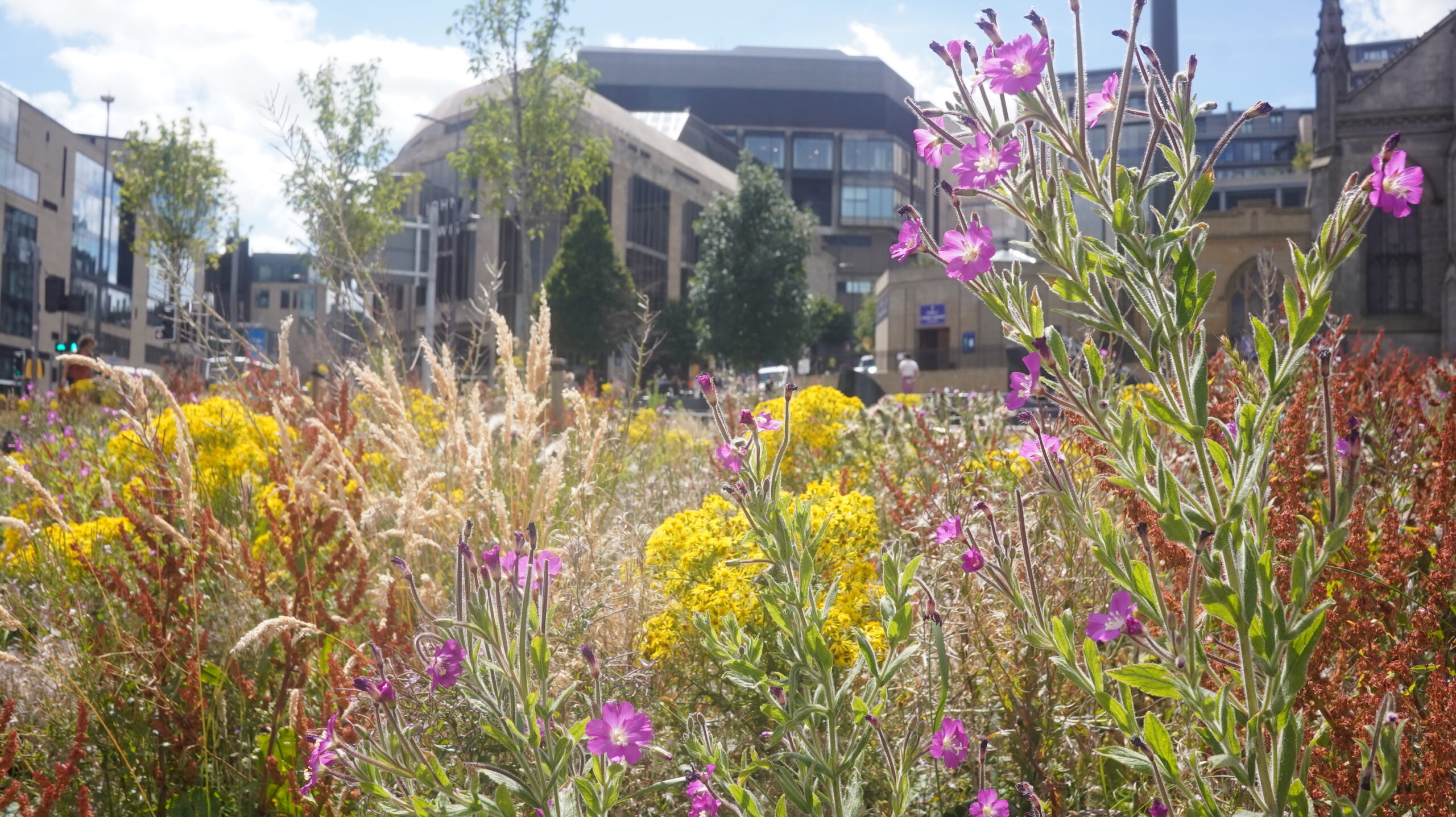
Pollinators are, of course, vital to sustaining biodiversity and the production of many of the tasty foods and drinks we enjoy (coffee and chocolate for a start!). However, there are ongoing concerns regarding the long-term decline of wild pollinators and biodiversity more generally. Surprisingly, cities can play a huge part in supporting pollinator populations, acting as potential refuges and offering diverse floral resources when they are well managed. Which is where those of us lucky to have a garden, however small, can make a huge difference to pollinators (and wider biodiversity) by planting species which produce nectar- and pollen-rich flowers. However, even if you don’t have a garden, you can consider planting pollinator-friendly flowers in a window box or a pot if you have space.
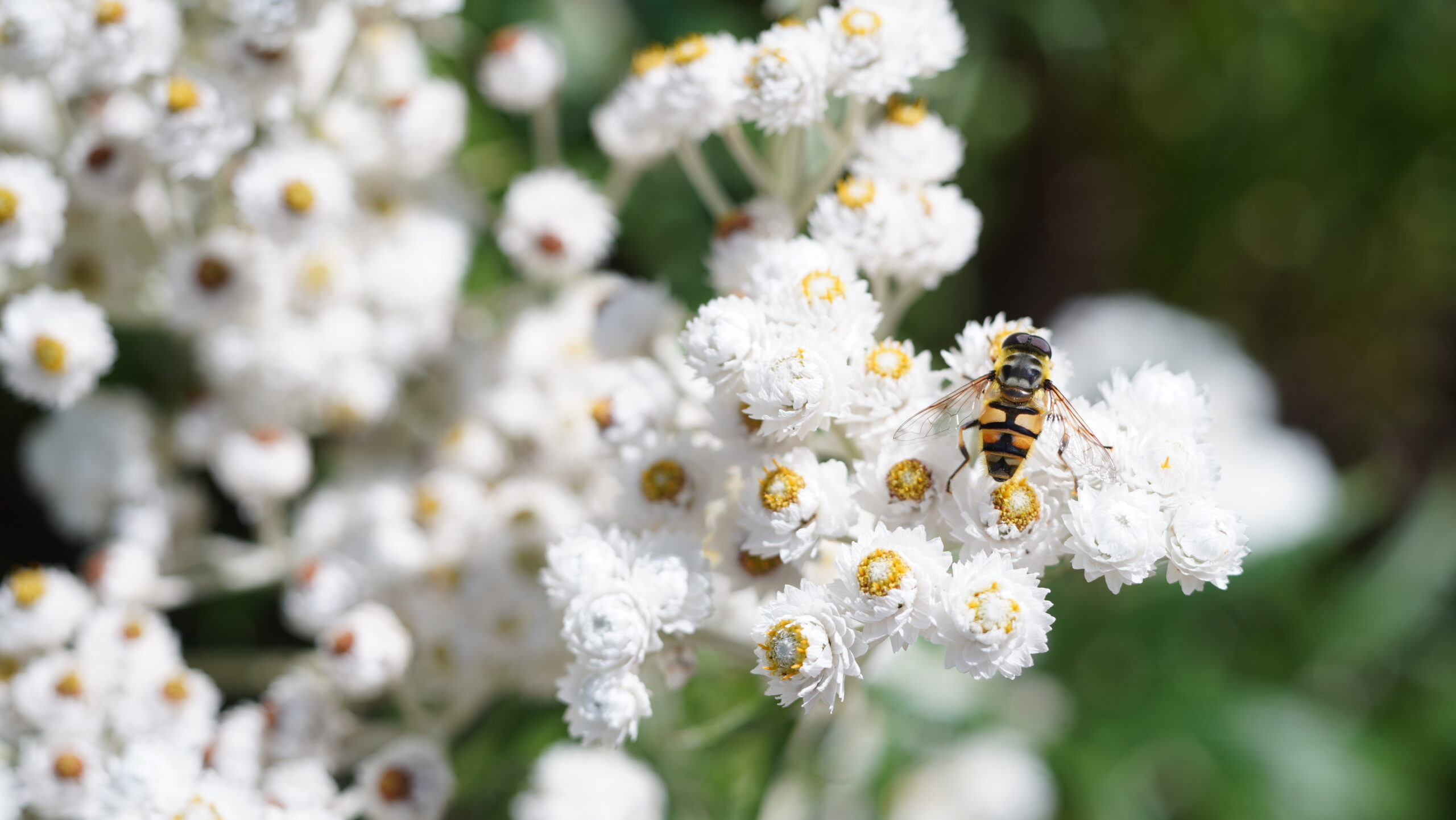
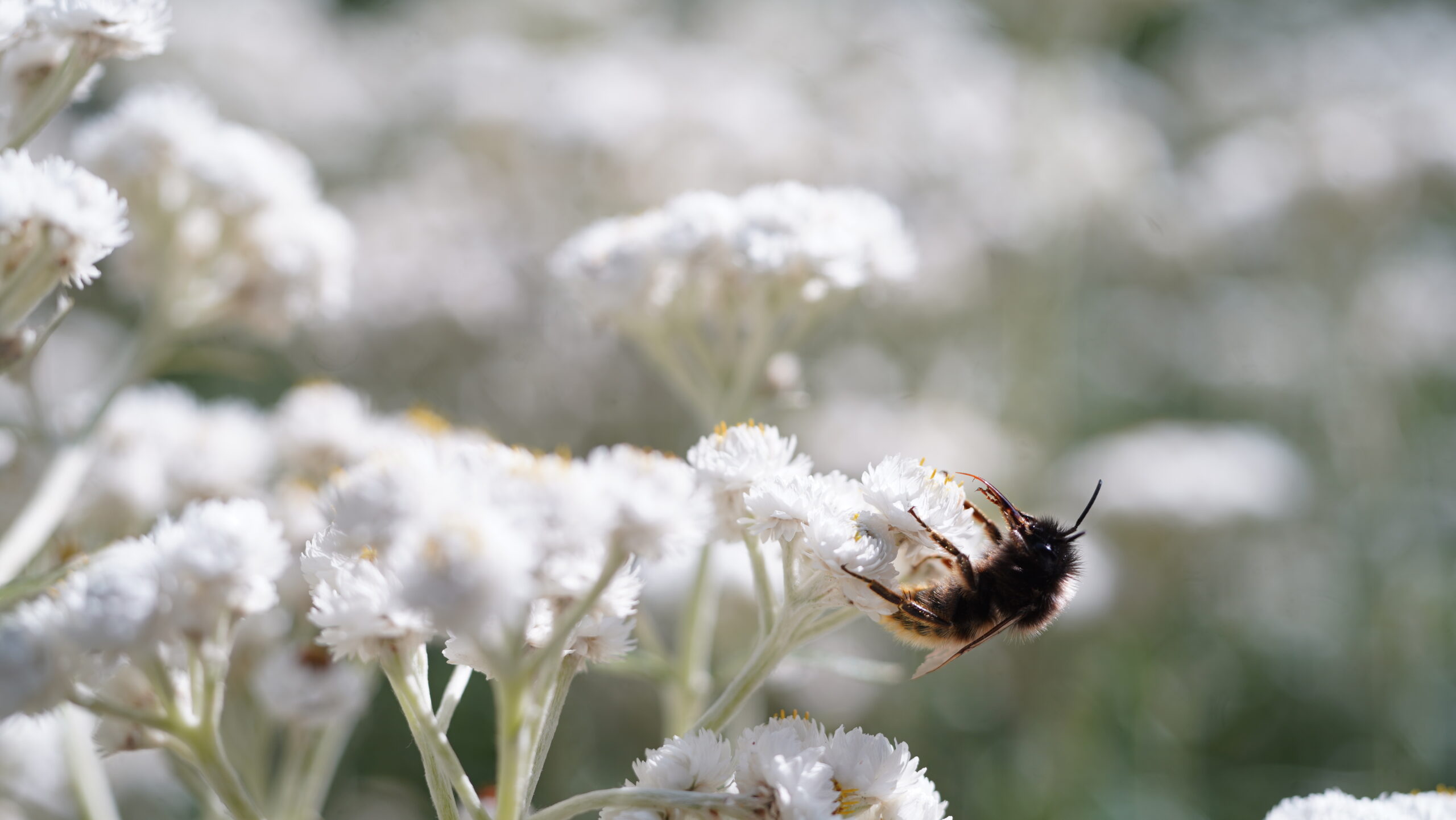
But which species should you plant!? This is one of the questions we are addressing with our current research. Whilst many of the most important plants for pollinators are weedy native species (e.g. thistles, ragworts, hogweed), many horticultural varieties are also beneficial. For example, yesterday I surveyed Anaphalis margaritacea (Pearly everlasting), an Asian and North American perennial plant in the family Asteraceae, in the RBGE gardens. On a single patch (~5m2) of this plant, I recorded 11 pollinator species (three solitary bee species, butterflies, wasps, hoverflies)! This plant has papery white flowers with yellow centers with disk florets, and short, accessible corolla tubes. Which means that these flowers are easily accessible to a range of pollinators, even those with short-tongues like flies, wasps and many social bee species. In other words, perfect for attracting a range of pollinators to your garden or window box. It’s also a very attractive species to look at!