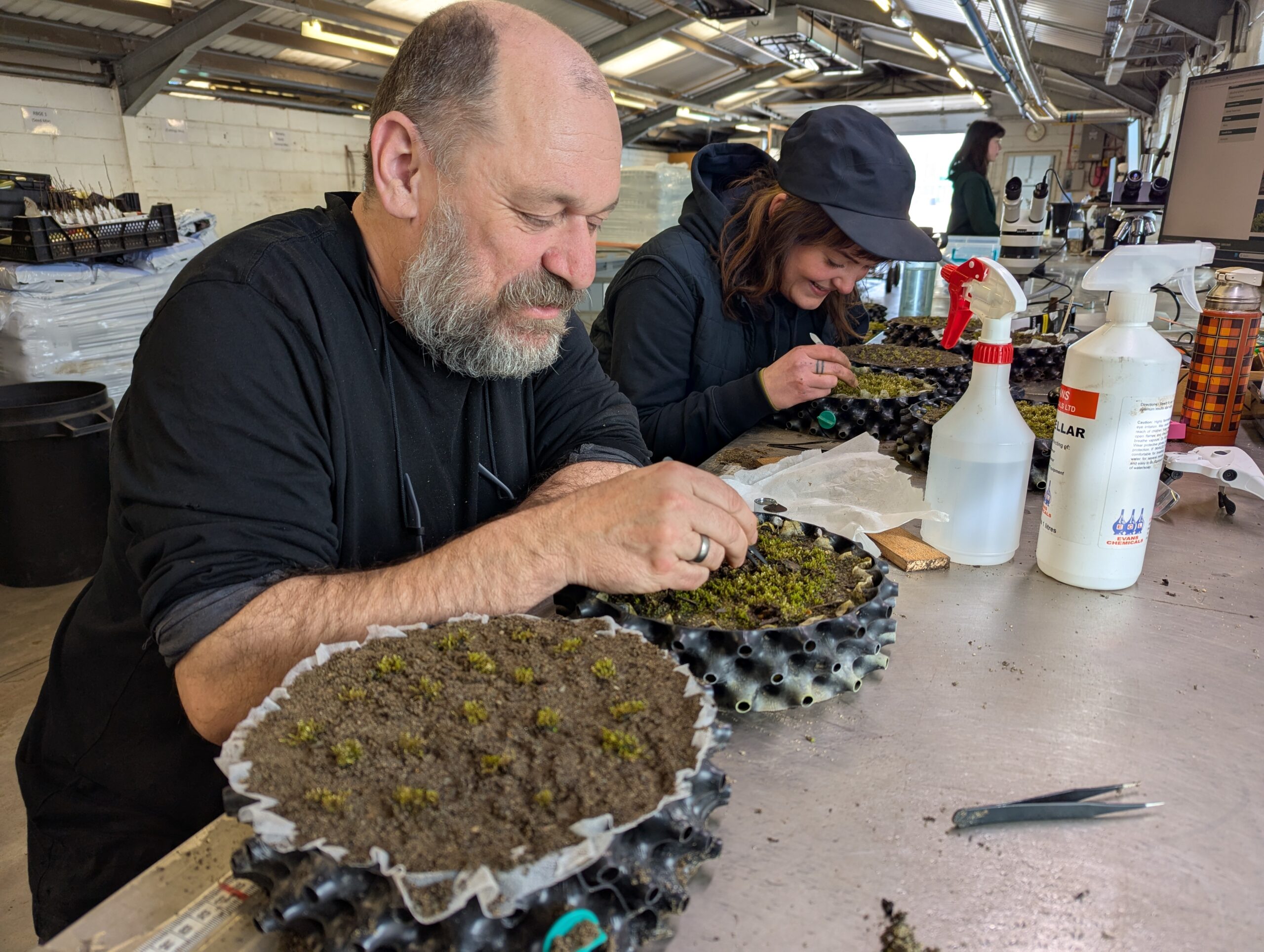
Weeding moss might sound like the endless battle that some people engage in to maintain their lawns and block paving in immaculate condition. Today I came across a literal example of weeding moss in the Botanics nursery. Tweezers were being used to pull unwanted moss from pots of the rare moss known as round-leaved bryum (Bryum cyclophyllum). It looked like the most fiddly work imaginable and I had to get a picture of this unexpected activity.
The moss in question is known from a single Scottish site and was brought into cultivation to protect it from extinction. Round-leaved bryum grows in damp conditions in the exposed mud at the edges of lakes in a habitat that can be rather ephemeral, depending on the water level. The discovery of the only known wild population of this moss was made by Kat O’Brien (NatureScot) and David Chamberlain (RBGE). Kat is leading the conservation work on this extremely rare species and the hope is that plants can be returned to suitable habitat in the wild.
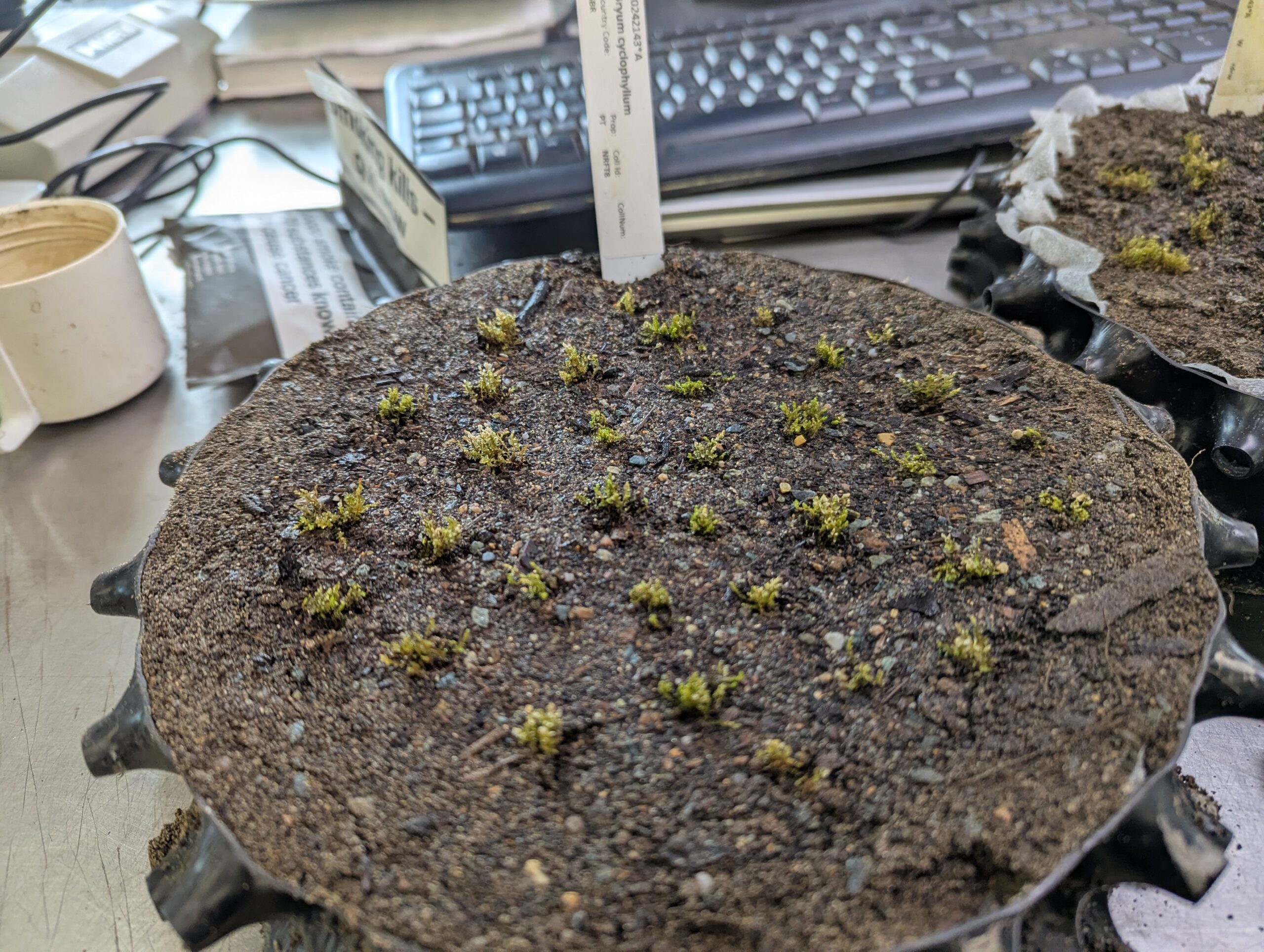
As you might imagine, moss conservation is a relatively undeveloped field and the maintenance of what are call ex situ collections of living mosses in cultivation as an insurance against the loss of threatened species has been developed by Rebecca Drew. Thye work on round-leaved bryum is not part of the Scottish Plant Recovery project, the the same skills and dedication are required. Like all threatened plant cultivation, the key is understanding and replicating the needs of a moss species. Very few botanic gardens attempt to cultivate moss, so this is another example of the innovative approach to the conservation of threatened Scottish plants by the Garden’s conservation horticulturists. Watch this space for updates on round-leaved bryum.
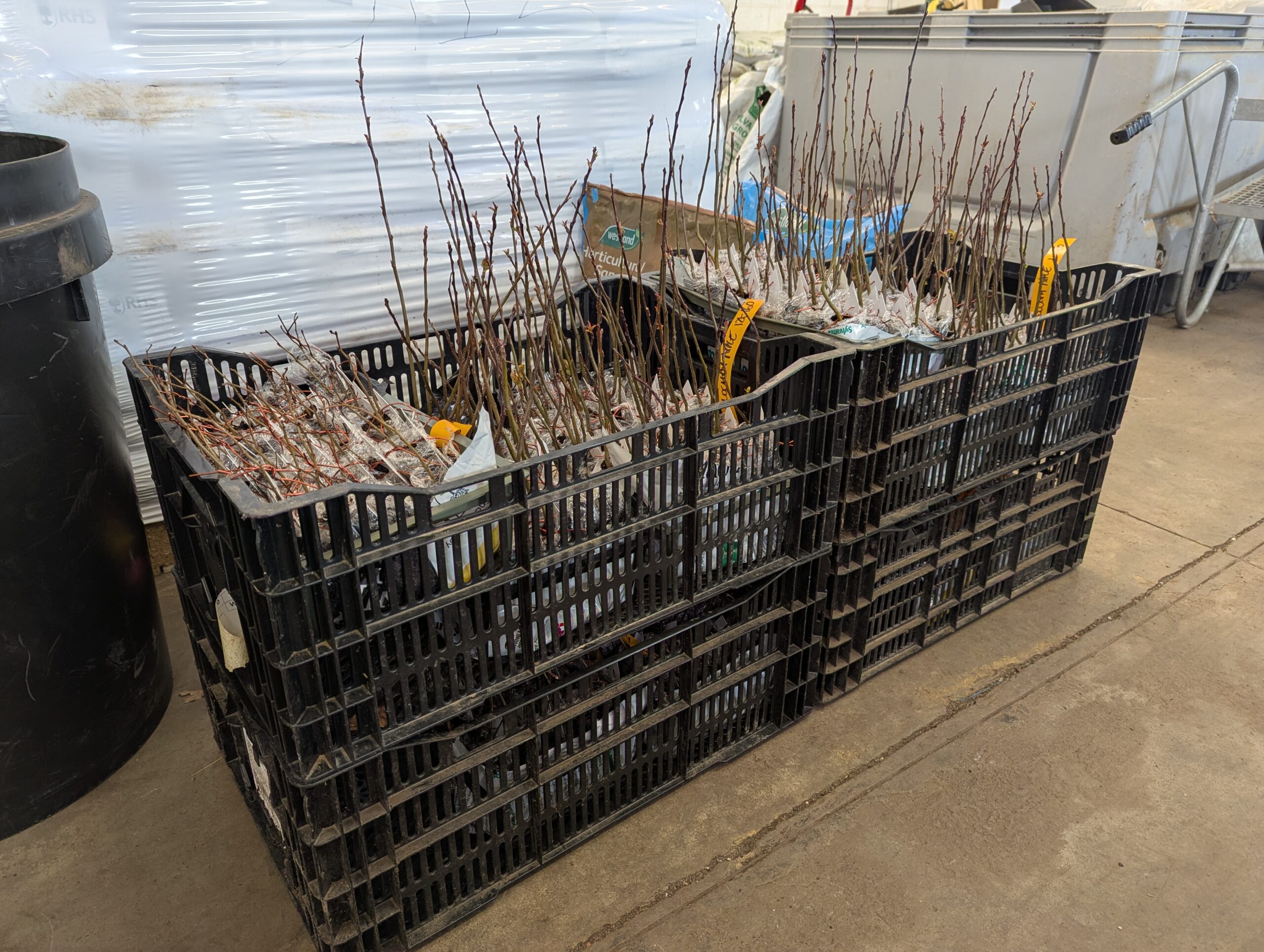
This moss weeding was a welcome break from the ongoing packing of 5,000 wych elm (Ulmus glabra) and crab apple (Malus sylvestris) saplings. Directly behind the bench was a batch of 400 trees about to head out on the latest trip of a mammoth planting exercise for the Scottish Plant Recovery project.