
Translocations are, by their very nature, complex and demanding undertakings – something our team knows all too well. Challenges such as logistics, limited time, unpredictable weather, difficult terrain, and small team numbers are often part of the challenge. Earlier this year, our Woodsia ilvensis translocations pushed these challenges to their limits. Despite this, the Scottish Plant Recovery Team – supported by our amazing volunteers and partners – planted nearly 2,000 Woodsia ilvensis across multiple sites in the month of September.
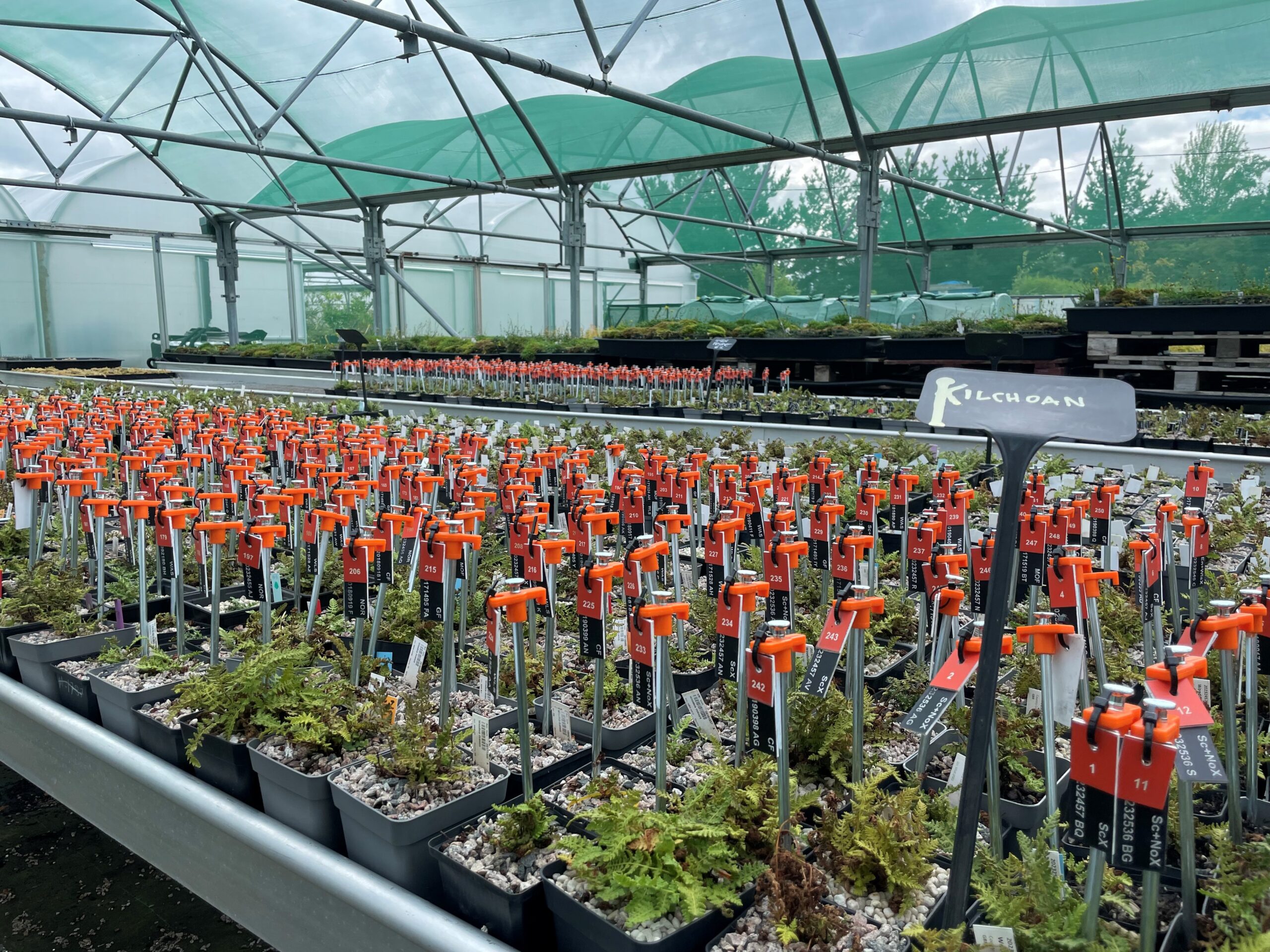
Woodsia ilvensis, or Oblong Woodsia, is an arctic-alpine fern, nicknamed the ‘Resurrection fern’ due to its ability to produce new fronds after appearing dead for a length of time. This already rare fern was made even rarer by Victorian fern collectors during the ‘pteridomania’ craze (which you can read about more here: Restoring a fern wiped out by collectors and botanists – Botanics Stories). After surviving a legacy of overcollection, Woodsia ilvensis now faces adversities such as climate change and loss of suitable scree habitat as competitive plants continue to move higher in altitude as temperatures rise. It is no surprise that this fern is classed as endangered on the GB Red List.
In order to restore Woodsia ilvensis numbers in Scotland, the Scottish Plant Recovery Team, fern expert Andy Ensoll and the glasshouse team from RBGE have been propagating and bulking up thousands of Woodsia ilvensis in the nursery, in preparation for planting into Scotland’s wilderness. Our ex-situ collection contains material from both native (Scotland, England, Wales) and foreign (Switzerland, Norway, Canada) provenances. We aim to restore over-collected populations from the 1800s and help this fern to create genetically diverse self-sustaining populations in Scotland.
There have been previous translocations completed of Woodsia ilvensis, however these varied in success rate with no planted population going on to establish or self-regenerate. As the fern is so fragile in nature, it could be many things – site, geology, planting method, aspect, etc. It is also highly likely that it could be multiple factors acting together, making it tough to identify what went wrong.
Though long term establishment wasn’t fully successful, these previous translocations have provided detailed valuable information which has helped our own translocations. I cannot emphasise how much these papers have helped us amid identifying sites, base rock, and translocation method. Hopefully, the team can stand on the shoulders of giants by learning from this knowledge and the factors that are essential to make a Woodsia translocation successful.
SITE SELECTION
On our mission to rescue Woodsia ilvensis in Scotland, we selected 9 sites across the country to plant nearly 2000 ferns.
These sites were selected for their base rich scree habitat with low competition. However, as is the case with many endangered rare plants, their preferred growing conditions are heavily debated and still undergoing research. Unfortunately, there is no certainty around the ideal conditions for Woodsia ilvensis, even including factors as basic as humidity level. Inherently, our plantings also act as trial work for the Woodsia’s environmental requirements.
Across all sites there is considerable variation in humidity, altitude, aspect, and base rock. Whilst the spectacular view at Glencoe features high humidity from a nearby waterfall and an east facing aspect, Kilchoan faces the westerly sea air on andesite base rock, and Glen Feshie holds one of the last remaining wild populations, so surely its’ low altitude and large scree size is suitable for our own Woodsia. Additionally, based on their presence at existing wild populations, we have chosen sites which have closely associated species Racomitrium moss, and Cryptogramma crispa (parsley fern).
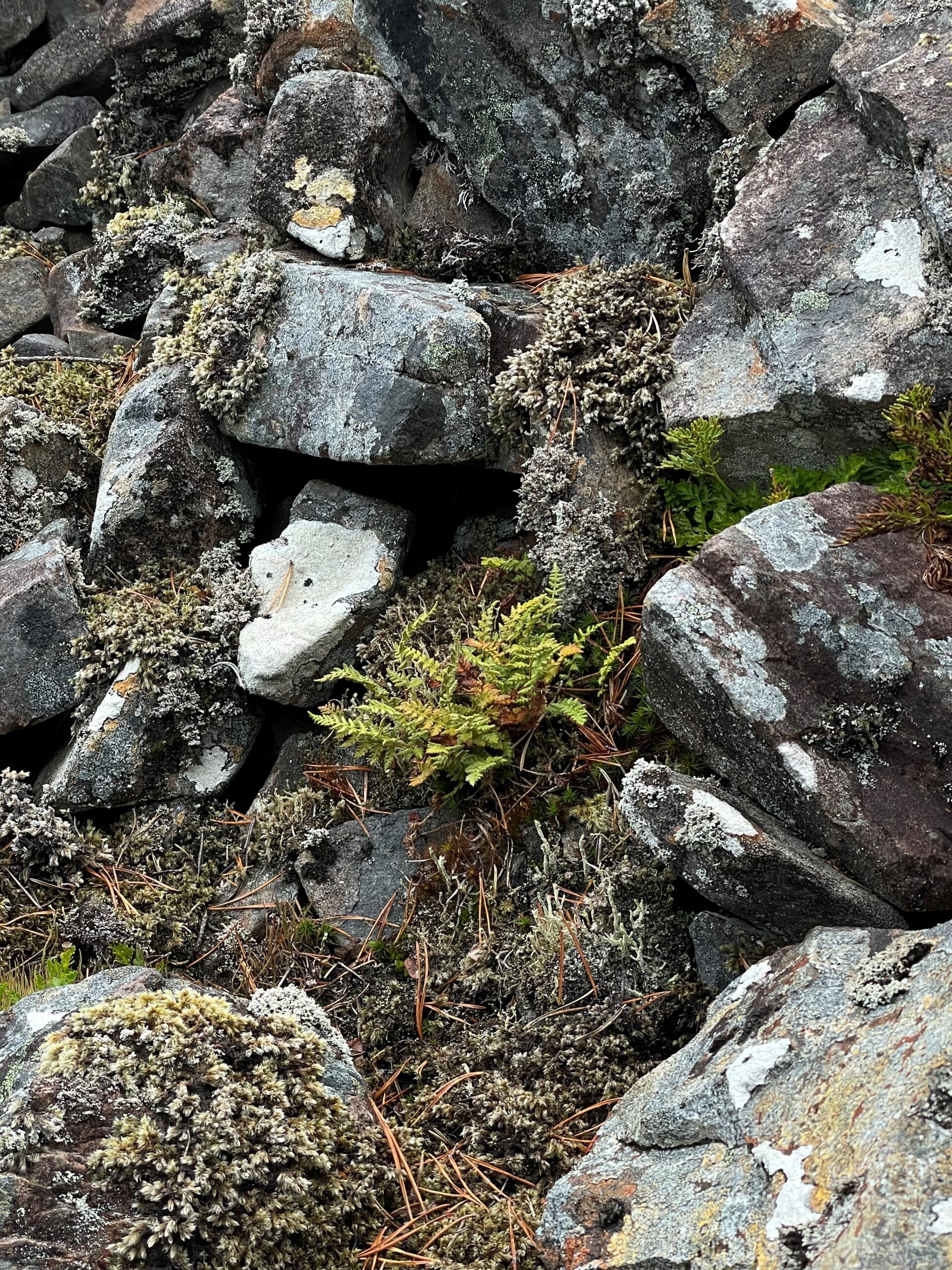
The most successful natural site of Woodsia ilvensis is in the Wasdale Screes in Cumbria, where it faces the sea on a western aspect. It is a large population which is the only in the UK to produce spore. This leaves many questions unanswered – especially, what qualities about this site makes it so successful for Woodsia ilvensis? As this fern is one of our most complex plants on the project, we can only hope that these specific qualities are present at the sites we have chosen.
When we return next year, the team will monitor these ferns across a variety of sites. Hopefully, even though its early on in their establishment, we will be able to get an indication of what conditions are most successful for Woodsia ilvensis.
RUCKING?
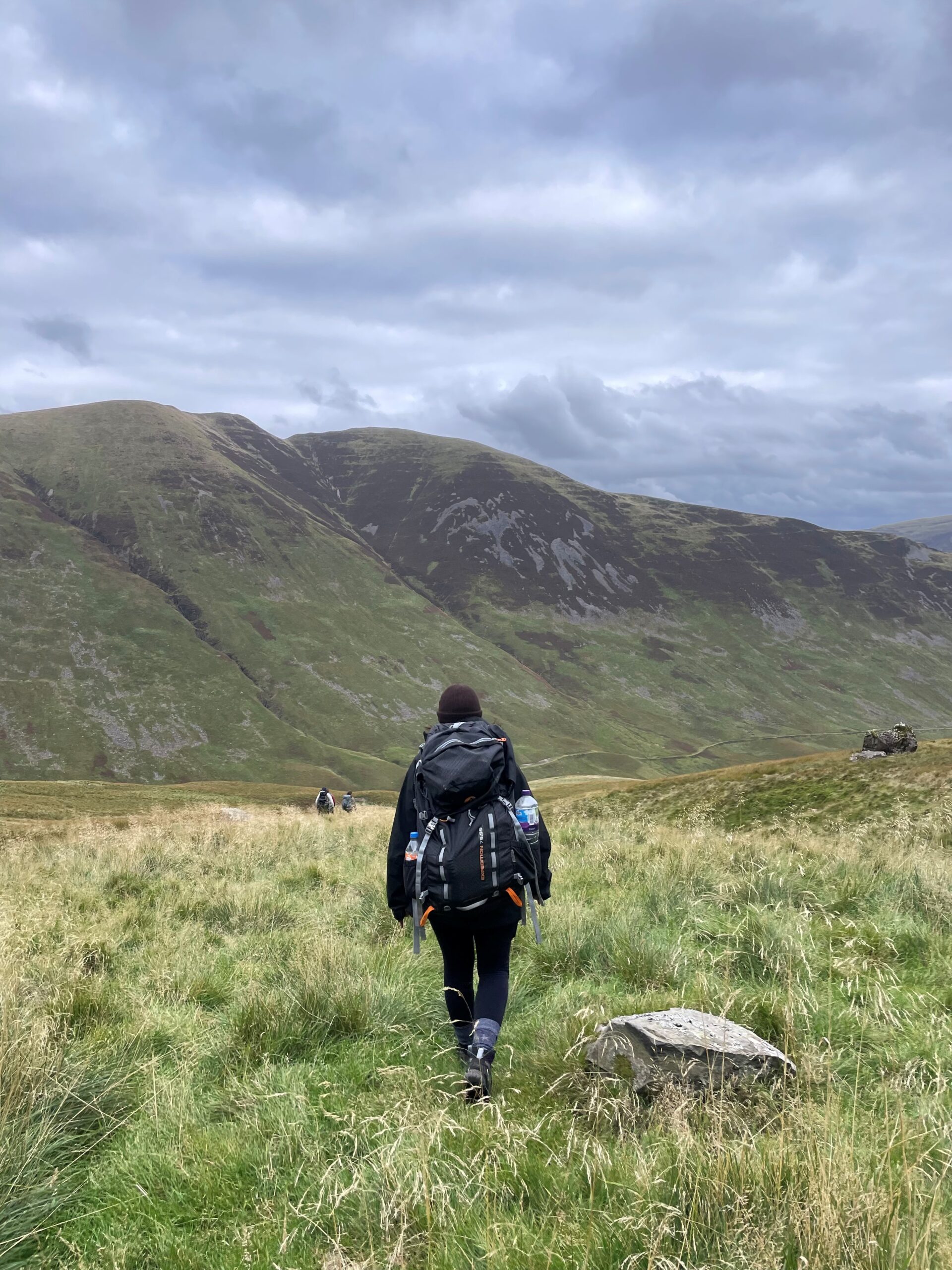
Rucking is walking or hiking while carrying a heavy backpack, originally used as a form of military training and now also practiced as an endurance and fitness activity.
This was a term unfamiliar to the team until we began our translocations. The nature of Woodsia as a fern meant the fine hair roots could not be separated from the soil and resulted in a very heavy load to carry up to the sites. The team also had to carry in 200 metal tent poles (our plant labels) per site, and all the other usual planting material – mallets, flags, and our own personal belongings.
As we had quite a load to carry, the team utilised 65L backpacks in which we could fit around 25 plants each. This meant on occasion multiple trips back and forth to site to transport 200 Woodsia and all of the translocation materials up.
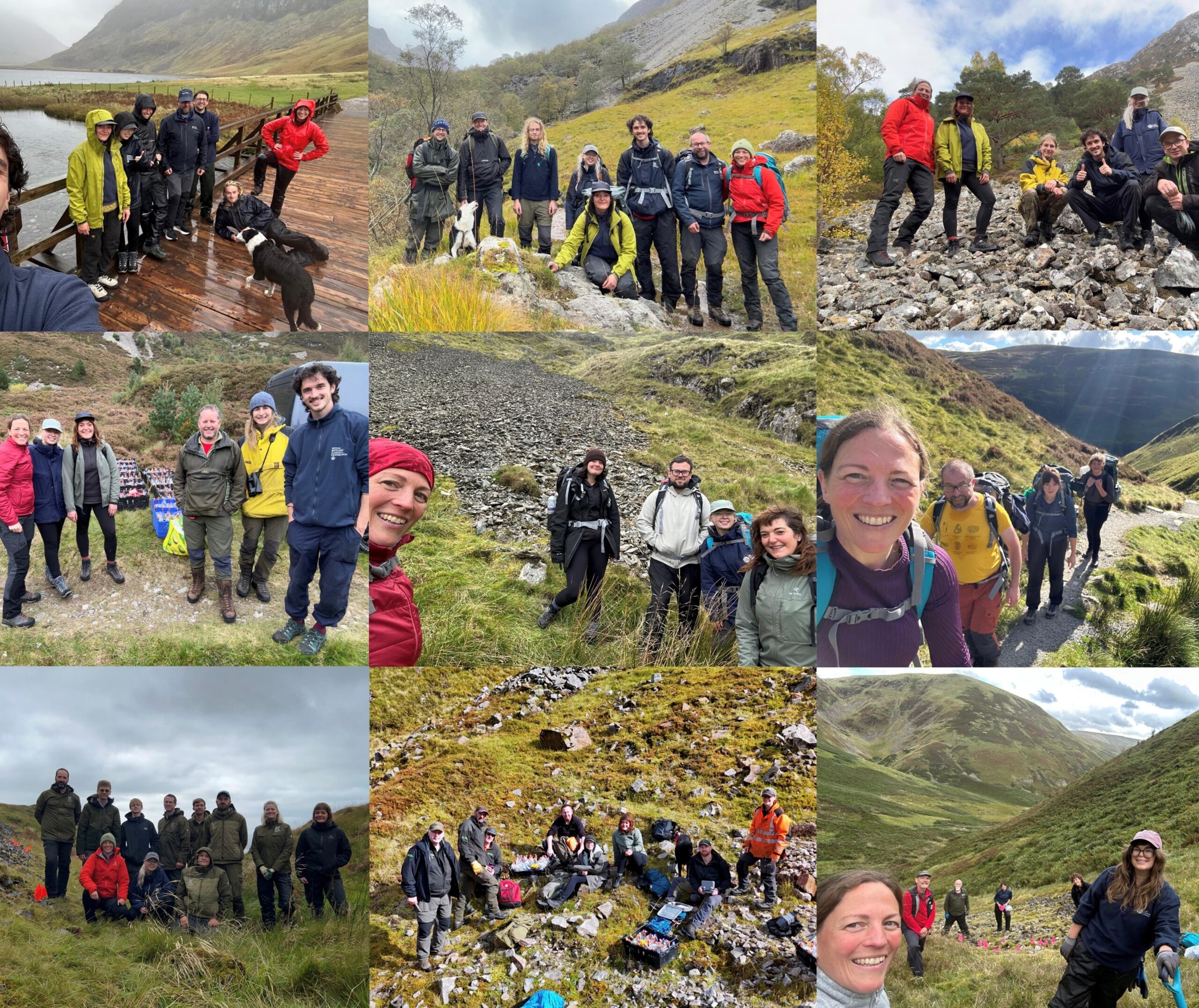
As an arctic-alpine fern, the majority of the Woodsia sites were high altitude, so carrying materials up to site was not an easy job. Fortunately, some of our partners were able to utilise ARGOs and quadbikes to transport the heaviest materials in, and of course, we had the help of amazing volunteers at each site. We absolutely could not have managed this feat without their hard work.
PLANTING
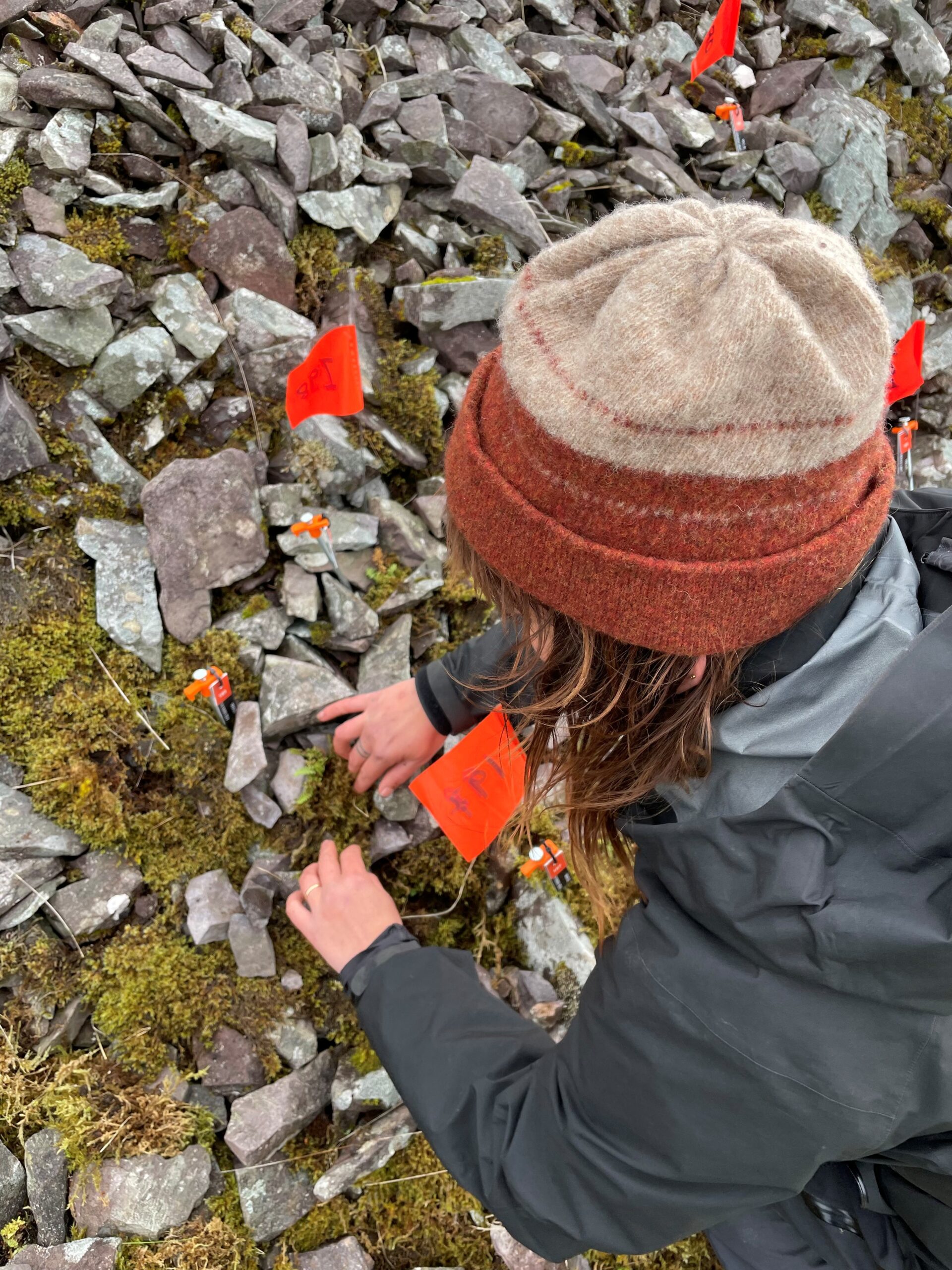
After making it to site (and then collapsing onto the scree) the team had to identify 200 micro sites for the ferns which had low competition and high stability. Within the scree habitats, there was a lot of variation.
Woodsia ilvensis does not have a formal planting protocol for the team to follow. However, as a delicate arctic-alpine fern, it is a species whose requirements we cannot compromise. Meeting these needs was critical, and as a result, our planting protocol was as follows:
- Dig a hole deep enough for the Woodsia to sit exactly level to the ground. If too low, it could create a sink for rainwater, rotting the crown, and if too high, the wind would dry out the crown.
- Woodsia placed in with its substrate. This was inserted as a whole plug, avoiding as much root disturbance as possible.
- The crown and surrounding bare soil covered with Racomitrium moss. Racomitrium is a large moss but is not overly competitive so should not grow over the fern. This moss grows in association with Woodsia and is found on all the existing wild sites, with some Woodsia even growing directly out of Racomitrium patches, so the team used this moss as an indicator species for sites while selecting for translocations. Ideally, this moss will discourage any larger, more competitive plants from crowding out the Woodsia.
- Large rocks used to stabilise the ferns’ position in the scree, and gravel/small rocks used to cover any gaps in bare soil.
- Label hammered in near the fern with associated information including planting number, accession and provenance of the fern.
- Recording the fern on our phones, entering planting number and GPS point for future monitoring.
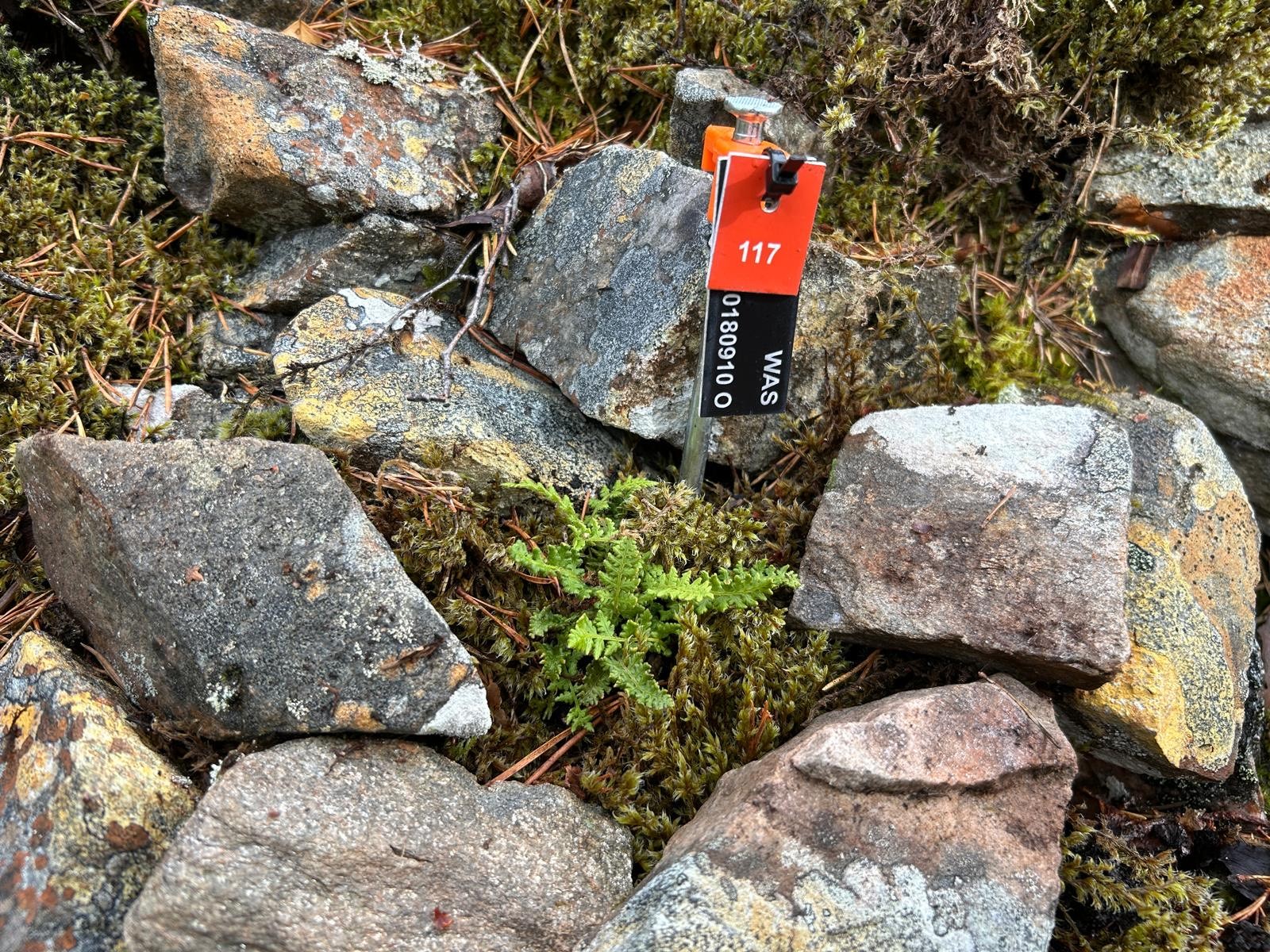
After this process was repeated 200 times, we had established a new population of Woodsia ilvensis at each site. This would take us all day from early morning to sunset, which meant a lot of Haribo breaks (thanks Aline!).
Unfortunately, there were some sites where we did not manage to plant 200 ferns, and instead had to aim for 125, such as Grey Mares Tail, due to time challenges coupled with low numbers in the field.
Additionally, on some sites excessive movement on loose rocks posed a significant hazard. This required constant and careful communication within the team, as we could never be positioned above others on the scree. Any rocks dislodged or shifted by our body weight could have caused serious injury to those working below.
LOOKING AHEAD
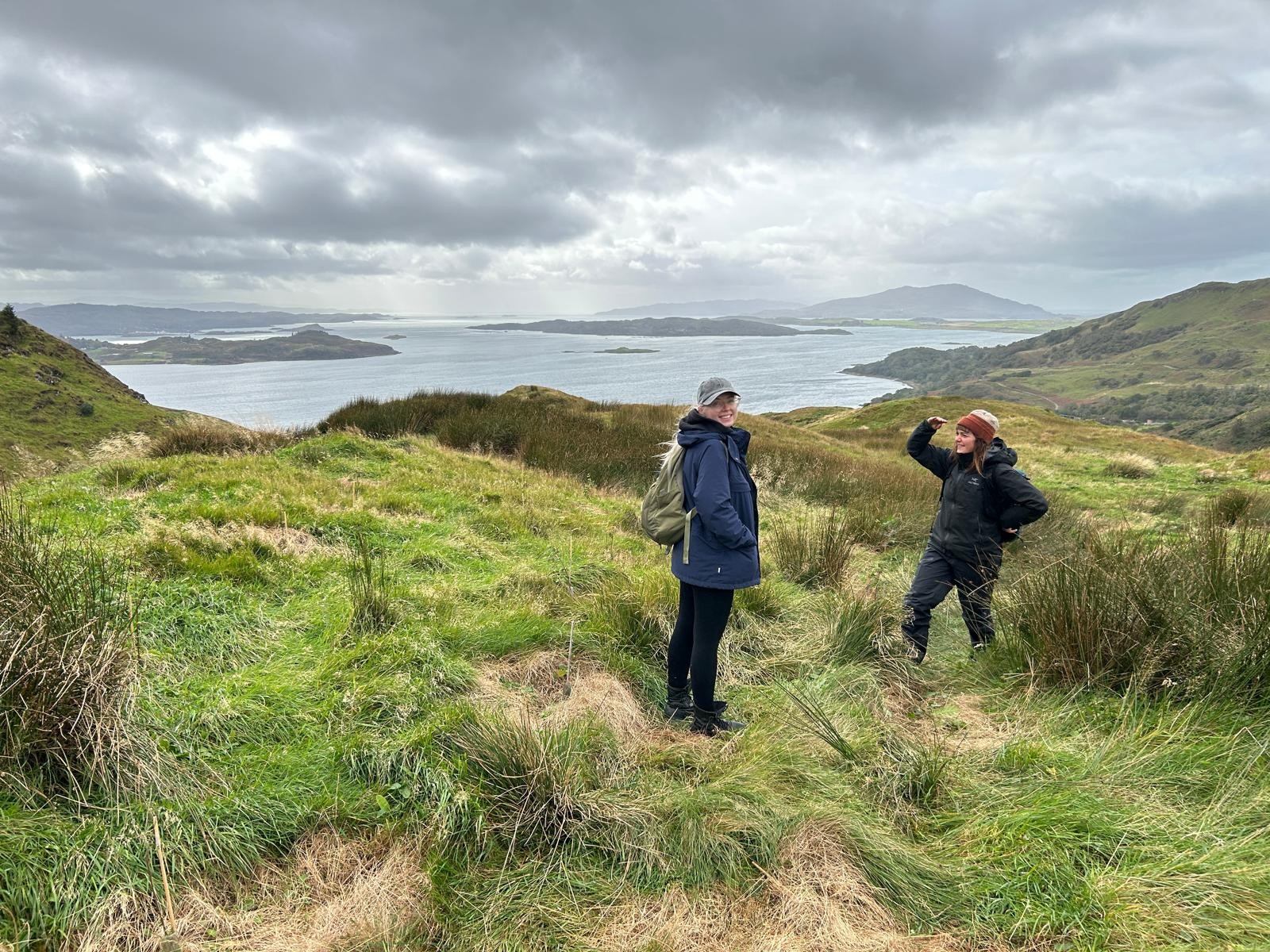
I feel beyond grateful to have been a part of very intense, challenging, but important plantings. The SPR team are so thankful to our partners, landowners, and volunteers for helping to achieve these plantings. It would have been impossible on our own and I feel very lucky to have been a part of such lovely and knowledgeable groups on every single translocation. Nothing says team bonding like 8 hours on unstable scree habitat!
I am incredibly excited to monitor these Woodsia ilvensis populations next year and see which of the sites will work best for them (my bets are on Glen Feshie!). Through trialling, we will become closer to having a protocol for Woodsia ilvensis translocations which will help us continuing to restore this fern in the future. We are all keeping our fingers crossed that next year there are some new established Woodsia ilvensis populations in Scotland.
By Erin O’Hare

This project is supported by the Scottish Government’s Nature Restoration Fund, managed by NatureScot.
Instagram @rbgescottishplants
X @TheBotanics
X @nature_scot
X and Facebook @ScotGovNetZero
Facebook @NatureScot
#NatureRestorationFund