
The following blog was written by Courtney Kemnitz a digitiser in the Herbarium.
Since 2021 we have increased our digitisation capacity reaching 1 million specimens imaged in August 2024. Each digitiser is assigned a family of plants to work through. This series of blogs will spotlight the families that have been completed by a member of the team.
Part I was about the canvas, the linen: Linum usitatissimum, part II will focus on the plants used to dye the wool: Rubia tinctorum, Reseda luteola, and Isatis tinctoria. More commonly known as madder, weld, and woad.


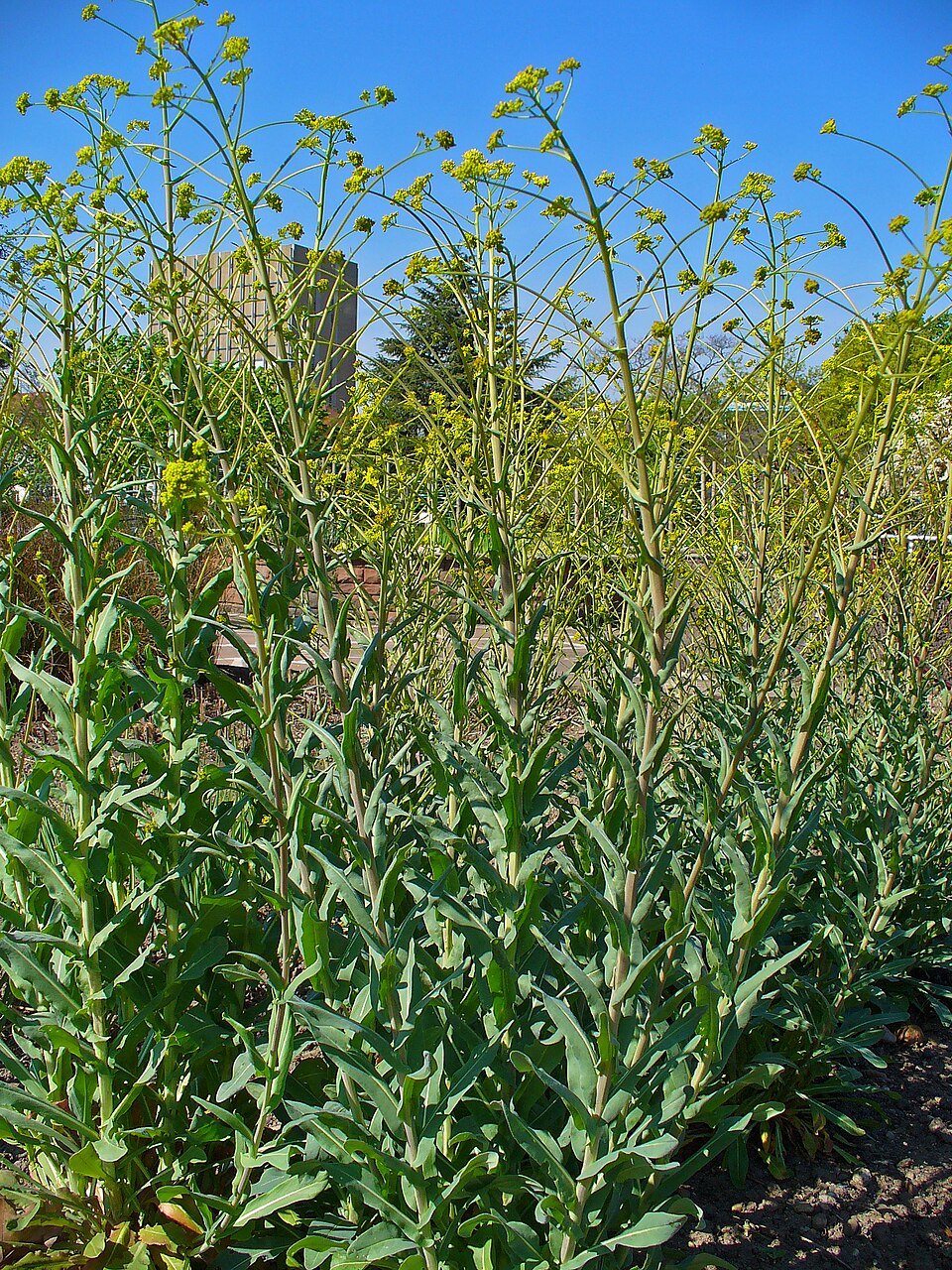
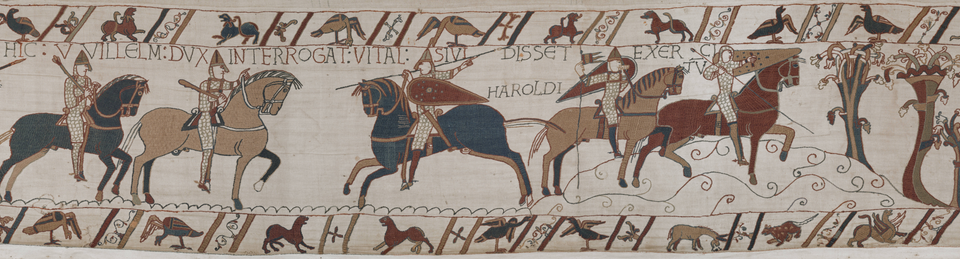
Between 1982–1983, the Bayeaux Tapestry underwent conservation work. Samples of the dyed wool threads on the reverse side were taken and analysed. It was determined that the Tapestry is made up of four main colours in different shades for a total of about 10 –12 distinct colours. Three plant dyes were identified in the study: madder (red), weld (yellow), and woad (blue), along with a fourth plant with brown hues, which remains unidentified[1]. These three plants have been staples in the dying of textiles in not only England but in Europe, Asia and Africa for thousands of years.
Limited to a single dye for each primary colour (red, yellow, blue) these were combined to create the secondary colours: orange, green. There was no natural black dye so woad was used, as it can produce very dark tones. The range of colours used in the Tapestry has no equivalent in 11th century Norman art. But can be seen in Anglo-Saxon manuscripts such as the illustrated Old English Hexateuch. The embroidery was restored in the 19th century, with the use of synthetic dyes for the colours.
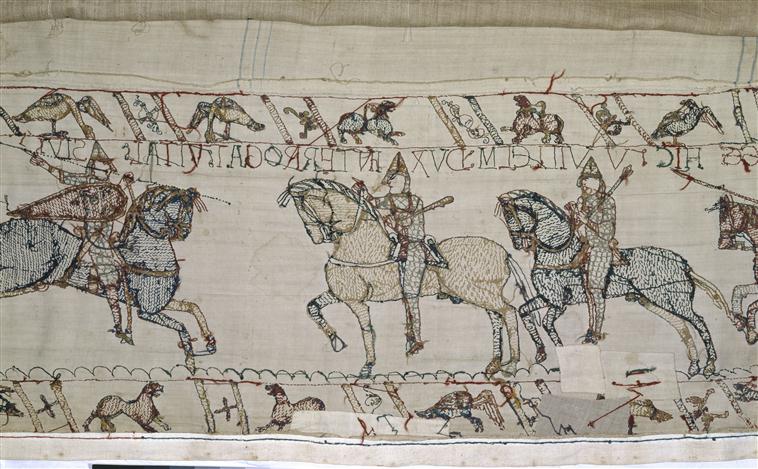
It should come as no surprise the colours are not as vibrant as they were centuries ago. When comparing the threads on the front with their corresponding threads on the back, the colours have noticeably faded. The reds have darkened and the blues appear greener. Overall, the original wool dyed with natural colours have changed very little in comparison with the threads dyed with the synthetic colours during the 19th century restoration. These threads have faded a lot more and, in some cases, have faded completely and are now white.
The creators of the Bayeux Tapestry made full and fairly consistent use of the restricted palette. An impressive feat considering it is believed many people were working on it at the same time.


Dying the Wool
Wool[2] can hold dye very well; this is large in part due to is unique structure. The woollen threads from the Bayeaux Tapestry have some colour variation between the two halves of the twist. This indicates that the wool was dyed before it was spun and twisted into thread.
Most natural dyes are made from plants, but they can also be made from minerals and invertebrates. Since Neolithic era people have been extracting and using natural dyes. By the late 1800s, in the industrial era, synthetic dyes were created and replaced the natural dyes.
The method for extraction of natural dyes, and the dying process itself, has more or less stayed the same for thousands of years. First the fibre or textile is cleaned. Then, the plant material, for example the leaves of Isatis tinctoria (woad) are added to hot water and heated to extract the dye. Then the material is added to the heated dye, and left to simmer and soak until it is the preferred colour. To ensure colour fastness, i.e. a resistance to fading or running of the colour, a binding agent called a mordant is added to the dye. Historically, the most common mordants were metal salts. Mordants not only help to bind the colour to the material but can also be used to change the colour of the dye.
The Bayeaux Tapestry contains more than the primary colours. In order to achieve the greens and oranges, the material would first be dyed with the darker colour then overdyed with the lighter colour. For example, to produce the greens, first the material would be dyed with woad (blue), and then overdyed using weld (yellow). The same can be done with madder (red) and weld (yellow) to produce the various shades of orange. Visit Cambridge Botanic Garden website or in person to learn more about natural plant dyes. They grow a variety of plants that can be used as a natural dye as part of their dye trail. https://www.botanic.cam.ac.uk/learning/trails/dyestrail/
A Closer Look
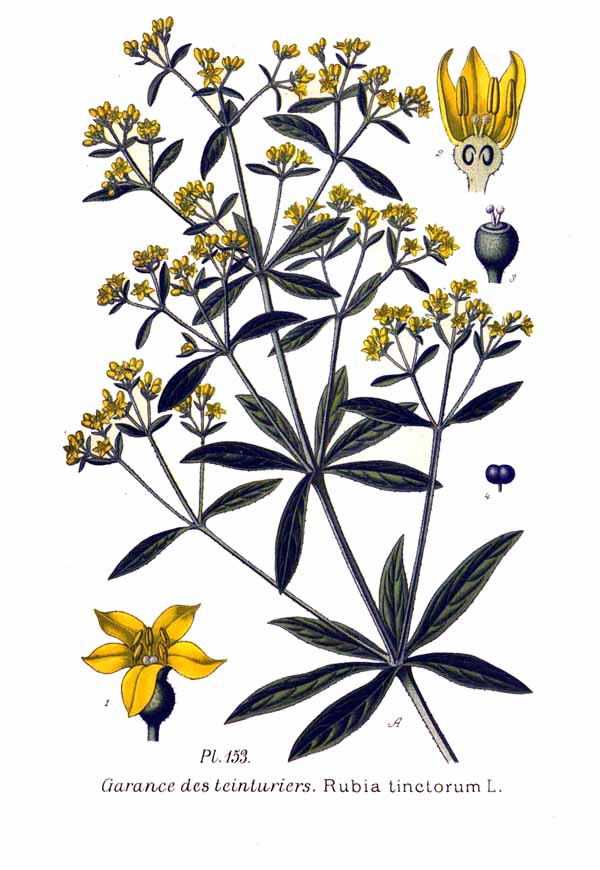

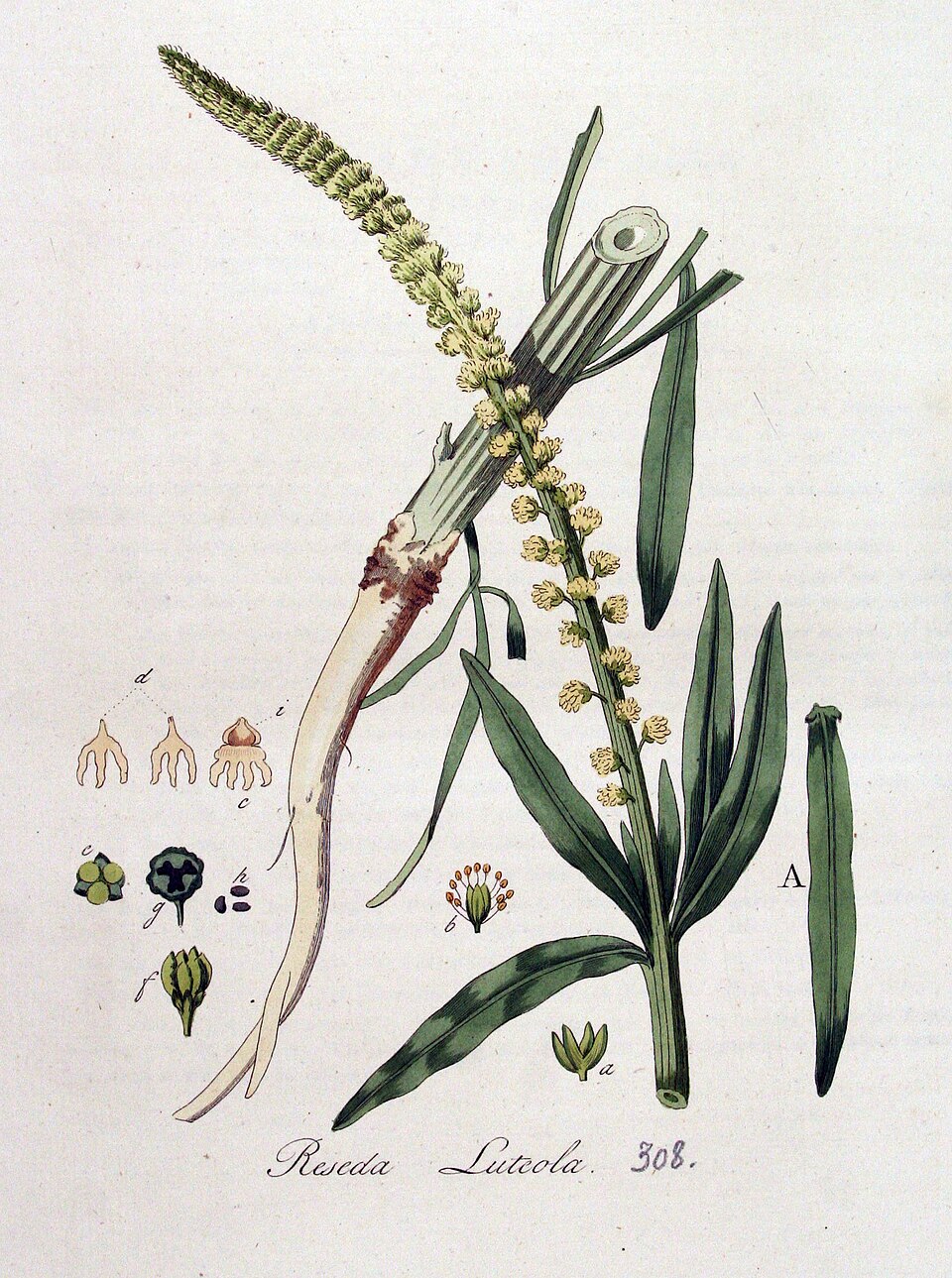

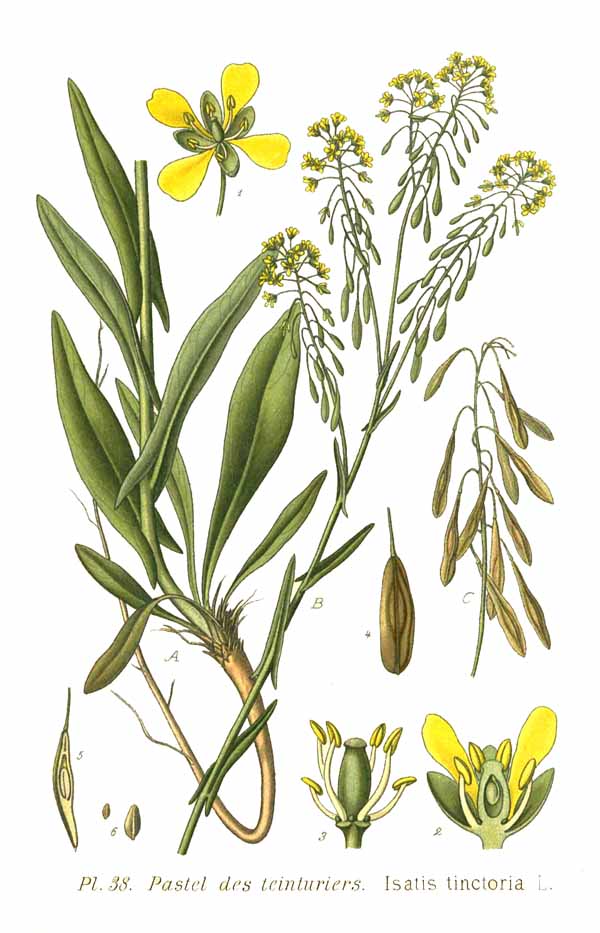

| Scientific Name | Rubia tinctorum L. madder | Reseda luteola L. weld | Isatis tinctoria L. woad |
| Dye Colour | Reds from the roots | Bright yellows whole plant except taproot | Blues from the leaves |
| Family | Rubiaceae | Resedaceae | Brassicaceae |
| Height & Spread | Height: 0.5-1m Spread: 0.5-1m | Height: 1-1.5m Spread: 0.1-0.5m | Height: 1-1.2m Spread: 0.5-1m |
Common Names in the British Isles and the Isle of Ireland*
* This list is not exhaustive | ** Simplified English pronunciations
| Rubia tinctorum madder | Reseda luteola weld | Isatis tinctoria woad | |
| English | Madder [MAd-uhr] | weld, dyers rocket | woad [wohd] |
| Scottish Gaelic | Màdar [MAH-dur] | lus-buidhe mòr [LOOSS BOO-yuh MOHR] | Gorman [GORR-uh-mun], glastam [GLAHSS-tum] |
| Scots | madder/mader [MAHD-ir] | wald [WAHLD], strae [STRAY], wad [WAHD] | Wuid [WID/WEED], Wad [WAHD] |
| Irish Gaelige | Madar [MAH-dur] | buí mór [Bweem-ohr/Bee-MOHR] | Glaisin [GLASH-een/GLESS-een] |
| Welsh | Madr [MAH-dr] | Cynffon Titw [KUN-ffon TEE-too], Melyngu [MUH-lin GEE] | Glaslys GLAHS-leess] , Lliwlys [HLEW-leess], Lliwiog Las [HLEW-yogh LAHSS] |
| Anglo-Saxon** (Old English) | madder [MAHD-der], mædere [MAt-ehr-eh] | Wealde [WÆ-ahld-eh/WAt-ahld-eh], walde [WAHLD-eh] | wad [wahd] |
| Anglo-Norman** | Mader [MAH-der/MAH-dair] | oulden [ool-DEN/ool-dun] | woad [wawd] |
Leaves
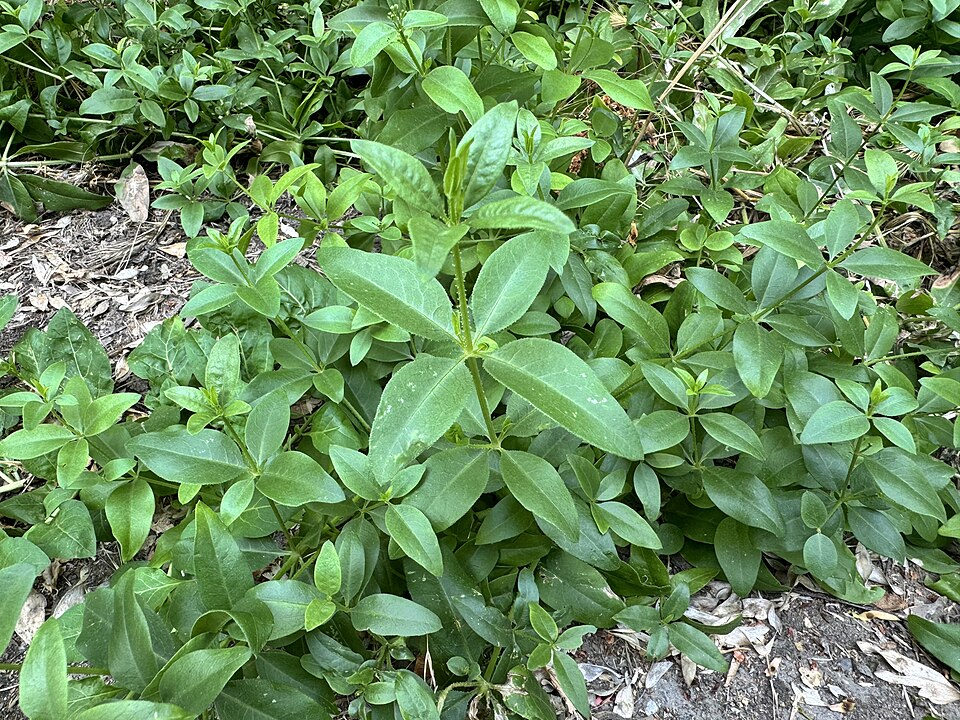

By Jamshid Nurkulov,
CC BY-SA 4.0
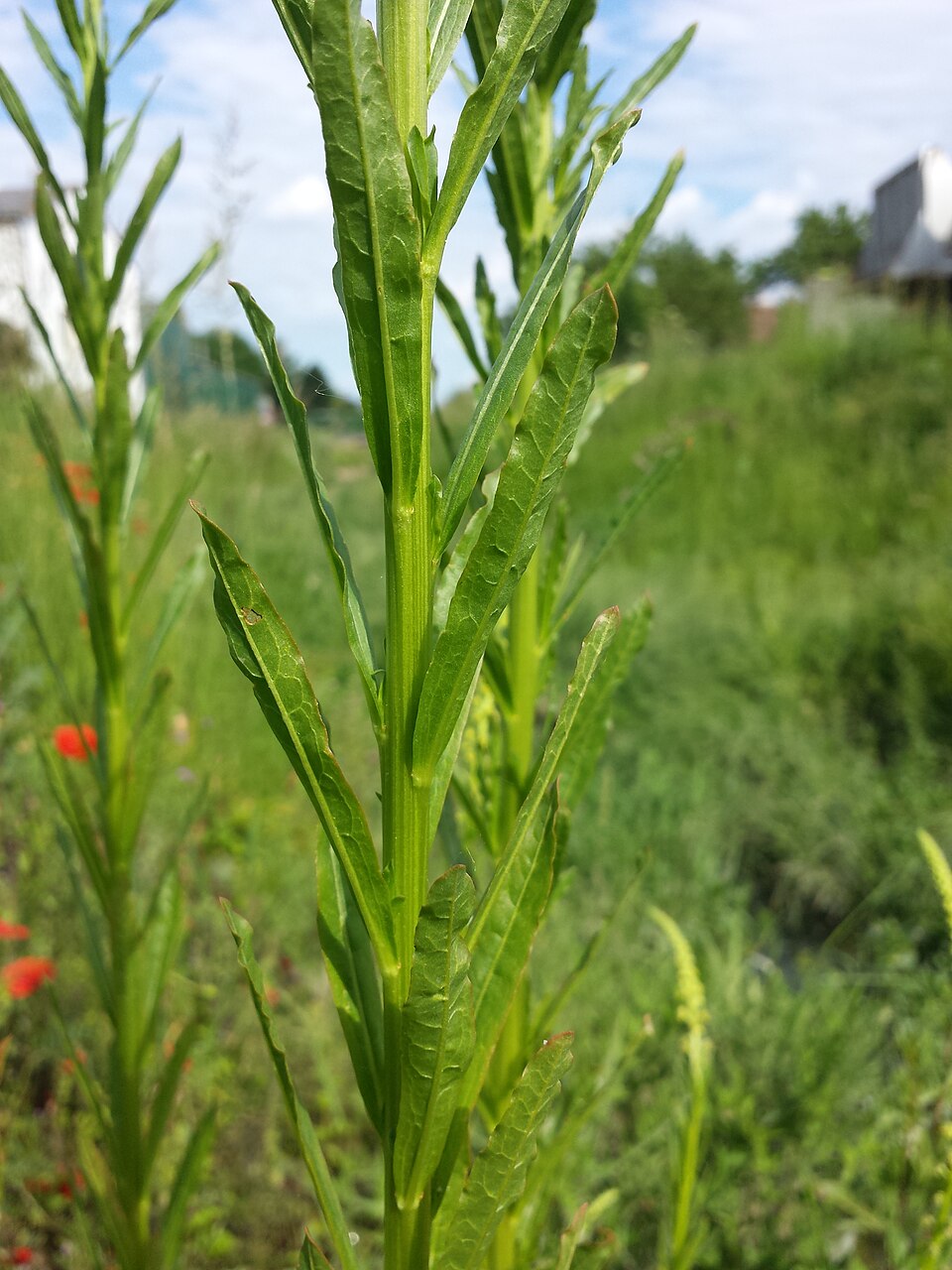

By Stefan.lefnaer, CC BY-SA 4.0
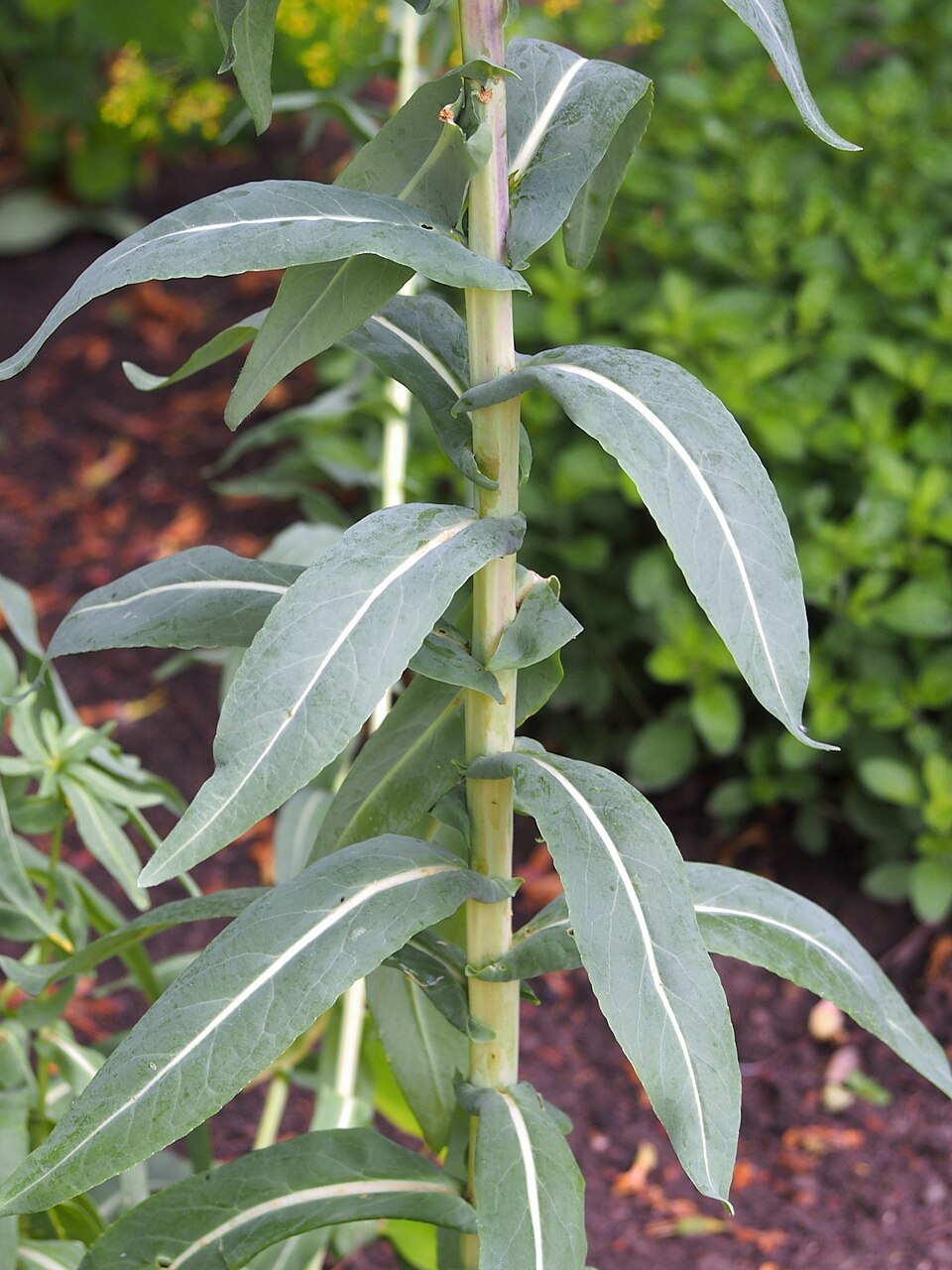

By Agnieszka Kwiecień, Nova, CC BY-SA 4.0
| Rubia tinctorum (madder) | Lanced-shaped, arranged in a circular pattern of 4-6 leaves around the stem. Size: up to 10cm long & 2.5cm wide. |
| Reseda luteola (weld) | lanced-shaped with wavy edges. Alternating arrangement up the stem. Size: 1-10cm long & 2-9mm wide |
| Isatis tinctoria (woad) | Teardrop shaped leaves at the base and arrow-shaped leaves up the stem, in a circular arrangement radiating outward from the base of the stem. Size: 5-15 cm long, 1-3cm wide. |
Flowers & Fruits
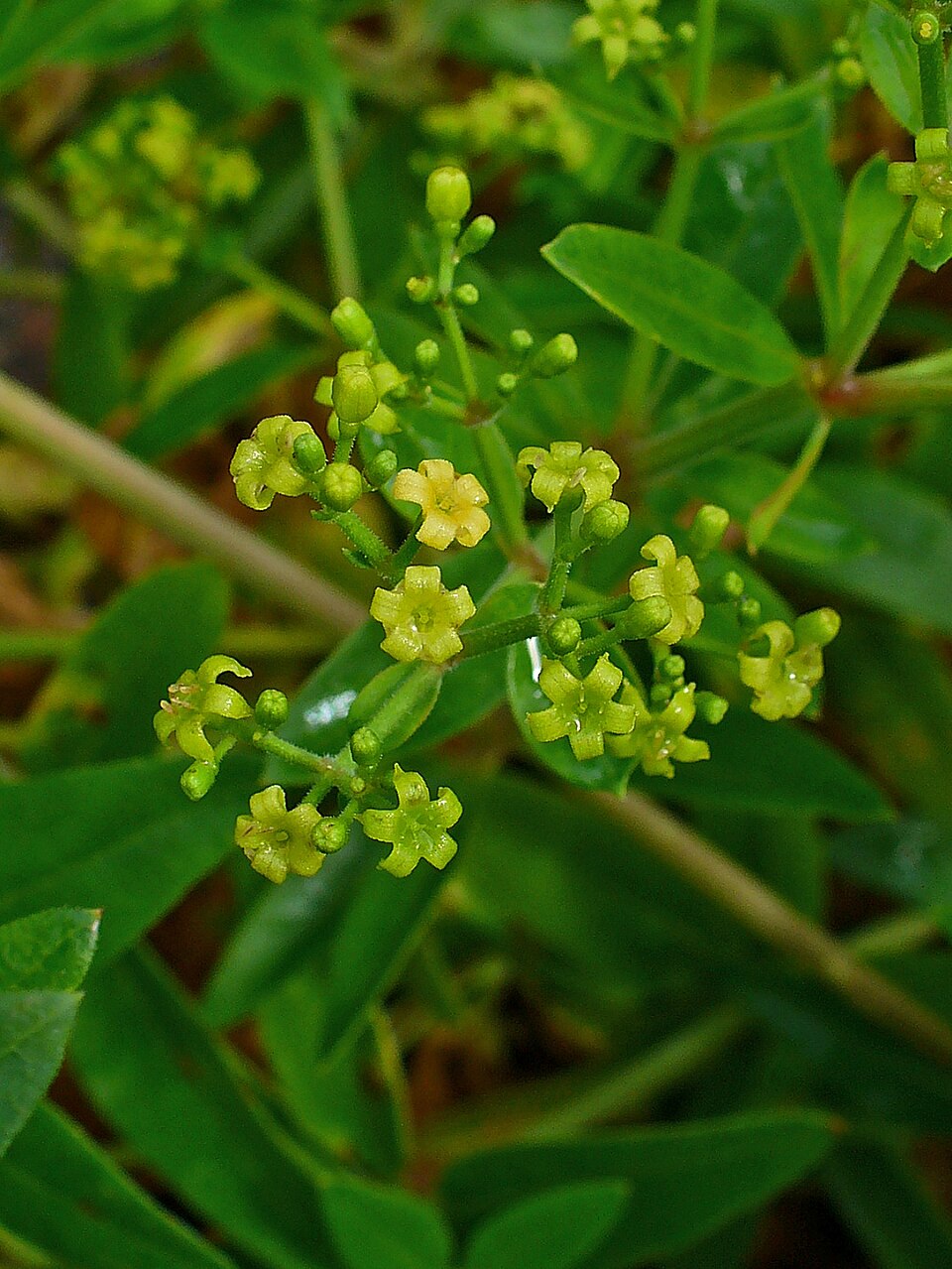

by H. Zell, CC BY-SA 3.0
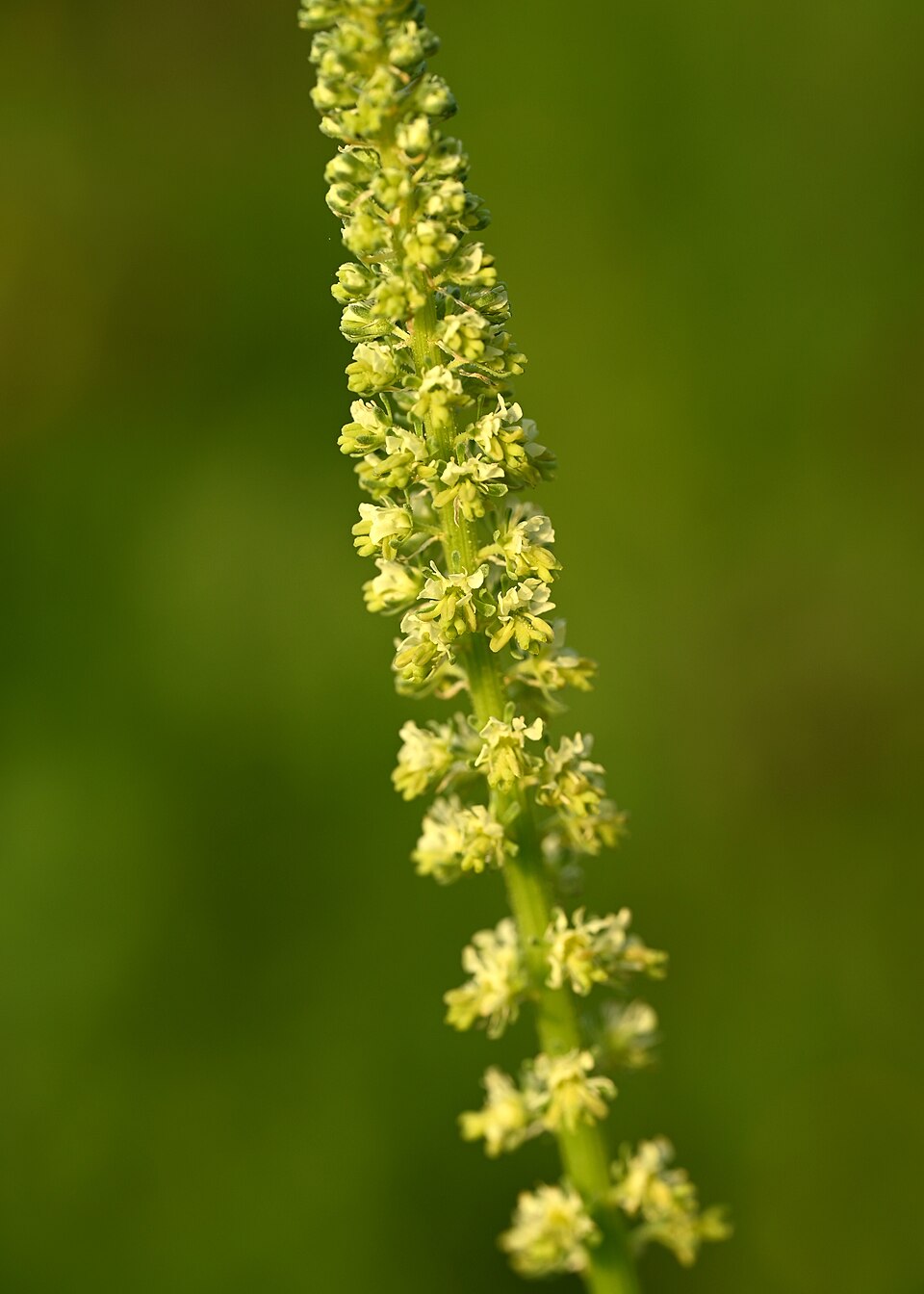

by Krzysztof Ziarnek, Kenraiz,
CC BY-SA 4.0
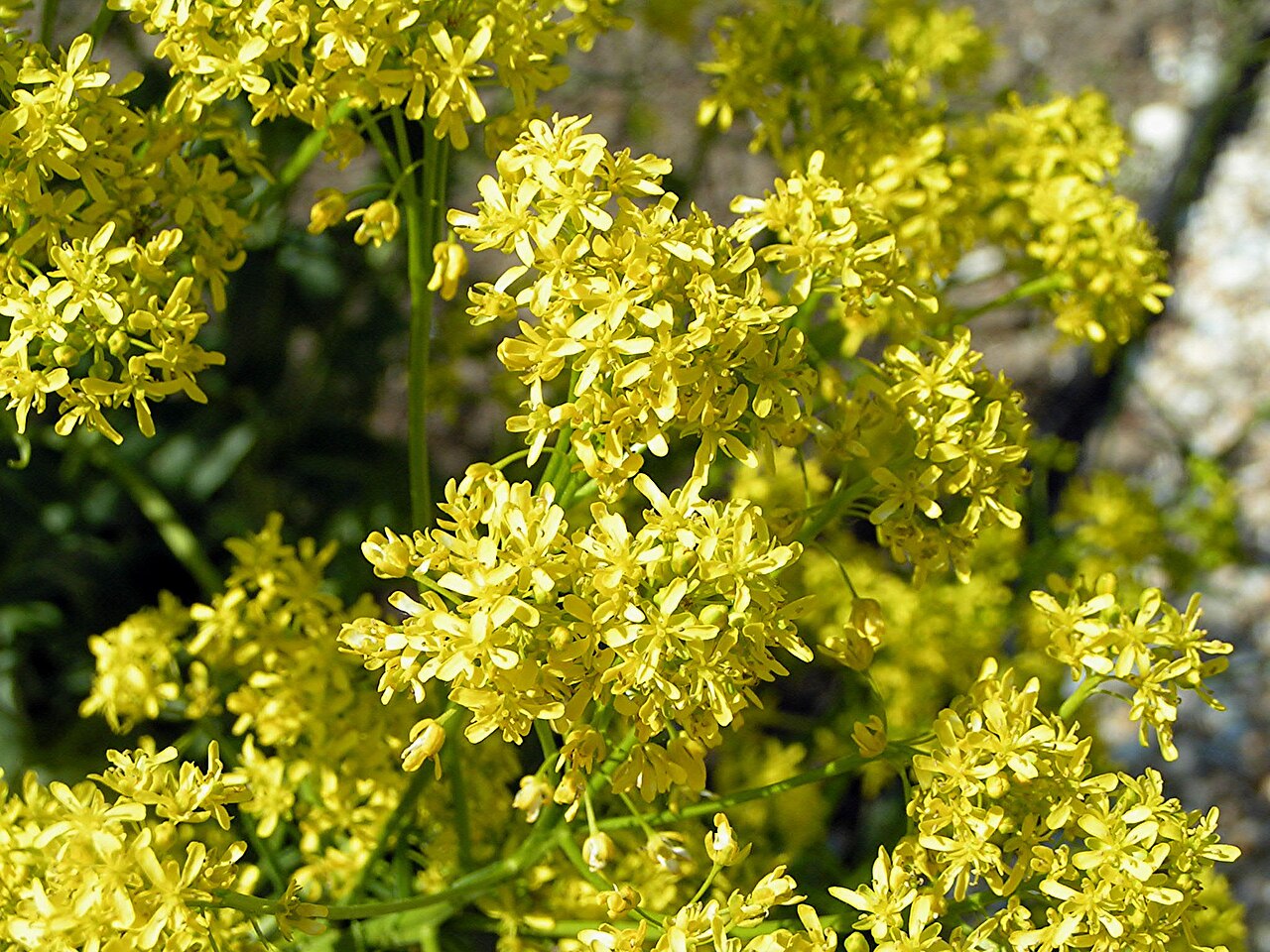

by Pethan, CC BY-SA 3.0
| Rubia tinctorum(madder) | Flowers: Small star-shaped yellow flowers with 5 petals, growing in clusters of 2-3. Size: 2-5mm. Appear in July & August. Nearly scentless Fruit: spherical berries that start green berries ripen to black. Size: 4-6mm. Appear by late summer/early autumn |
| Reseda luteola (weld) | Flowers: Slender spikes of tiny green-yellow flowers with 4 petals, growing in densely packed clusters of 2-3 flowers. Size: 4-5mm. Flowers in the summer. Subtle, sweet fragrance. Fruit: oval shaped, ripen to a brown colour. Size: . Appears from late summer/early autumn |
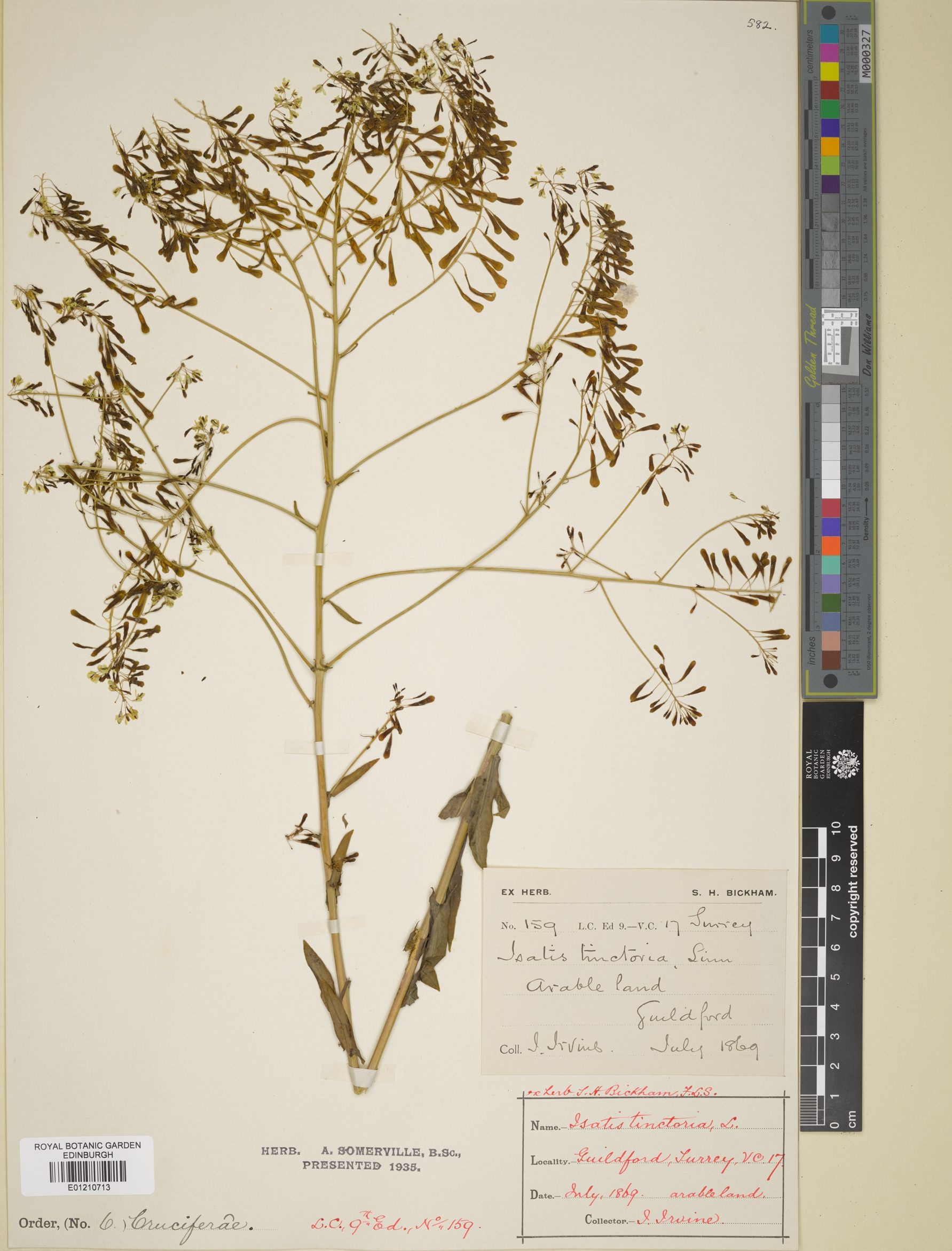
| Isatis tinctoria (woad) | Flowers: Tiny yellow flowers with 4 petals, growing in dense clusters. Size: 5-6mm. Flowers from May to July. Mild, sweet scent. Fruit: winged, flattened & dark purple/black. Droops in clusters. Appears in late summer to autumn |
Distribution
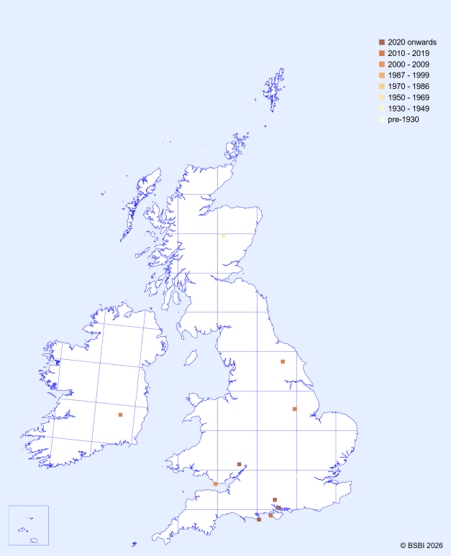
BSBI Database
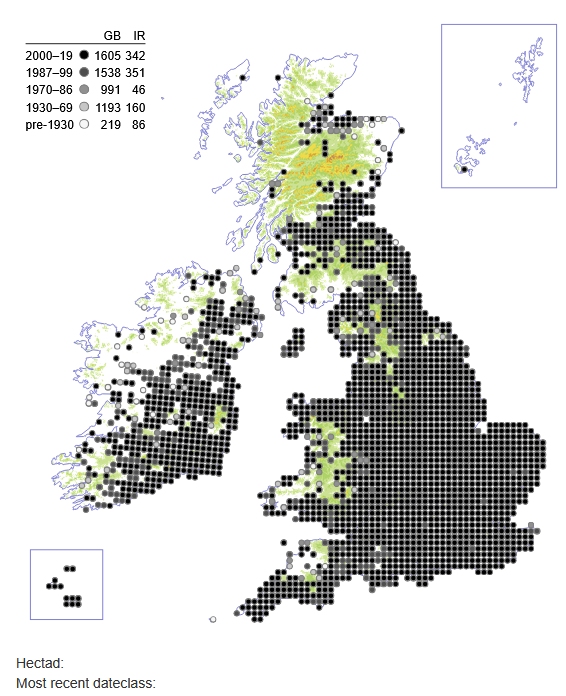
BSBI Atlas 2020
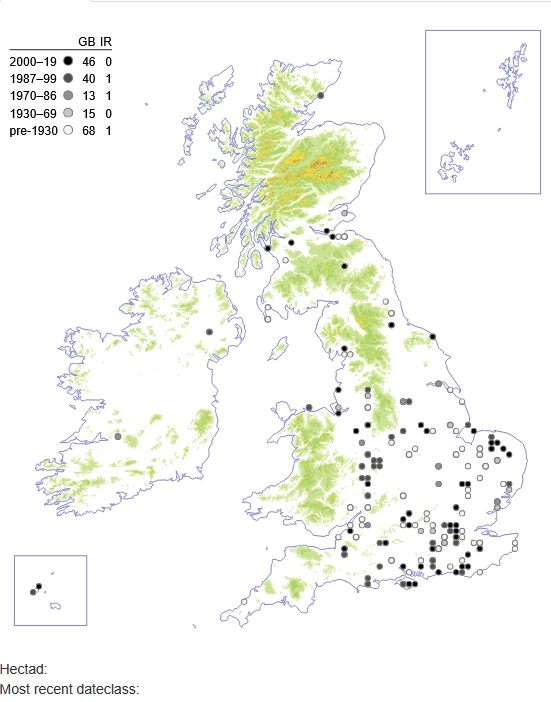
BSBI Atlas 2020
| Rubia tinctorum (madder) | Native to Asia and SE Europe UK/Ireland: R. tinctorum never naturalised and is rare to find in the wild. Typically found in places where it was previously cultivated or as a garden escape |
| Reseda luteola (weld) | Native to Asia and most of Europe including England. Widley naturalised outside this range. An archaeophyte in Britian and Ireland. UK/Ireland: Today, R. luteola is mostly found throughout most of England, and the eastern parts of Ireland. |
| Isatis tinctoria (woad) | Native to Asia, Europe, and North Africa. An archaeophyte in the UK and a neophyte in Ireland. UK/Ireland: Today, I. tinctoria can be found mostly in southern England. Since the 1930s, when the world’s last two woad mills in Lincolnshire closed, it has been increasing becoming uncommon in the UK & Ireland. Found only in areas disturbed by humans (i.e. ruderal areas) such as quarries, bare cliffs, arable fields, docks and waste places |
Royal Botanic Garden Edinburgh (RBGE) Herbarium Specimens
The digitisation of this species within our British Isle collections is now complete which allows us to see how our collections are distributed and compare this to the species range data recorded by the Botanical Society of the British Isles (BSBI).
| Rubia tinctorum (madder) | Reseda luteola (weld) | Isatis tinctoria (woad) |
| 0 | 60 | 21 |
*Please note, that the Herbarium contains more specimens from other parts of the world. These figures are not included.
Breakdown by Region
| Country | Specimen Count of Rubia tinctorum (madder) | Specimen Count of Reseda luteola (weld) | Specimen Count of Isatis tinctoria (woad) |
| Scotland | 0 | 40 | 5 |
| England | 0 | 15 | 16 |
| Wales | 0 | 1 | 0 |
| Channel Islands | 0 | 1 | 0 |
| Ireland (Republic of Ireland & Northern Ireland) | 0 | 3 | 0 |
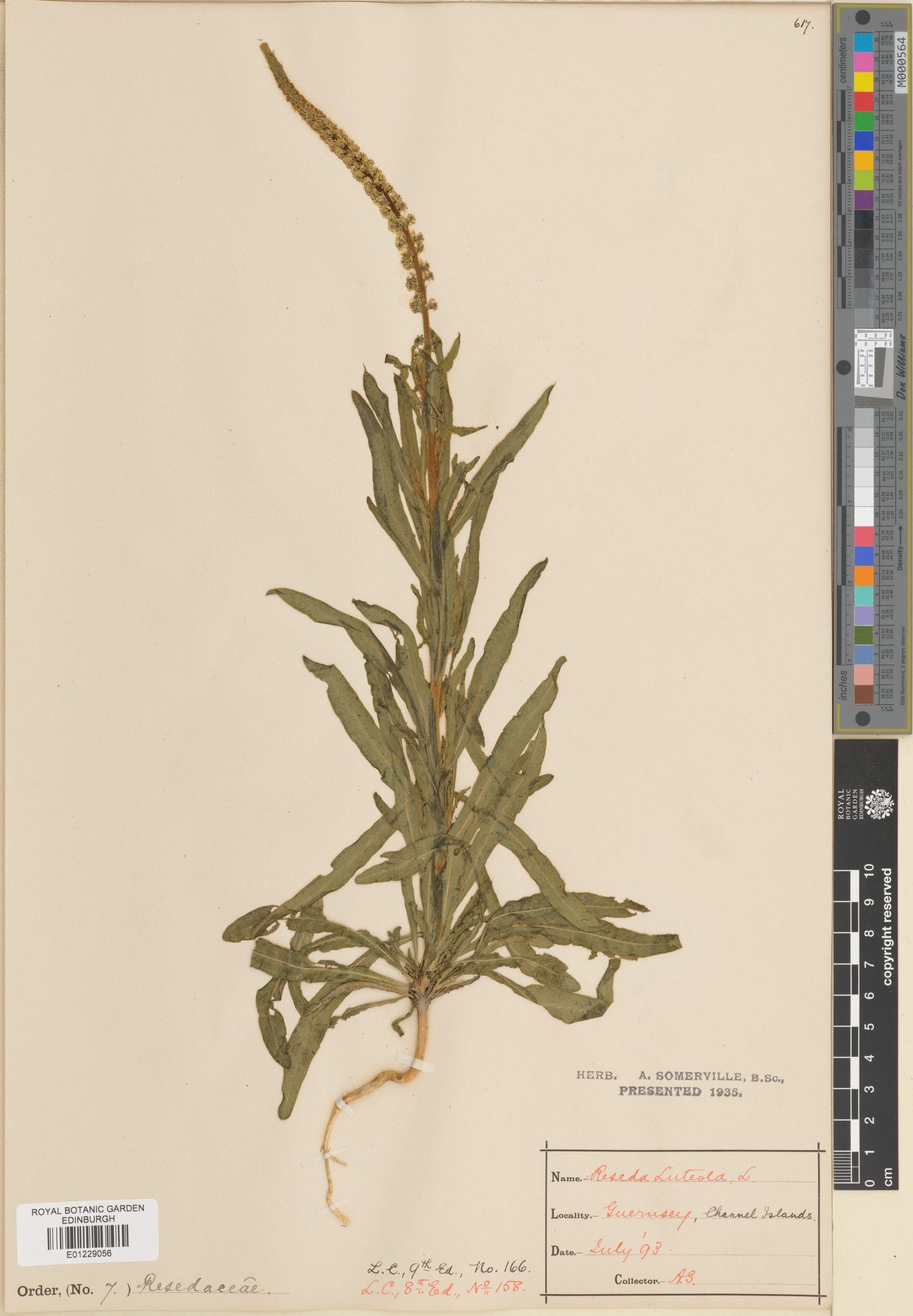
While the Bayeaux Tapestry depicts a story of kings and conquest, the materials that make it up tell their own story. The linen and plant dyes form the foundation for a work of art that has survived for nearly a thousand years. Besides the quality of the embroidery itself, the Bayeaux Tapestry demonstrates the impressive botanical skills and knowledge of the medieval people in Europe who cultivated and processed the plants. This makes it a wonderful example of the relationship between people and plants in medieval Europe.
[1] Analysis was done using thin-layer chromatography (TLC). Additionally, 17 colours of synthetic origin were also recorded during the study. Various shades of natural, undyed wools provided whites and light browns.
[2] Up until the 17th century most of the wool in Britain was sourced locally
Part II Sources:
Bayeux Museum (2019). Tapisserie de Bayeux broderie – Analyse de la tapisserie de Bayeux. [online] Bayeux Museum. Available at: https://www.bayeuxmuseum.com/en/the-bayeux-tapestry/discover-the-bayeux-tapestry/tapestry-or-embroidery/
Bédat, I. and Girault-Kurtzeman, B., ‘The Technical Study of the Bayeux Embroidery’ in The Bayeux Tapestry Embroidering the Facts of History, ed.
Bouet, B. Levy and F. Neveux (Caen 2004), 83-109 esp. 91-92; and B. Oger, ‘Results of the Scientific Tests (1982-1983) in ibid., 117-123, esp. 120-21
Cambridge University Botanic Garden (2024). Dyes from Plants – Cambridge University Botanic Garden. [online] Cambridge University Botanic Garden. Available at: https://www.botanic.cam.ac.uk/learning/trails/dyestrail/ [Accessed 17 Aug. 2026].
Chavanne, C. Les couleurs de la Tapisserie de Bayeux. Chimie analytique. Sorbonne Université, 2022. Français. ⟨NNT : 2022SORUS527⟩. ⟨tel-04021825⟩
Lewis, M., & Gameson, R. (2024). Palette, Pigments and Pictorial Narrative in 11th-Century England: The Use of Colour in the Bayeux Tapestry and the Old English Hexateuch. Journal of the British Archaeological Association, 177(1), 22–48. https://doi.org/10.1080/00681288.2024.2328966
Lewis, M., & Gameson, R. (online). Palette, Pigments and Pictorial Narrative in 11th-Century England: The Use of Colour in the Bayeux Tapestry and the Old English Hexateuch. Journal of the British Archaeological Association, 1-27. https://doi.org/10.1080/00681288.2024.2328966
Rynne, Colin, ‘The Linen and Wool Industries in Britain and Ireland’, in Eleanor Conlin Casella, Michael Nevell, and Hanna Steyne (eds), The Oxford Handbook of Industrial Archaeology, Oxford Handbooks (2022; online edn, Oxford Academic, 20 Apr. 2022), https://doi.org/10.1093/oxfordhb/9780199693962.013.6, accessed 23 May 2026.
Dictionaries
- Scots: Dictionaries of the Scots Language
- Gaelic: LearnGaelic & Gaelic names of plants (Scottish and Irish) – Biodiversity Heritage Library
- Anglo-Saxon: Bosworth-Toller Anglo-Saxon Dictionary online
- Manx: The Manx Dictionary by Rev Dr John Kelly, 1866 (The Manx Society)
- Welsh: Geiriadur Bangor (Bangor Welsh-English Dictionary), Prifysgol Bangor University & NBN Atlas
- Anglo-Norman: Anglo-Norman Dictionary (https://www.aber.ac.uk/en/modernlangs/research/current-research/anglo-norman-dictionary/)
- Irish Gaelige: téarma.ie | An Bunachar Náisiúnta Téarmaíochta don Ghaeilge · The National Terminology Database for Irish & New English-Irish Dictionary from Foras na Gaeilge
Cornish: Gerlyver Kernewek
Leave a Reply