
The following blog was written by Chris Knowles a digitiser in the Herbarium.
Since 2021 we have increased our digitisation capacity reaching 1 million specimens imaged in August 2024. Each digitiser is assigned a family of plants to work through. This series of blogs will spotlight the families that have been completed by a member of the team
Products derived from some of the plants within the Myristicaceae (Nutmeg family) and Piperaceae (Pepper family) have been well known to people around the world for thousands of years.
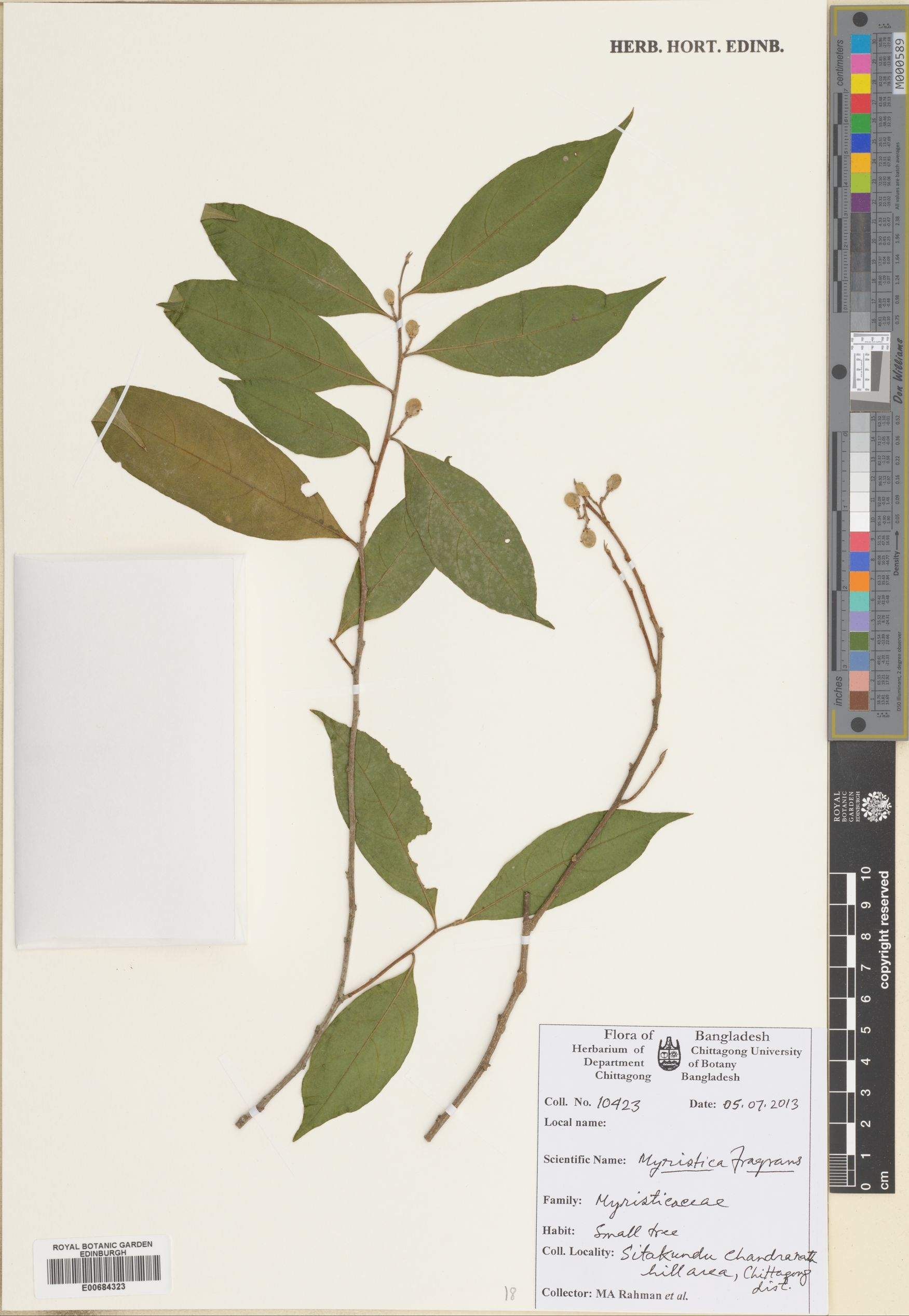
The fruits of the tropical tree Myristica fragrans are the source of both nutmeg and mace. The seeds of this tree are enclosed in a brightly coloured, soft, fleshy coating called an aril, from which mace is produced. As the seed ripens, this fleshy layer splits open to reveal the single, large seed that we know as nutmeg.
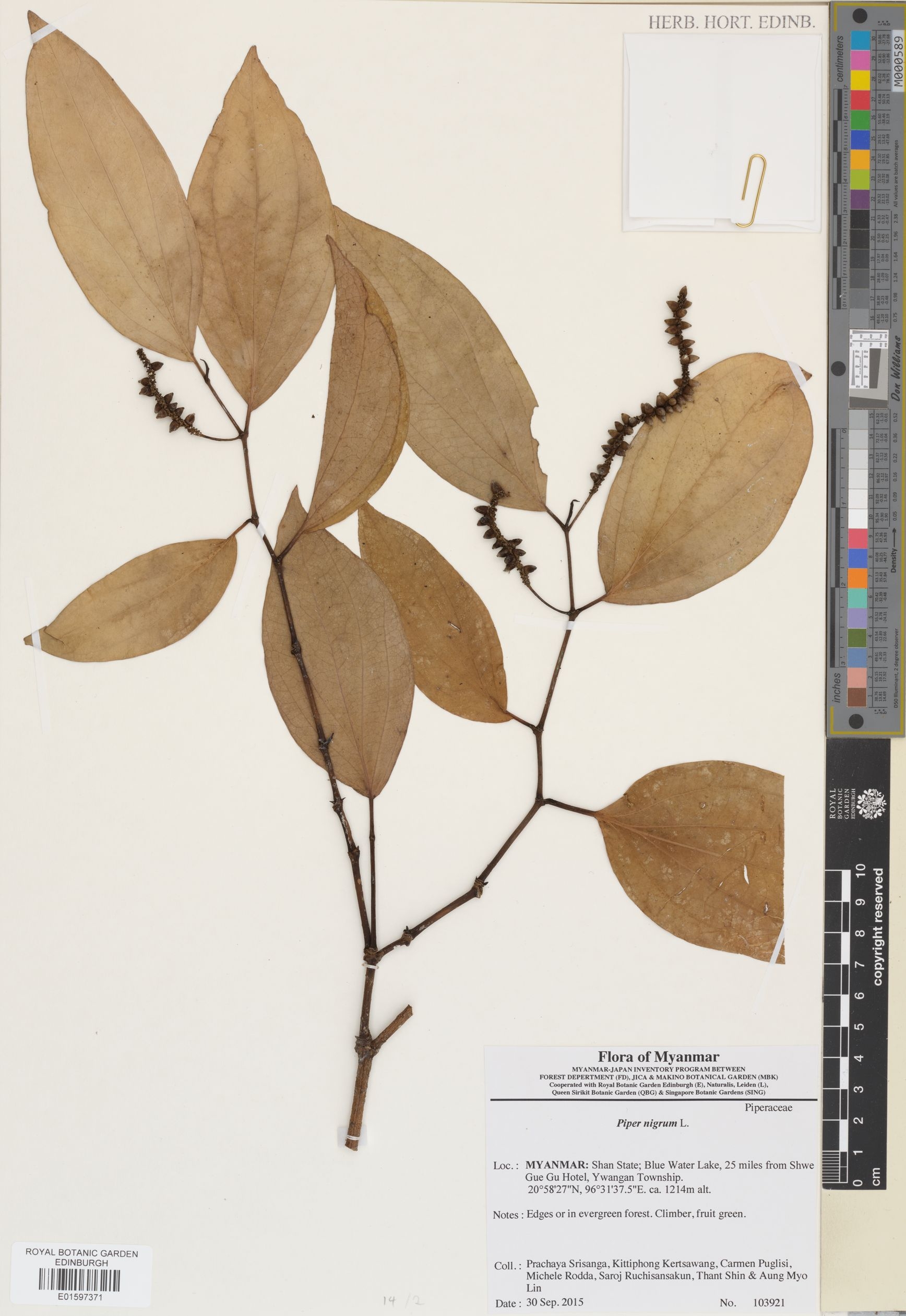
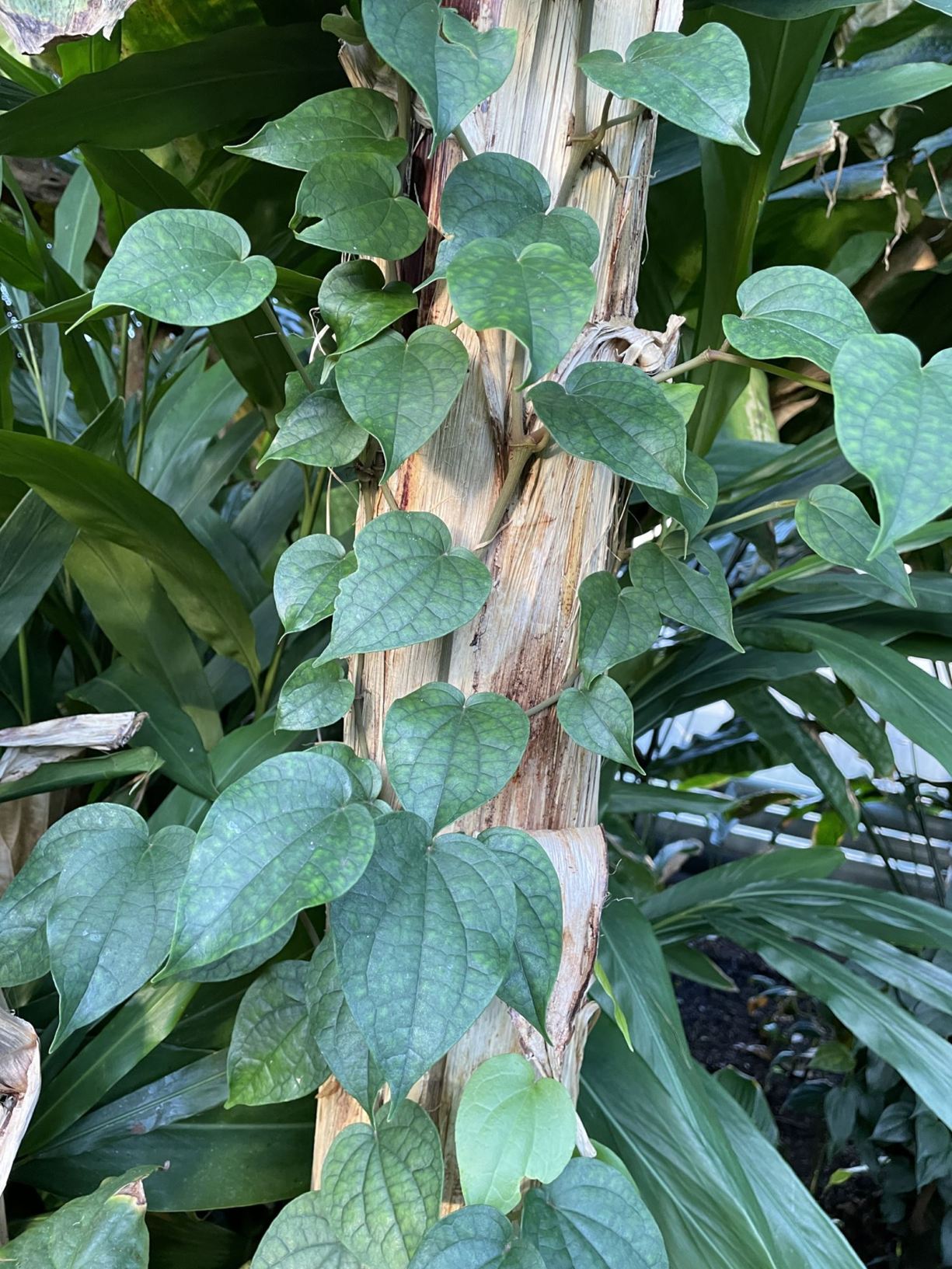
The pepper family is very diverse, and includes small trees, shrubs and woody climbing plants. The most well known species though, is Piper nigrum, from which we harvest both black and white pepper. Black pepper is produced by drying the whole of the small fruits that are harvested before full maturity; while white pepper is prepared from ripe fruits, but only after the strongly flavoured outer layer has been removed.
The international popularity of these spices have meant that the plants that bear them have been cultivated and spread from their original native ranges to many other tropical regions of the world, and have played major roles in the creation of trade routes, vast wealth and associated colonialism.
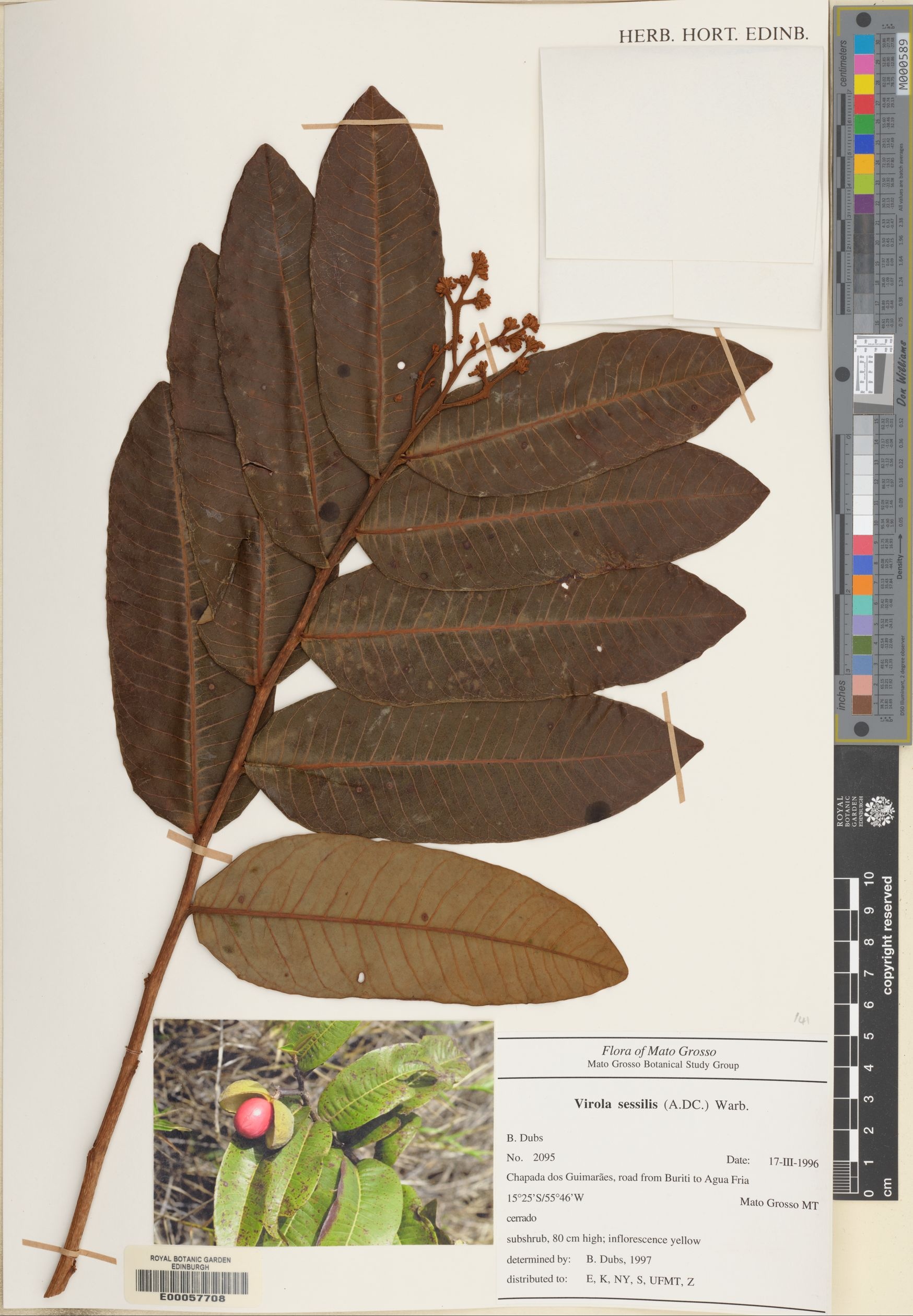
Other plants from these families that have long histories of use by humans are some species of South American Virola tree, the resin of which is used to create a snuff that is used in rituals and ceremonies due to its psychoactive properties; and Piper methysticum, a shrub cultivated on South Pacific Islands for its roots which are used to make the tradition drink kavakava.
Both families contain a great diversity of other plants, which are distributed across both hemispheres in the tropical zone.
Our Collections
Myristicaceae
The total number of specimens in Myristicaceae is 1,535 including 64 type specimens. Before the start of the mass digitisation project only around 450 were digitised. Specimens can be viewed here.
Top 5 Genera
| No. of Specimens | Genus |
| 500 | Knema |
| 476 | Myristica |
| 293 | Horsfieldia |
| 114 | Virola |
| 102 | Gymnacranthera |
Top 5 Filing Regions
| No. of Specimens | Herbarium Filing Region |
| 473 | Malay Islands |
| 320 | New Guinea |
| 265 | Malay Peninsula |
| 85 | East Tropical South America |
| 76 | Indo-China |
Piperaceae
Total number of specimens in Piperaceae is 2,957 including 166 type specimens. Before the start of the mass digitisation project only around 800 were digitised. Specimens can be viewed here.
Top 5 Genera
| No. of Specimens | Genus |
| 2,058 | Piper |
| 914 | Peperomia |
| 9 | Macropiper |
| 4 | Zippelia |
| 2 | Manekia |
Top 5 Filing Regions
| No. of Specimens | Herbarium Filing Region |
| 448 | West Tropical South America |
| 336 | India, Pakistan & Bangladesh |
| 237 | Inner China, Korea & Taiwan |
| 229 | Central America |
| 223 | East Tropical South America |
Leave a Reply