
At RBGE, growing interest in the plant humanities has prompted renewed attention to the wider histories associated with historical collections. Working with collections often makes me wonder how much scientific labour, particularly that of women, remains hidden within our herbaria and museums, and I have become increasingly interested in the process of recovering women naturalists from the historical record. Every herbarium specimen carries at least two histories: the history of the organism, and the history of the person who collected it. For many Victorian women, that second history has been obscured or forgotten.
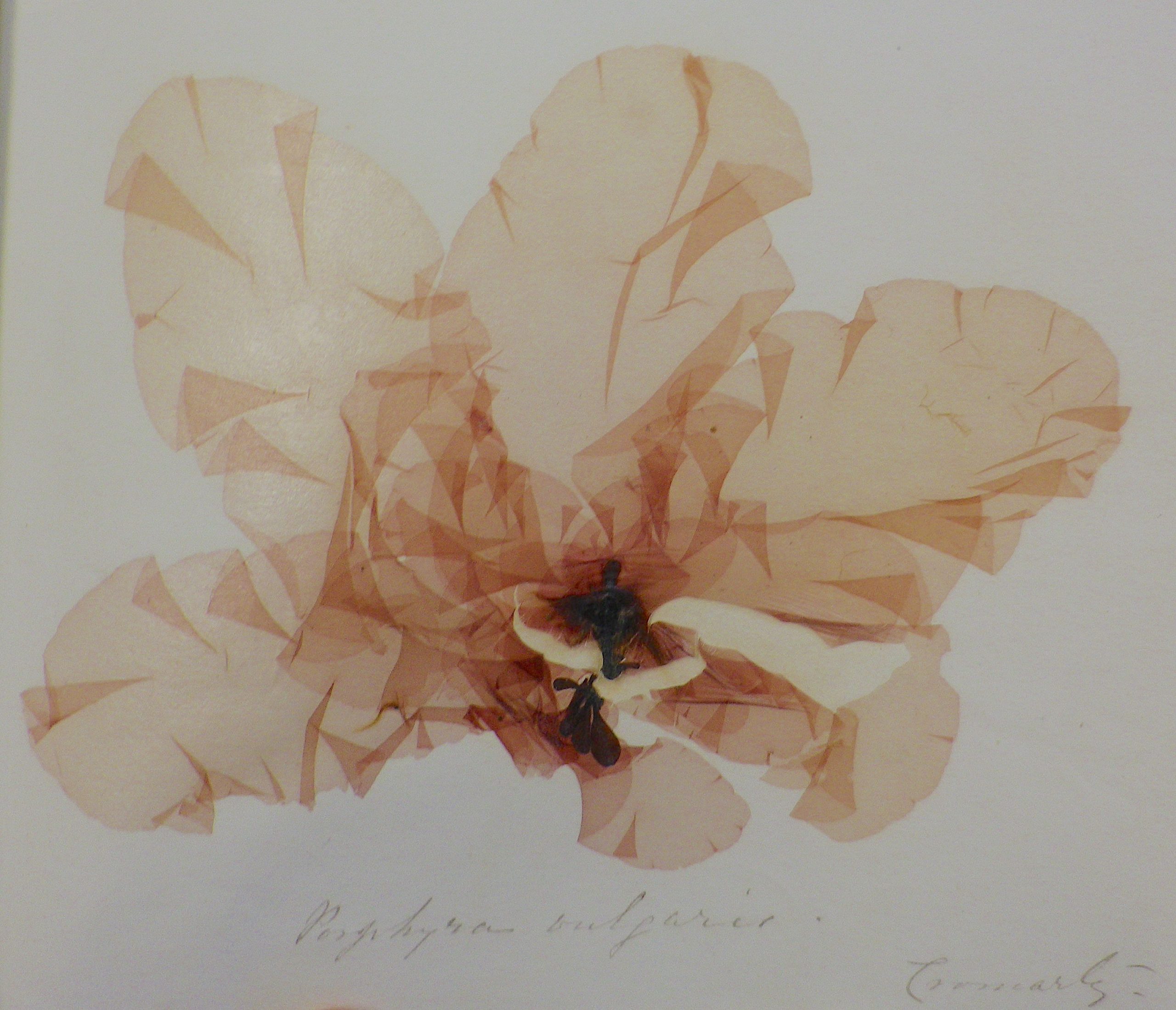
It was in this context that, while working with historical seaweed collections at RBGE and St Andrews as part of research into nineteenth-century Scottish women naturalists, I came across the name Catherine Allardyce attached to specimens collected in Cromarty during the 1850s. Beyond those specimen annotations, however, very little seemed to be known about her.
I was keen to find out more about her, especially since relatively few Scottish women collectors from that era are widely recognised today, whereas several Victorian women seaweed collectors in England have attracted scholarly attention. Who was Catherine Allardyce, and what place did she occupy within the natural history community of her time?
Census records, parish registers and newspaper archives revealed that Catherine Allardyce (1813-1895) was born in Forgue but spent most of her life in Cromarty. Among the more revealing discoveries that I made were references linking her to well-known naturalists of nineteenth-century Britain and Ireland. Apart from collecting seaweeds, Catherine Allardyce was also interested in geology and various sources state that she was part of Hugh Miller’s social and scientific circle. Correspondence and notes associated with seaweed specimens show that she was in contact with the Irish phycologist William Henry Harvey, while references both in publications and unpublished archival sources connect her with the naturalist David Landsborough and the bryologist Edward Morell Holmes.
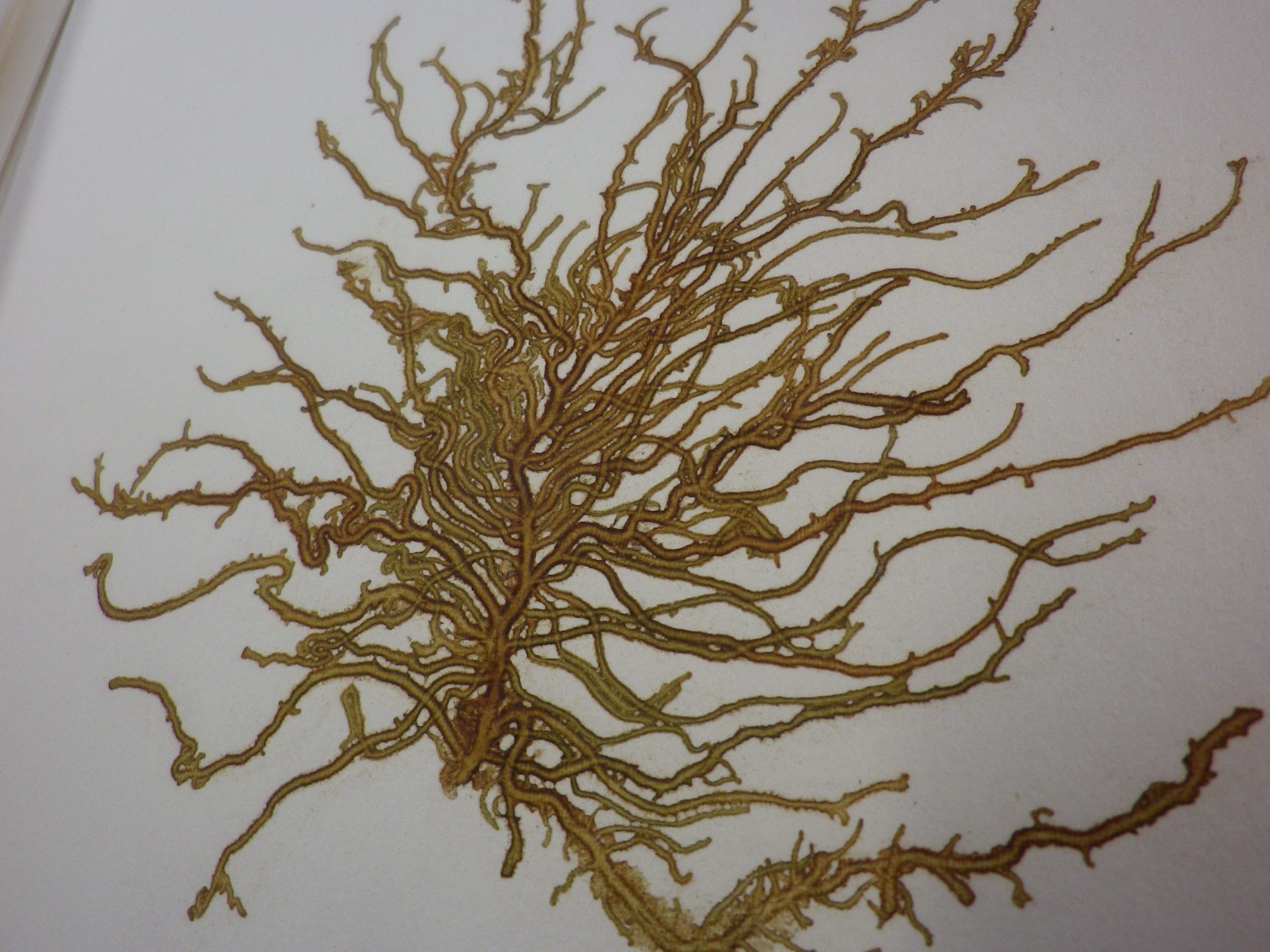
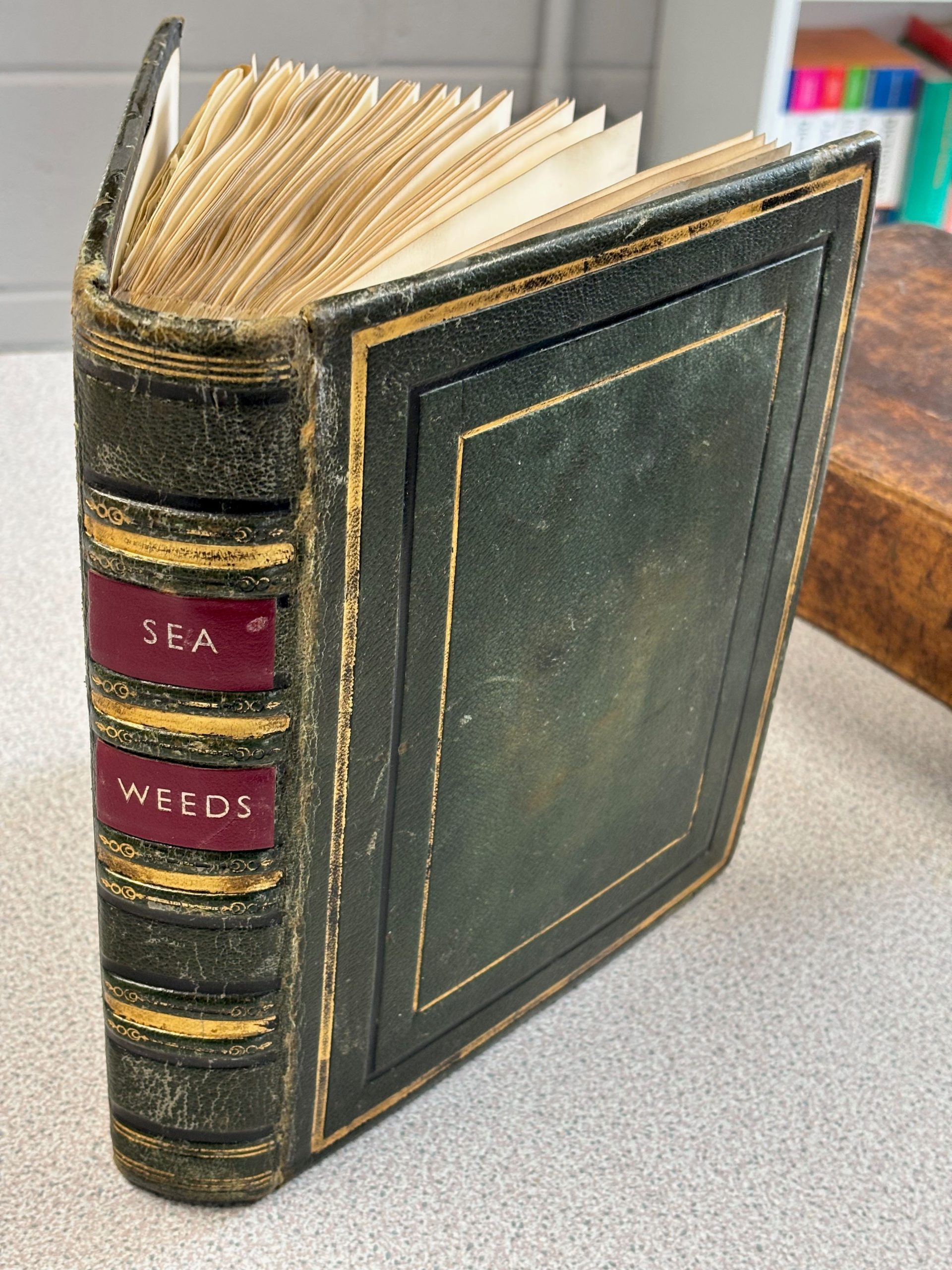
One particularly useful and exciting source I came across was a seaweed album preserved at Pluscarden Abbey, which contains 42 specimens collected from the Cromarty Firth in the 1850s. Catherine Allardyce’s name was linked to this album as the collector of these specimens, though her name doesn’t feature anywhere in the album itself. The album appears to have been rebound during its time at the abbey; unfortunately, we do not yet know how it came to be there.
Historical herbarium specimens are not straightforward historical documents, and the presence of a person’s name on a sheet does not necessarily mean they collected the specimen. Collectors frequently exchanged material with correspondents, who might later annotate or identify specimens. In many cases, collectors had no reason to add their own names to specimens intended for personal use. One of the dangers we sometimes face in this field is the interpretation of handwriting. Anonymous notations on specimens can lead us to make assumptions, and our enthusiasm during these journeys of discovery can sometimes encourage wishful thinking. By analysing and comparing specimen annotations with signed archival correspondence, I was able to attribute the handwriting on the specimens in the Pluscarden album to Catherine Allardyce with confidence. I was also able to confirm her handwriting on specimens held in the herbaria of RBGE, St Andrews, and the NHM London.
Catherine Allardyce survives only in fragments: specimens, scattered references, a seaweed album, archival traces, and a small number of letters. While much remains unknown about her, bringing these sources together is helping to place those fragments within a broader historical context. As this research continues, further evidence may help refine our understanding of Catherine Allardyce’s life and activities.
Curators at herbaria, museums, and archives are uniquely placed to connect specimens, correspondence, archives, and biographical information. By documenting those connections and recording uncertainty where it exists, we can make overlooked individuals more visible to future researchers. Catherine Allardyce’s case highlights the value of plant humanities in revealing the people and histories behind botanical collections.
Leave a Reply