
Is it possible for a lawn space to serve recreational desires and improve the ecosystem at the same time–be a beautiful walkable space for humans, provide for wildlife, and help combat flooding and drought? The Botanics is finding out.
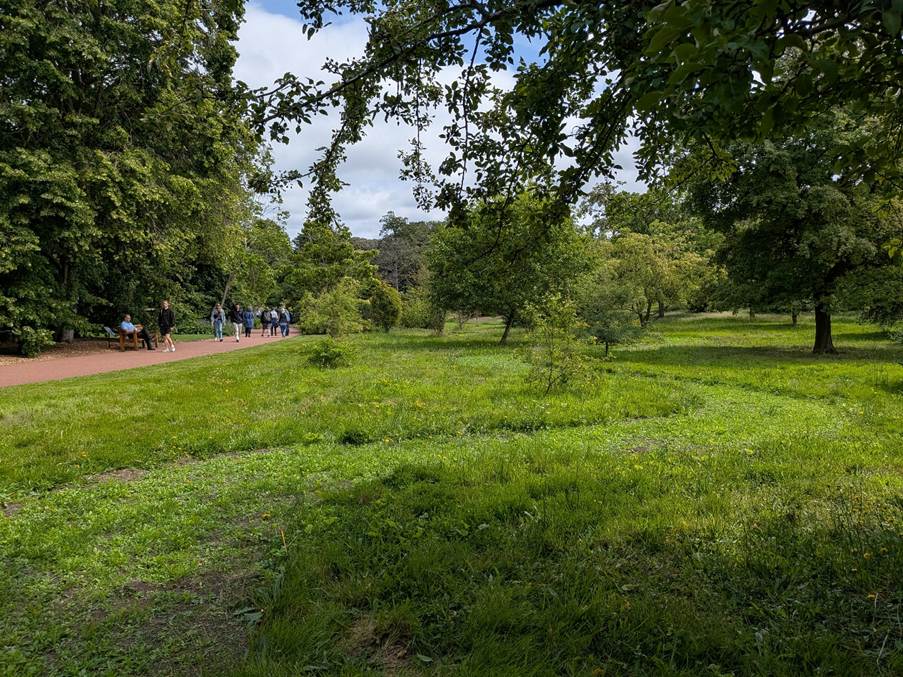
First trialed as patches in our Gardens ten years ago as part of Edinburgh Living Landscapes and then in the larger Botanics living lawn on our wild orchard, we’re exploring better walking greens that let flowers grow.
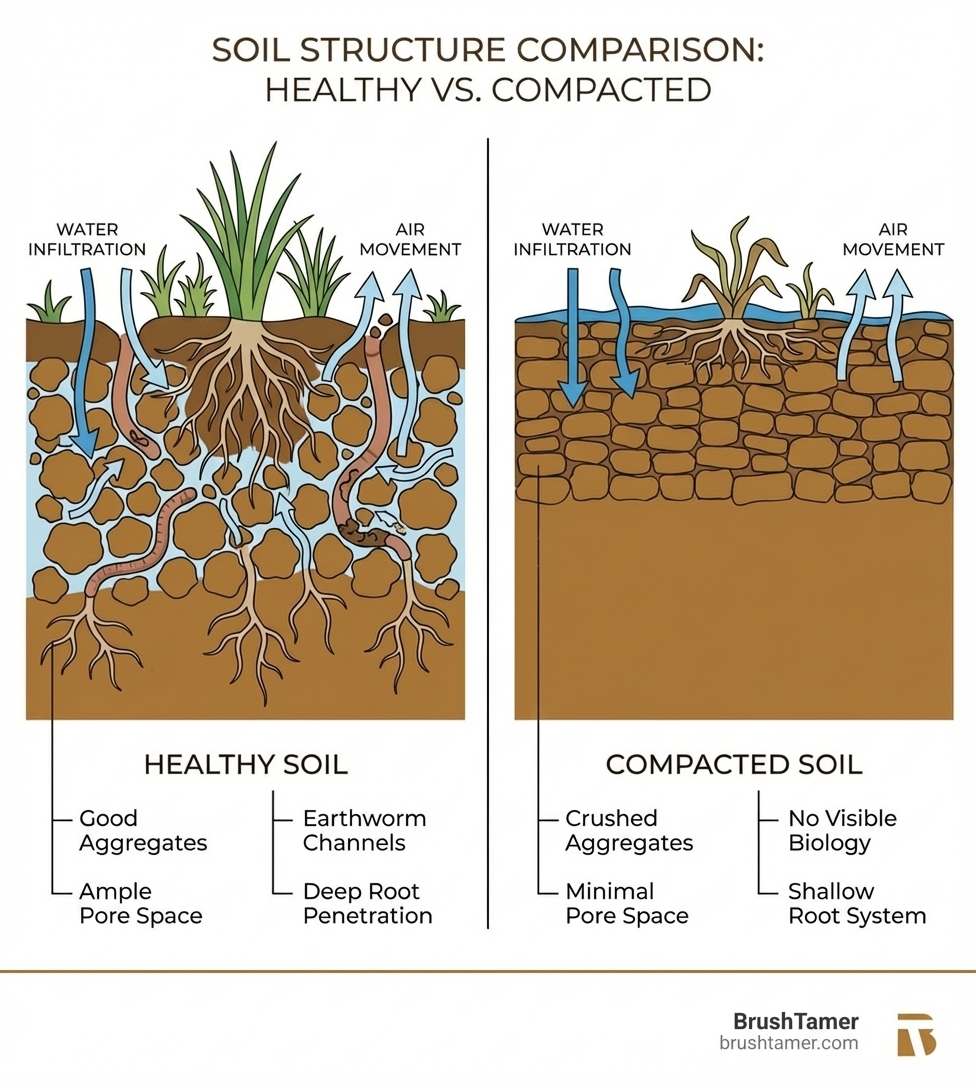
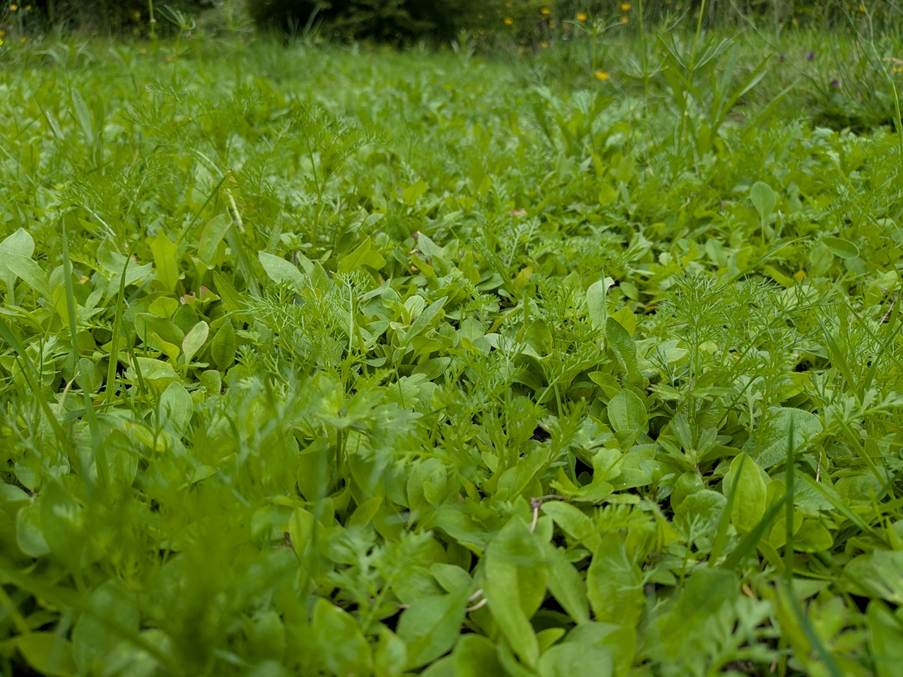
Like a traditional lawn, living lawns are low-growing, walkable, usable green spaces, but they have more than a monoculture of one species of grass. The many plant species—most of which are Scottish natives—provide resources for wildlife, while their root systems create structure in the soil that improves infiltration. Structure below ground means that when a storm event comes, water can soak in to the ground and provide for the plants instead of forming puddles on the surface. During dry spells, the roots of the plants access the water held within the soil and keep the lawn lush and green for longer.
Tracking change and creating a river
Here in Scotland storms are becoming more intense, our winters are becoming wetter, and our summers drier. How is our living lawn faring with those conditions? At the Botanics, horticulturists and scientists work closely together to put research into practice and demonstrate how stunning landscapes can also help protect the human world from the impacts of climate changes. In 2025, an MSc study found higher biodiversity and better water infiltration on the living lawn compared to traditional lawn, and identified opportunities to get even better.
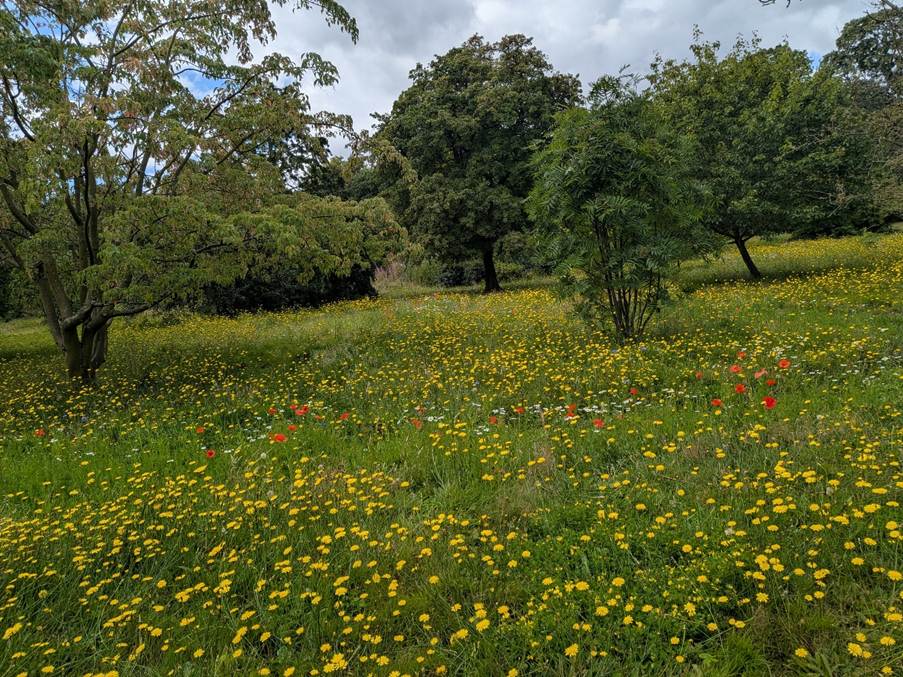
In 2026 we made two major changes: adjusting our mowing regime and creating our River of Flowers. We now maintain the lawn at a higher height (14cm) throughout the year and stop mowing completely during July and August, creating a delightful sea of colour for visitors while also giving pollinators a smorgasbord during their peak season. The trees in the orchard are also seeing the benefits of management changes, where instead of empty rings we are allowing plant life to grow under the canopy and improve health for the trees.
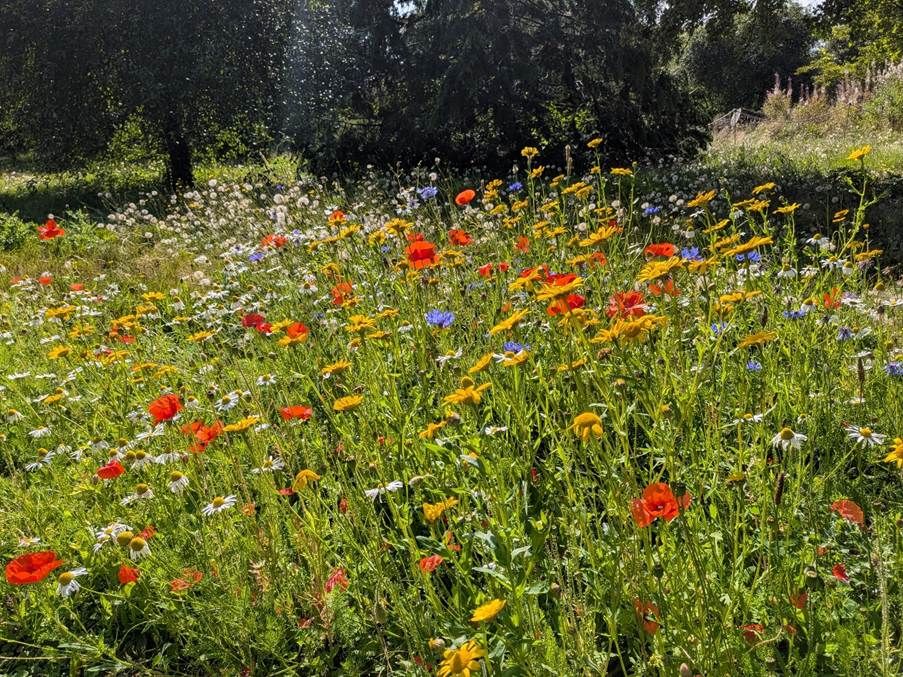
Weaving through the lawn in a meandering oxbow like a natural burn is our new river of flowers. This specially selected mix of wildflower species will remain uncut and bloom continuously throughout the year, giving visitors a living art installation that is also supercharging biodiversity resources and acting as a seed bank for the surrounding lawn.
What plants are we using? Is it working?
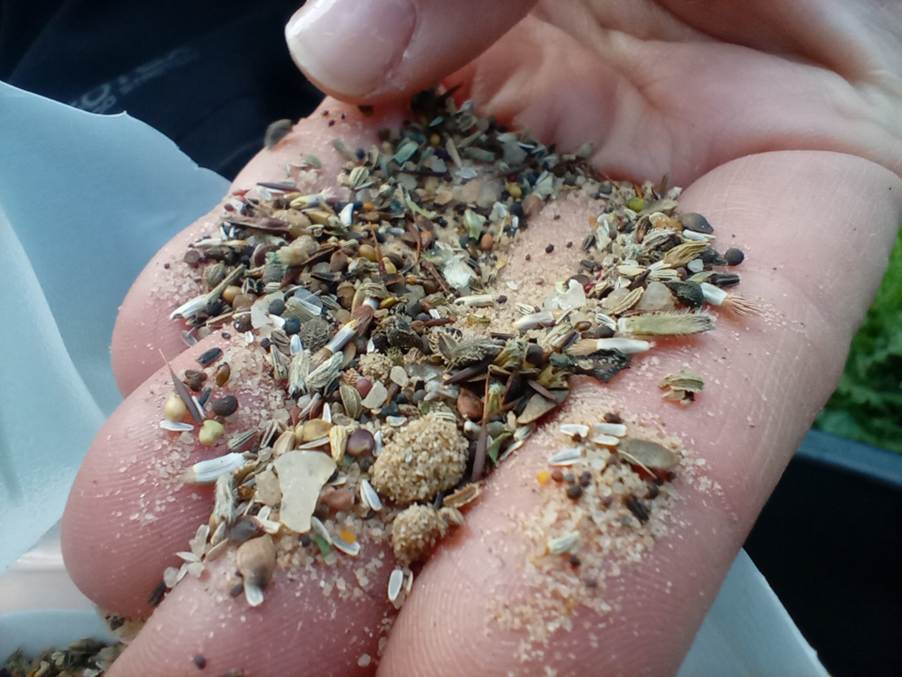
Which species to use is a crucial question. To create the river, RBGE scientists Caitlyn Johnstone and Nick Balfour worked with Scotia Seeds founder Giles Laverick to craft a combination of more than 30 species: plants that would be attractive in combination, provide for insects throughout their life stages, and be able to handle shifting water conditions throughout the season. Perennials that adapt well to mowing pressure and soil variation—like Achillea millefolium (yarrow, which has charming white flowers at varying heights and forms a softly walkable mat of ferny foliage with cutting) and Dianthus deltoides (maiden pink, a Scottish native that can form a groundcover and handle the dry patches)—were easy additions to fill the river and seed into the lawn over time. Others like Succisa pratensis (Devils-bit scabious) that are powerhouses for supporting insects and providing pollen and nectar resources joined the mix, rounded out by the likes of Knautia arvensis (field scabious, which has a deep taproot for improving infiltration) that aid in climate resilience. The dozens of perennial species and the varying soil conditions across the lawn will shift the river colour over the coming years, while a handful of annuals provide a pop of colour for year one.
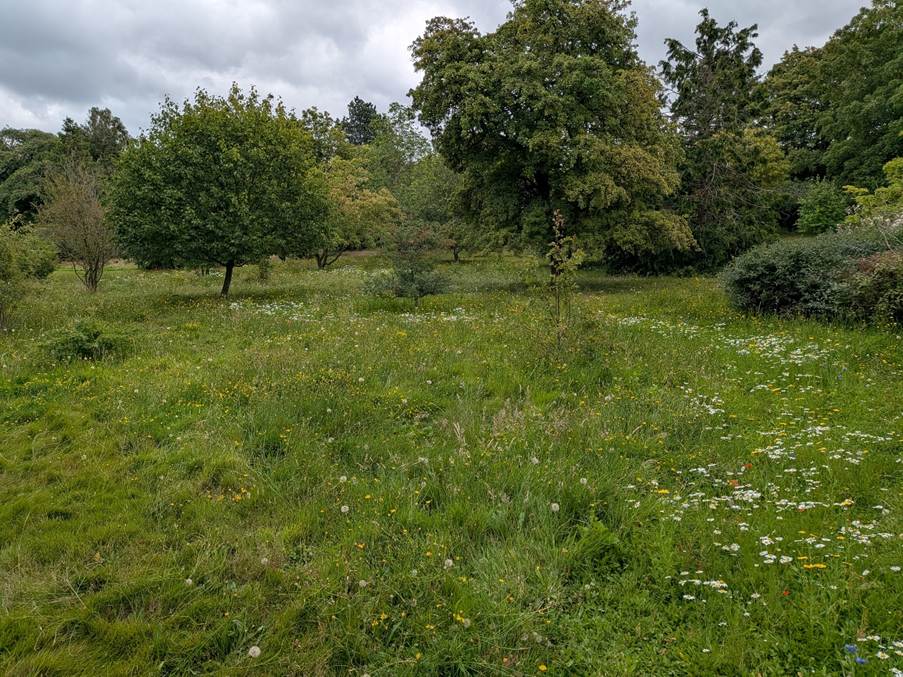
The living lawn and its newly established river will continue to be monitored over time. The combination of the new river and the mowing regime modifications has already shown hopeful changes in our plant and pollinator surveys in the city of Edinburgh: though only a few months of increased flower cover had elapsed from the start of the management changes this spring, pollinator ecologist Nick Balfour has already seen a tenfold increase in insect life in the living lawn transects from 2025 to 2026.
Surrounding the living lawn, we have left some grass areas long and mown wide, inviting paths large enough for whole families to walk abreast. The long grass areas sway with our frequent Scottish breezes, and may seed in with a few floriferous volunteers over time. The Botanics will monitor this as well – as part of our educational offerings in 2026, Expedition Botanics students learning the skill of biodiversity surveying did some hands-on species documenting.
How we cut our grasses is changing what they mean and how people use a space. Instead of just something to move across, the lawn becomes a place in itself to visit, slow down, spend time, and learn about the nature that lives among us.
Come visit the wild orchard, the living lawn, and the river of flowers next time you’re in Edinburgh. Not able to visit in person? Take a virtual tour of the living lawn and our other Edinburgh Nature Based Solutions features through interactive Garden Explorer.
Leave a Reply