This article was written by Amanda G. Shalit, graduate of the 2025/2026 RBGE Masters programme in Biodiversity and Taxonomy of Plants.
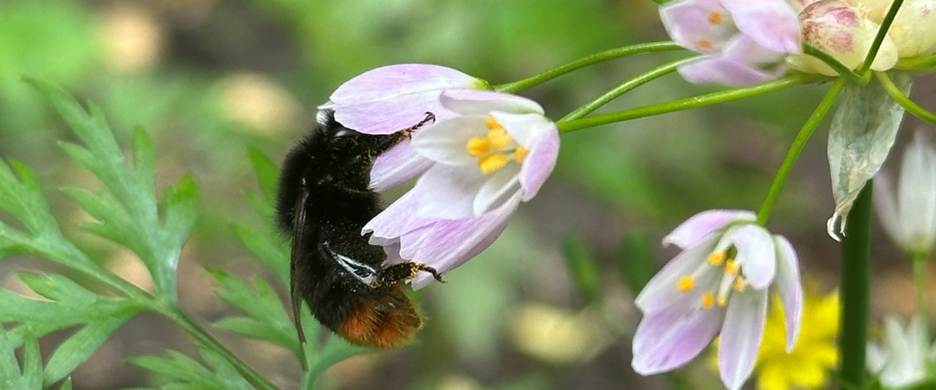
This past summer, I spent countless hours in parks and other green spaces around Edinburgh observing bees and identifying flowers. As a student in the Biodiversity & Taxonomy of Plants MSc programme at the Royal Botanic Garden Edinburgh (RBGE) and the University of Edinburgh, I chose to focus my thesis on urban plant and bee communities, a venture that was supported and supervised by RBGE’s Nature Based Solutions team.
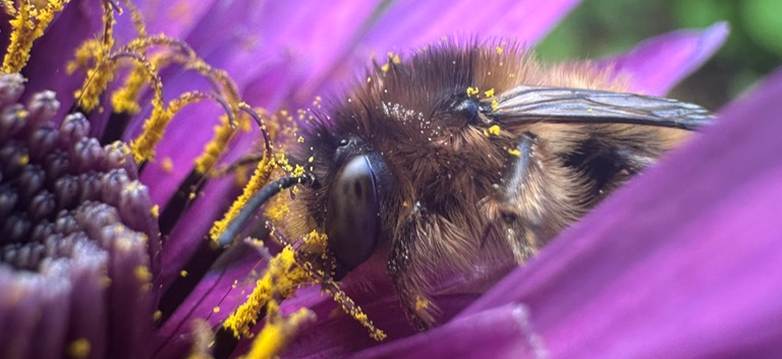
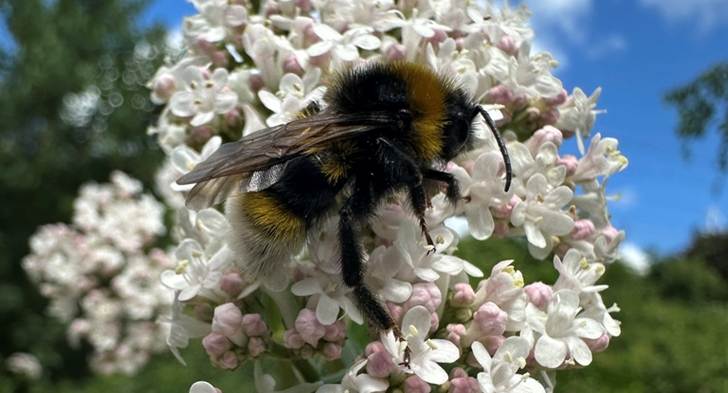
While most people are familiar with the abundant honey bees, the majority of bee diversity is made of native wild bees. The United Kingdom hosts more than 250 species of wild bees, of which around 115 are found in Scotland. Most of these are small, solitary species that do not live in hives or make honey but are essential pollinators. However, over the last decades, changing climates, the expansion of agriculture, and land use changes have put these populations at risk.
Urban green spaces refer to areas in cities that are intentionally designed to include vegetation or natural elements. Areas such as public parks, cemeteries, and botanic gardens all fall into this category. These spaces serve a variety of purposes, from offering area for leisure and recreation, to providing human health benefits, to keeping our city cooler through increasingly intensive summer heatwaves. Additionally, there is growing evidence that urban green spaces can host a surprising amount of biodiversity, providing valuable habitat for urban plants and wildlife including bees.
However, these open spaces vary widely based on how humans use them. Here in Edinburgh, Victoria Park, with its large expanses of playing fields and courts, looks very different from Ravelston Woods, which in turn looks nothing like Rosebank Cemetery. These differences are rooted in site management, which includes things like which areas are mowed and how frequently, which flowers are planted or removed, and if fallen leaves and twigs are cleared or left undisturbed. Learning how the plant community and its management affect bee populations in these widely used green spaces can help us better support larger, healthier, more diverse populations of bees in Edinburgh.
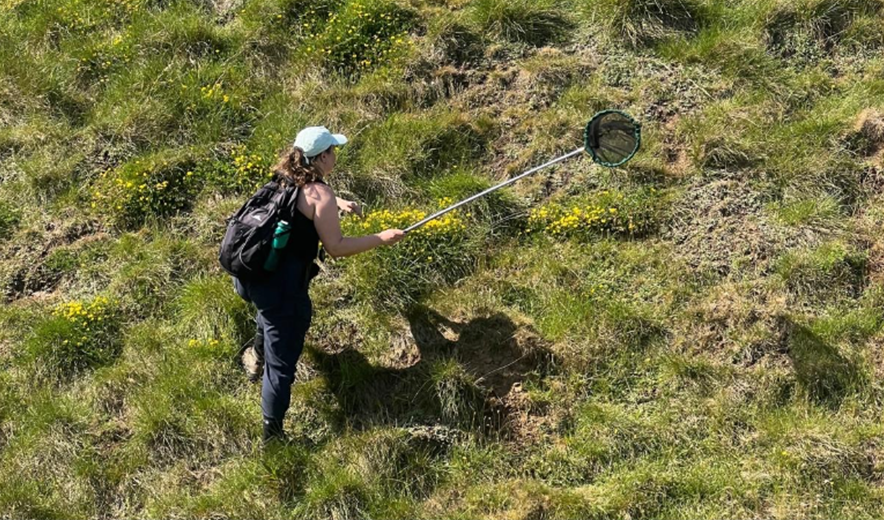
I spent two months collecting data in Edinburgh’s green spaces, visiting twelve sites across five urban use categories (parks, private gardens, allotment gardens, cemeteries, and nature reserves). At each site, I conducted a variety of surveys to quantify the floral community, ground cover, and bee community. I collected information about whether the flowers blooming are native to Great Britain and which flowers the bees were specifically found visiting. I observed around 300 plant species in bloom and nearly 4,000 individual bees.
Allotment gardens, which are highly sought after in Edinburgh, provide space for plot holders to grow food or flowers and build community but are also important sites for urban bees. Despite being some of the smallest sites I visited, allotments had the highest bee numbers and diversity, indicating that even small areas can have large impacts for bee conservation. This is great for urban conservation, where space is at a premium. The allotments I visited hosted a few species of bees that were not found at any other sites, indicating that these areas in particular can act as havens for bee diversity. However, more research is needed to more finely understand what the driving factors for bee diversity are in green spaces. Sites of all categories varied widely, indicating that what makes a space rich or poor for bees is dependent on how we choose to manage these spaces. Cemeteries are an example of this; previous research has found that cemeteries can be incredibly important for pollinators, but those that I visited had few bees with little diversity.
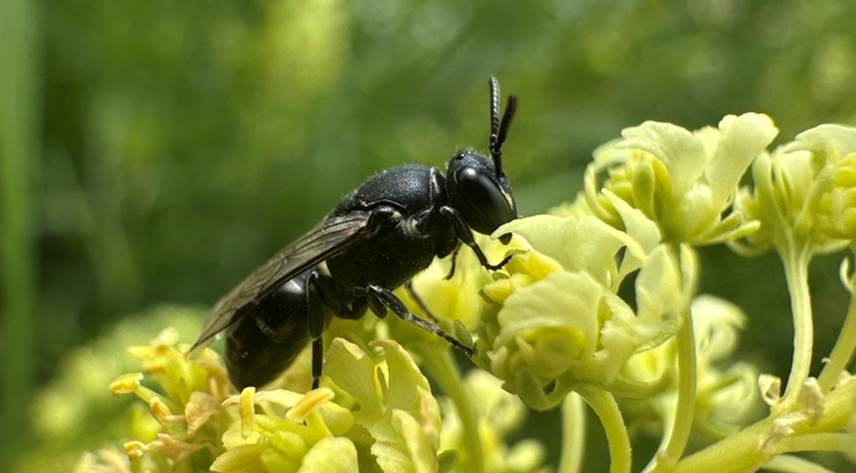
I was surprised not only by the incredible bee diversity at some sites, but by how many passersby were curious about what I was doing! I was happy to field questions from everyone from gardeners looking to better support bees in their own plots to folks who had just seen National Geographic’s new docuseries, to everyone in between. It’s encouraging to see people interested in Edinburgh’s bees. My dissertation only scratched the surface of urban bee conservation. I am certainly not the first to study Edinburgh’s bees; RBGE’s own Dr. Nick Balfour with Pollinating London Together, and Dr. Graham Stone at the University of Edinburgh are two scientists involved in urban bee conservation. Other bee conservation and long-term monitoring schemes exist across the UK as well, such as those through the Bumblebee Conservation Trust and Royal Entomological Society.
Urban conservation is something of a balancing act; how can we simultaneously account for what a bee needs while still catering to human uses and aesthetics? For example, fallen branches can be important nesting areas for bees but in urban areas, sick or dead branches are often cut down and removed to avoid potential injuries or property damage. Each of these needs is important and balancing them is tricky, but research like this is a key step in working out exactly what those needs are, so that we can enact positive changes to make Edinburgh’s green spaces a welcoming home for pollinators. As cities grow and urban populations boom, it is especially important to focus on species conservation not only in natural places or designated wildlife areas, but in our cities and our own backyards.