
This article was written by Isla Kendall, PhD student in the Nature-based Solutions team at RBGE.
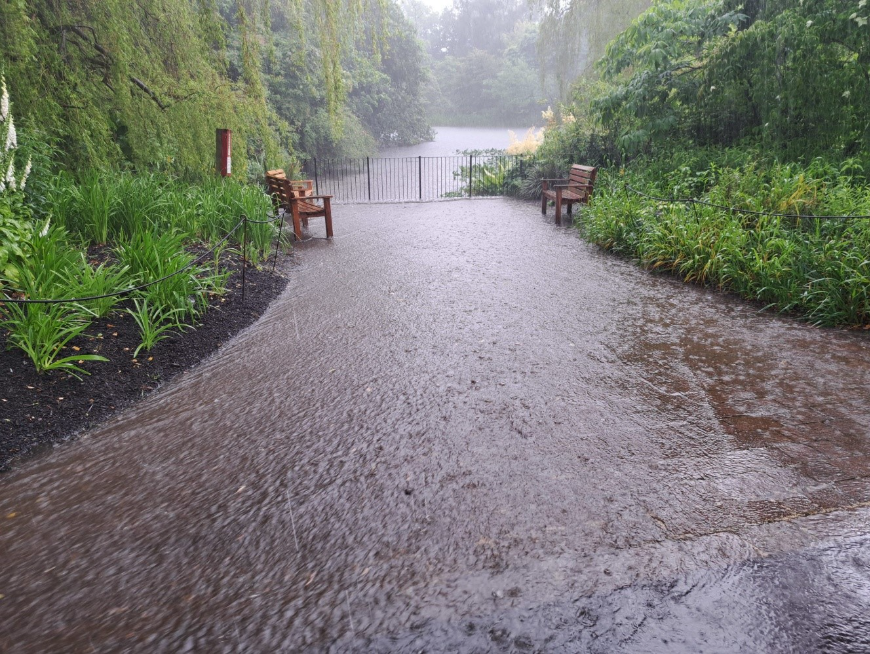
Rapid urbanisation and the accelerating effects of climate change are significantly altering the water cycle in urban areas across the UK and worldwide. Urban development decreases the amount of permeable surfaces in our towns and cities, and climate change is altering weather patterns, leading to an increase in the frequency and intensity of both extreme rainfall and drought events here in the UK. In the summer of 2026, approximately 153.1 mm of rain fell at RBGE over three summer months. This is roughly 28% below the long-term summer average between 1991 and 2020. Following this dry summer, in September 2026, there was intense rainfall that caused flash flooding and disruption in Edinburgh and the Lothians.
It’s clear that we need to do things differently to restore a sustainable water cycle in our towns and cities and help us adapt to the changing climate.
What are rain gardens?
Rain gardens are a type of Sustainable Drainage System (SuDS) that mimic the natural water cycle to manage rainfall where it falls. This is an example of a “nature-based solution” which are ‘actions to protect, sustainably manage, and restore natural or modified ecosystems, that address societal challenges effectively and adaptively, simultaneously providing human wellbeing and biodiversity benefits‘. The combination of plants and soil that make up rain gardens can help to reduce and slow the flow of surface water runoff from roads, roofs and surrounding landscapes through interception, infiltration and evapotranspiration. Ultimately reducing the pressure on sewer systems, especially during extreme rainfall events.
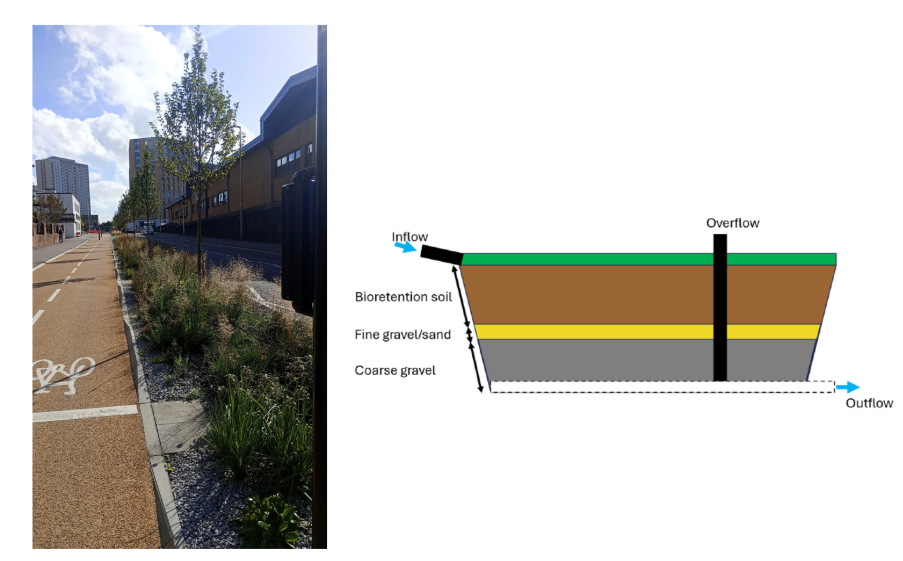
There are different types of rain gardens. Rain gardens can be landscaped and connected to surrounding soil, such as the rain garden at RBGE. Some on-street rain gardens are lined systems with outflow pipes to transport water to the sewer system.
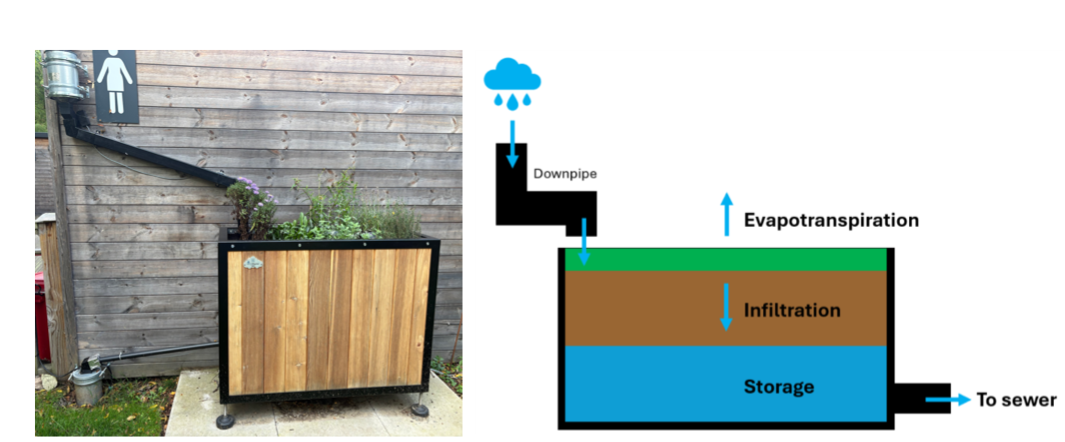
They can also be above ground stormwater planters that take water from roof downpipes and intercept its direct route to the sewer system.
Multifunctionality
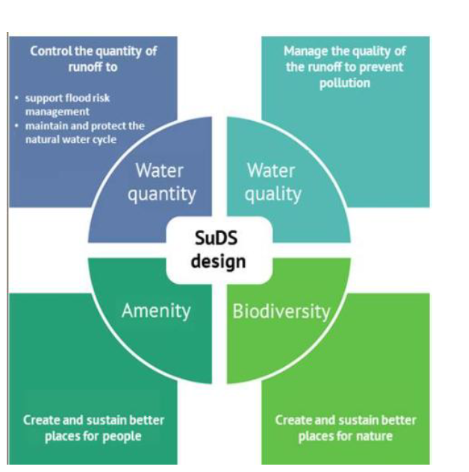
For an intervention to be considered a Sustainable Drainage feature, it must meet deliver improvements in four key areas: water quality, water quantity, amenity and biodiversity. My research focuses on the multi-functionality of sustainable drainage systems such as rain gardens, and the role of plants. In particular, I am investigating links between plant selection, plant health, biodiversity and hydrological function.
Research:
Plant Selection
Since starting my PhD in 2024 I have been collecting evidence from academic literature and other publications (e.g. blogs, horticultural websites, gardening books etc.) alongside information directly from Horticultural experts at RBGE to understand which plants are currently used in rain gardens across Scotland and the UK and where people are accessing information such as planting lists and designs. I am combining this information with data on the traits and functions of plants to analyse where there may be opportunities to expand the selection of plants that are used in rain gardens and therefore increase the multi-functional benefits that can be delivered by rain gardens.
RBGE Experimental rain gardens
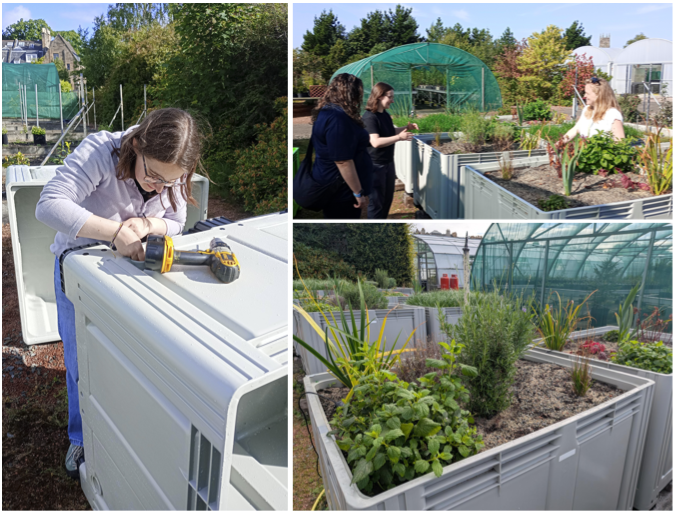
In the summer of 2026, I set up experimental rain gardens in the RBGE nursery and am monitoring soil moisture, plant health and outflow of water. The mini rain gardens have been planted with different planting combinations (turfgrass, perennials, mixed shrubs and perennials) to investigate the impact of plant choice on the functioning of the system. The experiments will run for the next two years and data will be collected on the response of the rain gardens to natural and simulated rainfall events.
Monitoring stormwater planters
I am also monitoring stormwater planters on a single-storey flat-roof building near the East Gate at RBGE )
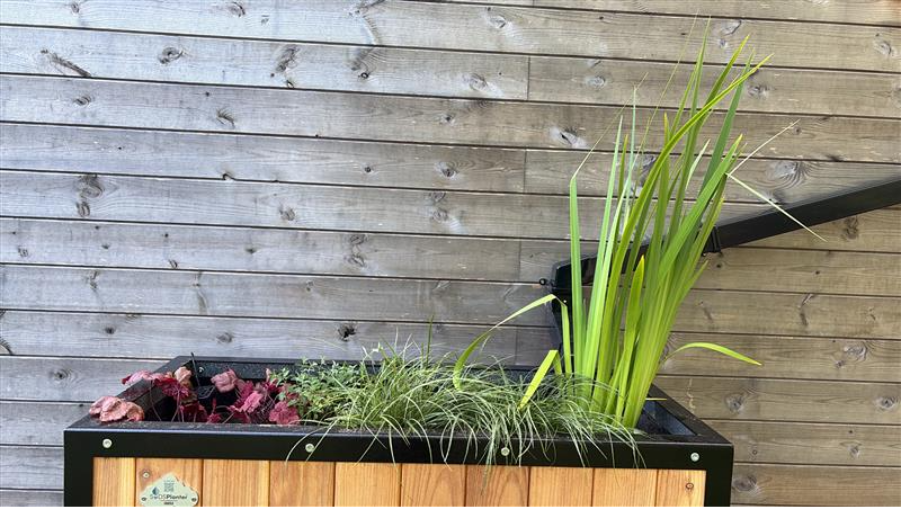
These planters take water from the building’s downpipes and are being monitored for soil moisture and inflow and outflow of water using tipping bucket rain gauges. Similar stormwater planters have also been installed by Scottish Water in pilot projects, including the Craigleith Pilot Project. For this project, RBGE horticulturists and scientists collaborated to design planting palettes for residents to choose from for their stormwater planter.
Biodiversity and Plant Health surveys
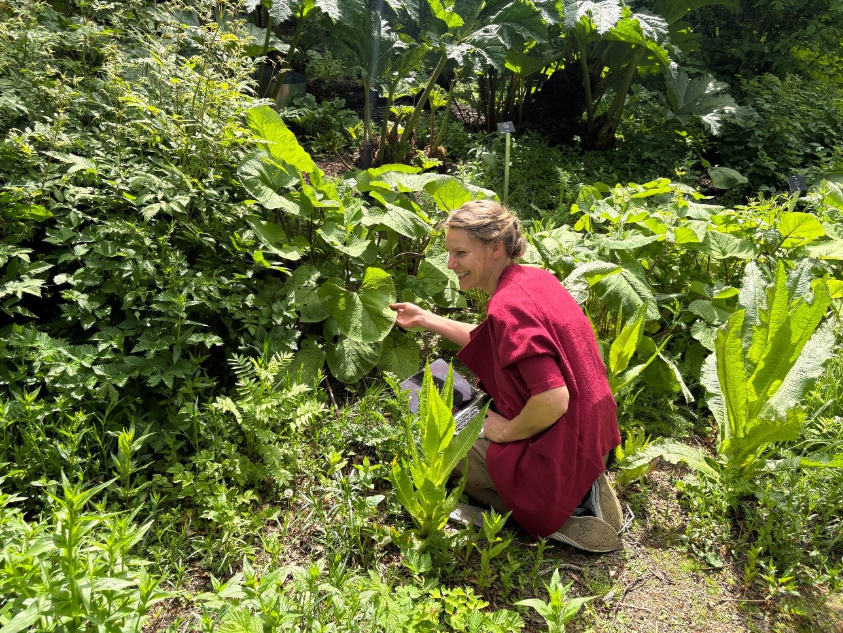
Over the summer of 2026, 2025/26 RBGE MSc student Goda Petrylaite and I have been surveying rain gardens across Scotland’s Central Belt to understand which factors impact plant health and biodiversity. This pilot dataset has already delivered really interesting results on the role of native versus non-native plants and the age, size and design of raingardens within the (semi-) urban landscape. These surveys will continue in 2027. Please get in touch if you have a rain garden that we could include in our surveys (naturebased@rbge.org.uk).
Real-world impacts of this research:
We are working with Scottish Water and other industry and community partners to make sure this research contributes to the evidence base for the multi-functional performance of rain gardens and helps improve confidence and knowledge for those seeking to implement these approaches on a wider scale. Specifically, I aim to quantify how different planting combinations contribute to the multifunctional benefits rain gardens deliver. My research will contribute to Scotland-specific guidance on plant selection and care to ensure that rain gardens can deliver the greatest benefits.
Another Botanics story will be coming soon with findings from our 2026 Plant Health and Biodiversity rain garden surveys…
Biography:
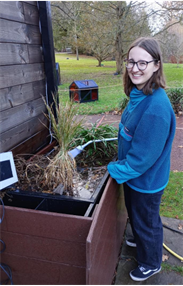
I am a PhD student at RBGE and the University of Durham, investigating the multifunctional benefits of rain gardens, with a specific focus on Scotland. My PhD is funded by RBGE’s Plants with Purpose programme and Scottish Water. I have previously completed an MSc in Wildlife Biology and Conservation at Edinburgh Napier University and a BA in Natural Sciences at the University of Cambridge. I’m passionate about finding ways to make our towns and cities greener, more resilient and better for people and wildlife. LinkedIn
Leave a Reply