The following blog was written by Becky Camfield a digitiser in the Herbarium.
Since 2021 we have increased our digitisation capacity reaching 1 million specimens imaged in August 2024. Each digitiser is assigned a family of plants to work through. This series of blogs will spotlight the families that have been completed by a member of the team.
This genus has a long history with the Edinburgh Botanics and our sister sites. You could probably write a book or two on it.
Rhododendron has been known in the UK since 1656 via the work of Clusiuis in Leiden. This was R.hirsutum L. although it didn’t gain this name officially until Linnaeus in 1753 who published it in his Species Plantarum with 4 other species. During the 1800s the early explorers of Nathanial Wallich, in the 1820s, William Griffith in 1838 and Joseph Hooker in 1848-1850 along with others found more in India and its neighbours: Nepal and Myanmar. Their material returned to Kew where Hooker published 25 species. These early species already drew gardeners’ fascination and hybrids, and early cultivars are known to date back to pre-1900.
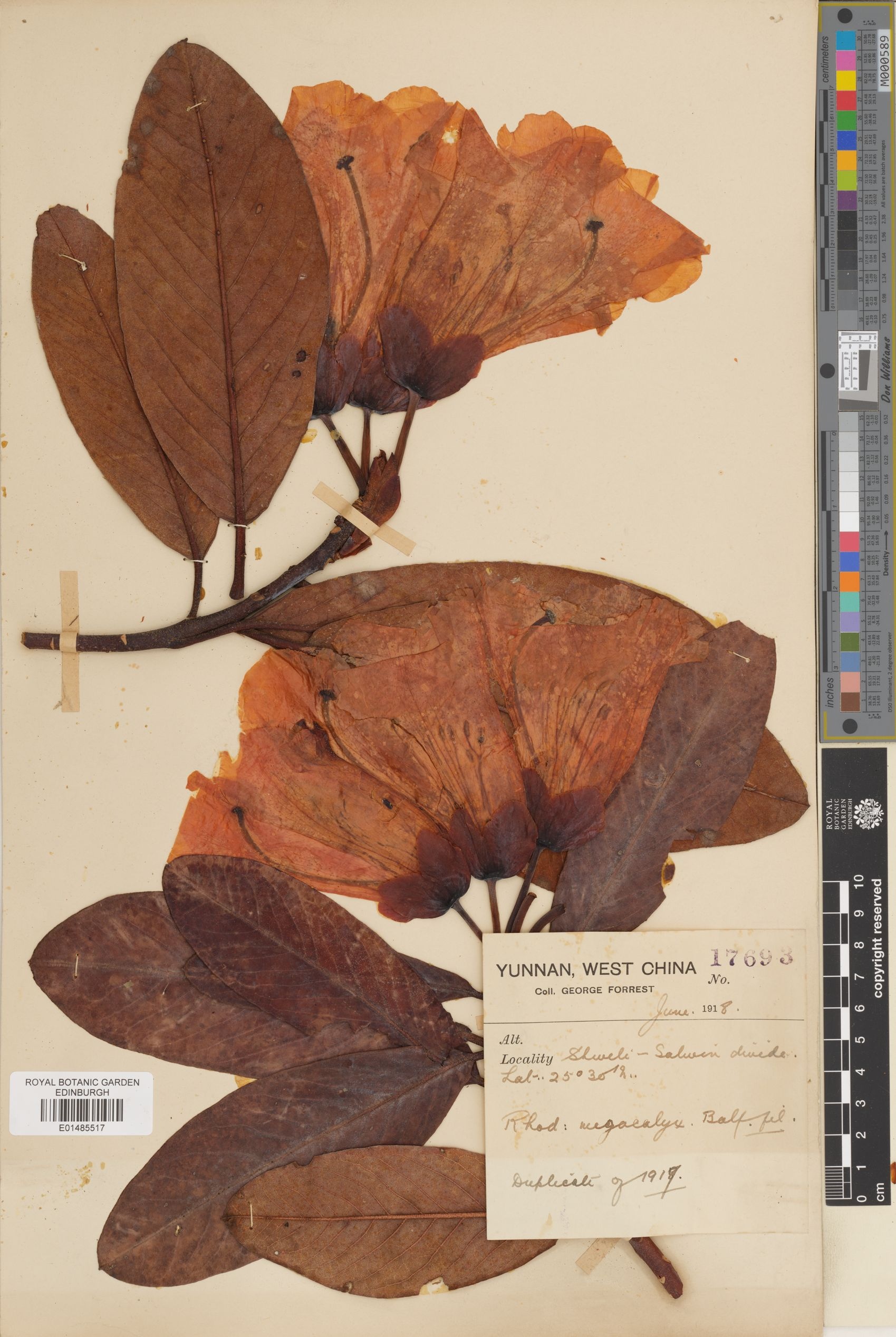
For Edinburgh’s history though it was Issac Bayley Balfour, the regius keeper of the gardens at the turn of the 1900s who sent George Forrest on his expeditions to China and the Himalayas that really started the collection. Forrest brought back tens of thousands of living and pressed plants, as well as seed from his trips to the Himalayas (1904-1930). This contained a further 300 species of Rhododendron. The habitat and climate in the Himalayas is similar to that in Scotland. This made the plants ideal garden additions, particularly for those with large estates, who funded such trips. His material is mostly from China (The provinces of Yunnan, Sichuan & Tibet), and Myanmar. For more information on Forrest you can read about him here. Back at the gardens Balfour and William Wright Smith would spend many years publishing the Rhododendron species and other plants from the material collected by Forrest. This was continued by H. F. Tagg, J. M. Cowan and H.H. Davidian.
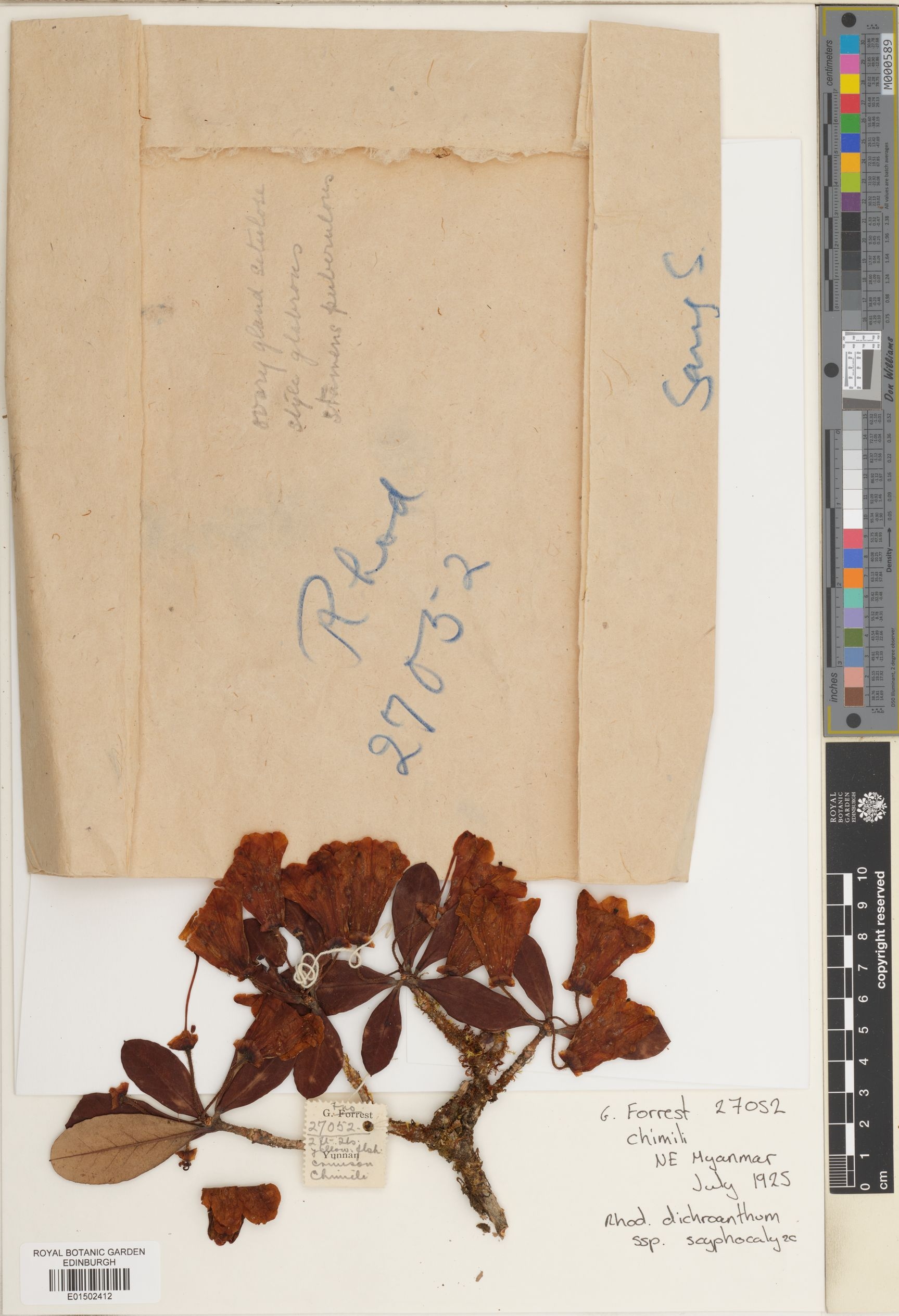
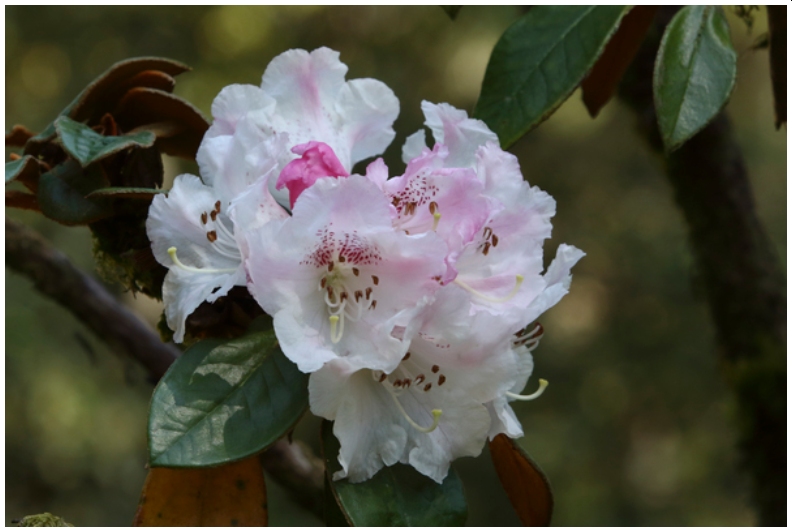
He was not the only plant hunter sent to the region at that time and collections from Joseph F.C. Rock, Reginald J. Farrer, Augustine Henry and Frank Kingdom-Ward are also heavily represented in our herbarium and living collection. They expand the regions covered to include Nepal, Bhutan, India and other provinces of China such as Gansu and Hubei to those already mentioned. These collections form the backbone of herbarium specimens here at Edinburgh. They drew in more botanists over the years eager to work on them such as Tagg, Cowan, Davidian, James Cullen, David Chamberlain to now Alan Elliott. Yet they also added to them with their own collections. Yet the region itself has also become heavily linked with research work at the RBGE including the Flora of China, Flora of Bhutan and the Flora of Nepal. These projects have continued to add to the herbarium to this day.
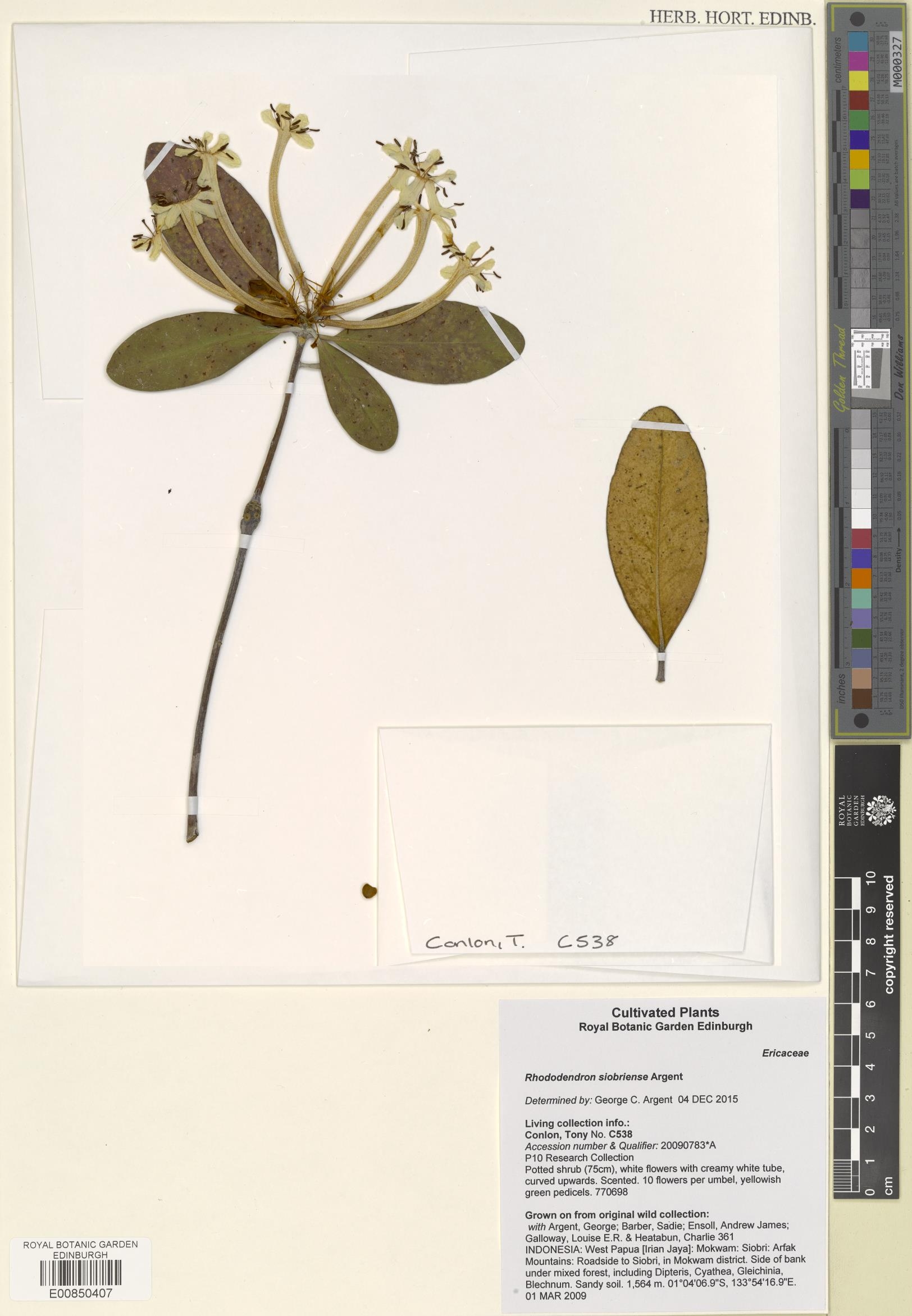
The Himalayas is the biodiverse hotspot for the genus and is reflected in the RBGE collections. Of the 102 Cupboards the genus occupies (Ericaceae itself is only 150 in total), 66 are filled with material from China alone. In more recent years the gardens had the late George Argent based at them, and he focused on the tropical part of the genus, the Vireya section. It equates to roughly a third of the species and are mostly found in the montane tropics of the Malesia Archipelago down to Australia. Although they can be found on the mainland in Thailand, China and up to Nepal, yet very few non Vireya rhododendrons are found in Malesia. Here the hot spots for biodiversity are New Guinea with over 160 species followed by Borneo with about 46 species. Although not suitable for the outdoors of Scotland these rhododendrons can be found in the glasshouses and has resulted in the RBGE having the largest cultivated collection of Vireyas.
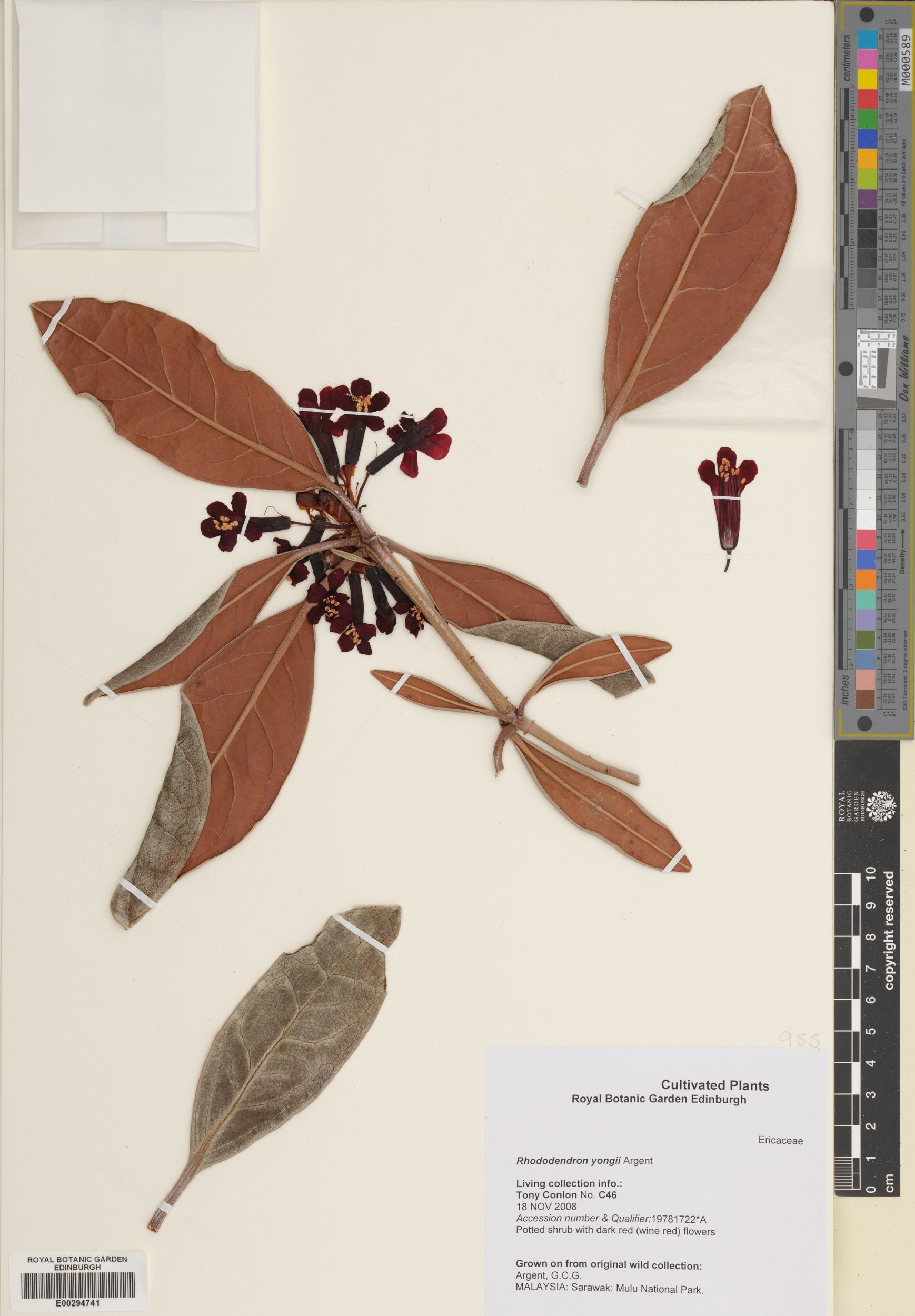
With all the interest in the genus and with the experts being based here during the heyday of its discovery (Forrest, Tagg, Balfour, W.W.Smith), it meant the Botanics got sent trusses of the plants. These were from gardeners, wealthy enthusiasts and other botanists such as Lionel de Rothschild, the creator of Exbury gardens (known for its Rhododendrons), the Mangles at Littleworth (early breeders of the genus), Henry McLaren (Baron Aberconway) owner of Bodnant gardens (a sponsor of G.Forrest & F.Kingdon-Ward) and it’s head gardener Mr Puddles. These trusses had been sent for identification mostly, or to show a difference from what was expected as they usually all grew seed from the wild collections. Other times it was just to show off something pretty. These trusses were for the most part pressed and kept in our herbarium, alongside the accompanying letters. There are also those cuttings taken from plants grown at the RBGE, usually for identification. This has resulted in a varied historical collection of the genus.
The cultivated collection is the largest of any genus in the RBGE herbarium with over 4000 specimens in just over 12 cupboards and a cupboard of that is for cultivars alone. These included plants from the Duchess of Montrose’s gardens (Brodick Castle) on Oban. One of the funders of the plant collectors and she even has a species named after her. There are also those used as reference by botanical artist Lindsey Snelling. There are 35 which specifically state they were ‘drawn or painted by Miss Snelling’ between 1918 and 1920, there are more that say ‘Photo by Adam’. These are also likely to be reference plants for Miss Snelling. They both worked with Issac B. Balfour.
![A specimen of Rhododendron arboreum subsp. arboreum from 1919, annotated as being not only drawn by Miss Snelling but photo by Adam as well.]](https://stories.rbge.org.uk/wp-content/uploads/2026/10/E01474710_4.jpg)
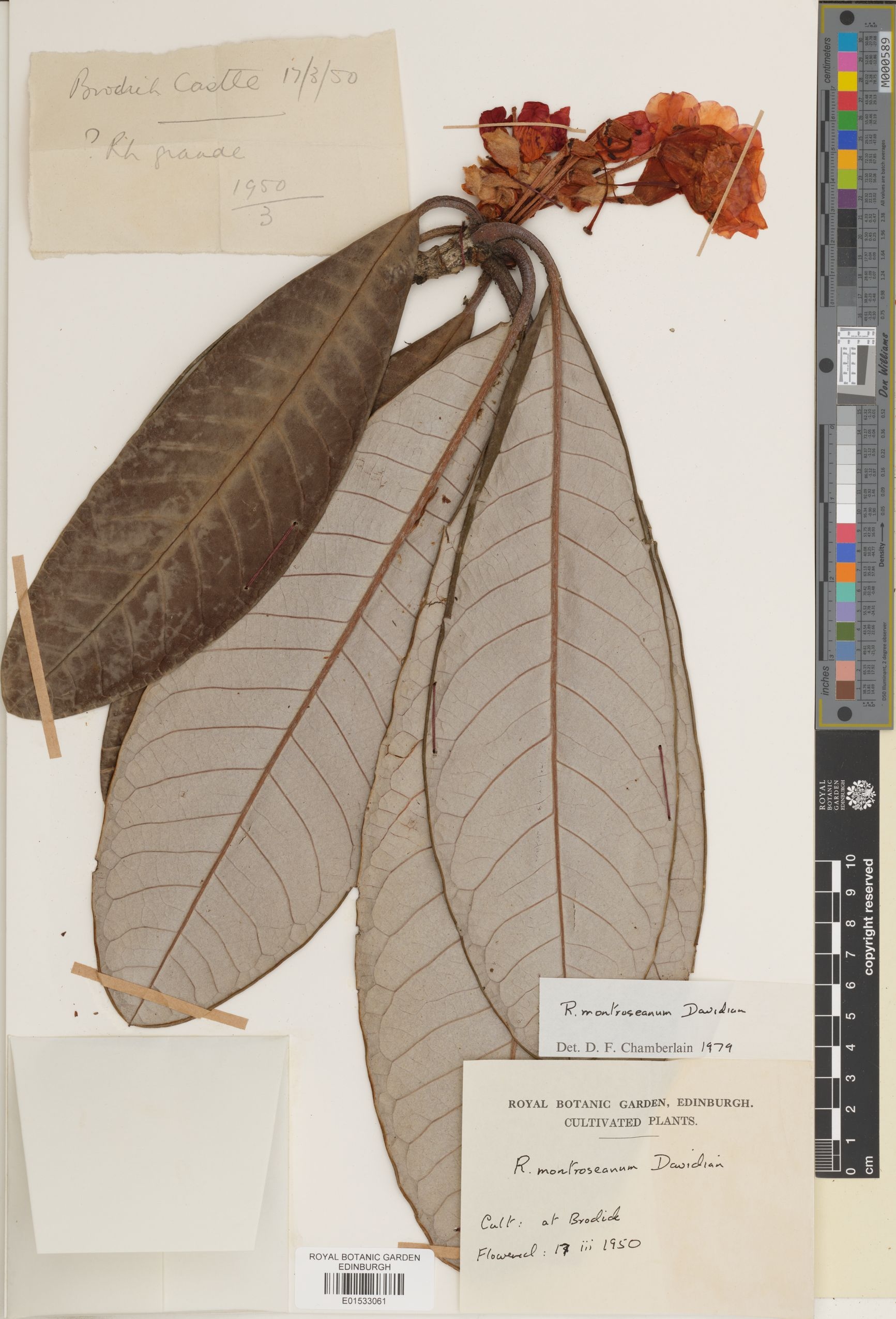
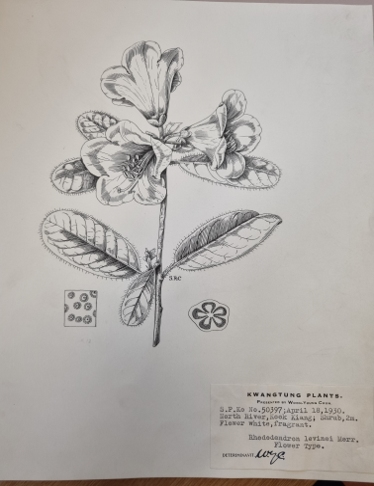
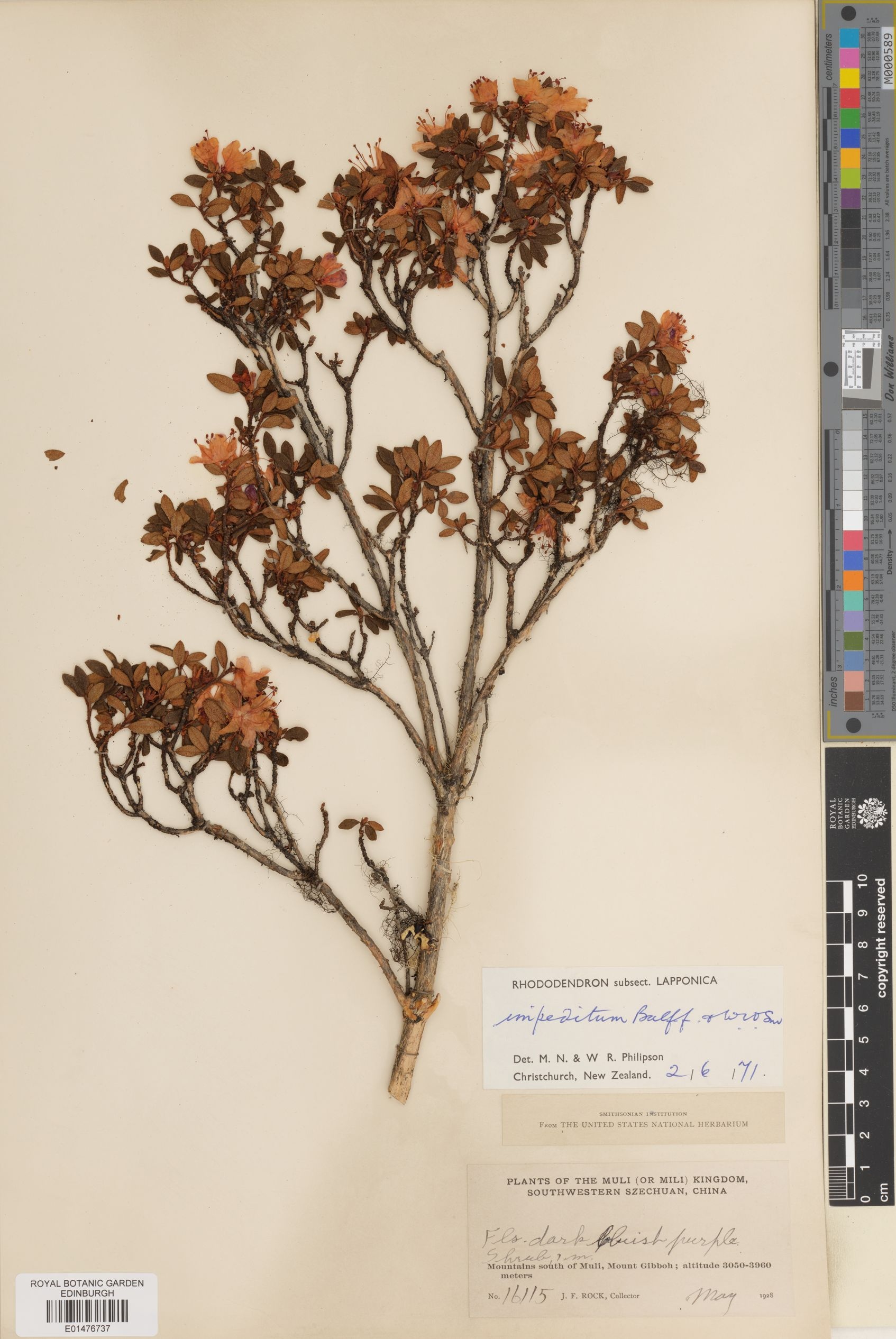
This has led to the RBGE having one of the largest herbaria collections on the genus, which over the last year has been curated, barcoded and imaged for the mass digitisation project. You can view our collection of over 26,000 specimens on our online catalogue. There are over 1200 species of Rhododendron. We currently have specimens for 803 species (not including hybrids or cultivars). The project has unearthed some hidden treasures in letters, photos and botanical artwork which were sitting in the herbaria cupboards and have now found homes in our archives. Two highlights would be the Lindsey Snelling pencil drawing and an exquisite ink drawing by Stella Ross-Craig that was unfortunately never published. The project also highlighted some interesting, cultivated collections from the Mangles of Littleworth and those of Spaulding’s collections of Reef Point Gardens, Maine. Perhaps my favourite find or outcome was the discovery of the herbarium specimens that go with the large cross-section of R.prostitum var. gigianteum (Tagg) D.F.Chamb. that has been in the archives since George Forrest sent it from China. Read more about it here.
Our Collections
Before mass digitisation there was 8801 specimens online and now there are 26,159 available. 1481 of these are type specimens. This project took over a year to complete mostly due to the extra curation the genus required. The specimens can be viewed here.
Top 5 regions
| No. of Specimens | Herbarium Filing Region |
| 11,505 | Inner China, Korea and Taiwan |
| 4,206 | Cultivated |
| 2,876 | Inner China |
| 1,202 | Bhutan and Sikkim |
| 1,131 | Myanmar |
This is not surprising considering the Himalayas is the home of biodiversity for the genus.
Leave a Reply