
The following blog was written by Rebecca Camfield a digitiser in the Herbarium.
Since 2021 we have increased our digitisation capacity reaching 1 million specimens imaged in August 2024. Each digitiser is assigned a family of plants to work through. This series of blogs will spotlight the families that have been completed by a member of the team.
Whilst digitising our cultivated Rhododendron collections, I came across 31 beautifully mounted specimens of ‘Azaleas’ with intricate labels. They were all from Reef Point Gardens and each has a map showing the location of the plant within the garden. They were all collected between 1949 and 1950 by Marion I. Spaulding. She was only at the gardens for 3 years but is responsible for establishing the herbarium with 1200 collections to document the gardens. This would turn out to be an important historic account as the gardens would be lost only 5 years later in 1955.
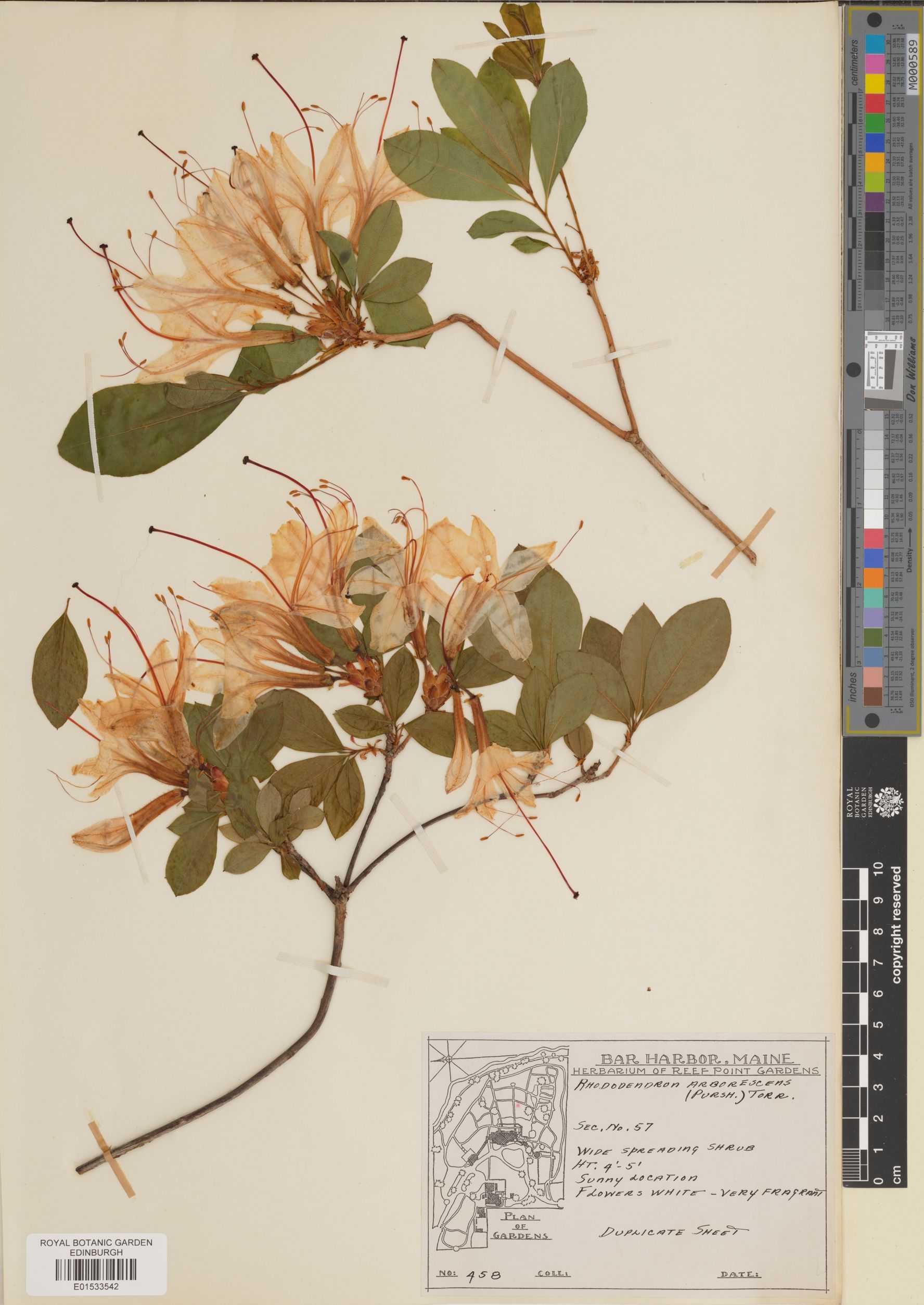
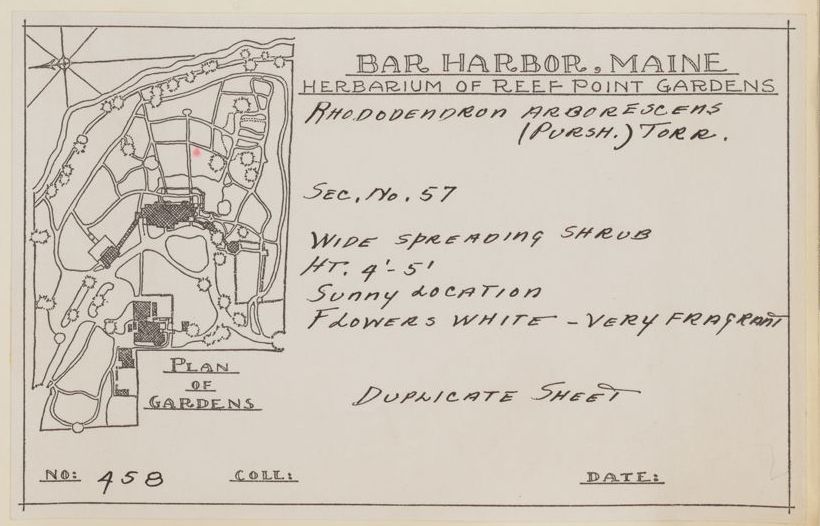
The gardens were part of the Reef Point Estate in Bar Harbour, Mount Desert Island, Maine. It was the coastal home of Mary Cadwalder Rawle and Frederic Rhinelander Jones. It would be inherited by their daughter Beatrix Farrand (1872-1959), a landscape architect whose work included gardens for the Rockerfellers, what is now the Harkness memorial park, one of the White House gardens, part of Santa Barbara Botanic Gardens and Dartington Hall, Devon to name a few of her works. Although the estate was deeded to her by her mother in 1917 it wouldn’t be until the death of her mother in 1935 that Beatrix and her husband (Max Farrand 1869-1945, historian at Yale and director of Huntingdon library) set about turning it into a horticultural study centre. It was an ambitious project, and they would spend their summers working on it (they lived in California as well). They studied and documented the plants chosen for specific areas of the gardens and in particular, for the climate of Bar Harbour. This included a bog garden made with native plants. Yet also exotic plants such as Azaleas [Rhododendrons]. They then wrote about their findings in the Reef Point Bulletin. The house also amassed a library and collection of educational materials to create their study centre. Yet perhaps due to its remoteness the centre never reached the level of interest she hoped it would.
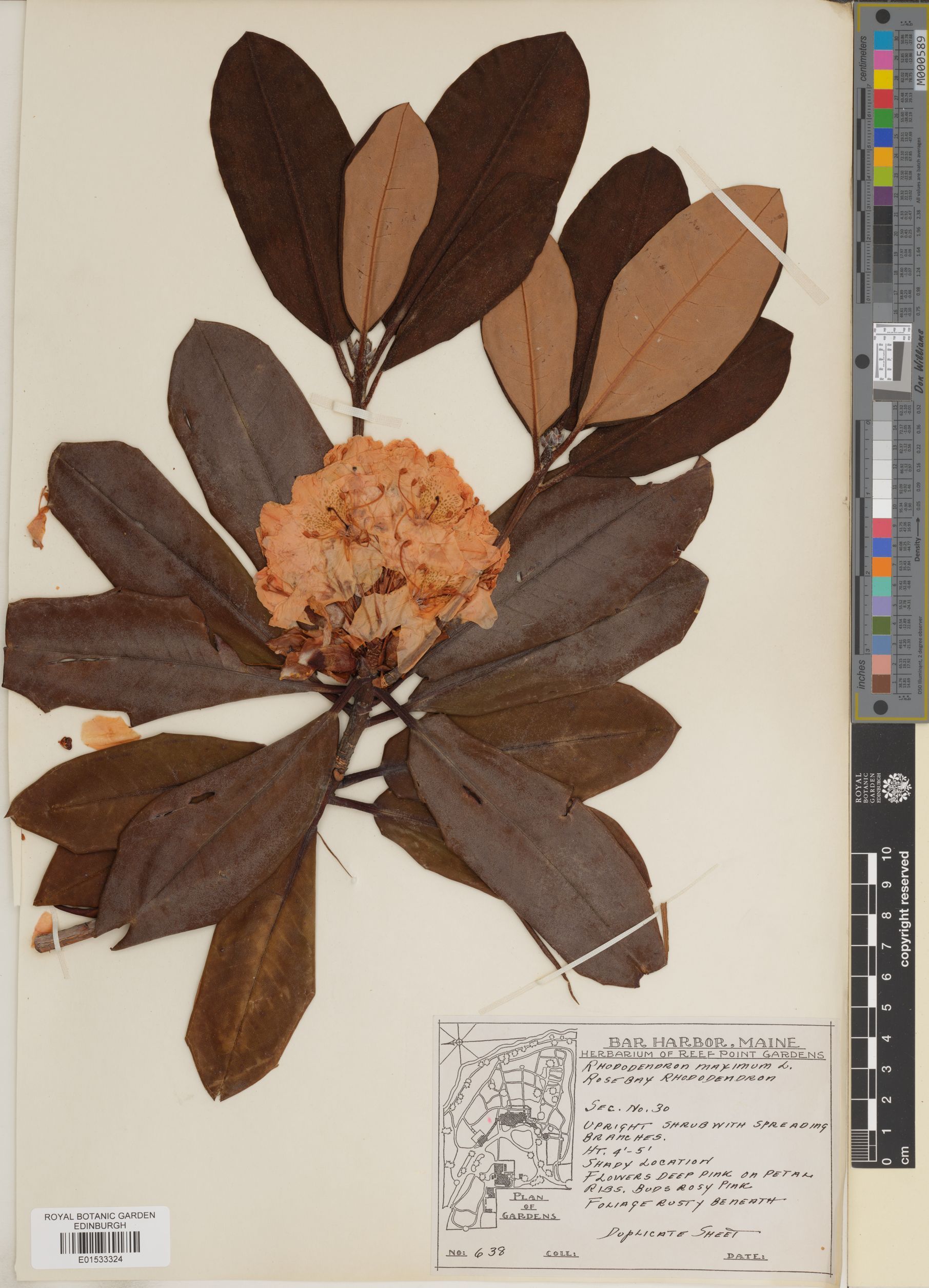
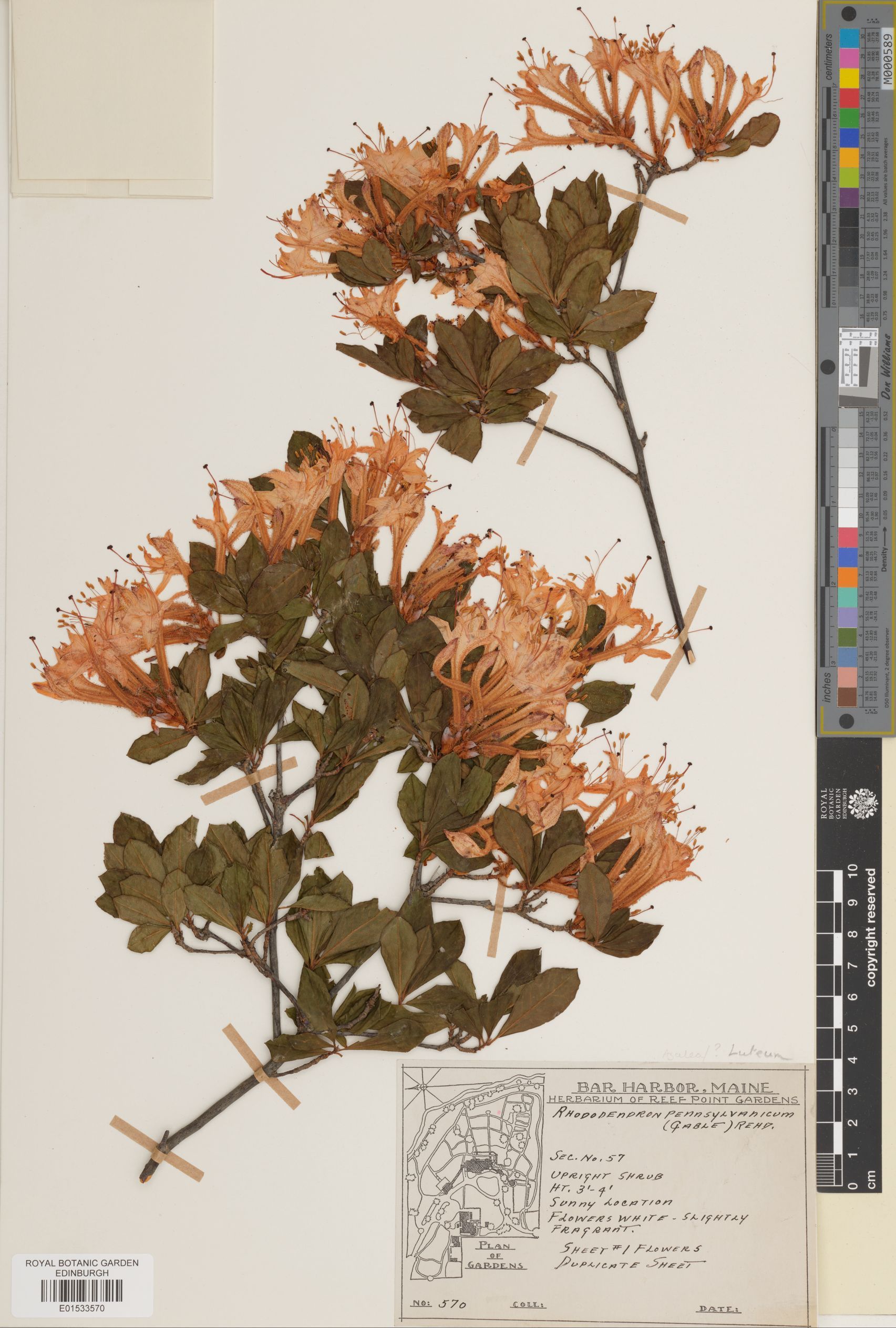
In 1947 the island was hit by a wildfire which wiped out much of Bar Harbour’s tax base and the town needed taxes to recover. This meant the town refused to grant the gardens a tax-exempt status and in 1955 Farrand decided the garden’s future was not secure and abandoned her project. The land was sold for development. Her library, collection of art prints and architectural designs were donated to the University of California, Berkeley. This continued her main goal of spreading knowledge and education in landscape design. Her herbarium of 2000 sheets were gifted to the Jepson Herbarium also in California.
The main house was dismantled but some fixtures and elements went with Farrand as she moved in with the Garlands; longtime friends and gardeners at Reef Point. She would have an extension at their farmhouse and even design it a small garden. Reef Point went to her architect friend Robert W. Patterson. Yet the plants would be saved as well. The local innkeeper, board member and garden designer Charles Kenneth Savage came up with a plan to save them, and with funding from summer residents such as John D. Rockerfeller Jr. this was achieved. This amazingly included the moving of a western hemlock tree. The plants went on to create two gardens, the Asticou Azalea garden and the Thuya garden both designed by Savage and in Northeast Harbour. The former is designed as a Japanese stroll garden and the later a semi-formal herbaceous garden in the style of Gertrude Jekyll. These gardens still exist to this day and are open to the public between May and October.
The Garland family farmhouse was obtained by the Beatrix Farrand society in 2006 and they are restoring the estate and plan to reinstate Beatrix’s goals of an educational centre with a library, collections and trial gardens.
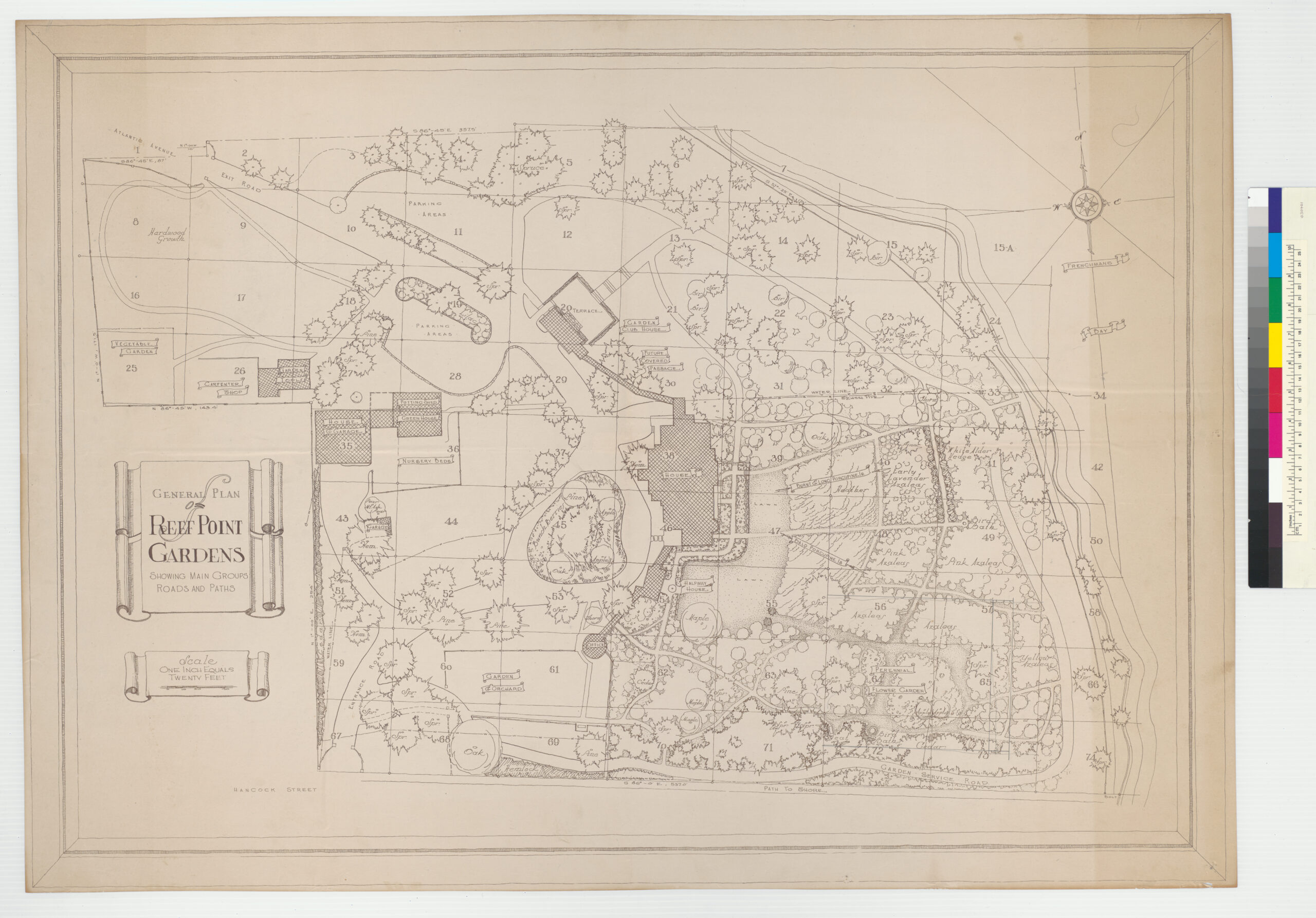
https://oac.cdlib.org/ark:/28722/bk000775f50/?order=3&brand=oac4
)