
The following blog was written by Thibauld Michel a digitiser in the Herbarium.
Since 2021 we have increased our digitisation capacity reaching 1 million specimens imaged in August 2024. Each digitiser is assigned a family of plants to work through. This series of blogs will spotlight the families that have been completed by a member of the team.
This is an order of 5 families: Aquifoliaceae, Phyllonomaceae, Helwingiaceae, and since 2001 Caridopteridaceaae and Stemonuraceae.
Aquifoliaceae
The Ilex or holly family is the largest of the Aquifoliales, comprising 581 accepted species and occurring across North and South America, Europe, Southeast Asia, and South Africa. It is best known for the iconic type species Ilex aquifolium, with its glossy leaves, spiny leaf margins, and bright red berries. Several members of the family contain caffeine and theobromine in their stems and leaves and have traditionally been used to prepare stimulating beverages. For example, Ilex paraguariensis is used to prepare yerba mate, a drink first used by Guarani and Tupi, natives community of Paraguay.
Ilex vomitoria, also known as yaupon, was used by native Americans from the Southweastern coastal plain to make a stimulating “black drink”. The species name originates from early European observer, who mistakenly believed the drink has emetic properties, whereas vomiting was actually part of a purification practice.
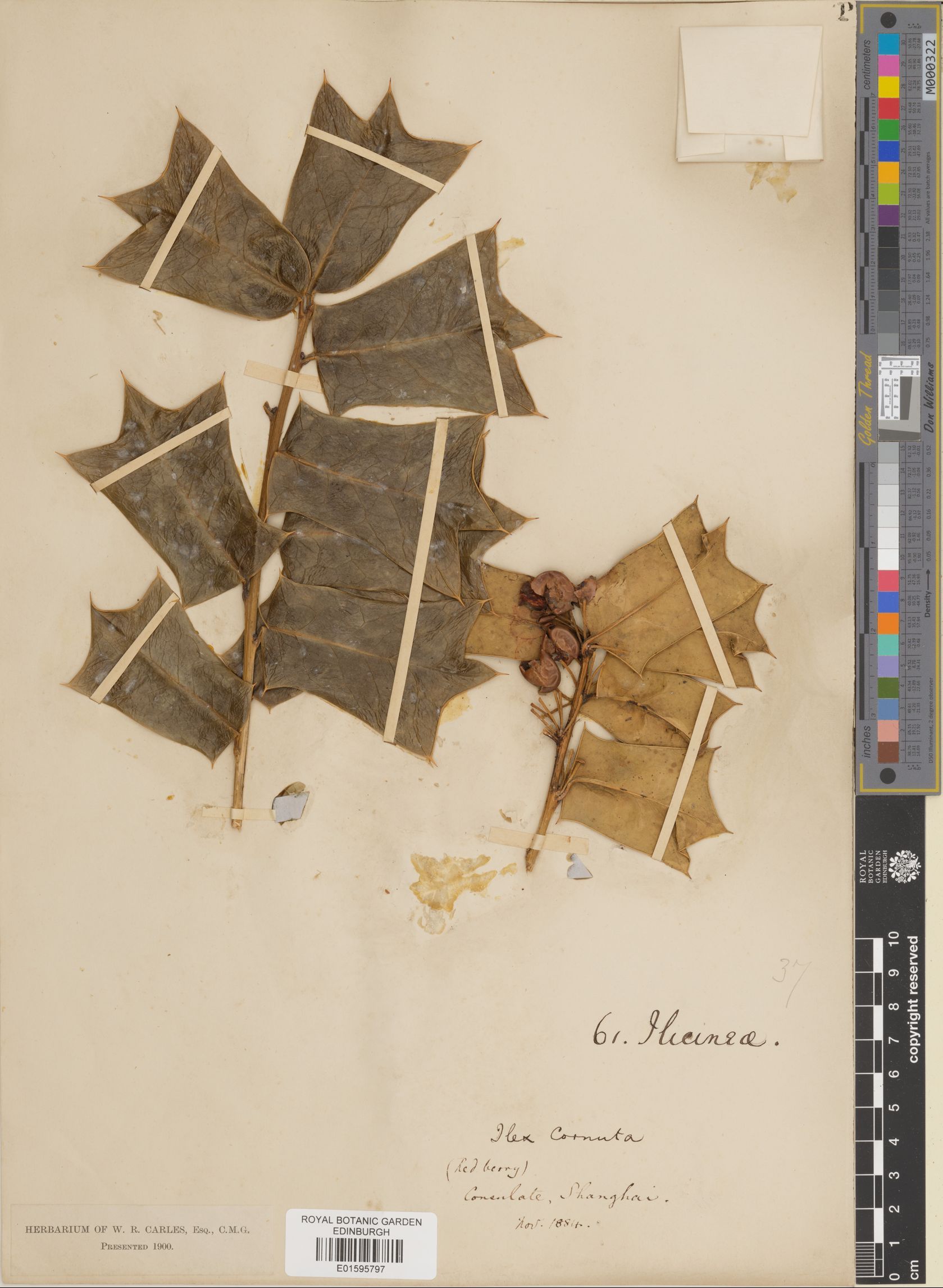
The genus counts a large array of different morphologies. See here the curious square-shaped leaves of Ilex cornuta, native from South-East Asia.
Specimens of the Aquifoliaceae can be viewed here.
Cardiopteridaceae
This family comprises 41 accepted species, mostly distributed across tropical regions such as South America, Central Africa, and Southeast Asia. The family name derives from the Greek kardía (“heart”) and pteris (“fern” or “feathery”), essentially meaning “heart-shaped fern.”
The family includes five genera, among them the type genus Cardiopteris and the most species-rich genus, Citronella, which accounts for 20 of the 41 known species.
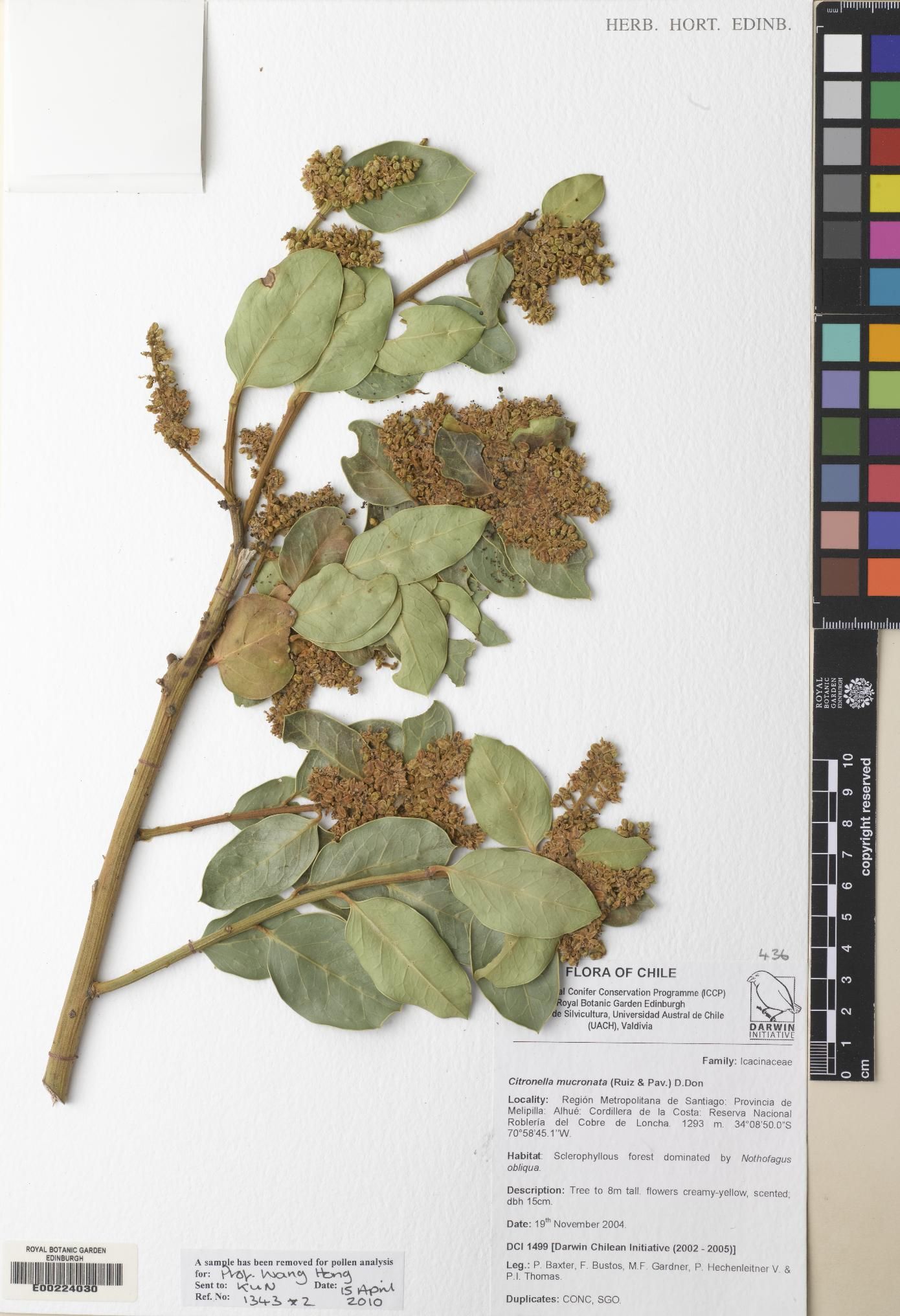
Endemic to Chile, Citronella mucronata is commonly known as hillipatagua, naranjillo, or the Lemon-Scented Tea Tree. It is notable for its aromatic foliage which can be crushed to produce essential oils. Despite its relatively wide range along the coast, the species is threatened by habitat fragmentation due to deforestation1. It has played a role in conservation efforts, notably being cited by the National Forest Corporation in opposition to a rare-earth mining project in Penco. More recently, some populations have been severely affected by the 2026 Chilean wildfires2.
Specimens of the Cardiopteridaceae can be viewed here.
Helwingiaceae
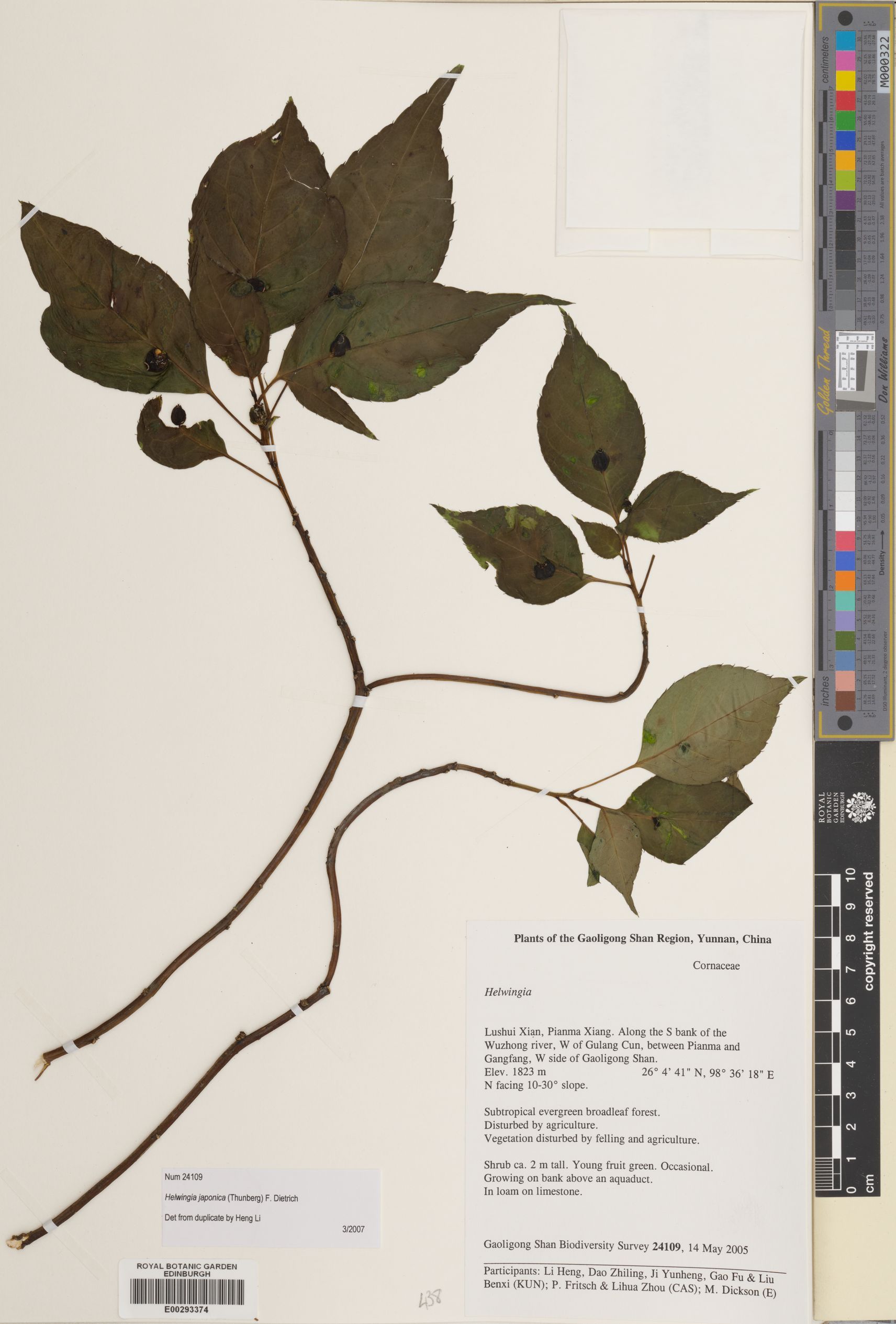
It is a monotypic family whose only genus, Helwingia, comprises 4 species distributed in Southeast Asia. The inflorescences and fruits are epiphyllous, meaning they develop on the surface of the leaf. A phylogenetic study conducted on Helwingia japonica and other insect-pollinated epiphyllous species has suggested that this trait is an adaptation to pollination by insects larger than the flowers themselves. These insects are too heavy to be supported by the floral pedicel and are instead supported by the surface of the leaf3.
Specimens of Helwingiaceae can be viewed here.
Phyllonomaceae
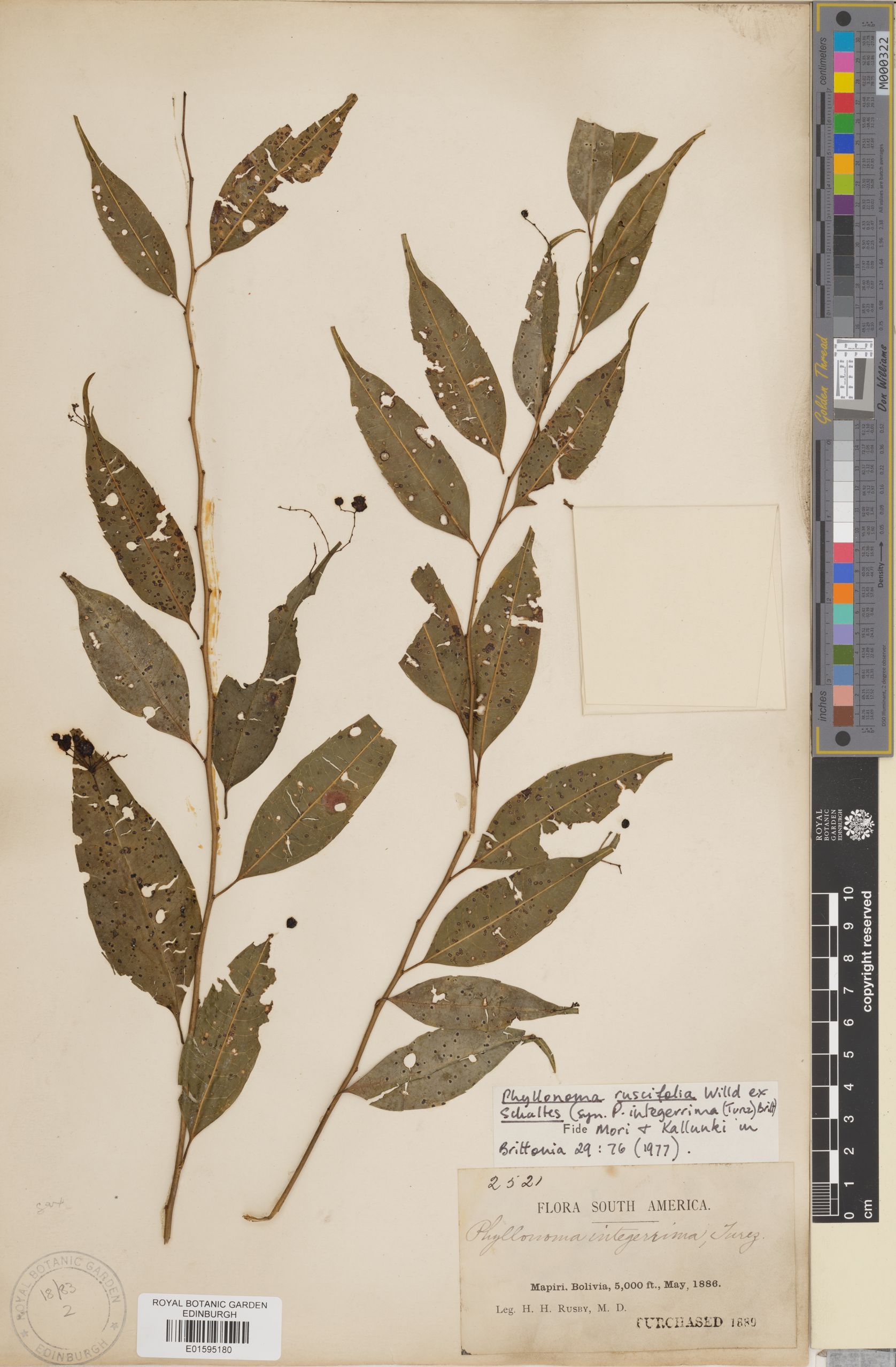
This is a small, monogeneric family comprising a single genus, Phyllonoma, which includes only 5 species distributed across Central and South America. We hold 3 species and specimens in our collection. The inflorescence resembles that of Helwingiaceae but differs slightly, as it is epiphyllous and borne on the adaxial surface near the leaf apex. Although this morphology, distinct from Helwingiaceae, likely reflects an adaptation to different environments in Central and South America, rather of Asia where its relative occur, the underlying reasons for this floral arrangement remain unclear4.
Specimens of Phyllonomaceae can be viewed here.
Our Collections
Following the digitisation of our collections we have 3,103 specimens.
| Family | Number of Species | Number of Specimens in collection |
| Aquifoliaceae | 581 | 2688 |
| Cardiopteridaceae | 41 | 182 |
| Helwingiaceae | 4 | 230 |
| Phyllonomaceae | 5 | 3 |
Literature
1. IUCN. Citronella mucronata: Rivera Caniulao, M.: The IUCN Red List of Threatened Species 2021: e.T31358A63588356. https://doi.org/10.2305/IUCN.UK.2021-3.RLTS.T31358A63588356.en (2021).
2. BNamericas – Incendios y acusaciones sacuden planes de Ac… BNamericas.com https://www.bnamericas.com/es/reportajes/incendios-y-acusaciones-sacuden-planes-de-aclara-y-proyecto-de-tierras-raras-penco-en-chile.
3. Sun, C., Yu, G., Bao, M., Zheng, B. & Ning, G. Biological pattern and transcriptomic exploration and phylogenetic analysis in the odd floral architecture tree: Helwingia willd. BMC Res. Notes 7, 402 (2014).
4. Tobe, H. Floral morphology and structure of Phyllonoma (Phyllonomaceae): systematic and evolutionary implications. J. Plant Res. 126, 709–718 (2013).