
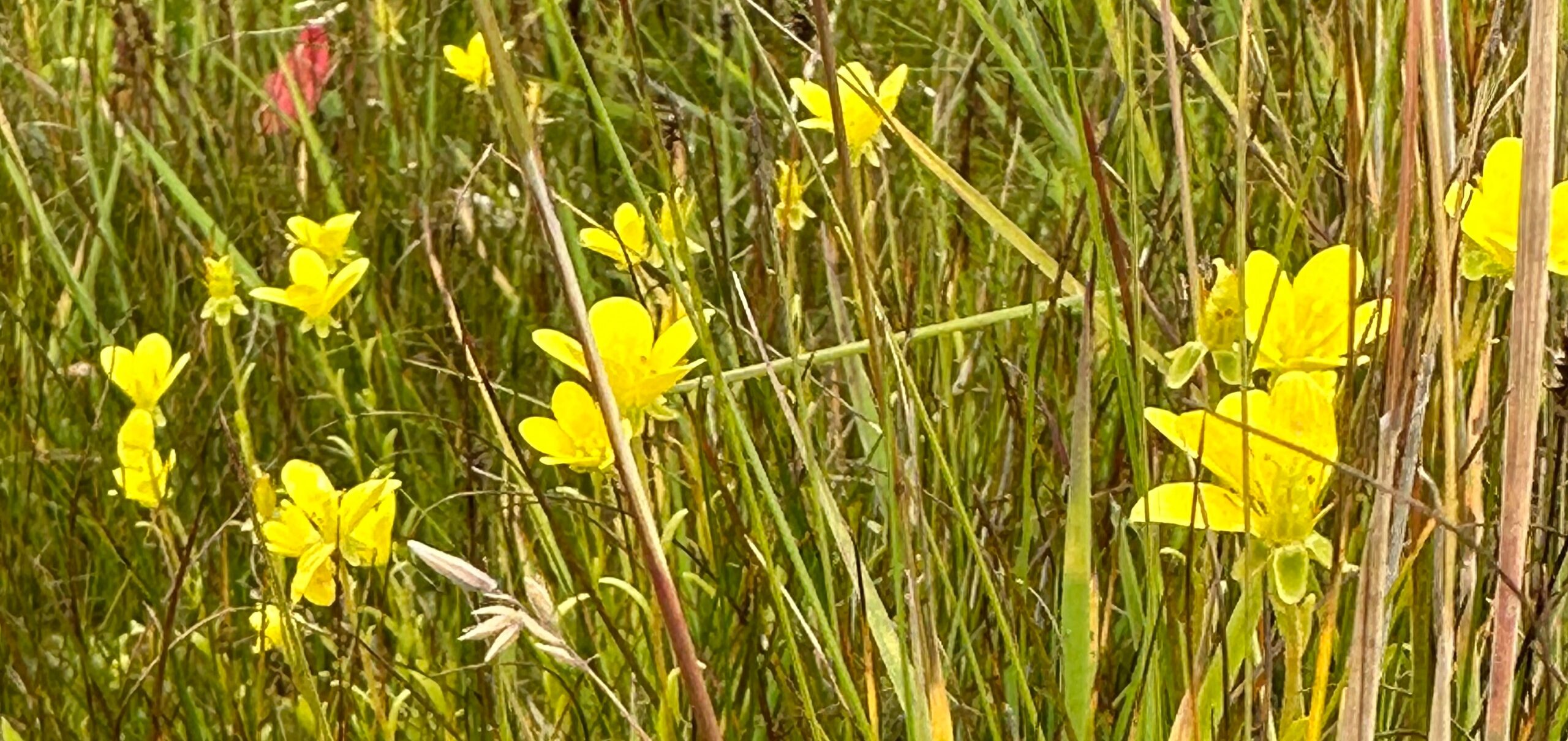
This is it, the last planting for our project. I feel a mix of pride and sadness bittersweet, really, as we reach this milestone together.
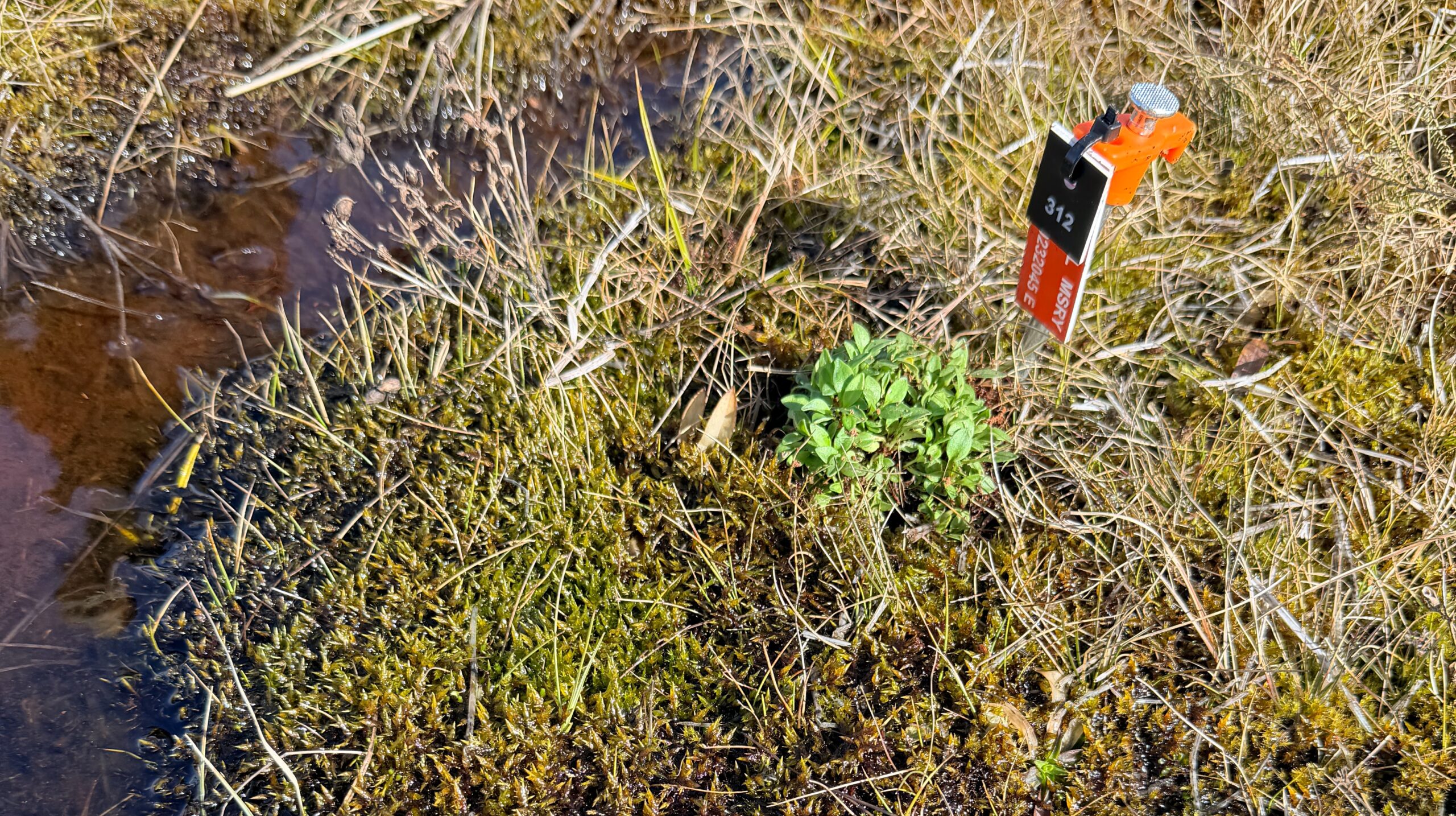
In the last week of March 2026, we finished our final planting. This time, it was Saxifraga hirculus the Yellow Marsh Saxifrage. I know I shouldn’t have favourites, but this species has truly captured my heart and challenged me every step of the way.
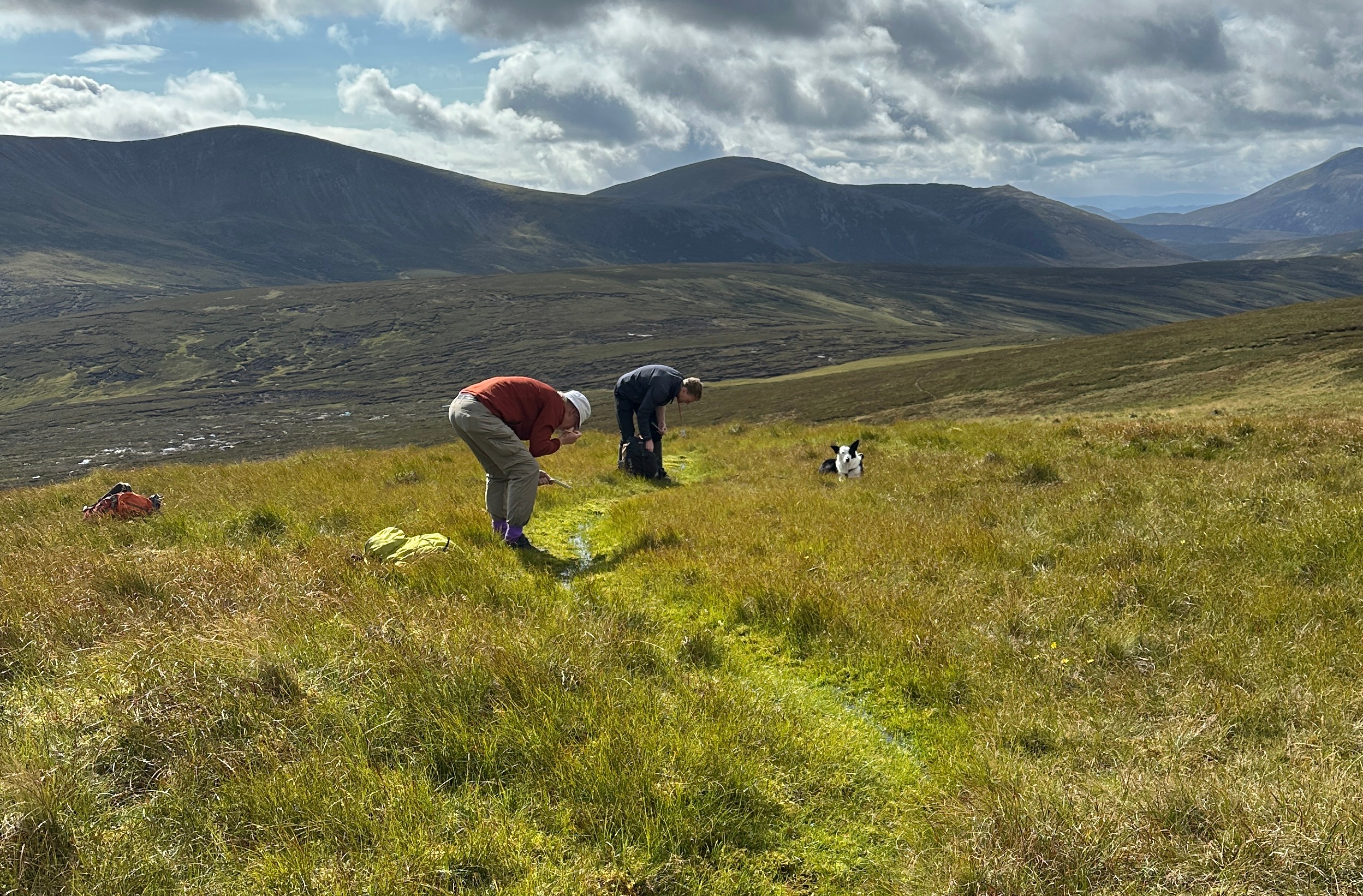
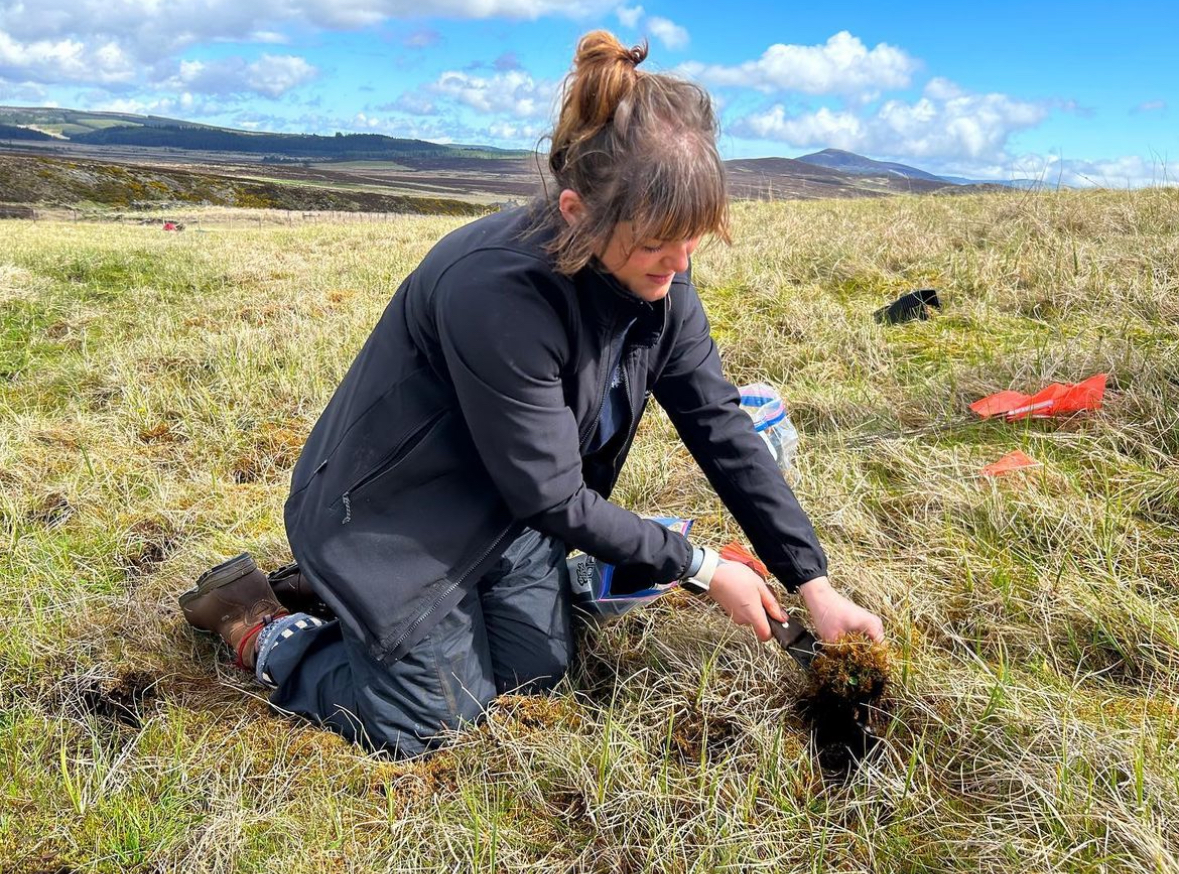
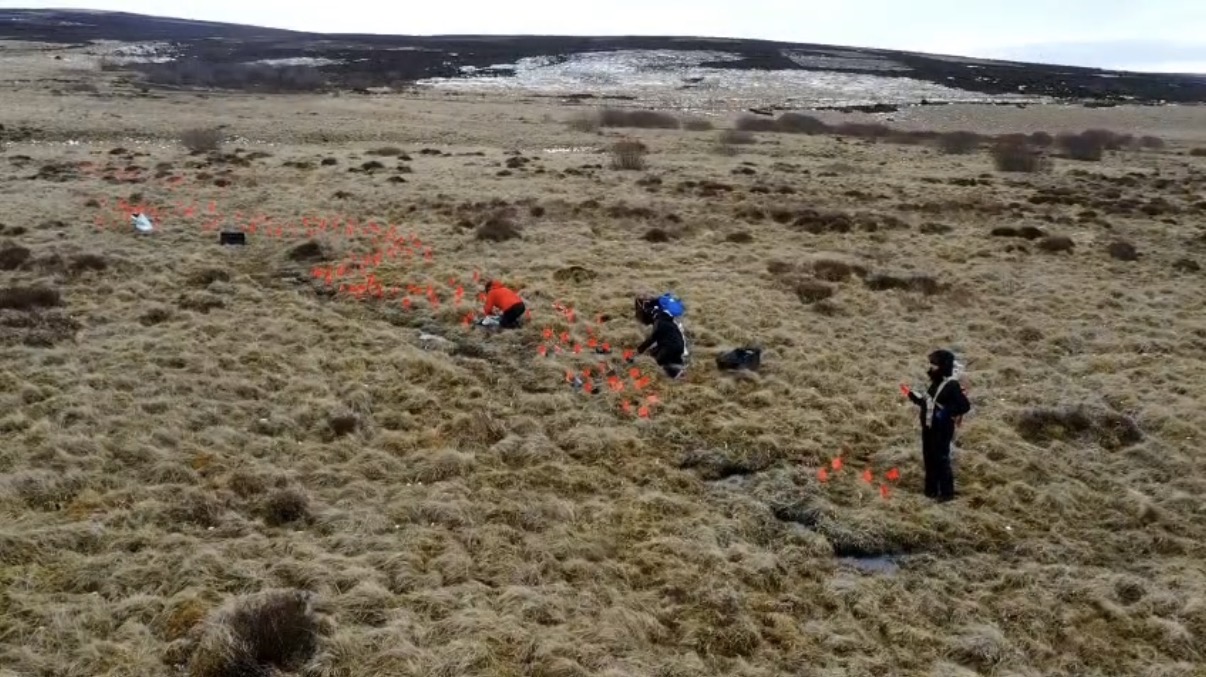
This planting really put us to the test. For the first time, we had to stay longer than planned snow covered everything, hiding the delicate patchwork of microhabitats we needed to see. These plants are far too precious for guesswork. So, we waited, watching the weather, hoping for a window. When the skies finally cleared, it felt like a gift. We were able to introduce 420 new plants to their new home in Towie, Aberdeenshire.
A little introduction
Let me introduce you to the real star of the show: Saxifraga hirculus marsh saxifrage, or bog saxifrage. It’s a small plant with a huge presence, and its conservation story is even bigger.
Marsh saxifrage is a delicate little perennial, quietly thriving in damp, open wetlands. It might not catch your eye at first, but once you notice it, you’ll never forget it.
- Height: usually 5–30 cm tall
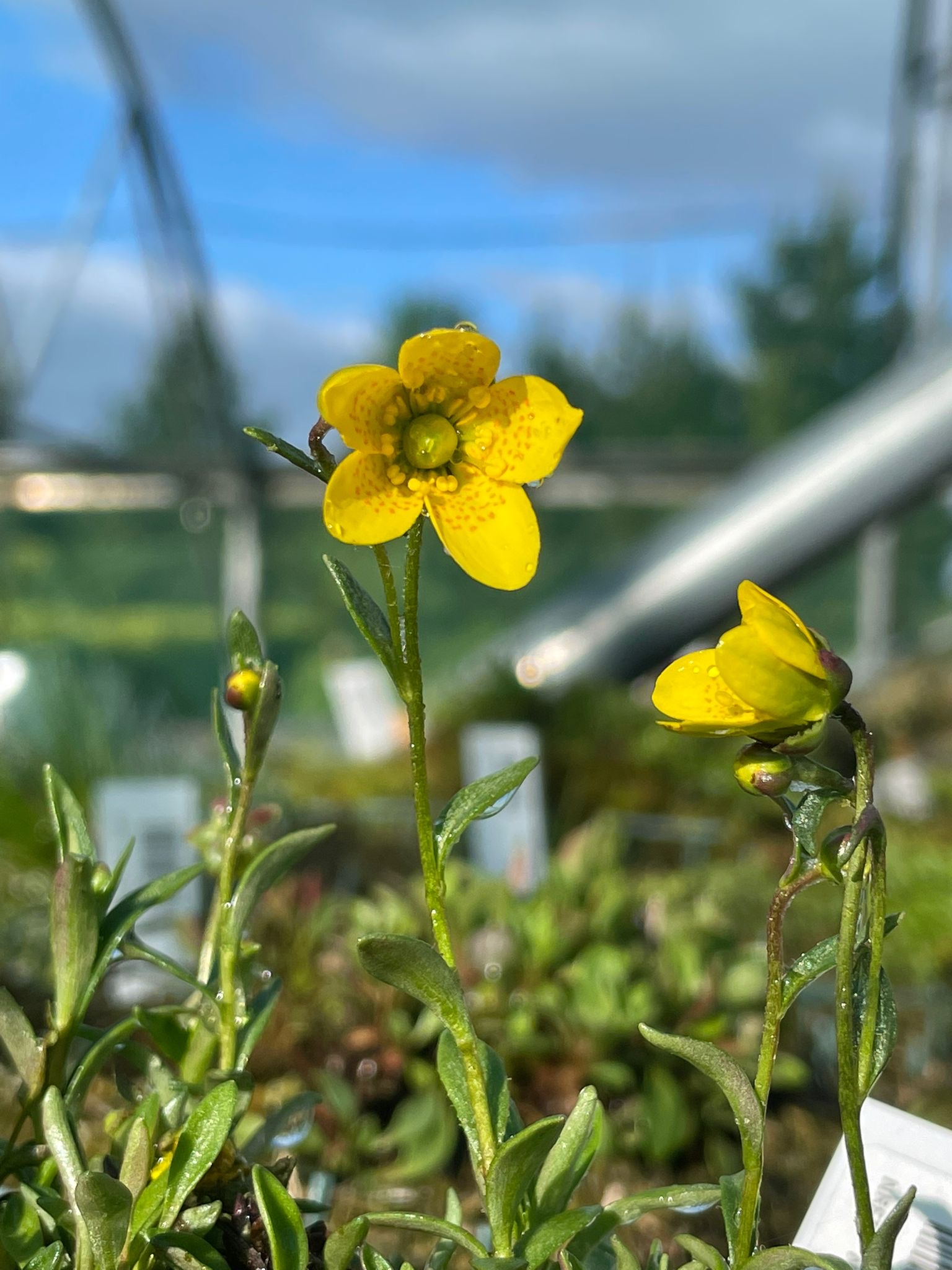
- Stems: upright and often reddish appearance due to tiny hairs.
- Leaves: narrow, green, often forming a basal rosette
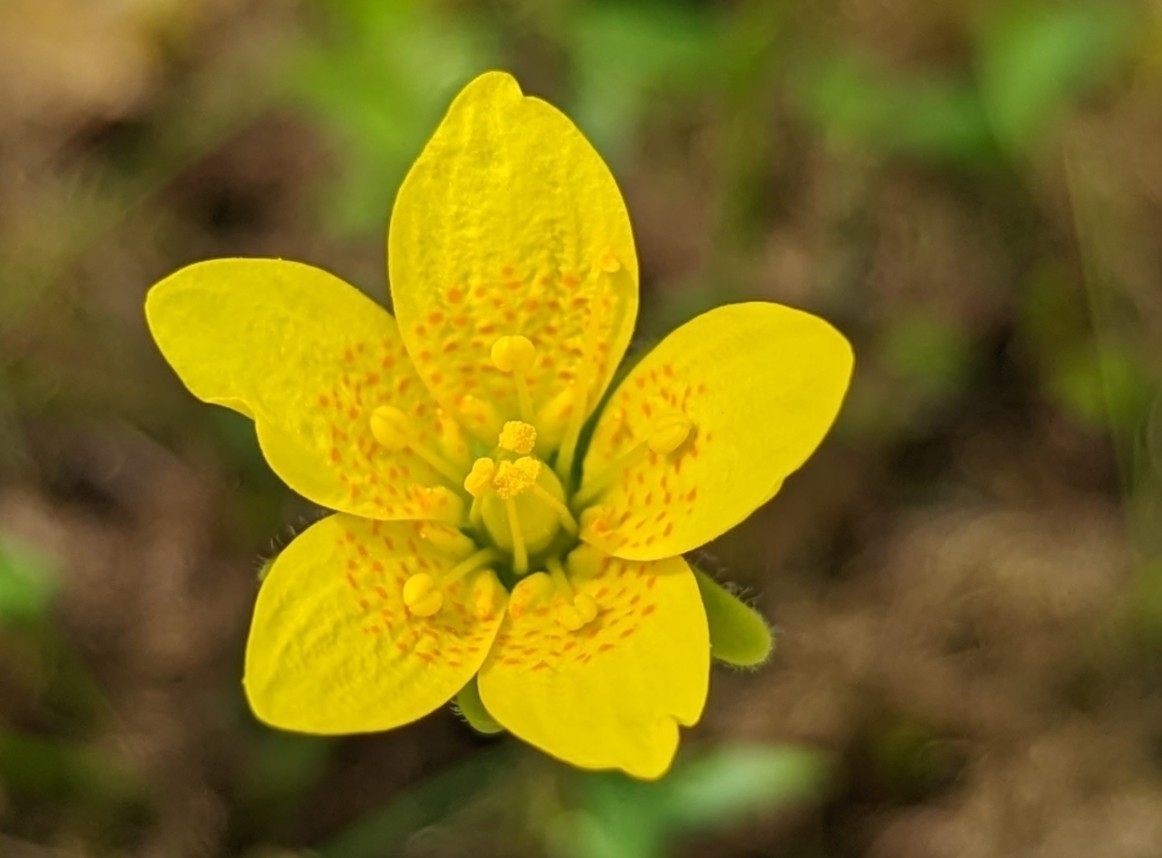
- Flowers: bright golden-yellow, usually 1–3 per stem (occasionally more), around 1–2 cm wide speckled with orange dots radiating from the centre.
- Growth: spreads via rhizomes (clonal growth) as well as seeds
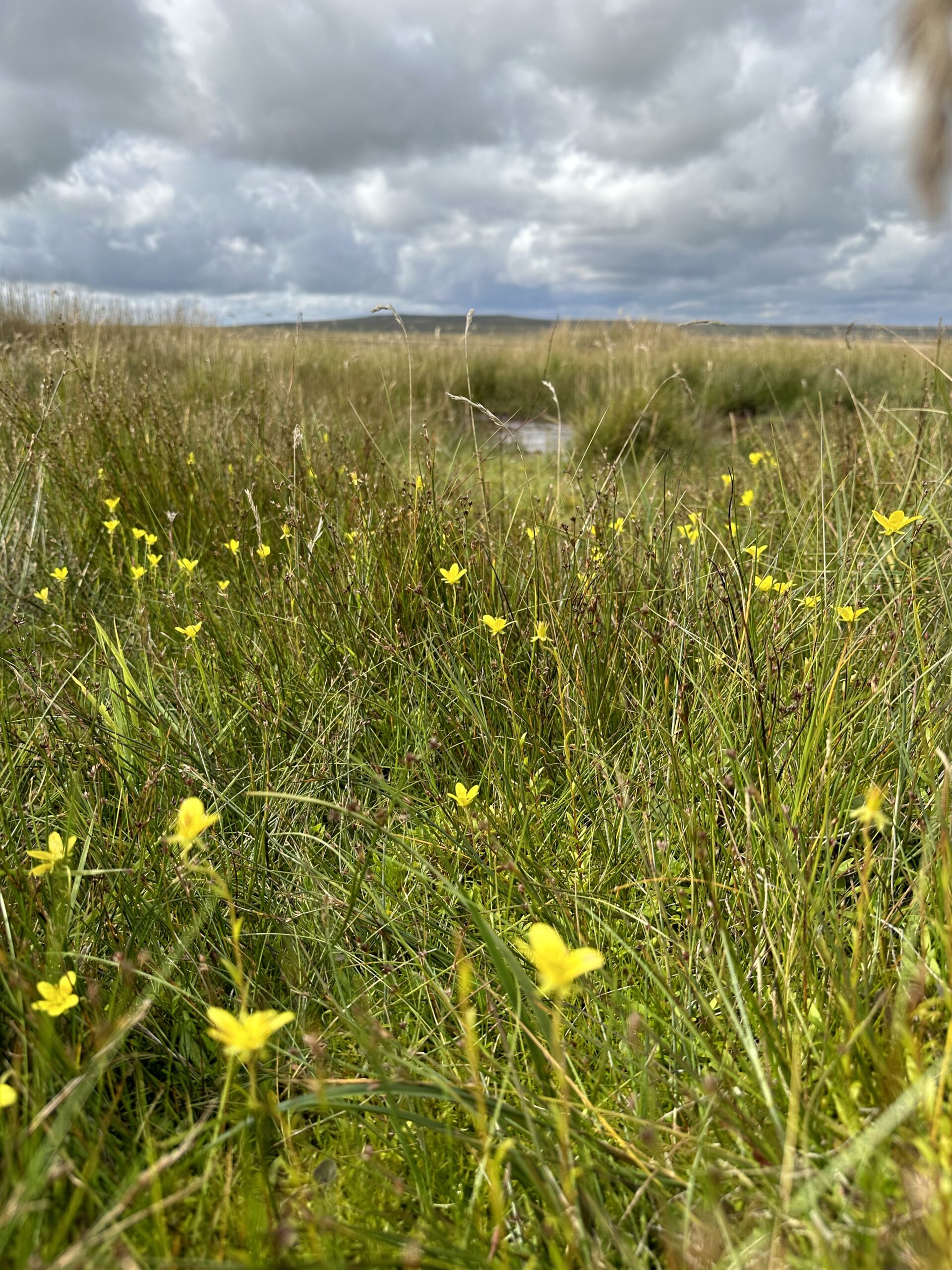
Flowering in summer, and those yellow blooms glowing in boggy flushes are often how people first meet this plant. Marsh saxifrage is fussy about where it lives, and that fussiness is at the heart of its story.
It prefers:
- Base-rich wetlands
- Spring-fed flushes and fens
- Open vegetation with constant oxygenated groundwater flow
- Cool, upland or boreal climates
In Britain it has effectively become an upland species, because its former lowland wetlands have largely disappeared.
Globally, it belongs to a circumpolar boreo-arctic group, found across northern Europe and other cool northern regions. But here’s where things get serious for this little plant.
In Scotland, this species is now extremely scarce. It clings on at just a handful of upland sites, and many of those populations are tiny sometimes only a few hundred, or at best a few thousand, plants.
Today, the largest Scottish population is in Caithness, where beautiful base-rich wetlands classic Schwing moors, spring-fed flushes and fens still support strong colonies.
Across the United Kingdom, marsh saxifrage is officially classed as rare and vulnerable.
It survives at only a few sites in England, Scotland, and a single site in Northern Ireland. Over 90% of the UK population now occurs in northern England, particularly the North Pennines.
Across Europe, the plant has a wide northern (boreal) distribution. But here’s the catch: despite appearing widespread on a map, it’s declining or threatened in many countries and protected under European conservation legislation.
In short: widely distributed, but locally rare almost everywhere.
Why is it at risk?
The decline of marsh saxifrage is almost entirely about habitat loss and fragmentation.
Historically, the plant was far more widespread especially across lowland Scotland before widespread drainage and land-use change wiped out many lowland populations in the 19th and early 20th centuries.
Major pressures include:
- Drainage of wetlands
- Agricultural intensification
- Peat extraction
- Afforestation
- Overgrazing
- Rising temperatures
But now, modern populations face another, quieter threat: genetic isolation.
Many Scottish populations consist of only a few genetic individuals, reproducing mainly clonally. Flowering is often suppressed by grazing, which limits seed production and gene flow.
That means some populations are stuck in what feels like an evolutionary dead end unless we step in to help.
Why projects like this matter
Marsh saxifrage isn’t just rare it’s a species that needs us. Restoring wetlands, managing grazing, and reconnecting populations through translocation are all now essential for its survival.
That’s why this final translocation feels so meaningful a real step forward for the species through positive human interaction.
Cultivation challenges
Because this plant is so particular about its home, growing it in our ex-situ collection was a real challenge. Very few have managed to keep it alive in cultivation, let alone get it to flower. We needed to build up a genetically diverse collection of at least 1000 individuals and keep them thriving for three years. It felt daunting, but I was determined to give it everything I had.
Natural populations are scattered across fens, flushes, and moors, each with their own quirks. Visiting these sites in person was essential searching for the threads that connect them. I pored over research papers, trying to piece together what makes the perfect home for this species, not just here but across Europe.
One of the real joys of working with this species has been joining a small, passionate community people who, like me, have fallen under the spell of this little plant. Their collective knowledge and experience span decades, and I was welcomed in as one of their own. These exchanges have been priceless, each person playing their part in safeguarding the future of marsh saxifrage.
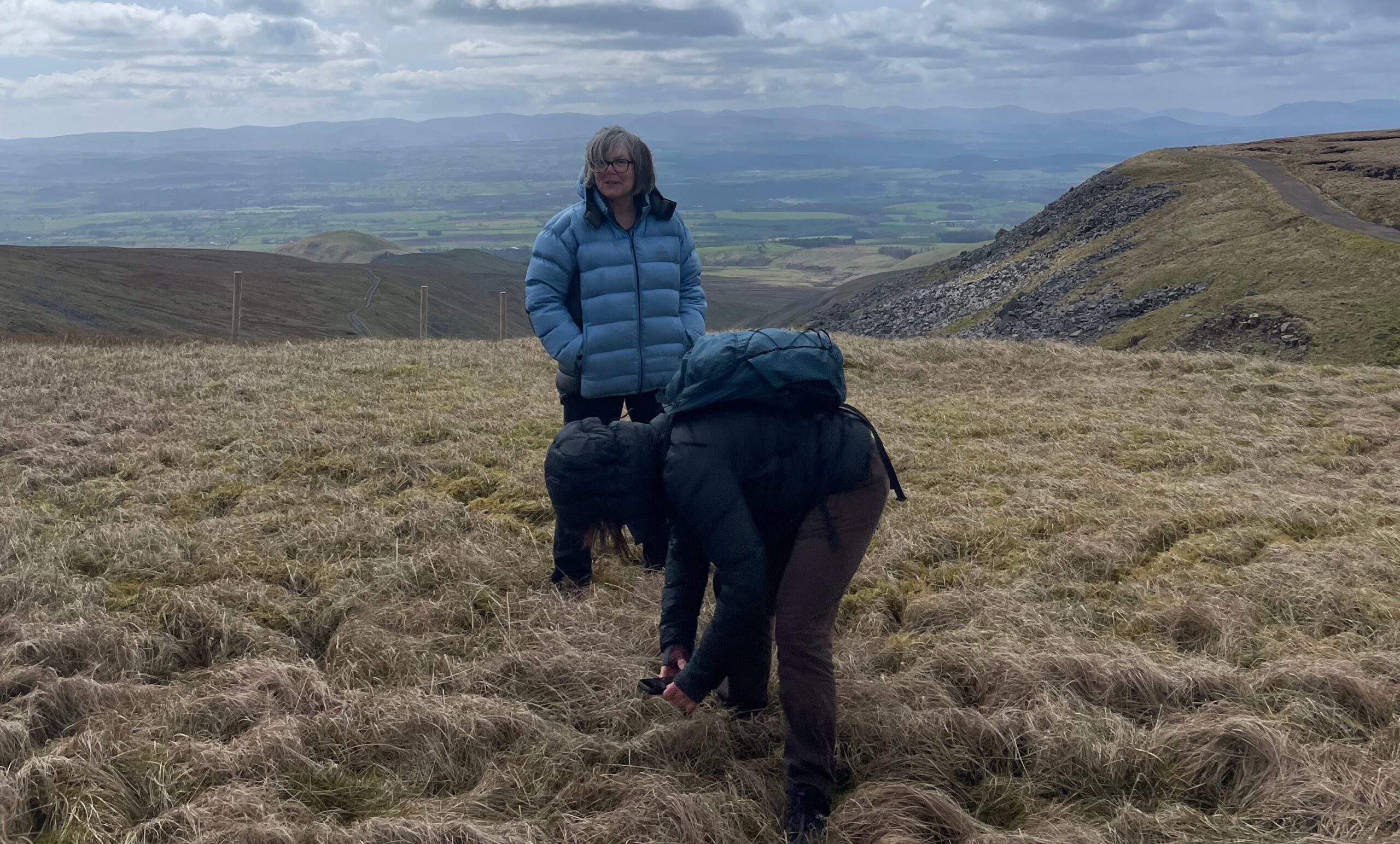
At the very beginning of the project, I was privileged to have an introduction with David Welch, who very kindly took me under his wing, and I held his experience dearly as a mentor. Many discussions were had over email, piecing together the puzzle that may unlock the secrets and promote success.
David Welch was a much-respected Scottish botanist whose passion for Saxifraga hirculus shaped decades of understanding of this remarkable plant. His love of botany began early in life and led him to study at Downing College, Cambridge, where he developed a strong focus on plant and moorland ecology. Over many years he carefully monitored marsh saxifrage populations in Aberdeenshire, making an invaluable contribution to our knowledge of this rare species in Scotland.
Let’s get building
One of my favourite things is building things, and I knew that somewhere in this puzzle, I’d need to come up with a creative horticultural solution to mimic the perfect conditions. Bit by bit, with David’s guidance, I pieced together a plan. The result? What we now call the “cascade” at the RBGE Nursery.
Sadly, David passed away before the build was finished. He was never shy about sharing his knowledge, and his cheeky sense of humour made every conversation a joy. David educated, inspired, and motivated me, and he made this species a true obsession for me. Now, success in cultivating this plant wasn’t just for the species it was for David too.
The “Cascade”
We had the “cascade” up and running before our first vegetative collections in May 2023. It was built to give these plants exactly what they need to thrive a carefully crafted environment, tailored just for them.
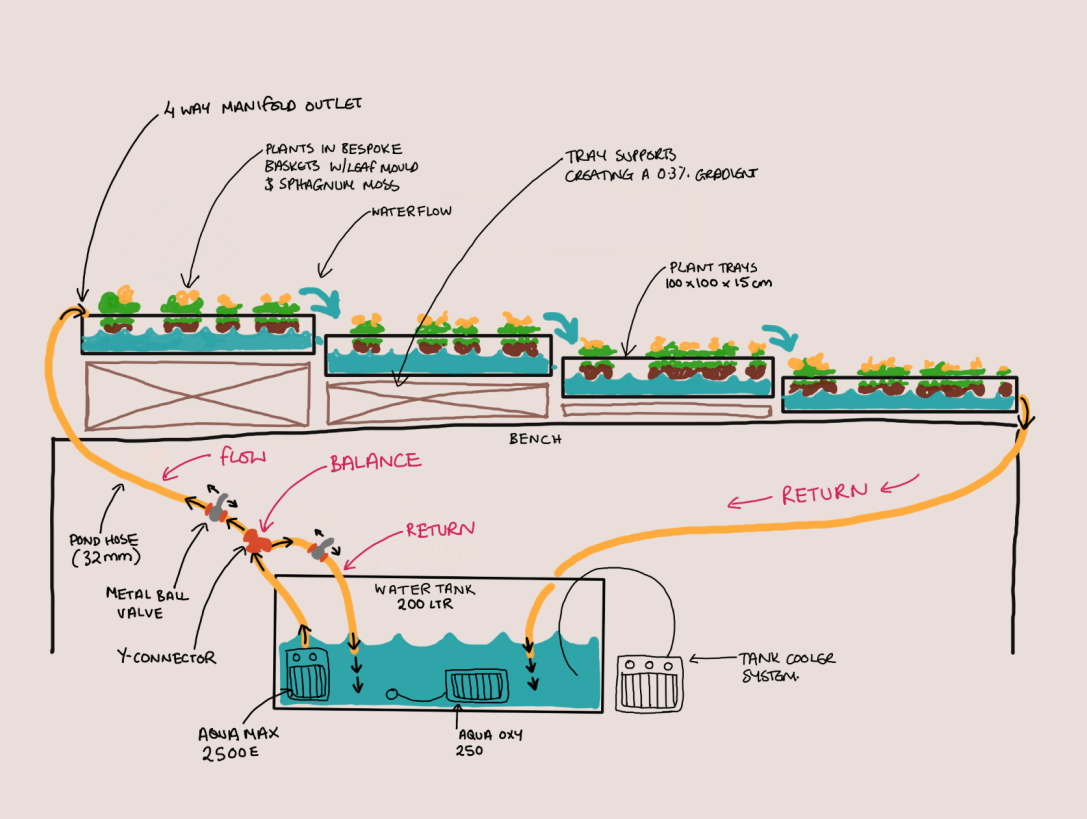
A waterfall pump keeps the water highly oxygenated, pushing it from a reservoir and controlling the flow just right. The water spills out at the top of a series of tiered trays, tumbling down and weaving through the roots just like in the wild.
Keeping the water cool like the chilly streams in high-altitude sites was another challenge, especially with city summers and black trays soaking up the sun. We solved it with a hefty water chiller, circulating and cooling the water before sending it back through the system. The plants had to sit at just the right height above this chilled, moving water table the base of the rosette needed to be between 8 and 14 cm from the water surface. We made bespoke baskets for potting our plants into.
I was curious about the water quality in natural habitats, since these plants are so picky about their base-rich communities. We tested for minerals and metals, comparing what we found in the wild to our tap water. It turned out our water had higher magnesium and other elements that marsh saxifrage just can’t tolerate. The solution? Lining our plant baskets with sphagnum moss. After some trial and error, it worked sphagnum naturally filtered out the excess minerals and metals. Bryophytes never fail to amaze me.
Diversification through Cultivation
With so many populations down to just a handful of genetic individuals, it was vital to get these plants flowering and cross-pollinating, to boost their genetic health. While isolated populations are low on diversity, together they still held enough genetic variation that we didn’t need to bring in material from elsewhere.
Plant material was collected from 5 wild Scottish sites in May 2023, and seed from 4 in the Autumn.
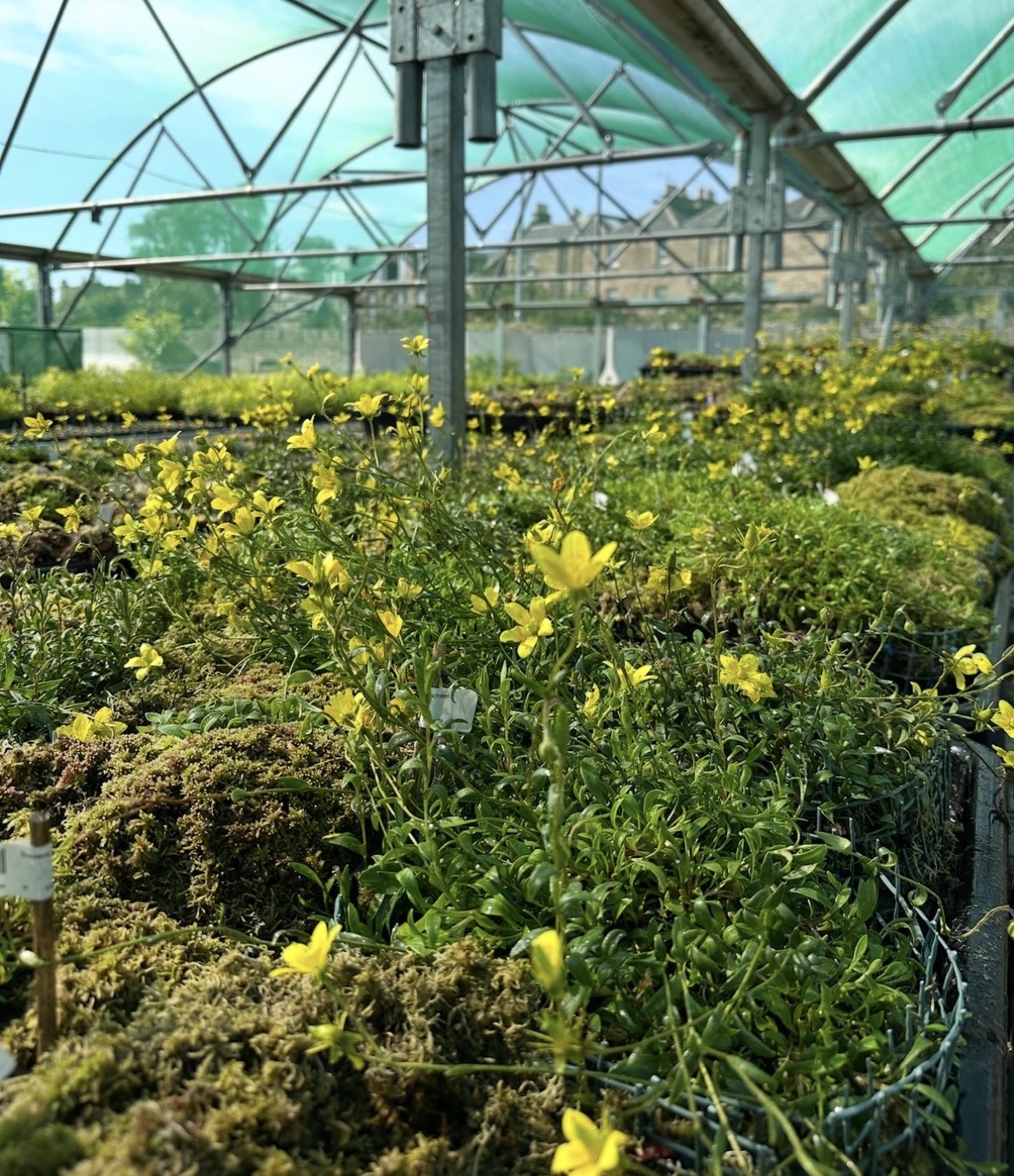
The plants thrived many doubled in size by summer 2024, and we saw our first mass flowering. Over 500 blooms appeared, letting us cross-pollinate and collect even more seed from this wonderful mix. It was a joy to see them flourish.
We sowed the seed and watched them grow, filling 500 baskets along a 15-metre-long, two-metre-wide cascade. After another mass flowering in 2025 over 2000 flowers! the plants were big enough to divide into three plugs each, giving us 1500 strong plants ready for their new homes.
Finding New Homes
Cultivation has been a success, but the real goal is to create new, self-sustaining populations out in the wild giving this species a future in Scotland. But where should we plant them? As we’ve learned, both in the wild and through our own trials, S. hirculus is incredibly particular. Finding the right site became our next big challenge, and I was determined to get it right.
To help narrow things down, I started looking for associated species. I discovered that a rare moss, Tometypnum nitens, was present in five of our natural S. hirculus populations. I don’t believe in coincidences, so I began tracking records of this moss across Scotland. T. nitens isn’t quite as rare as S. hirculus and sometimes grows without it, but maybe its presence could point us toward the right habitat, since both seem to need such specific conditions.
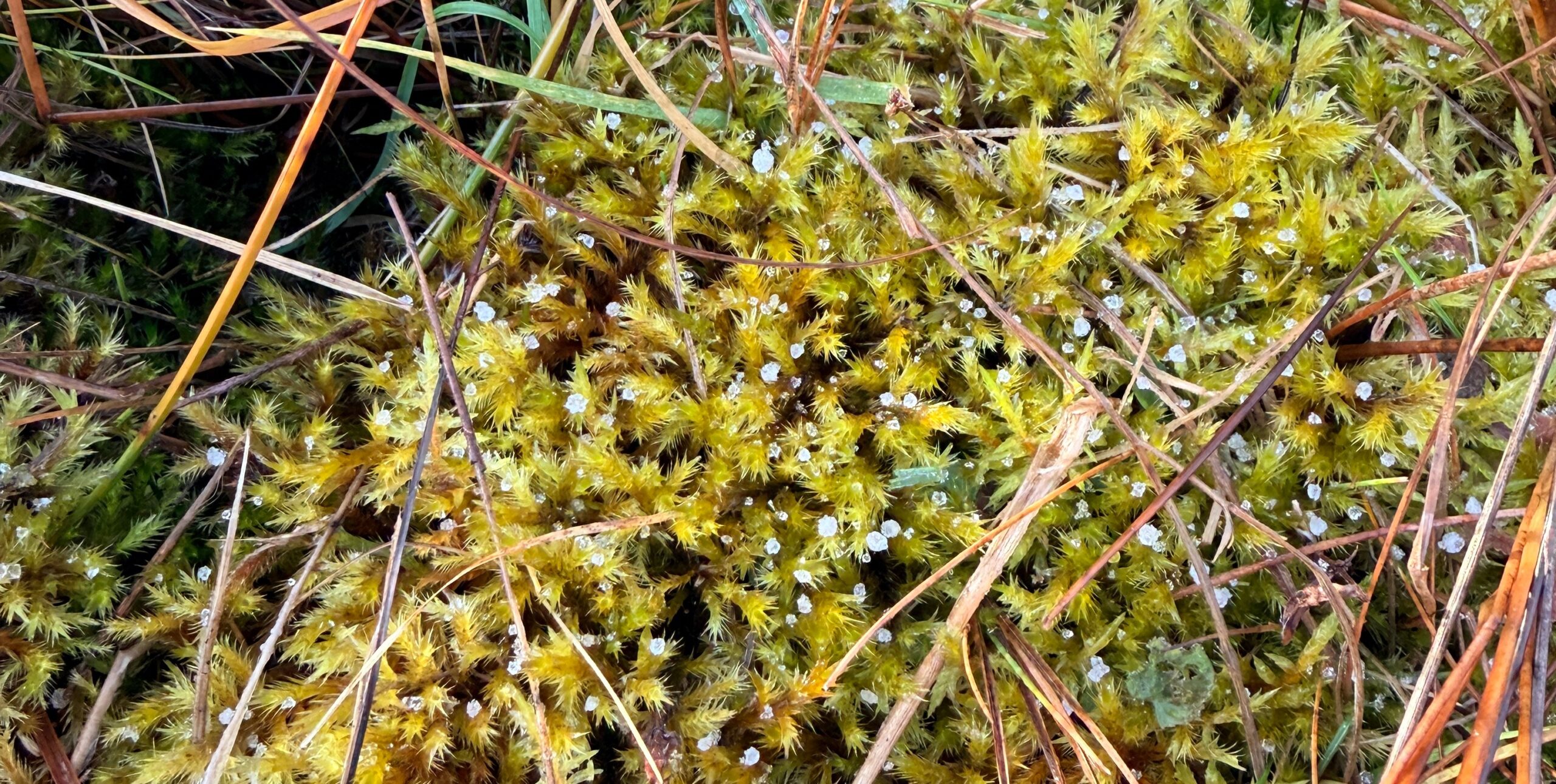
So off I went, moss hunting. In some places, land management changes since the last records had wiped out the moss, making the site unsuitable for planting. Hydrology had shifted, grazing had intensified, or sometimes fencing had allowed taller vegetation to take over. It was heartbreaking to see this happen in two S. hirculus populations in the UK.
But there was hope. One record led us to a site with perfect hydrology, the right associated species, plenty of space for planting, and just the right amount of grazing. Best of all, this was a site David Welch himself had once identified as a potential translocation spot. It felt like a win a chance to finish this chapter for S. hirculus and honour David’s legacy at the same time. Moments like this remind me why I do this work.
We are thrilled to be able to continue our work for this species in our next project. With many more plants still waiting in the nursery for their wild homes, the hunt continues for those rare and perfect places to plant into. The journey is far from over, and I can’t wait to see where it leads. More information to follow.
This project is supported by the Scottish Government’s Nature Restoration Fund, managed by NatureScot.


Instagram @rbgescottishplants
Bluesky @thebotanics.bsky.social
X @nature_scot
X and Facebook @ScotGovNetZero
Facebook @NatureScot
#NatureRestorationFund