
The following blog was written by Linde Hess a digitiser in the Herbarium.
Since 2021 we have increased our digitisation capacity reaching 1 million specimens imaged in August 2024. Each digitiser is assigned a family of plants to work through. This series of blogs will spotlight the families that have been completed by a member of the team.
About the Family
The nearly 900 species and ~80 genera of this family mainly occur in the subtropics and tropics. They are trees, shrubs, occasionally herbs or lianas. Genera that have temperate species include: Toxicodendron (poison oak and poison ivy), Cotinus (smoke-bush), Rhus (sumacs and varnish trees), Schinus (pepper trees) and Pistacia (turpentine tree, pistachio, and mastic). Mangoes, cashews and pistachios all come from members of this family. You can often see the ornamental shrub Cotinus coggygria in gardens in the UK; it is also known as European smoke tree or smoke bush, you can see a picture of a specimen below.
The family Anacardiaceae is part of the order Sapindales. Recent molecular phylogenetic studies have shown that the families Anacardiaceae and Burseraceae are sister groups in Sapindales after having been separated in different orders for a long time. Anacardiaceae and Burseraceae are traditionally distinguished by the number of ovules (1 vs. 2) per locule and the direction of ovule curvature.

Our collections
We now have a total of 5,443 Anacardiaceae specimens in our online catalogue – mass digitisation added 3,350 entries to our database. Of these 103 specimens are types. Our Anacardiaceae specimens can be viewed here.
Top 5 regions
| No. of Specimens | Herbarium Filing Region |
| 635 | Southern Africa |
| 601 | Inner China, Korea & Taiwan |
| 485 | India, Bangladesh & Pakistan |
| 369 | Nother America |
| 360 | West Asia: Arabian Peninsula |
The majority of our Anacardiaceae specimens were collected in Southern Africa, closely followed by the region comprising of Inner China, Korea and Taiwan. Though the Arabian Peninsula is relatively small compared to other collection regions, a large proportion of our Anacardiaceae collection originates from the Arabian Peninsula. It is a region we focus on when collecting due to our links with the Centre for Middle Eastern Plants (CMEP), so it is not surprising we have so many specimens. Central America tends to be under-represented in our collection; this is also the case for this family.
Top 5 Genera
| No. of Specimens | Genus |
| 1,817 | Rhus |
| 616 | Pistacia |
| 282 | Buchanania |
| 227 | Semecarpus |
| 96 | Schinus |
The genus Rhus is best represented in our collection, followed by Pistacia. The native range of the genus Rhus is wide and comprises Eurasia, Canary Islands, NW. Africa, N. & Central America, Bahamas and Cuba.
We have no species of the genera Tumultivenia and Uniostium, but both genera only consist of one species each, endemic to Western Tropical South America. We only have one Fegimanra specimen, while 3 species exist in Tropical Africa.
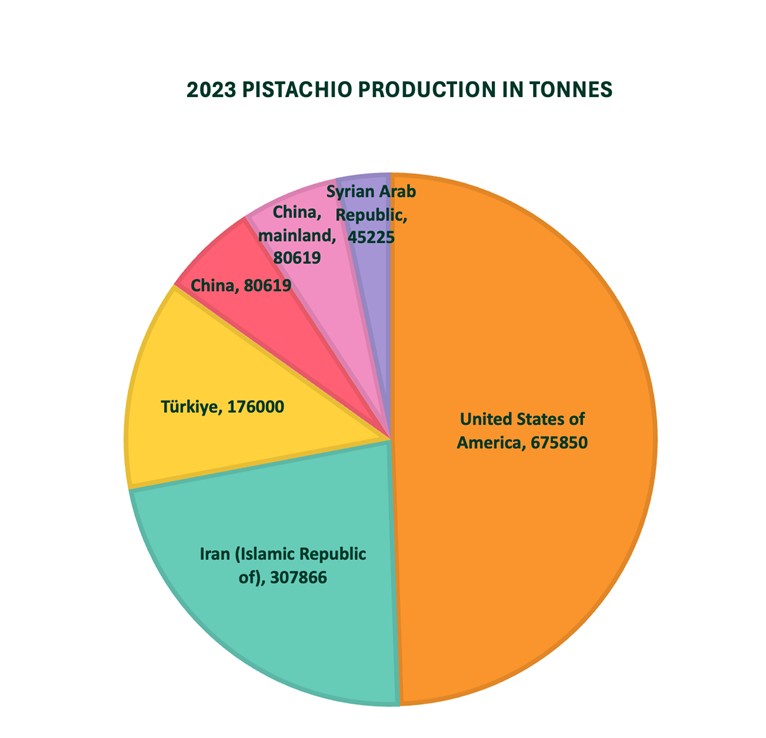
You can find 25 specimens of Pistacia vera in our collection; this is the tree that produces scrumptious* pistachios. Most of our specimens originate from West Asia and the Mediterranean, only two of our specimens were cultivated. However, pistachio trees have been cultivated worldwide and are an economically important crop. The United States is the largest producer of pistachios, producing nearly 676.000 tonnes (in weight, including shells) of pistachios in 2023, see pie chart below. The data originates from FAOSTAT, FAO is the Food and Agricultural Organisation of the United Nations; through FAOSTAT it provides free access to food and agriculture data for over 245 countries and territories and covers all FAO regional groupings from 1961 to the most recent year available. Here is a link down the FAOSTAT rabbit hole: https://www.fao.org/faostat/en/#home
*(personal preference)
Interesting specimens
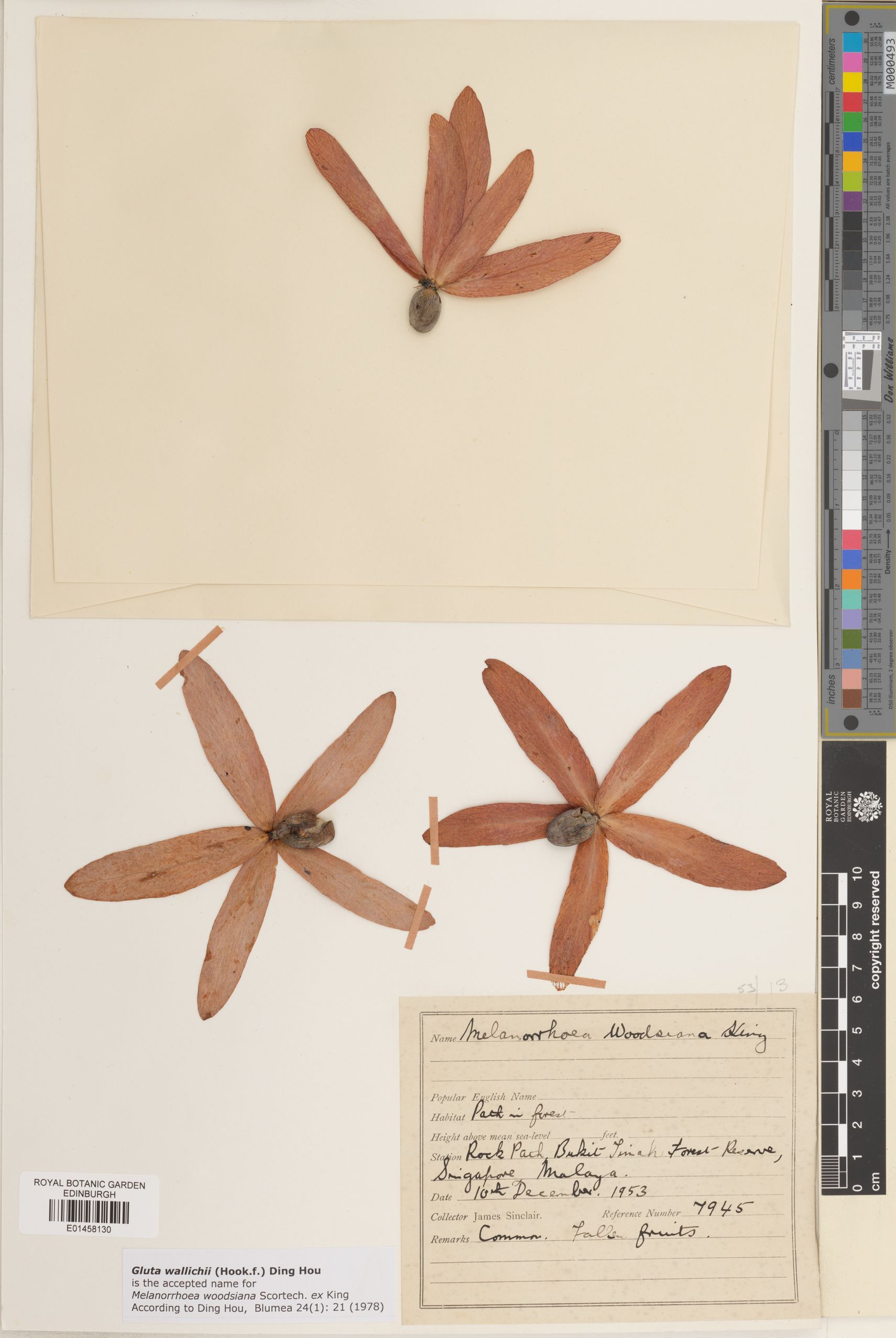
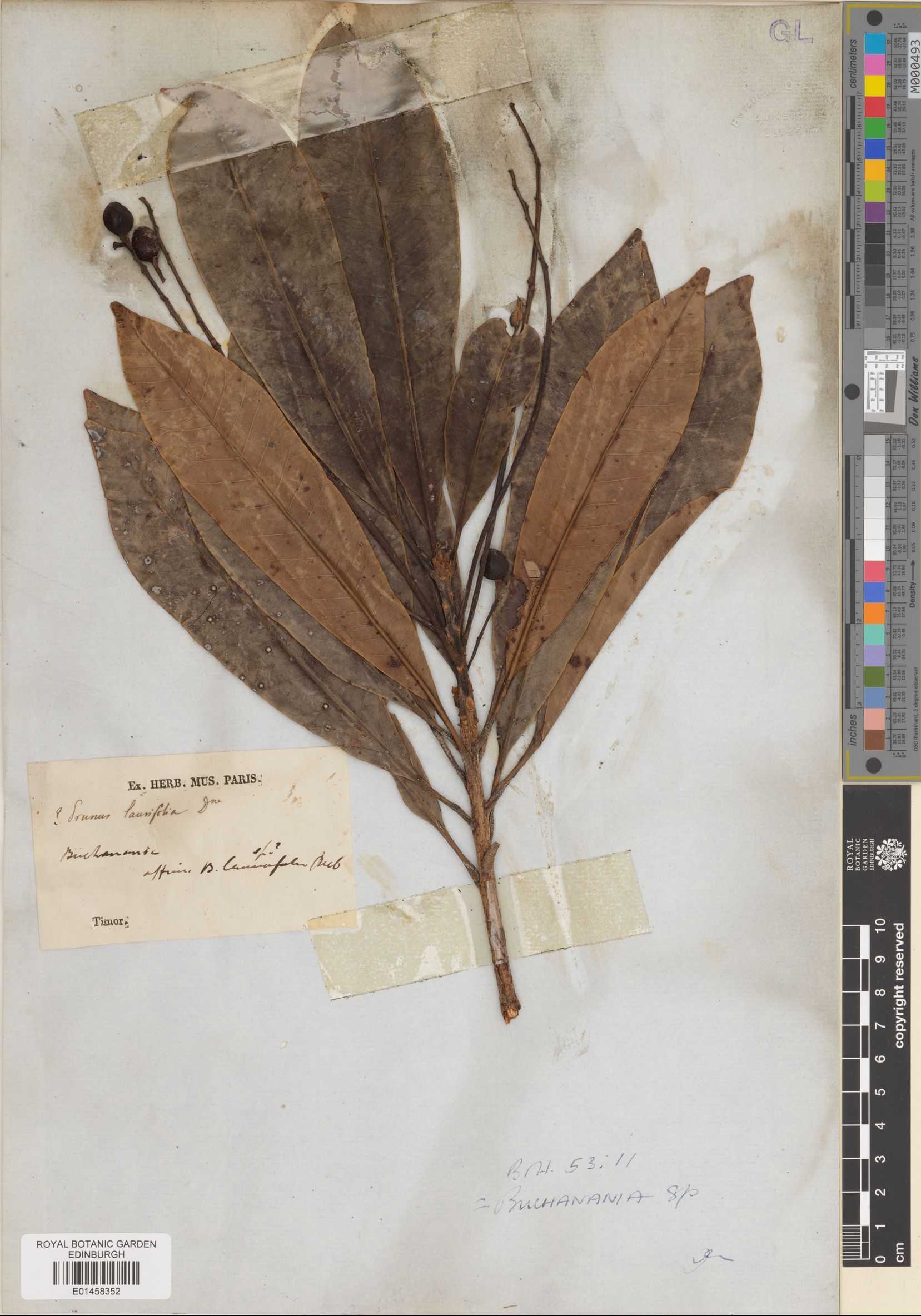
While digitising our vast collection, we get to handle nearly every specimen and we see the good, the bad and the ugly. Seeing a lovely, historic specimen stuck to a board with yellowed and brittle sticky tape can be heart wrenching (see included image of a Buchanania specimen). Sellotape and Scotch were developed in the 1930s and the manufacturers then suggested a lot of applications for this new product, such as use as a hygienic plaster on wounds, the perfect mask for paintwork (this was obviously before the invention of masking tape), etc, see the ad for Sellotape below.
A small proportion of our 20th century specimens have been sticky-taped to the backing paper. The problem is that the tape also sticks to the specimens and can damage them. Over time, the tape yellows, and becomes brittle. Tape also loses its sticking power, resulting I detached parts of specimens in our collection folders. It is labour-intensive to remove the tape without damaging the plants, so for now we are just diligently noting instances of tape in our big spreadsheet for a future project.