
The following blog was written by Rose Kent a digitiser in the Herbarium.
Since 2021 we have increased our digitisation capacity reaching 1 million specimens imaged in August 2024. Each digitiser is assigned a family of plants to work through. This series of blogs will spotlight the families that have been completed by a member of the team.
About the family
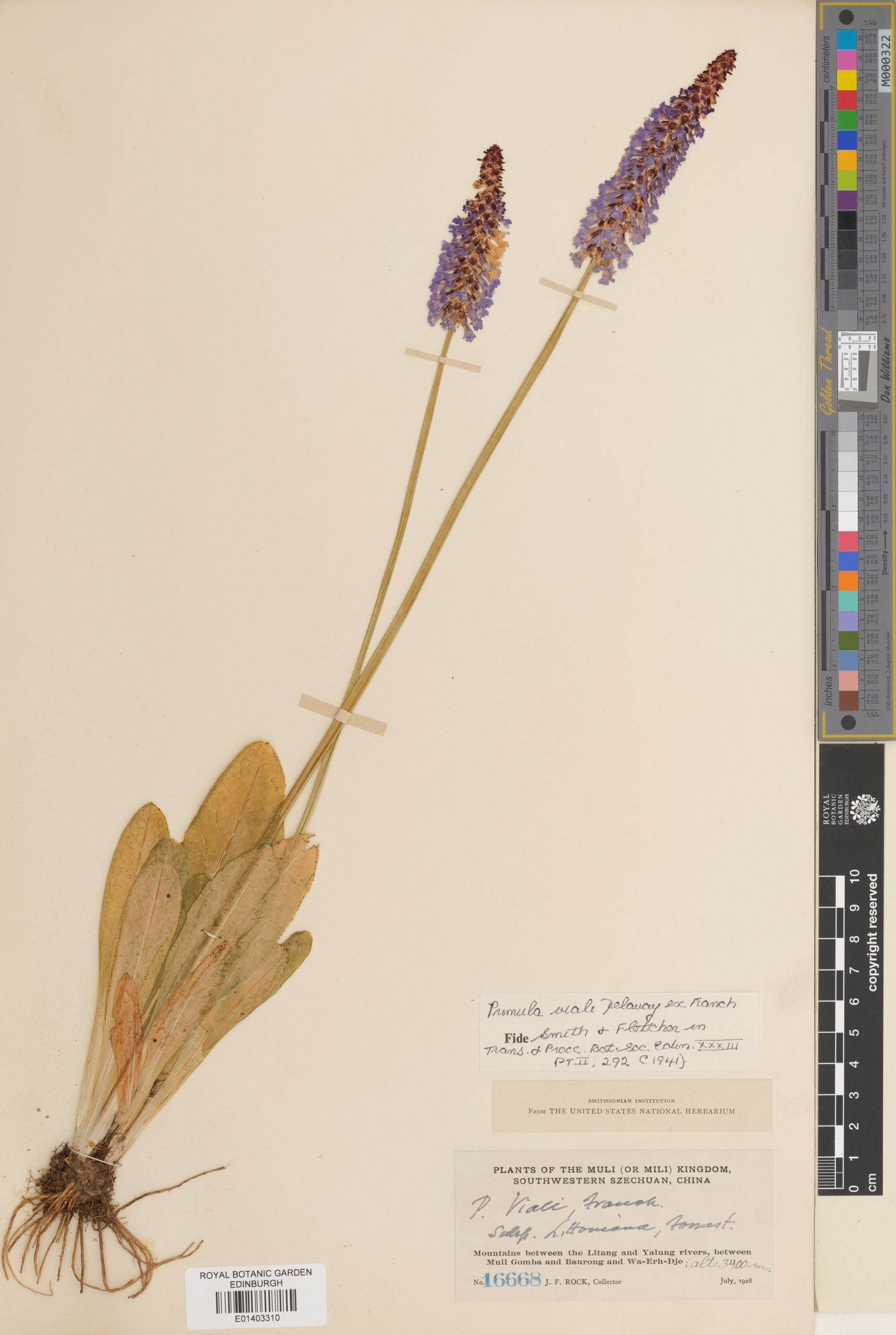
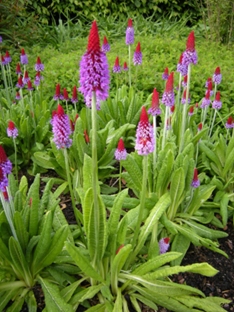
The Primulaceae s.l. (the primrose family) is a diverse and broadly defined family in the Ericales. It currently contains 58 accepted genera and nearly 2,600 species. The family is named after its largest genus, Primula, whose name comes from the Latin word prima meaning “first,” which probably refers to the early Spring flowering of many of its species.
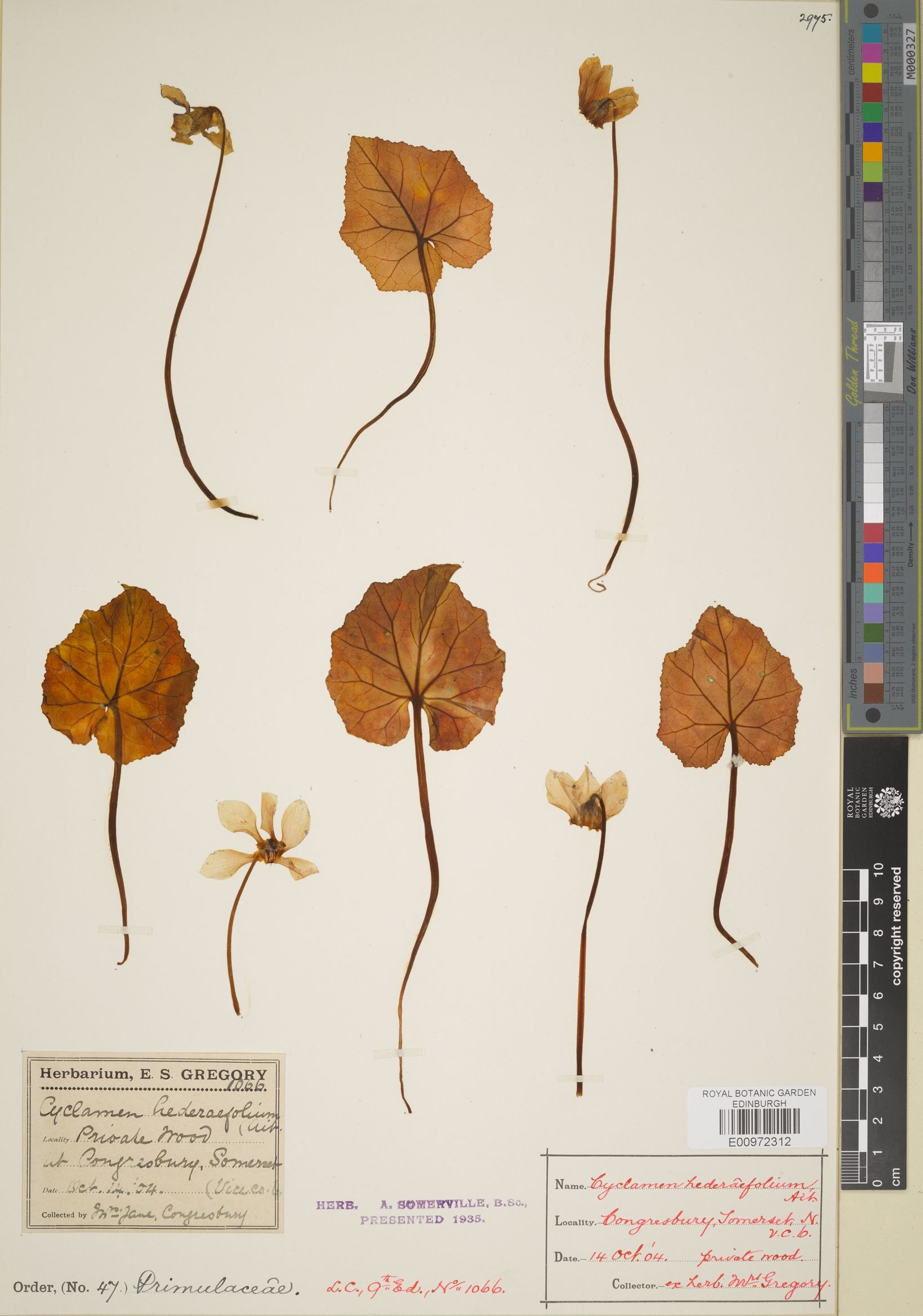
Well-known representatives of the family include popular garden ornamentals and wildflowers such as Primula (some 500-600 species, including primroses and shooting stars), Cyclamen, and Lysimachia (which includes loosestrifes and Lysimachia arvensis, the scarlet pimpernel).
![Dodecatheon frigidum Cham. & Schltr. [Primula frigida (Cham. & Schltdl.) A.R.Mast & Reveal]
collected in Alaska in 1968. This is part of a group of plants known colloquially as “shooting stars.” (E01413854)](https://stories.rbge.org.uk/wp-content/uploads/2025/10/E01413854_4.jpg)
collected in Alaska in 1968. This is part of a group of plants known colloquially as “shooting stars.” (E01413854)
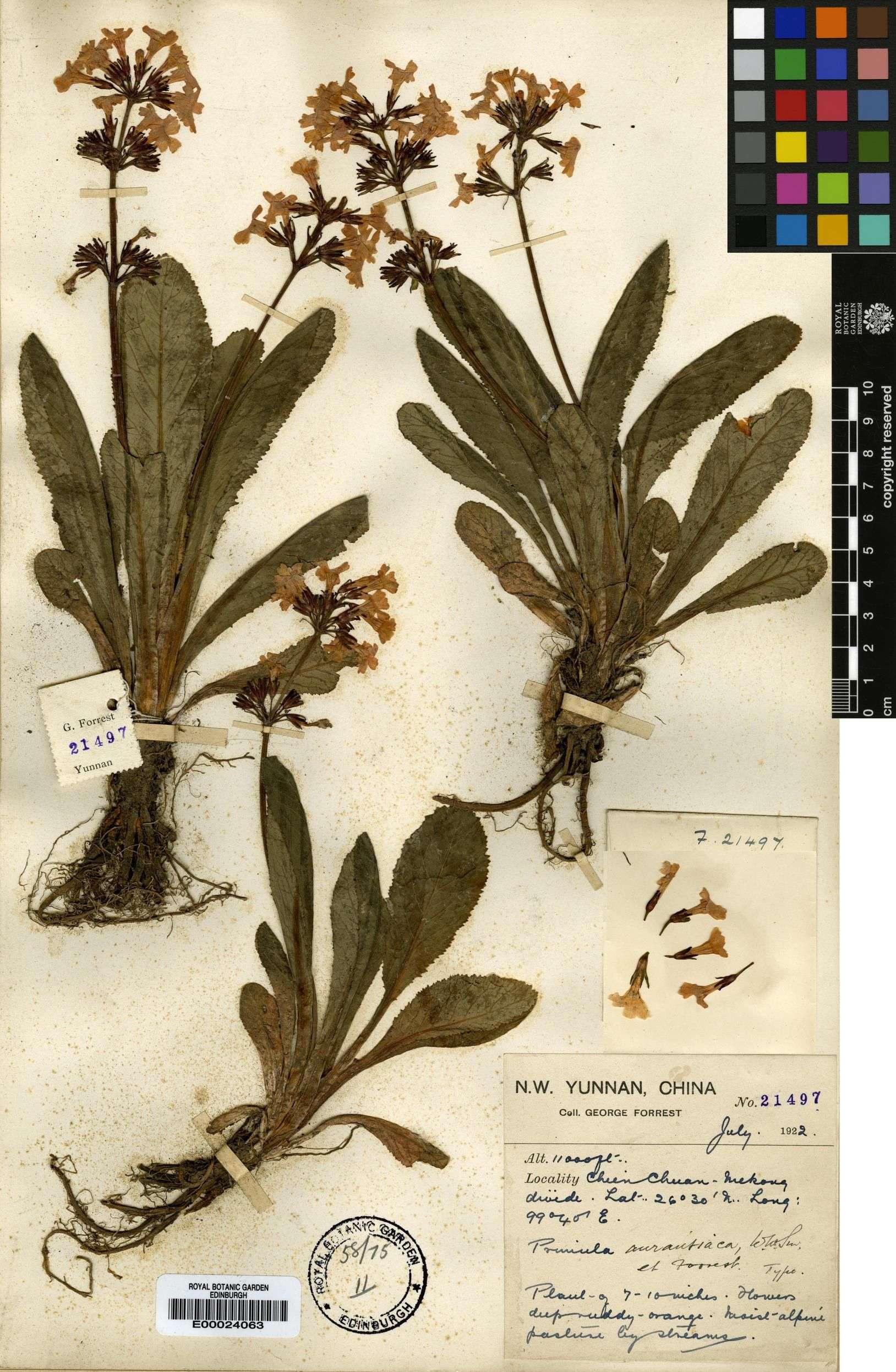
George Forrest and Chinese Primulas
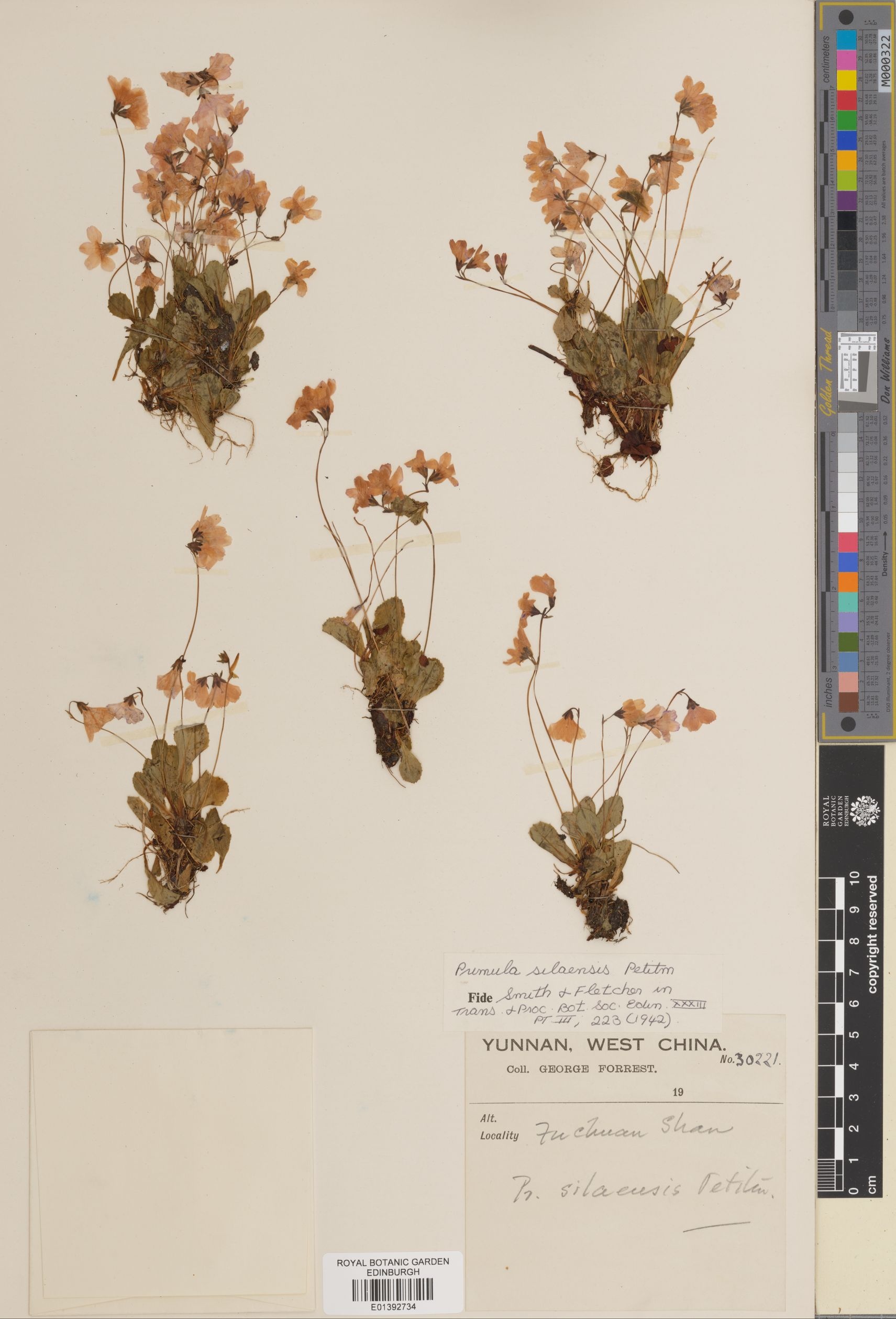
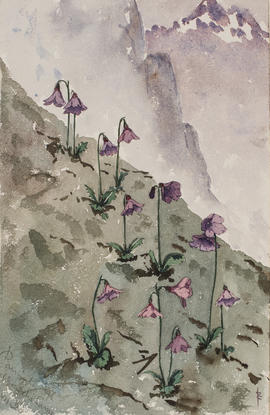
There are multiple Primulaceae specimens in the RBGE herbarium that were collected by George Forrest (1873 – 1932) in South-West China. [https://stories.rbge.org.uk/archives/tag/george-forrest] Employed by A.K. Bulley and his nursery Bees Seeds Ltd, Forrest’s purpose was to procure novel plants and seeds that would be particularly suited to cultivation in British gardens. The native range of many Primula species is concentrated in Western China and the Himalayas, and so many of these plants we now find in our gardens were introduced to Europe by George Forrest, as well as other collectors such as George Sherriff, Frank Ludlow, and Frank Kingdom Ward (another collector commissioned by Bees Seeds Ltd.). The legacy of these collectors is marked in the names of various species in the Primulaceae, such as Primula forrestii, P. sherriffi, P. ludlowii, and Androsace wardii.
The Dog Mess Flower
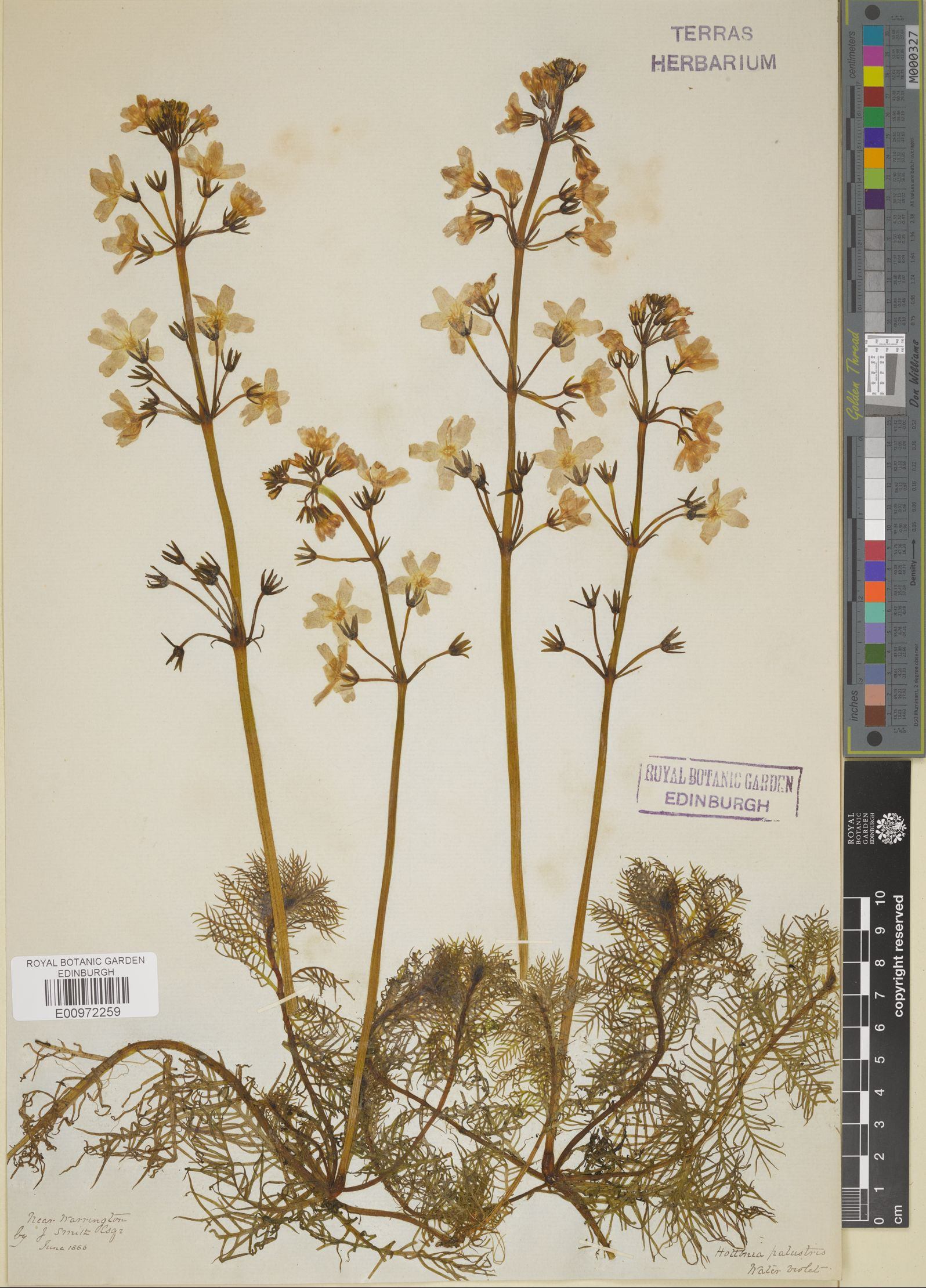
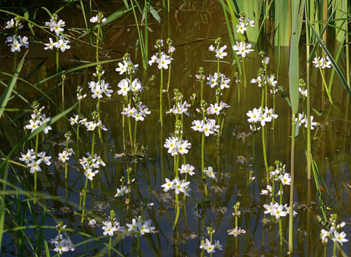
Plants in the Primulaceae are of course not just limited to these familiar garden flowers, but also include vines, shrubs, and trees. The family is distributed globally, with plants growing in a variety of habitats, from alpine and arctic meadows to fully aquatic environments.
Deherainia smaragdina, for instance, is a shrub native to the wet tropical forests of Central America. It has waxy green flowers that appear inconspicuous against the plant’s deep-green foliage (“smaragdina” is a Greek word meaning “emerald-like”). These flowers are hardly inconspicuous to the nose however – they are incredibly pungent, smelling something like a ripe blue cheese or “dog mess” (as one common name for it suggests). This peculiar smell attracts insects which pollinate the plant.
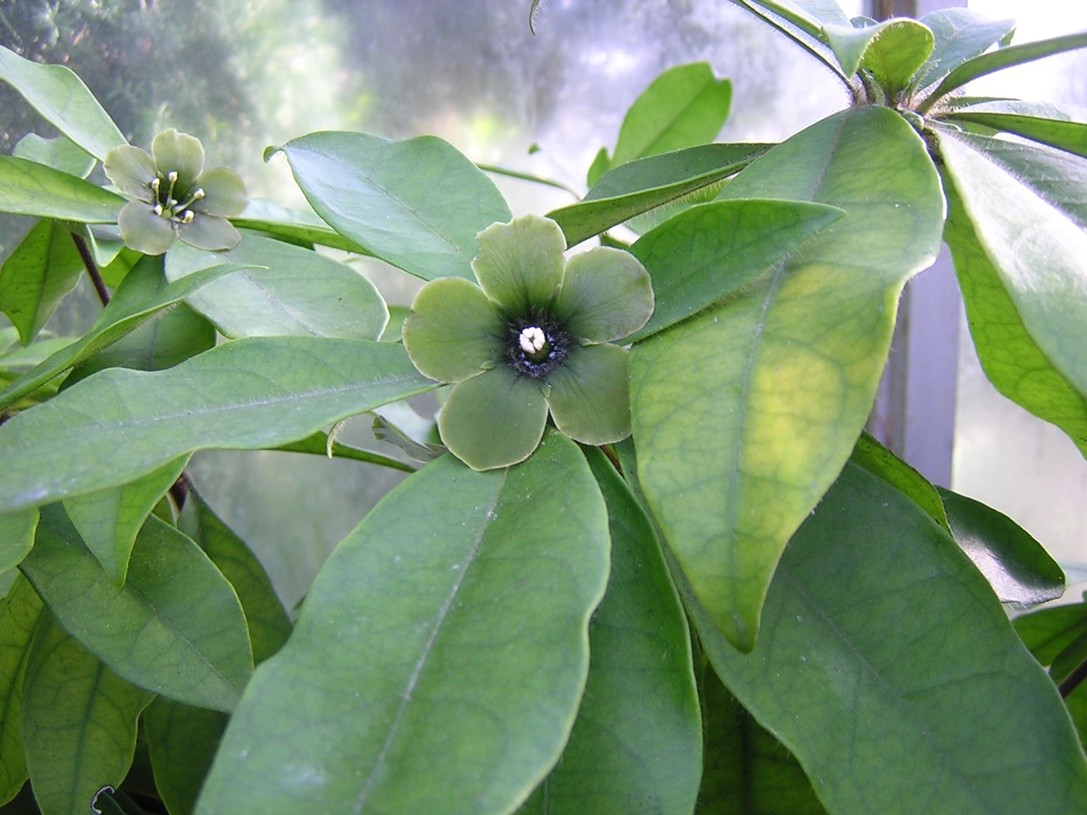
The Scottish Primrose
In Scotland, Primula scotica (or the Scottish primrose) grows in moist coastal grasslands in the very north of Scotland, and is not found anywhere else in the world. It is a tiny plant (only a few centimetres tall) with clusters of dark purple flowers and yellow centres that poke up through the vegetation.
Our collections
Our collection holds 15,159 specimens of Primulaceae, with 1,033 type specimens. Our collection can be viewed here.
Top 5 regions
| No. of Specimens | Herbarium Filing Region |
| 4,400 | Inner China, Taiwan and Korea peninsula |
| 2,185 | Europe (excluding Britain & Ireland) |
| 1,652 | Bhutan, Sikkim & Darjeeling |
| 1,610 | Outer Chine incl. Tibet |
| 1,203 | India, Bangladesh & Pakistan |
Top 5 Genera
| No. of Specimens | Genus |
| 11,526 | Primula |
| 2,747 | Androsace |
| 246 | Omphalogramma |
| 219 | Dionysia |
| 205 | Soldanella |
NOTE: With the development of molecular phylogenetic methods (APG IV, 2016), the family has recently undergone significant taxonomic revision, with four subfamilies being circumscribed. These subfamilies include the Maesoideae (consisting of 1 genus of shrubs and trees, Maesa), Myrsinoideae (formerly recognised as the family Myrsinaceae, consisting of 35 genera across temperate and tropical climates, mainly trees and shrubs), Primuloideae (the former Primulaceae s.s. family before it was enlarged, including Primula, the largest genus in the family), and Theophrastoideae (8 genera confined to South and Central America, including Deherainia smaragdina).
It takes time for herbaria to catch up with such big changes. Currently, our arrangement of the Primulaceae in the herbarium represents an older concept of the family (consisting mainly of species in the Primuloideae) and needs to be updated to include all four sub-families currently accepted.