
The following blog was written by Natalie Zarte a digitiser in the Herbarium.
Since 2021 we have increased our digitisation capacity reaching 1 million specimens imaged in August 2024. Each digitiser is assigned a family or group of plants to work through.
Poikilohydry… bless you?
Not quite, so what is poikilohydry? It is the lack of any structural capacity to actively regulate the water content in your own cells. Therefore, poikilohydric plants are entirely dependent on the environment they grow in for the water content of their cells. This might sound bad if you are thinking about growing in a desert where there is generally a lack of water in the ground, leaving you dehydrated. But in combination with cells that can recover from extreme dehydration without any physiological damage, it suddenly turns into a superpower!
This is where lichens excel, they can withstand extreme dryness (desiccation) but are able to quickly rehydrate, as soon as moisture is available again. They stop photosynthesis while in this dormant state, but once they are rehydrated, they spring right back into action as if nothing has happened.
Being poikilohydric enables lichens to colonise hostile habitats like coastal dunes and deserts. They bind several grains of sand together to avoid being blown away themselves, thus reducing wind and water erosion of these sandy habitats.
By creating these bigger cohesive surfaces, lichens reduce runoffs and hold moisture for longer in the ground. Additionally, lichens release nutrients into the ground by fixing atmospheric nitrogen (especially those inhabiting cyanobacteria) and by decomposing themselves. These factors lay the groundwork to make barren sandy habitats more attractive to other plants. Hence, lichens can be the first step to changing a habitat, playing an important role in habitat restoration and ecological succession.
The picture below shows a nice progression of the lichen Stereocaulon condensatum, also aptly known as the “granular soil foam lichen”. This lichen species plays a significant role in the formation of soil, hence creating new habitat for other organisms.
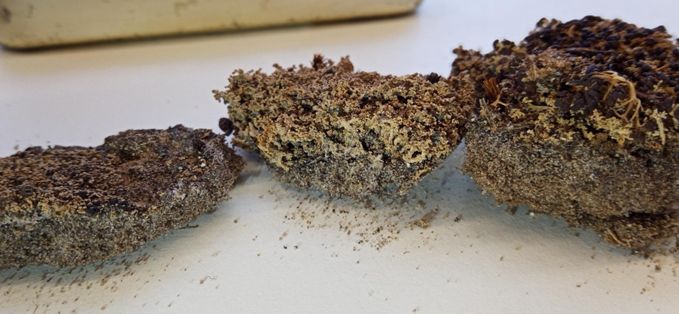
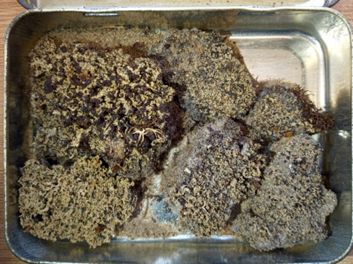
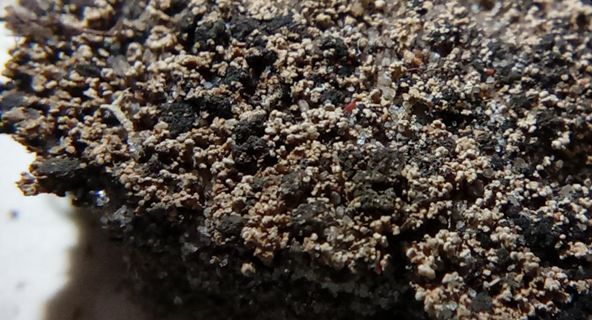
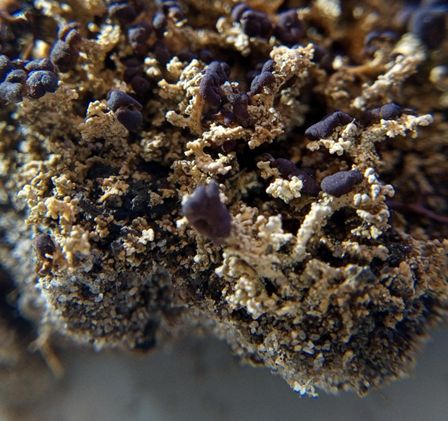
If you find a lichen on one of your walks on the beach or during a prolonged dry period during a hot summer (yes, I know I am writing this from Scotland…). You might be wondering if it is in a dormant state, look closely at its colour and you might be able to tell!
The more intense its colour the higher the chances it is happily photosynthesising away, this can be a brighter green or a really dark intense black depending on the species.