The following blog was written by Rose Kent a digitiser in the Herbarium.
Since 2021 we have increased our digitisation capacity reaching 1 million specimens imaged in August 2024. Each digitiser is assigned a family of plants to work through. This series of blogs will spotlight the families that have been completed by a member of the team.
Gentian Blue
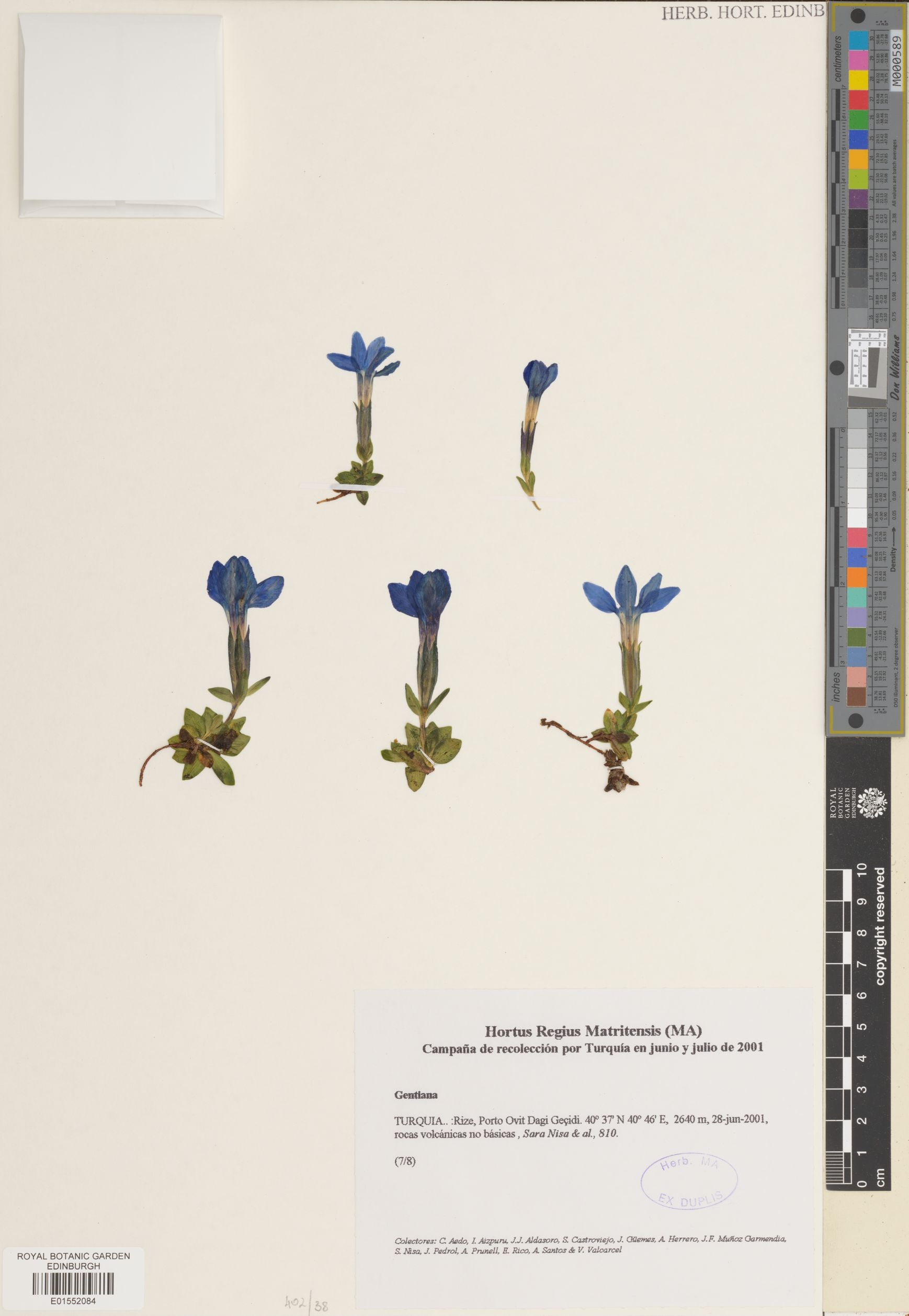
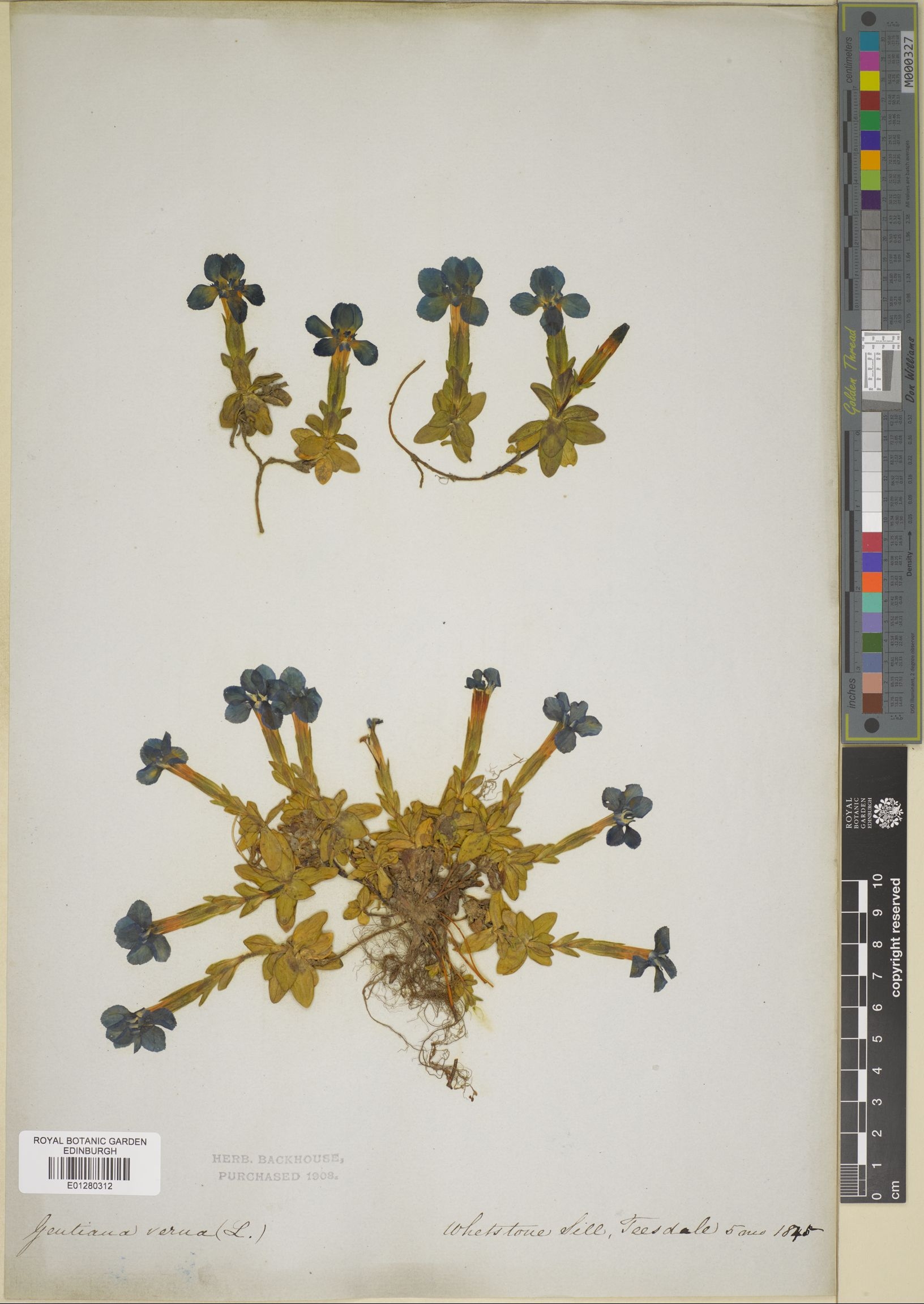
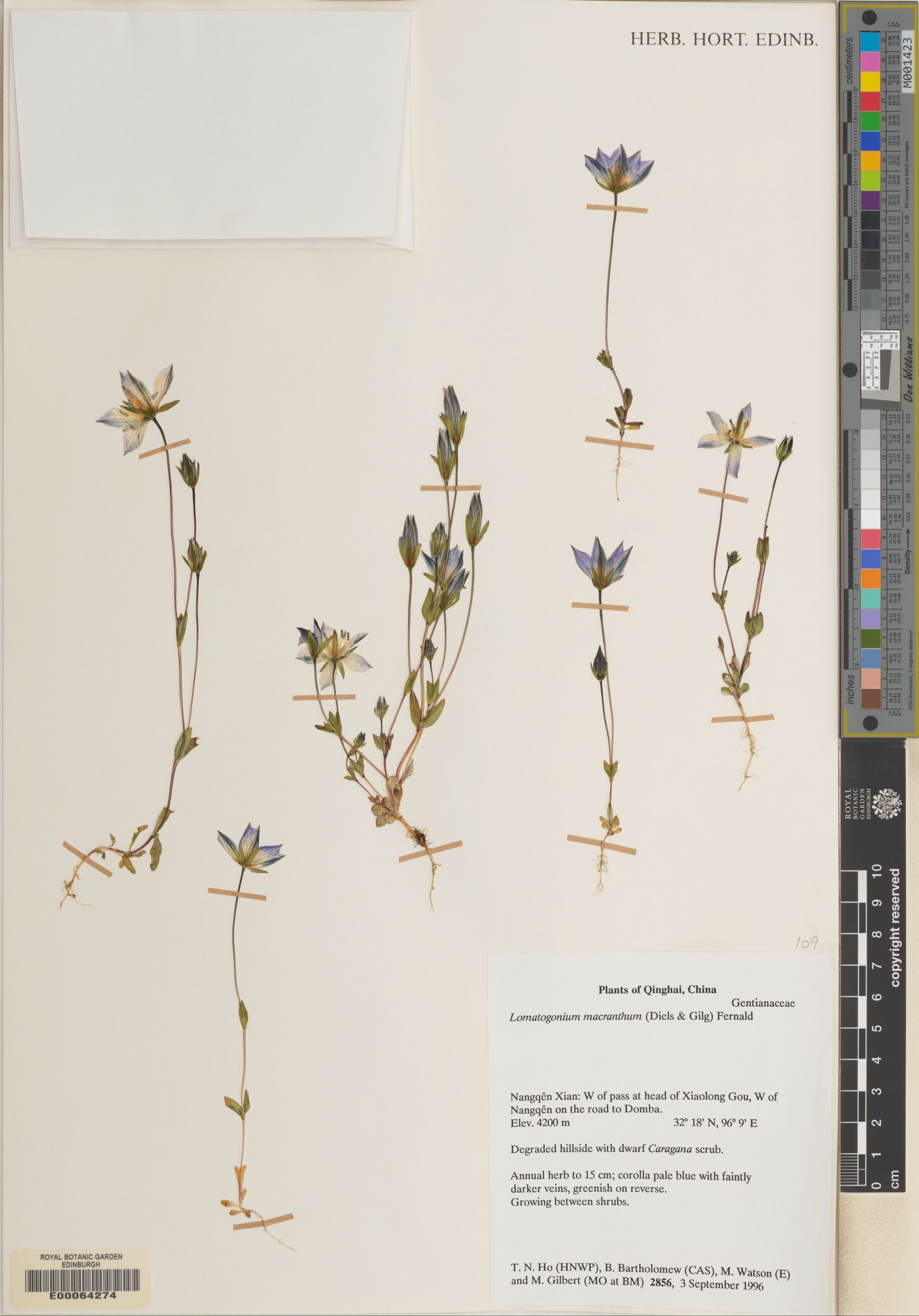
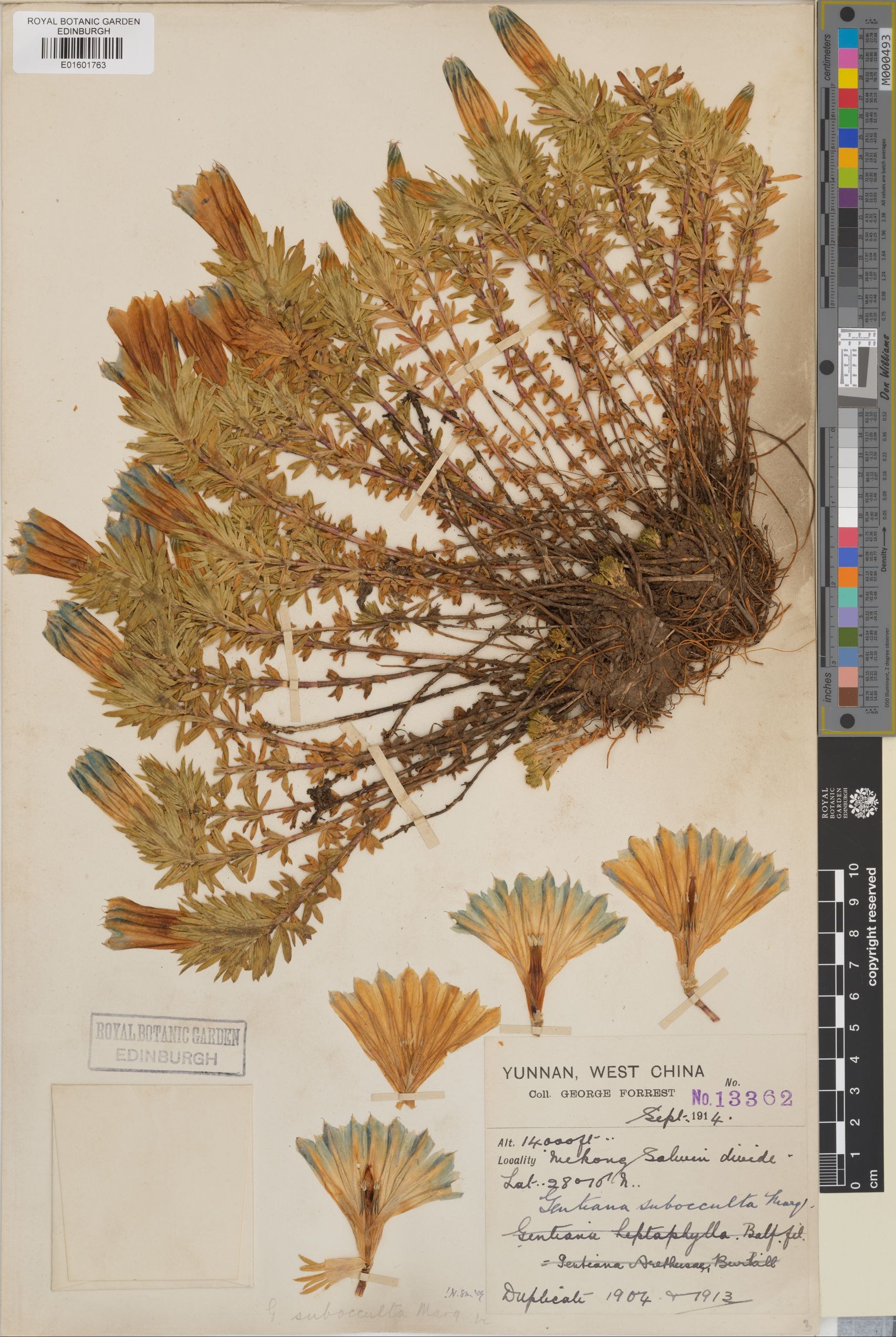
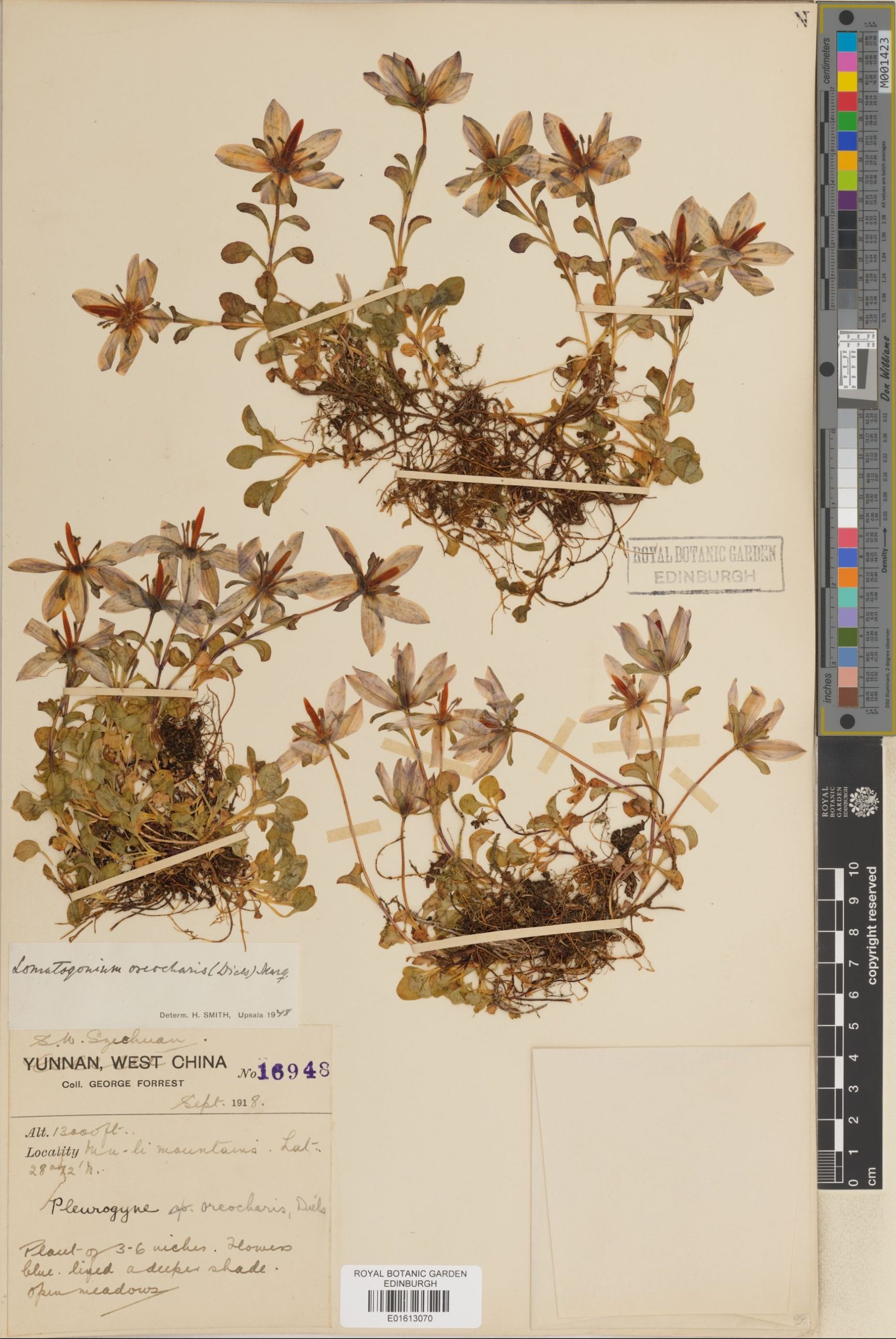
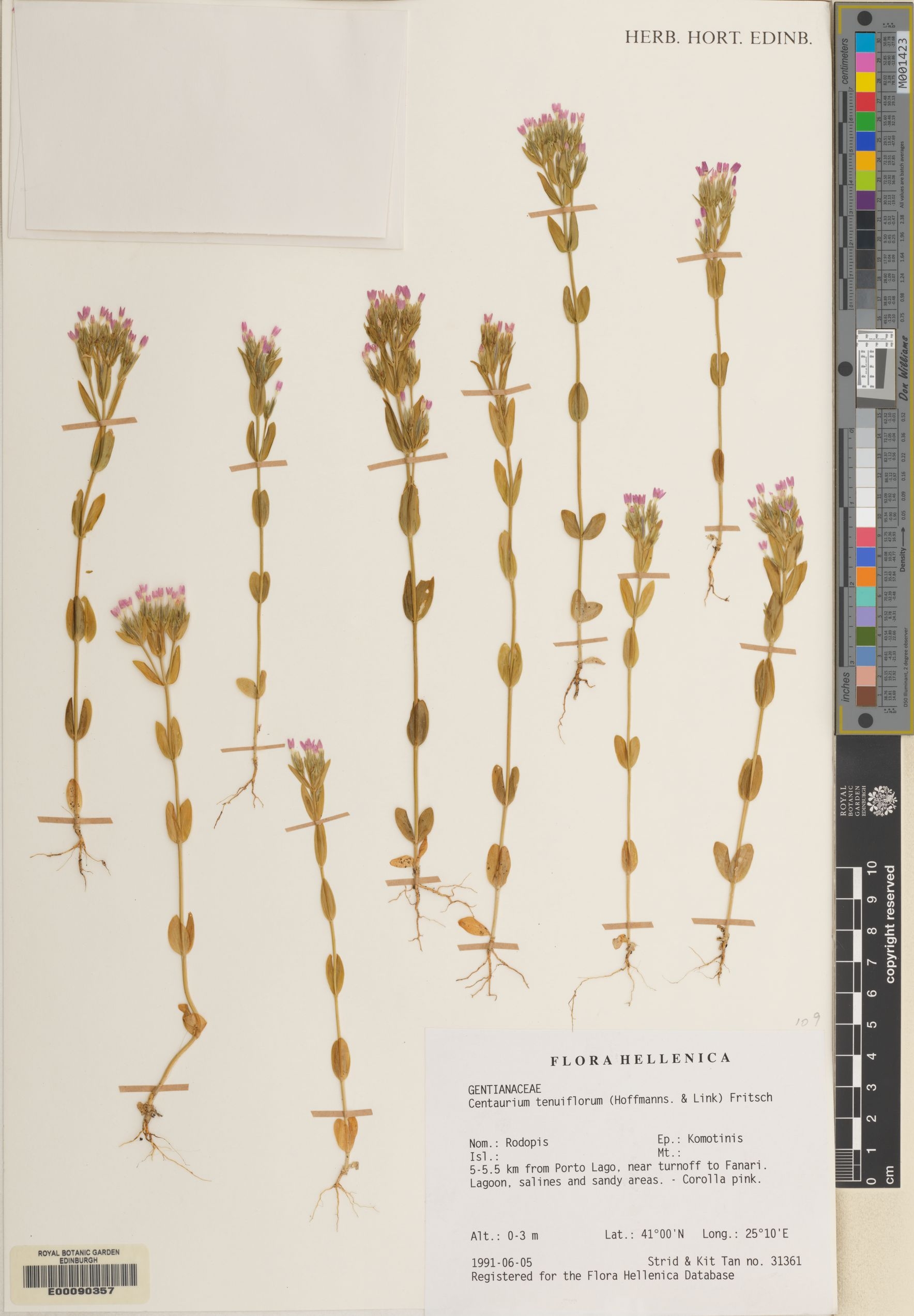
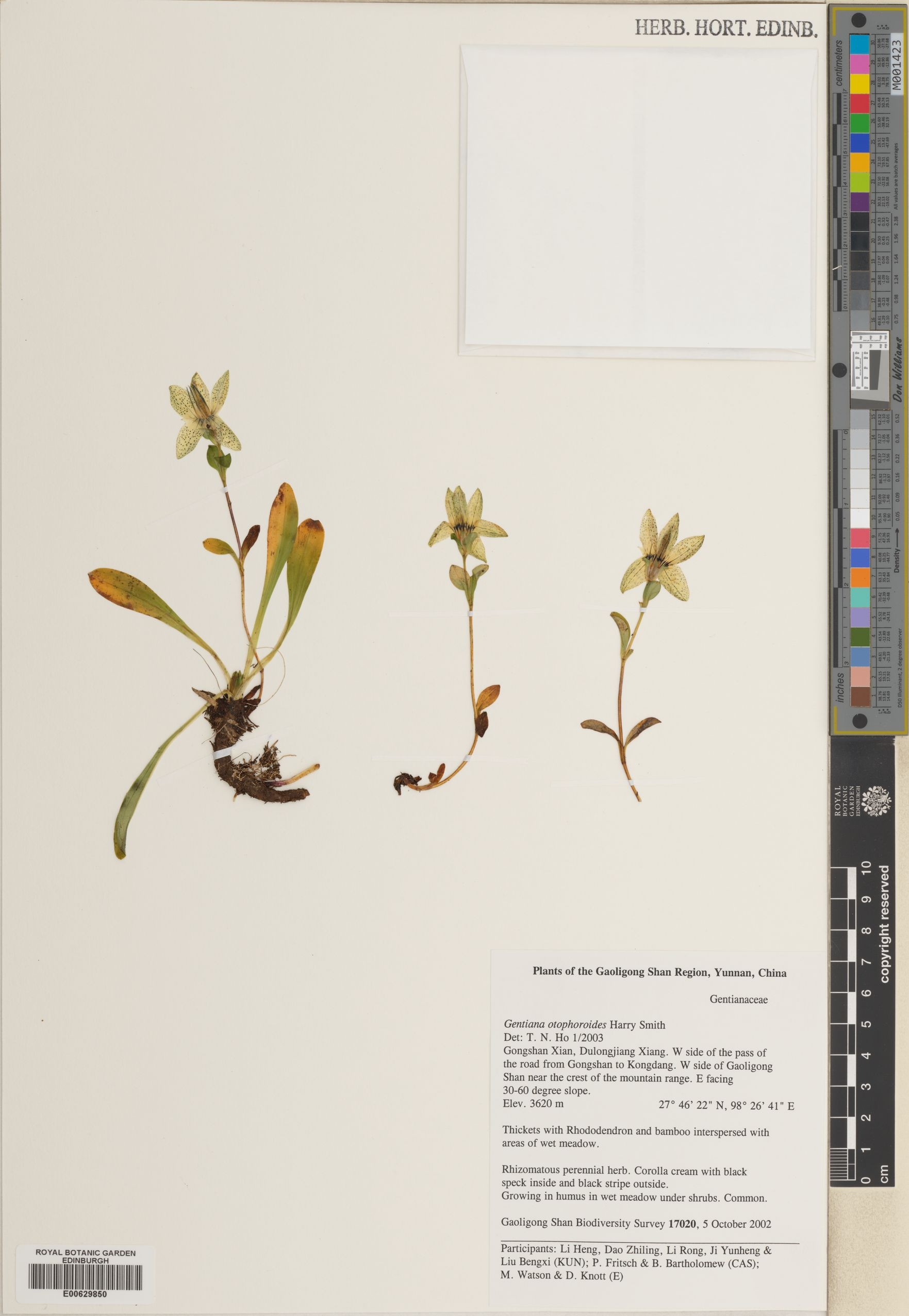
The deep and vivid blues of the gentian are a delight to witness, not least because true blue flowers are particularly rare in nature. Whilst digitising the family, it has been a joy to encounter the palette of blues and purples that have been beautifully preserved in the pressed specimens in our collection. However, not all dried specimens preserve their colour well. Some specimens have colour photographs attached as supplementary information, but most rely on descriptions on specimen labels to attempt to capture colour before a plant is dried or fades with age.
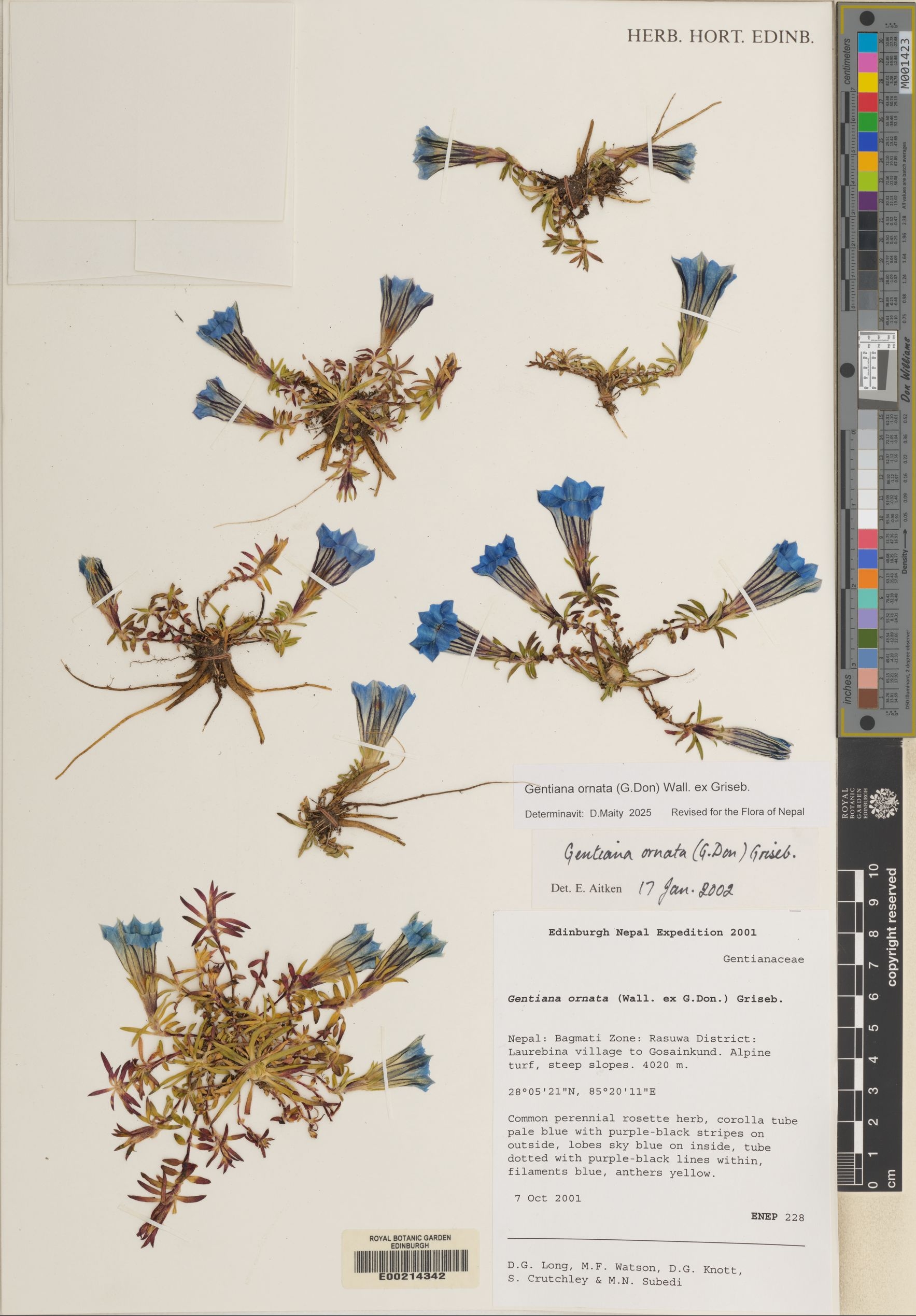
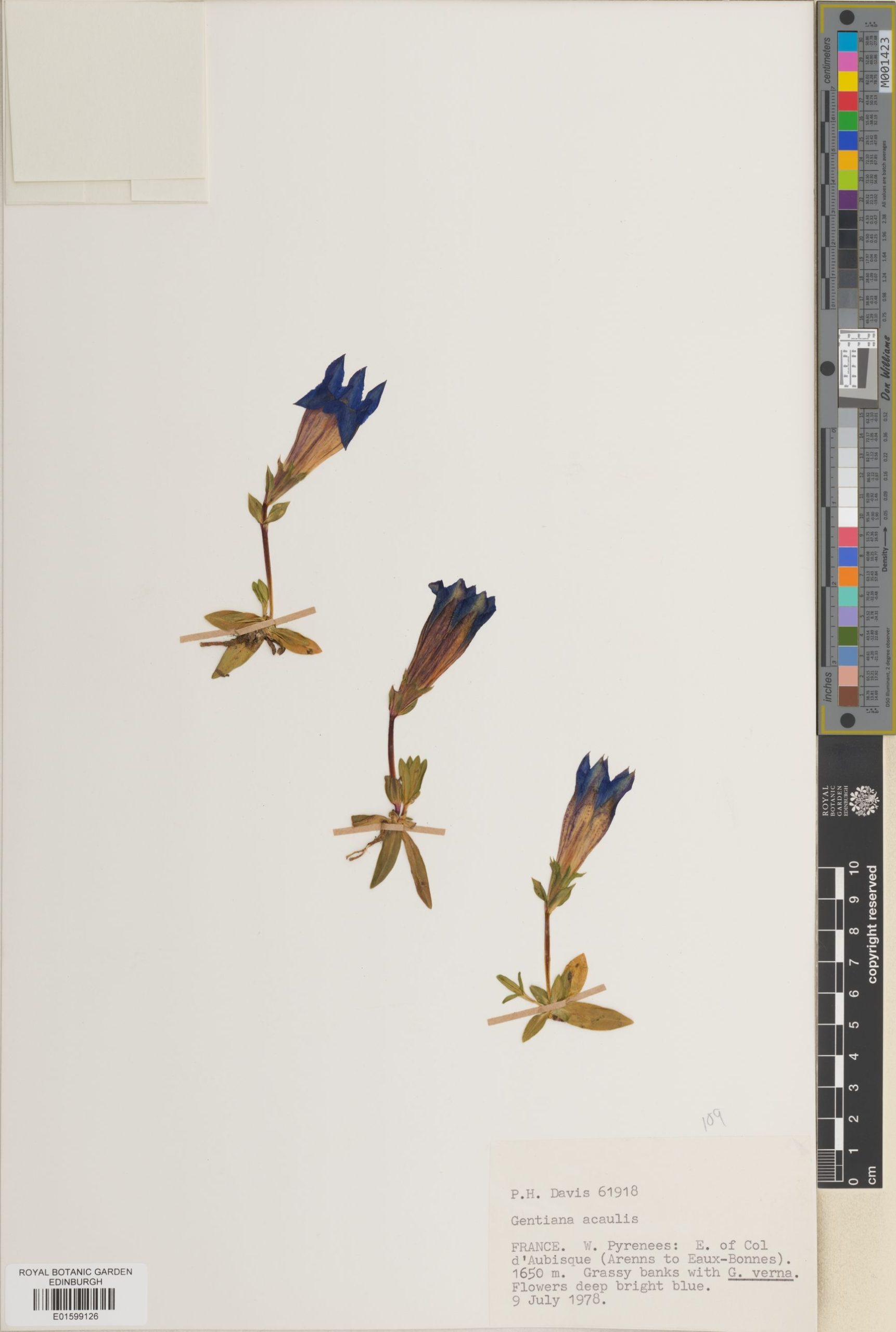
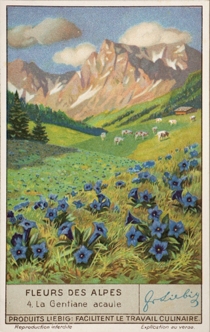
A specimen of Gentiana ornata collected in Nepal in 2001 is described, for instance, as having a corolla tube that is “pale blue with purple-black stripes on [the] outside” with “lobes sky-blue on [the] inside” and “filaments blue.” Various and varying shades of blue have been identified here. Another specimen, this time of Gentiana acaulis, collected in 1978 from the French Pyrenees, is described as having flowers of a “deep bright blue.” Others are described as “violet-blue.” An artist looking at a blue gentian would likely see many more shades and complexities of “blue” in its flower.
This language of colour on botanical specimens led me to the delightful discovery of Werner’s Nomenclature of Colour (1814). This book is a colour manual created by the Scottish botanical illustrator Patrick Syme (1774-1845), based on a colour system developed by the mineralogist Abraham Gottlob Werner (1749-1817). Syme’s manual contains painted colour swatches alongside animal, plant, and mineral examples of where these colours occur in the natural world. In a pre-photographic age, with no images for reference, the manual relies on these brilliantly poetic descriptions of where exactly to find particular colours on “well-known objects in the animal, vegetable, and mineral kingdoms.” Prussian Blue, for instance,can be found in “the beauty spot on [the] wing of [a] mallard drake,” or the “stamina of [a] bluish-purple anemone,” and a “blue copper ore.”
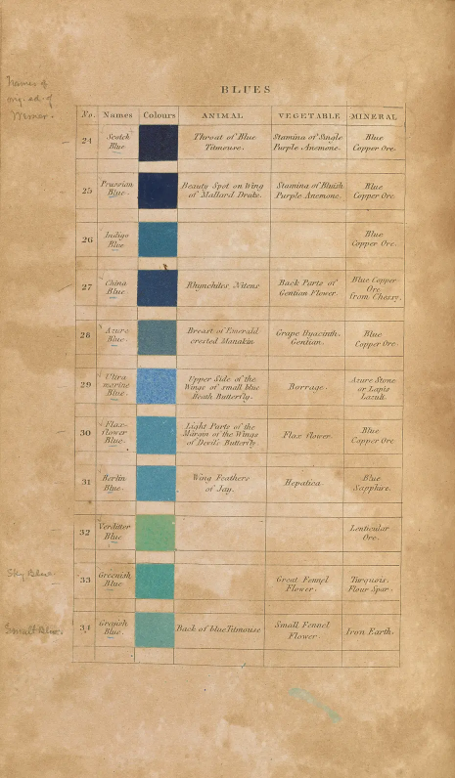
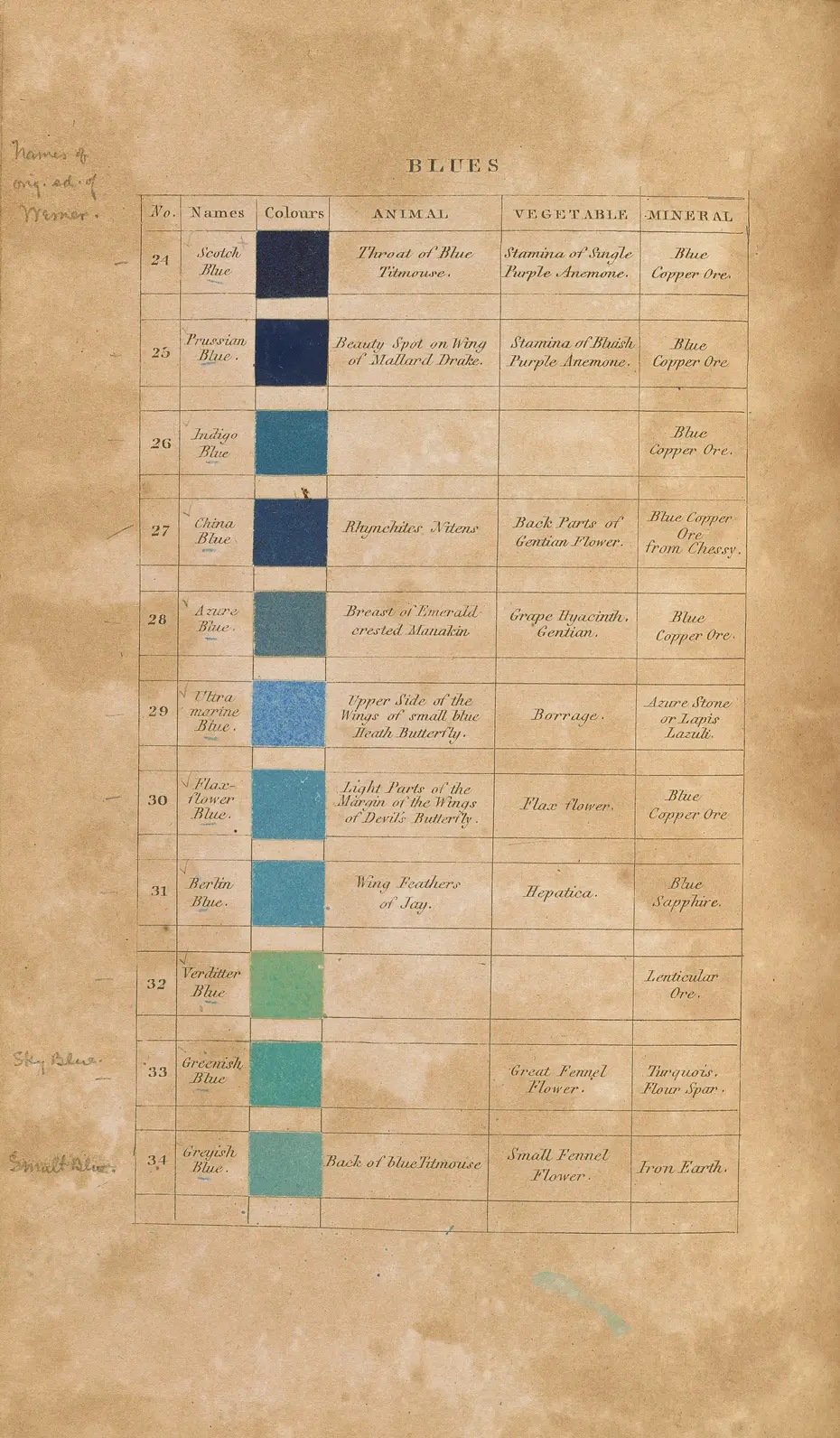
The gentian is used as a reference point for a couple of blue colours: China Blue is described as the blue of Rhynchites nitens (a type of leaf and bud weevil), the “blue copper ore from Chessy,” and the blue of “the back parts of a Gentian flower”; Azure Blue is described as akin to the “breast of an emerald-crested manakin,” or a “grape hyacinth” or a “gentian” blue. Unfortunately, no specific species of gentian are identified.
The colour nomenclature and vocabulary that Syme developed was used widely by many naturalists in the first half of the nineteenth century. The second edition of the book (1821) was famously used by Charles Darwin in his observations aboard the HMS Beagle. In one entry, Darwin writes, “I had been struck by the beautiful colour of the sea when seen through the chinks of a straw hat […] according to Werner nomenclature ‘Indigo with a little Azure blue’. The sky at the time was ‘Berlin with little ultra marine’ & there were some cirro cumili scattered about” (quoted in the Epilogue of Werner’s Nomenclature, 1821).
Syme’s nomenclature of colour is generally seen as a predecessor to modern colour systems such as Pantone, but it also reveals a sense of nature “illiteracy” in our present day. The examples from the natural world were selected because they were “well-known objects,” but how many people still know the greenish-black of “the breast of a lapwing” or can distinguish it from the reddish-black of “spots on [the] large wings of [the] Tyger moth”? At least the blue of a gentian can now be found (in all its variety) on our online herbarium catalogue!
About the family
The Gentianaceae (the gentian family) contains over 100 genera and around 1,700 species. Members of the Gentianaceae have simple, opposite, and entire leaves, that are often sessile, usually with no stipules. Flowers tend to have 4 or 5 petals that are fused (sympetalous) to form trumpet- or bell-shaped tubular corollas. Members of the Gentianaceae grow in a variety of habitats on every continent in the world except Antarctica and range from small herbs to shrubs and large rainforest trees.
Plants in the Gentianaceae have been used since ancient times for their pharmaceutical properties, prized especially for their bitter compounds. The type species of the family, Gentiana lutea, for instance, has a very bitter root that has long been used in the treatment of various digestive disorders and in the flavouring of alcoholic drinks (bitters). The name Gentiana comes from the name of the Illyrian king Genthios, who is believed to have discovered and utilised the medicinal properties of gentians.
Our Collections
Before mass digitisation there were 5,915 specimens on our catalogue, this increased to 16,257 specimens following mass digitisation. Of these 531 are type specimens. All our Gentianaceae specimens can be viewed here.
Top 5 Genera
| No. of Specimens | Genus |
| 6165 | Gentiana |
| 1681 | Gentianella |
| 1652 | Swertia |
| 1566 | Centaurium |
| 466 | Gentianopsis |
Top 5 Regions
| No. of Specimens | Herbarium Filing Region |
| 3359 | Europe (excl. Britain and Ireland) |
| 2847 | Inner China, Korea and Taiwan |
| 1237 | India, Pakistan & Bangladesh |
| 1140 | Britain and Ireland |
| 996 | North America |
Leave a Reply