The following blog was written by Becky Camfield a digitiser in the Herbarium.
Since 2021 we have increased our digitisation capacity reaching 1 million specimens imaged in August 2024. Each digitiser is assigned a family of plants to work through. This series of blogs will spotlight the families that have been completed by a member of the team.
Hamamelidaceae or the Witch Hazel family has approx. 26 genera and 100 species. They are mainly trees or shrubs with an interesting distribution. Its main hotspot is Southern China, SE Asia and down into Indonesia. It is also found in Southern Africa, and the Eastern states of America, Central America and into Columbia. It then has fragments left in Madagascar, Queensland Australia, Turkey, Iran and Pakistan. This is due to the age of the family, it covered most of the Northern hemisphere, during the Cretaceous. Since then, continental drift and events such as glaciation have created this disjointed spread.
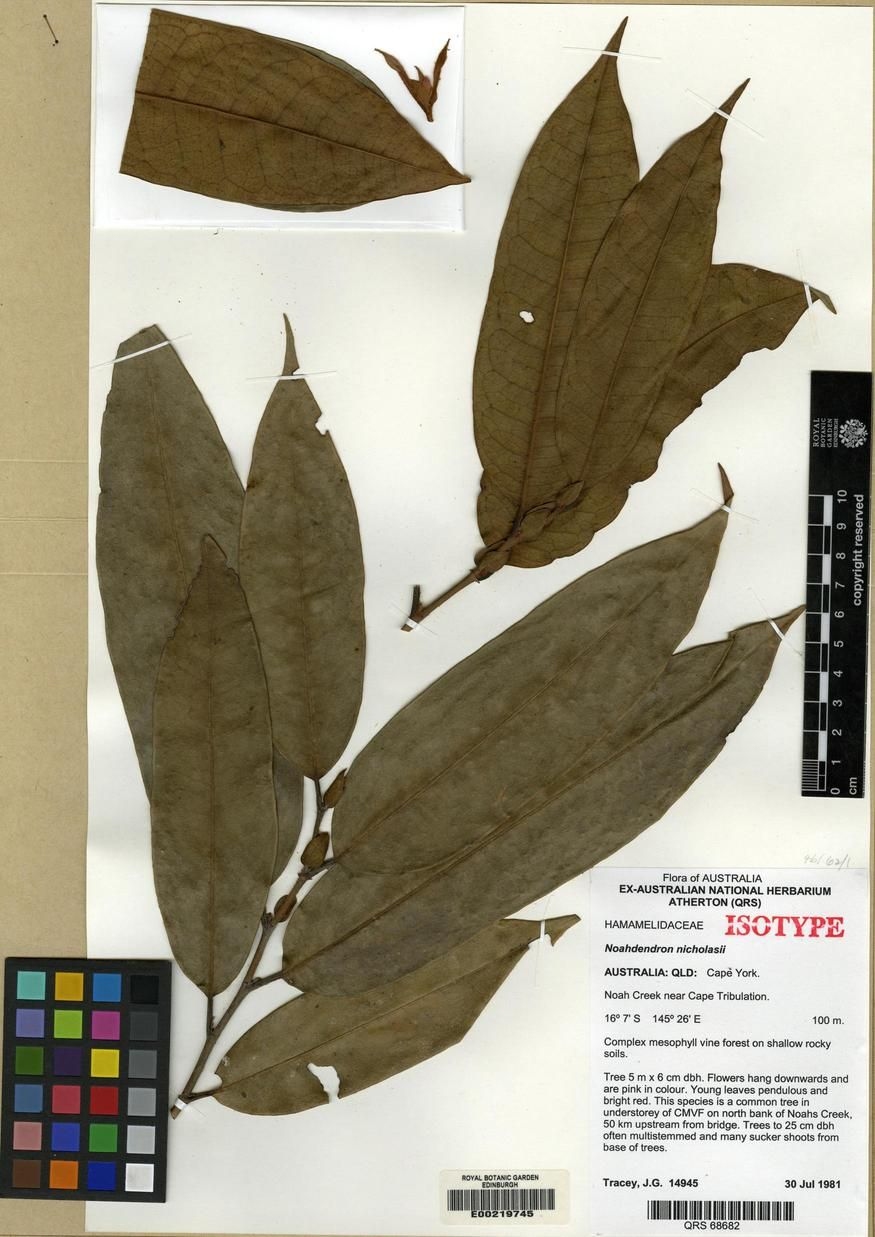
9 of the genera are monotypic: Chunia, Fortunearia, Maingaya, Mytilaria, Neostrearia, Noahdendron, Ostrearia, Parrotiopsis, and Sinowilsonia. Three of which are Australian and found only from Queensland. In fact, Noahdendron appears to only be found in Noah’s Creek, an area of 7km2.
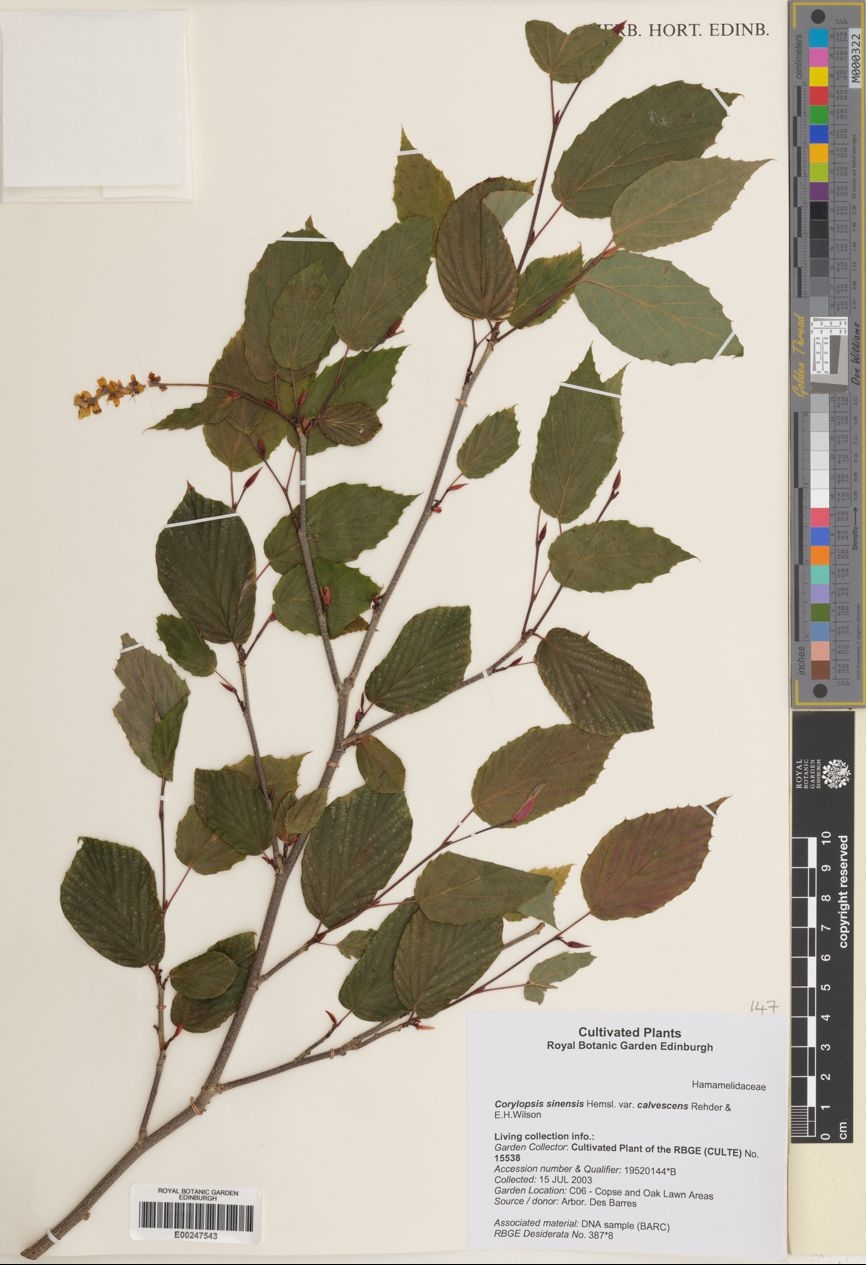
They are used as ornamental plants in gardens for usually early flowering flowers (Hamamelis, Corylopsis (scented), Fothergilla, Rhodoleia) or foliage (Parrotia, Disanthus).
Hamamelis is used to make a topical ointment due to its astringent and antiseptic properties. It also has links to folk medicine, especially in Native Americans. Parrotia has very dense timber, hence its common name of Ironwood. This plus it’s resistance to rotting due to its chemical content make it a desirable lumber. Yet due to the rarity of the species and the smaller nature of the tree the wood is expensive.
Our Collections
Before mass digitisation we had 342 specimens, following digitisation we had 742 specimens in our database, 27 of which are types. You can view our specimens here.
Top 5 regions
| No. of Specimens | Herbarium Filing Region |
| 322 | Inner China, Taiwan and Korea peninsula |
| 113 | Cultivated |
| 63 | North America |
| 25 | Indo-China |
| 25 | Bhutan & Sikkim |
Unsurprisingly Region 4 (Inner China, Taiwan and Korea peninsula) is the highest followed by Cultivated. Yet our representation of this family elsewhere is rather poor with just 2 or 5 specimens for regions like SE Africa, or Central America. Western Asia is just missed with 23 specimens, a good count due to the CMEP team’s collections. The same is similar with South Africa and its 24 specimens. It is also interesting that there is a low count throughout 6C to 6E (Malay Islands, Philippines and New Guinea) considering there are several genera and multiple species in the area.
Top 5 Genera
| No. of Specimens | Genus |
| 185 | Corylopsis |
| 115 | Hamamelis |
| 67 | Exbucklandia |
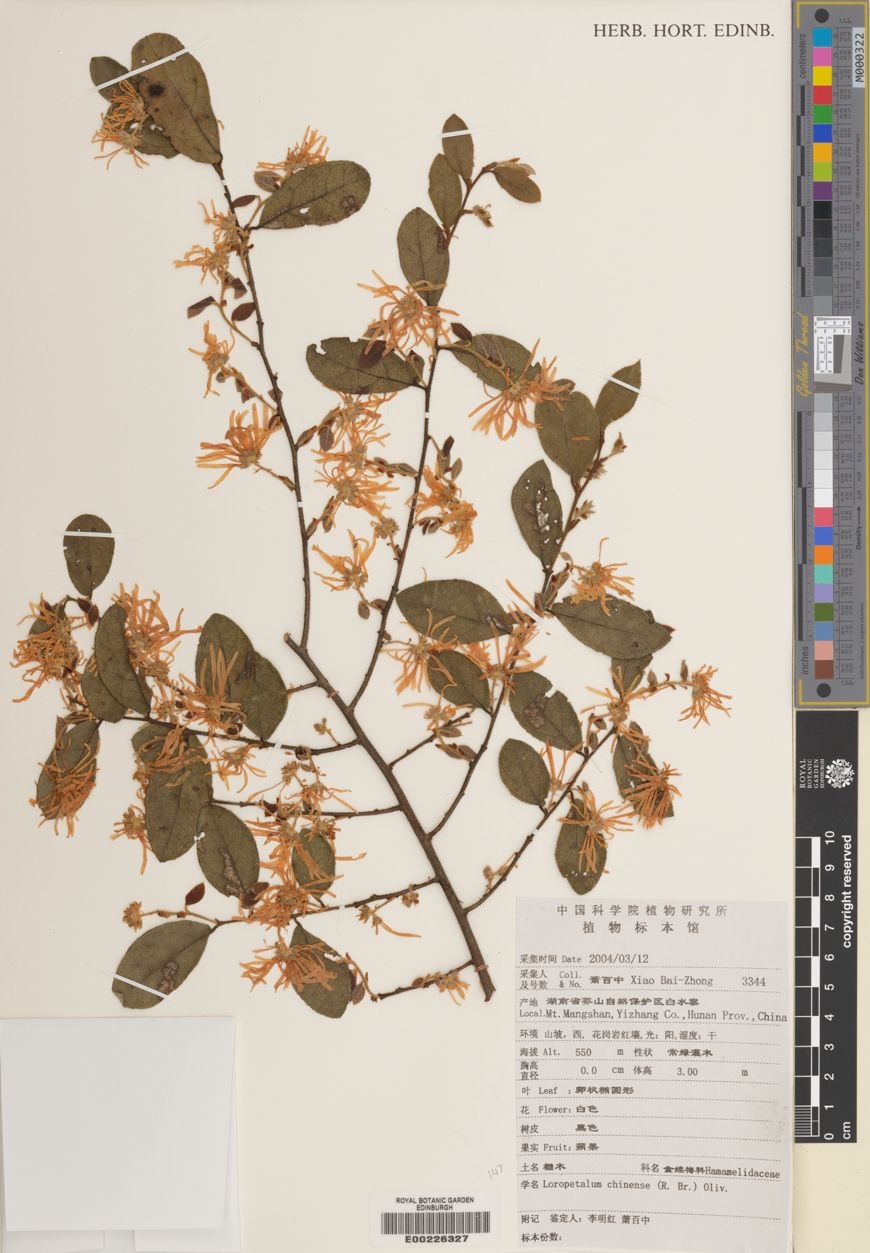
| 67 | Loropetalum |
| 49 | Rhodoleia |
Corylopsis is the largest genus with 25 species and found from the Himalayas to Japan. Yet Hamamelis with only 5 species is second due to also being found in North America. Exbucklandia with just 3 species is probably so high due to its distribution including the Himalayas. This being a one of our focus regions with the Flora of Bhutan Project and the Flora of Nepal.
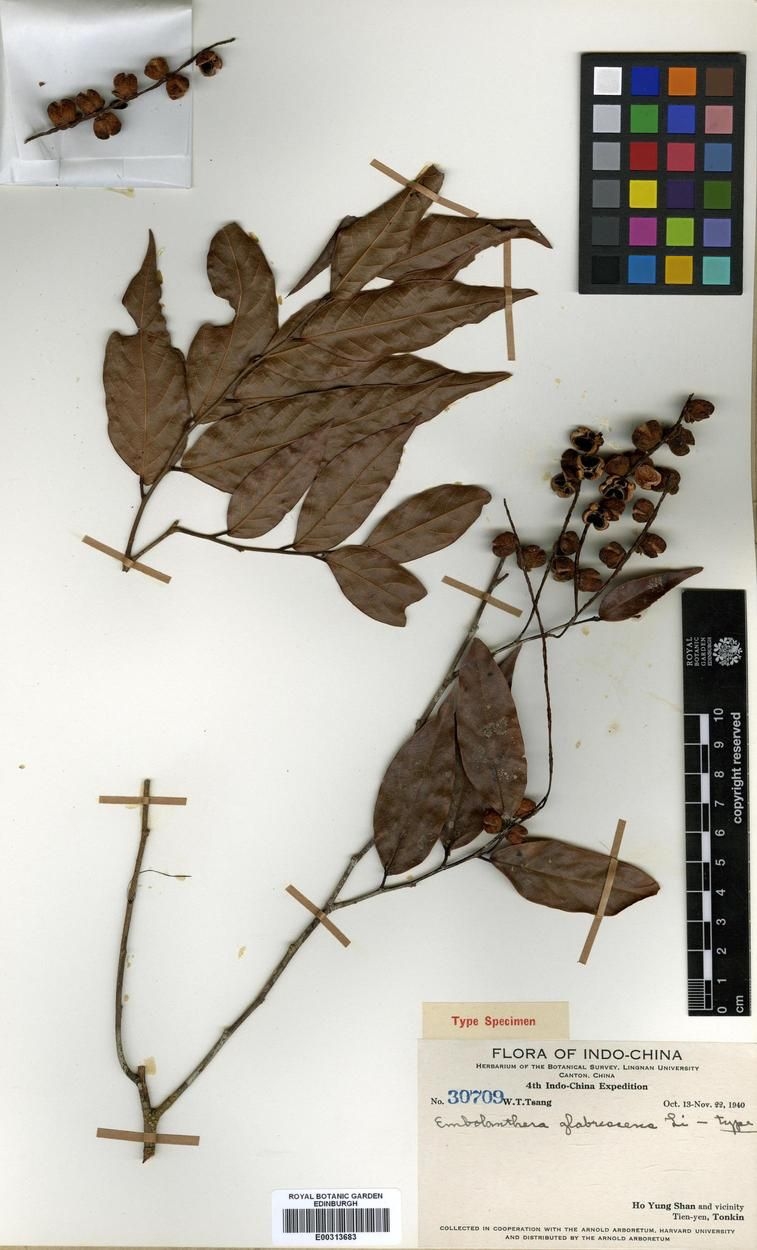
We have one specimen of Embolanthera and Noahdendron. We have none of the following genera: Chunia (Hainan), Maingaya (from Thailand & Malay), Matudaea (C.America & Columbia), Molinadendron (C.America), Neostrearia & Ostrearia (Queensland). Going for the niche distribution of these genera it would be nice to have representation of them before they potentially lost.