The following blog was written by Courtney Kemnitz a digitiser in the Herbarium.
Since 2021 we have increased our digitisation capacity with the goal of getting to 1 million specimens imaged by Autumn 2024. Courtney is working through our British and Irish collections. This series of blogs will spotlight the species that have been completed.The following blog was written by Courtney Kemnitz a digitiser in the Herbarium.
The thistle is a symbol deeply rooted in Scottish culture and proudly holds the title of the country’s national flower. Scotland is a haven for a variety of thistle species. These thistles, each with its unique characteristics, collectively represent the nation’s floral emblem.
.jpg - Wikimedia Commons)
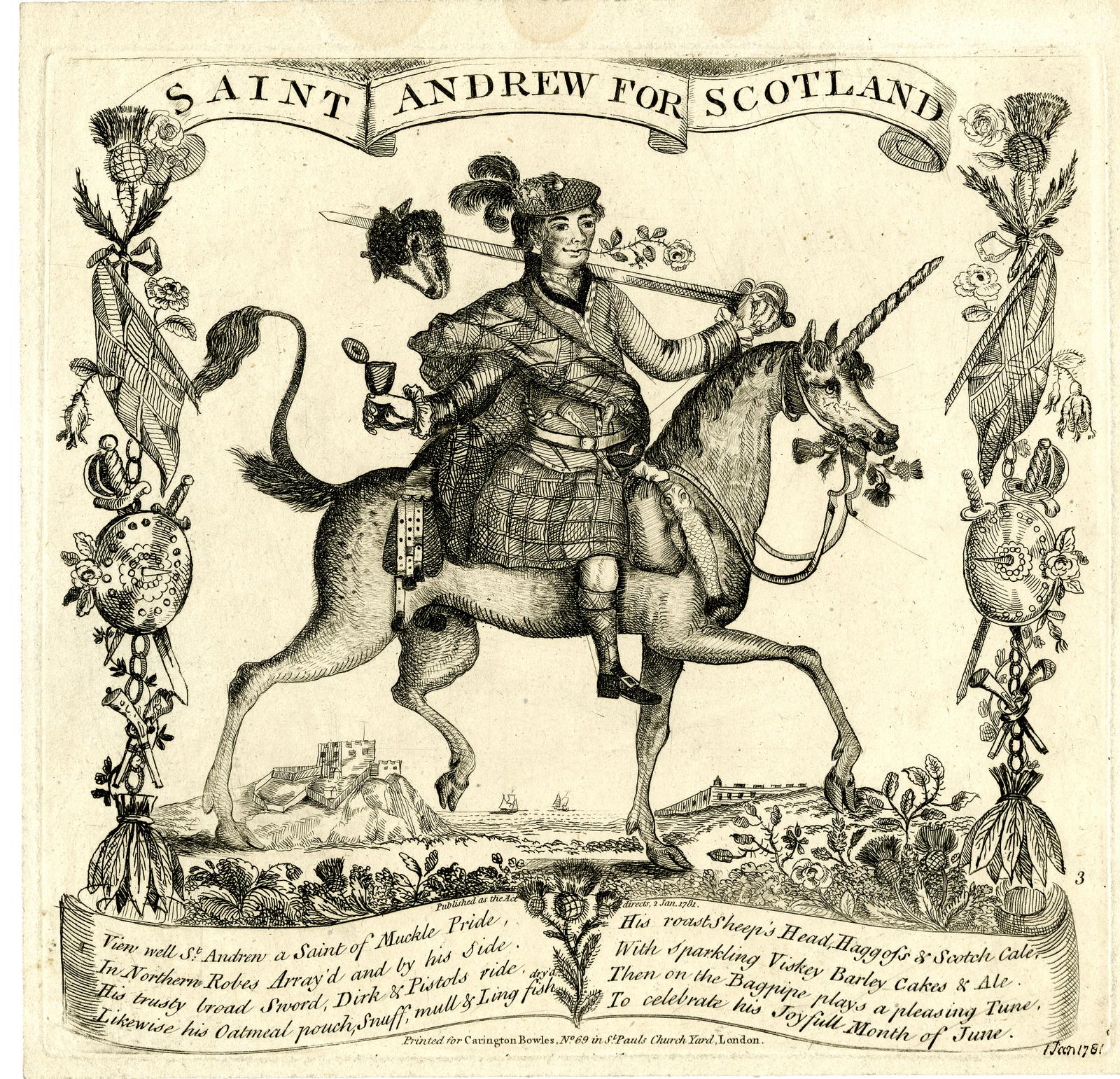
Determining the exact species represented by the historic thistle iconography has been a subject of debate among historians and botanists. Many have analysed the stylized depictions of thistles found on various Scottish artifacts. One such study, was published in the Glasgow Naturalist in 19811, by two botanists, Agnes Walker and JH Dickson, who examined thistle iconography on a variety of Scottish artefacts.
Due to the stylized and often generalized nature of thistle depictions in art, pinpointing a single species based on iconography is challenging. However, identifying the genus level has proven more feasible. However, thistle iconography has frequently combined characteristics from various genera and species, leading to the suggestion that the “Scotch Thistle” may not have been a single species but rather an amalgamation of several.
Two Leading Scotch Thistle Species
The term “thistle” encompasses over 20 plant species. Based on historical iconography, the two most commonly identified genera associated with the “Scotch Thistle” are Onopordum and Cirsium.
This blog will explore two prominent thistle species:
- Cirsium vulgare (Spear Thistle): A native and abundant thistle species in Scotland.
- Onopordum acanthium (Cotton Thistle): Though not native to Scotland, this species was introduced in the 16th century and has since become naturalized in many parts of the country. It gained prominence as the ‘Scotch Thistle’ after Sir Walter Scott chose it as the emblem for King George IV’s visit to Scotland in 1822.
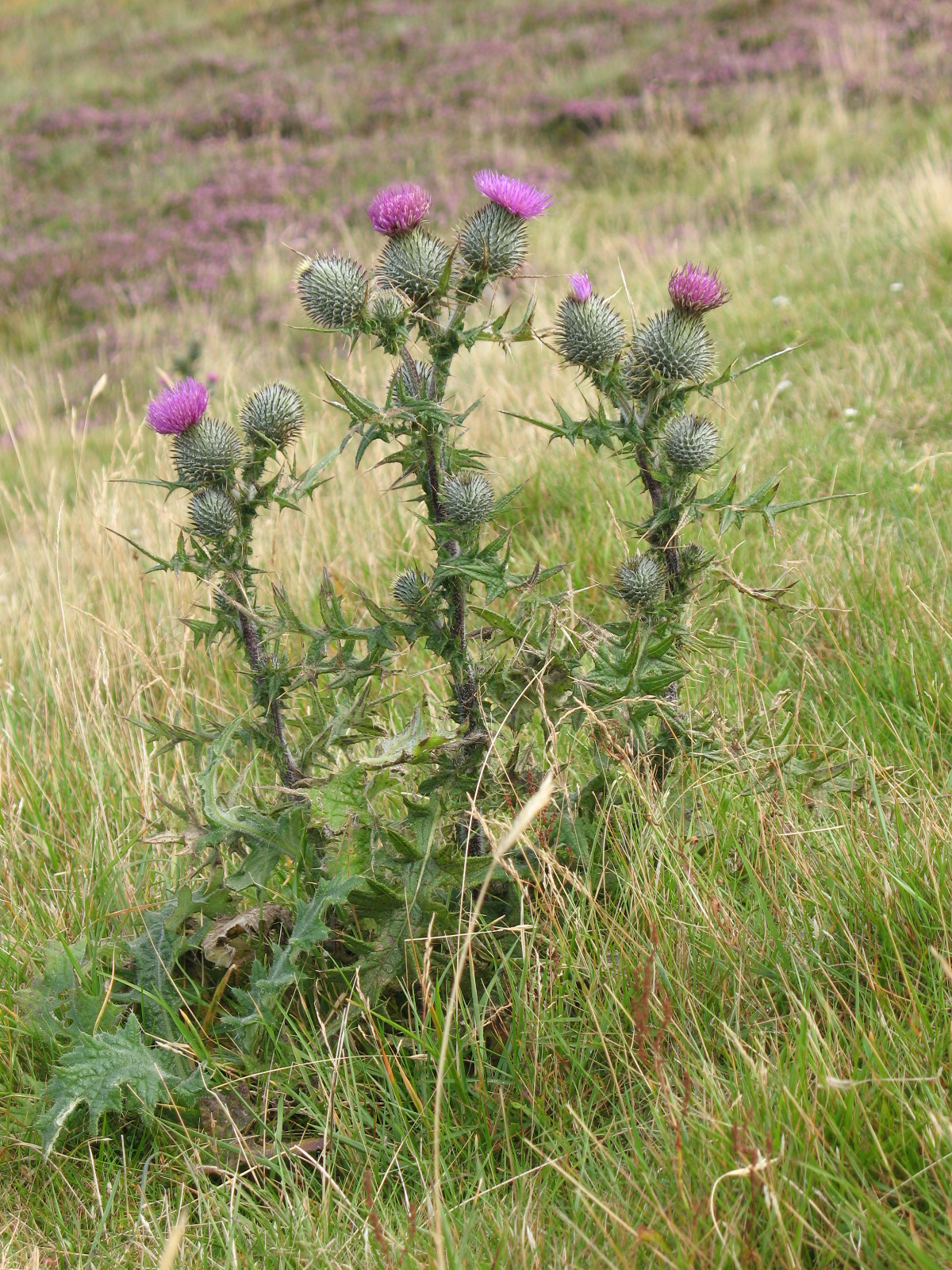
By Akinom, CC BY 3.0

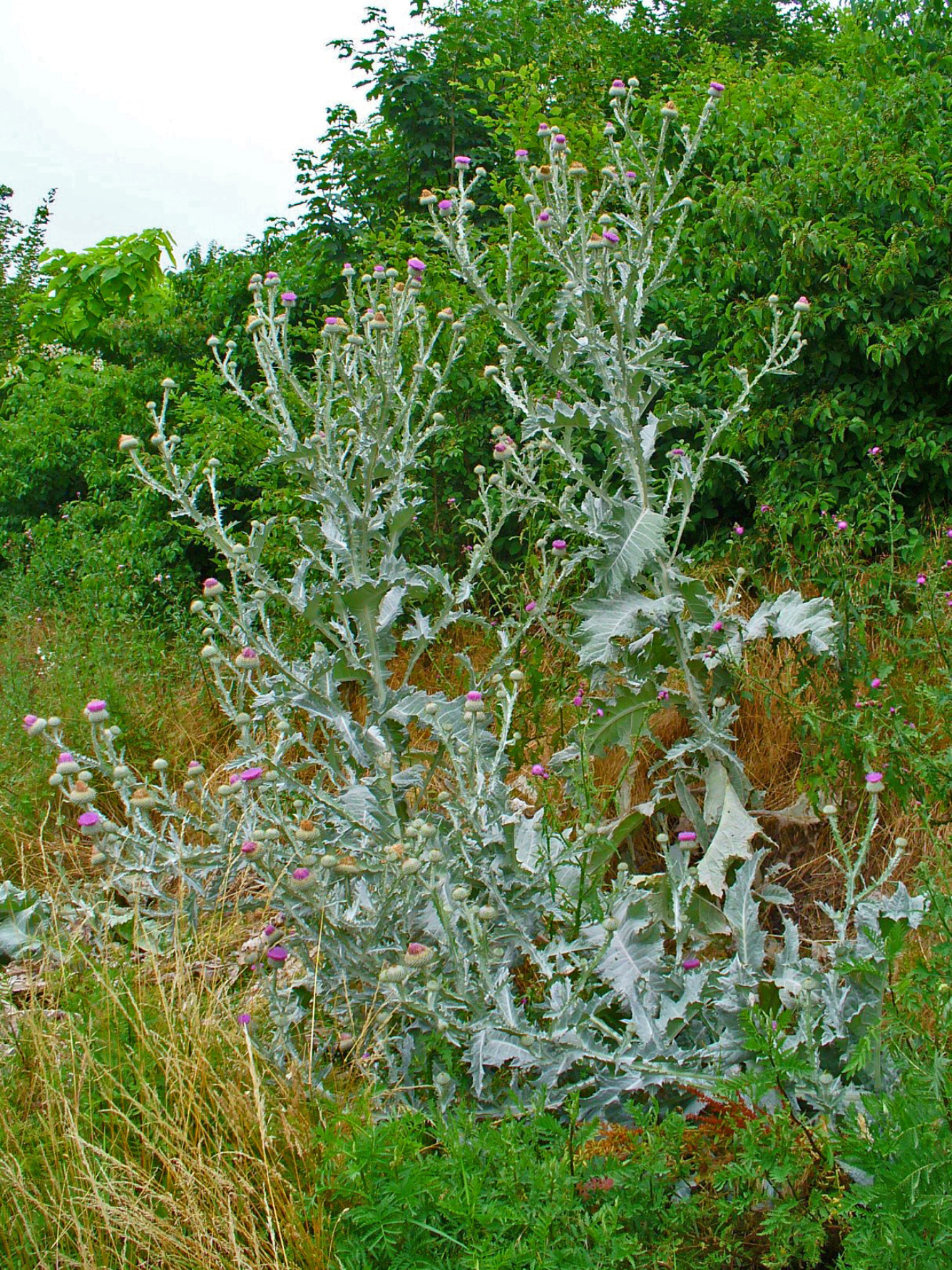
By H. Zell, CC BY 3.0

While the exact identity of the “Scotch Thistle” remains a subject of debate, exploring these two species provides valuable insights into the botanical heritage of Scotland.
A Closer Look
Names
Cirsium vulgare (Savi) Ten. Originally named Carduus vulgaris by Gaetano Savi in 1798 until it was reclassified and moved to the genus Cirsium in 1836 by Michele Tenore
Onopordum acanthium L. It was first described scientifically in 1753 by Swedish Carl Linnaeus in Species Plantarum
Family
Both come from the same plant family, Asteraceae (also known as Compositae)
Common Names* in the British Isles and the Isle of Ireland
| Name | Thistle (general) | Cirsium vulgare (Savi) Ten. | Onopordum acanthium L. |
| English | Thistle | spear thistle, common thistle | cotton thistle, Scotch thistle |
| Scots | Thrissil | – | – |
| Scots Gaelic | Cluaran, fóghnan, gìogan | deilgneach | cluaran-cotain |
| Irish | Cluarán, Feochadán | Feochadán colgach | – |
| Welsh | ysgallen | March Ysgallen | Ysgallen Gotymog |
| Manx | onnane | – | – |
*list not exhaustive


Features
| Feature | C. vulgare | O. acanthium |
| Stem | Spiny, winged, green, often branches out | Spiny, winged, grey/green colour due to being covered in a dense layer of woolly hairs, thick and sturdy (Up to 10cm wide at the base), branches out |
| Flowers | Large (up to 5cm), reddish-purple, florets tightly packed in to a disk shape, sitting upon a spiny bract, can grow singularly or in clusters of up to 3 per stem | Large and showy (up to 6cm across), has a range of shades from pale pink to purple, florets tightly packed into a disk shape, sitting upon a spiny/globular shaped bract, grow in clusters |
| Leaves | Spiny, lobed, oblong, tapers at both ends, green, rough texture, up to 40cm long and 15cm wide | Spiny, lobed, grey-green, woolly texture due to white hairs, upto 60cm long |
| Size | Up to 1.5m tall (5ft), spread up to 0.5m | Up to 3m tall, spread up to 1m |
| Habitat | Varies includes meadows, pastures, | Varies includes roadsides, fields, riverbanks. Well-drained and full sun |
| Scent | subtle sweet | Not much of an odour |
| Flowering Season | Midsummer to early autumn | Summer |
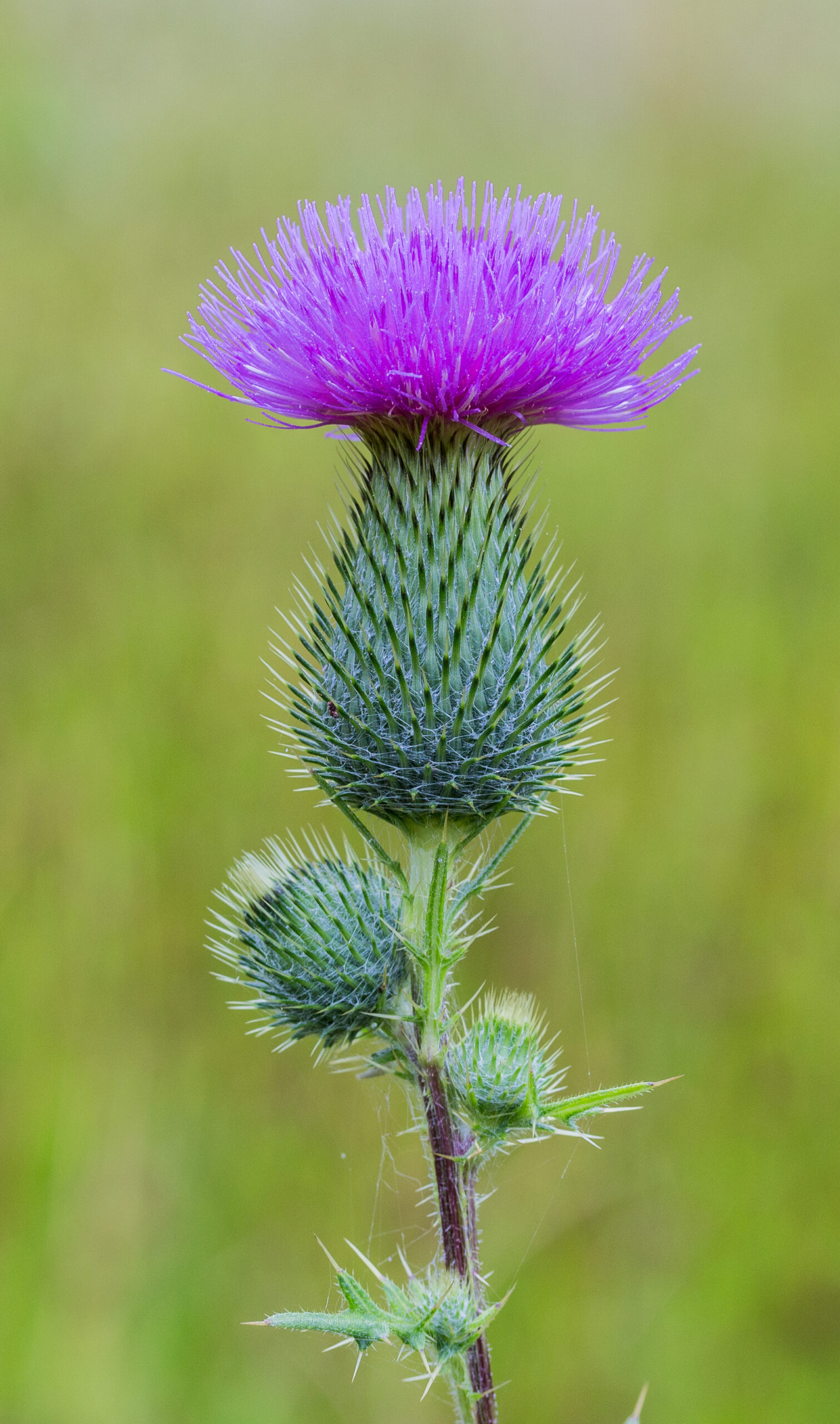
by Famberhorst CC BY-SA 4.0
_03.jpg)
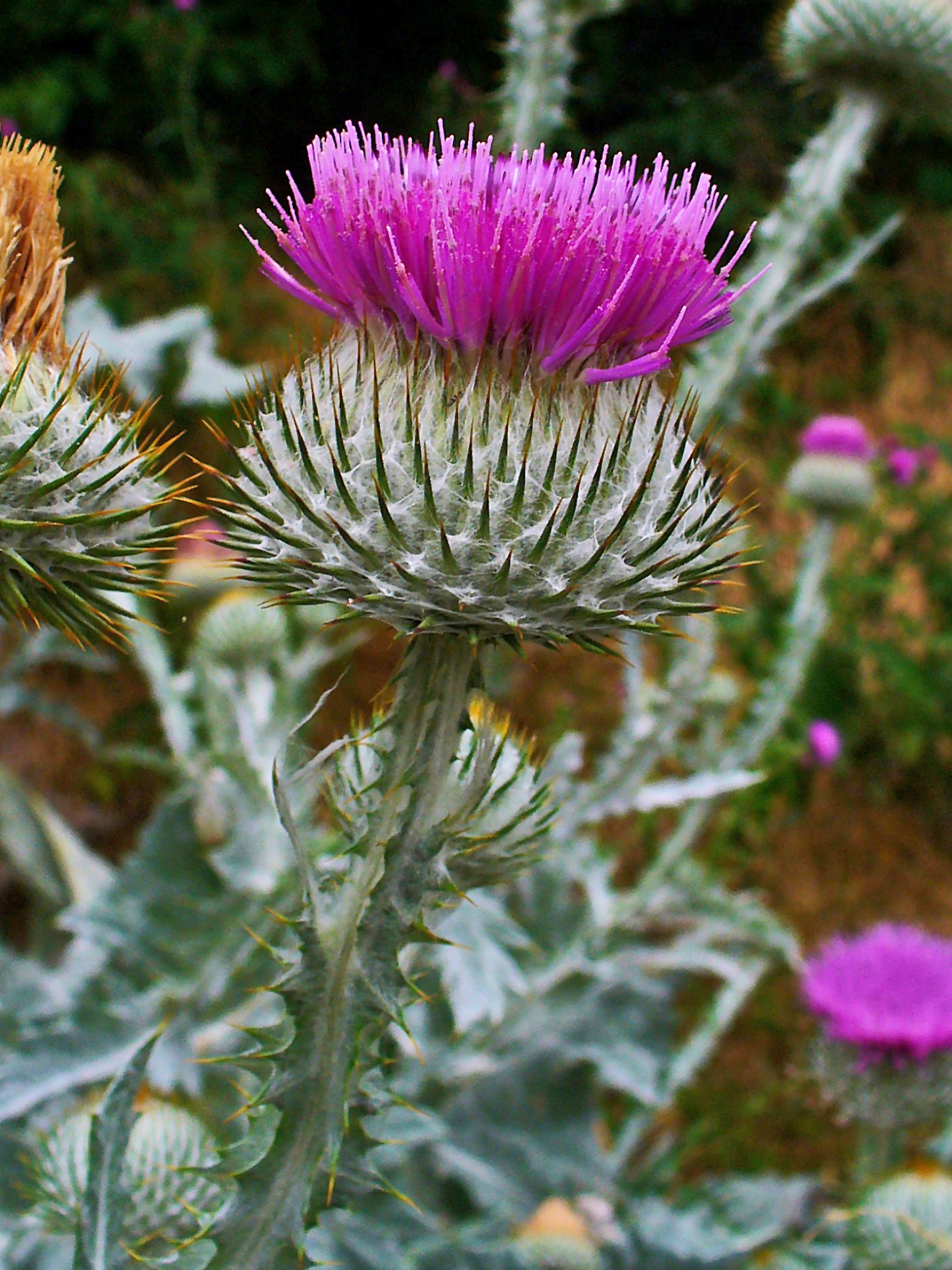
By H. Zell CC BY-SA 3.0

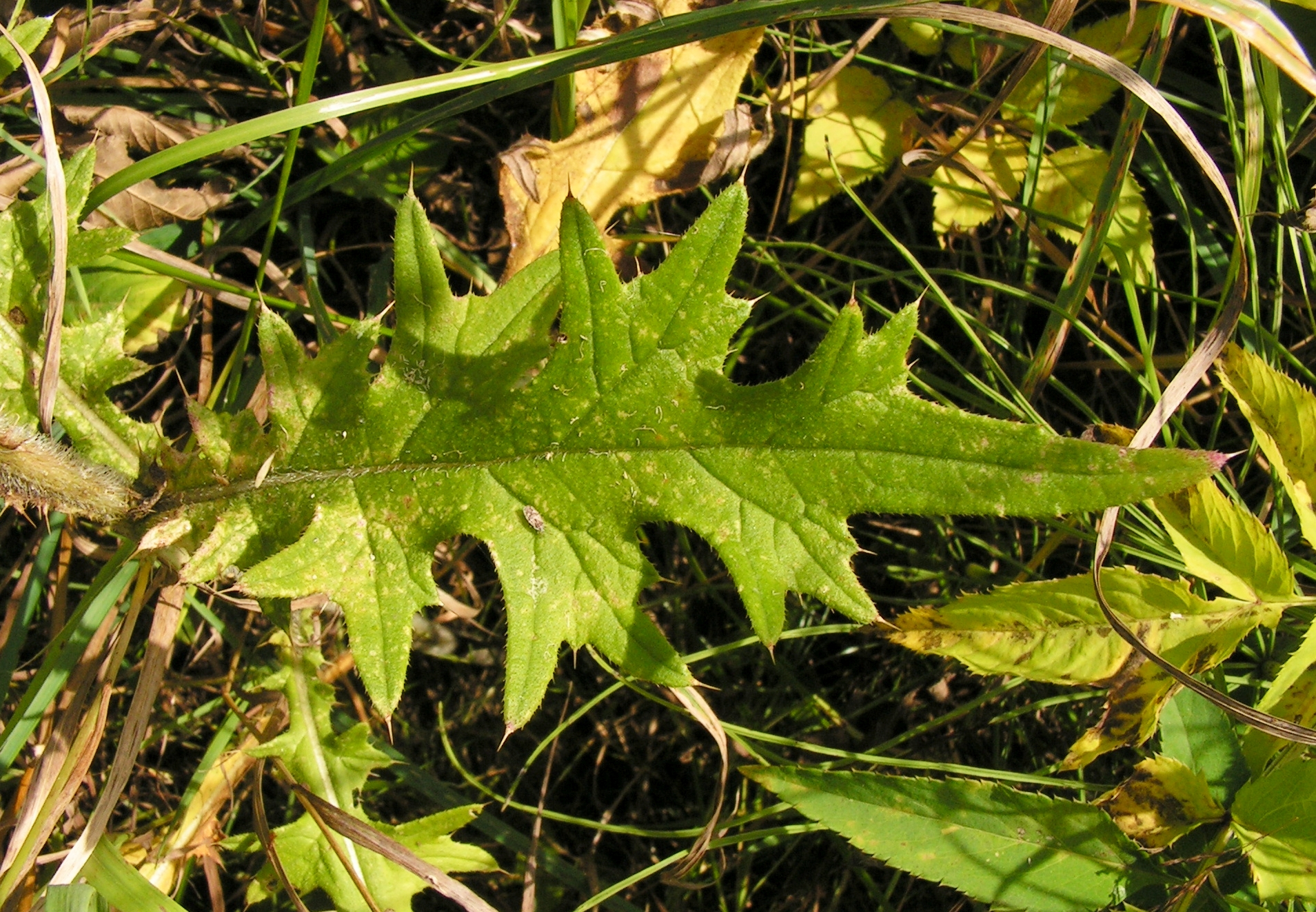
By Bff CC BY-SA 3.0

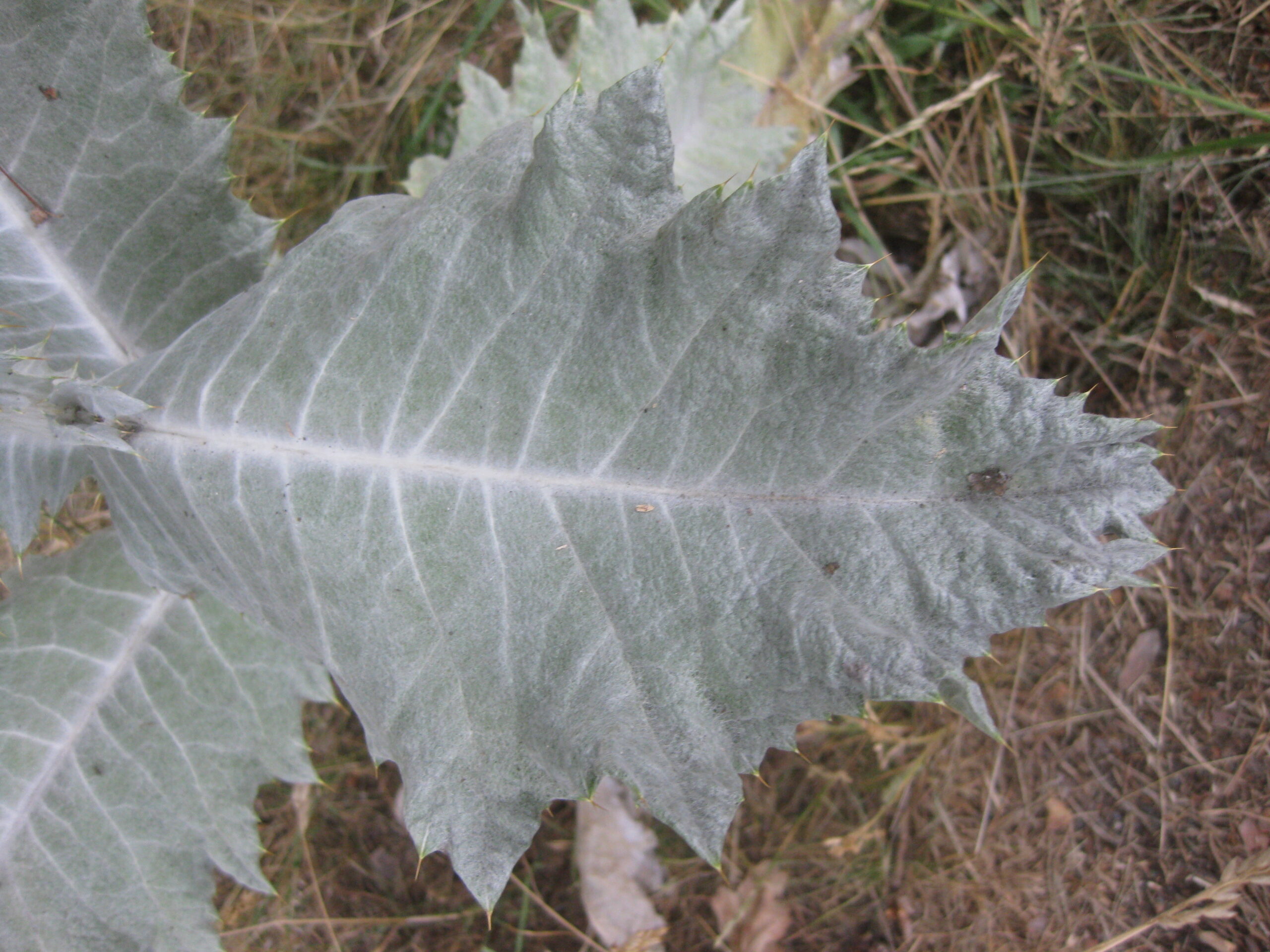
By Wilhelm Zimmerling PAR CC BY-SA 4.0

In summary, the key differences between these two thistles are their overall size, the shape of their flower heads, and the distinct colour and texture of their stems and leaves.
Royal Botanic Garden Edinburgh (RBGE) Herbarium Specimens
The digitisation of these species within our British Isle collections is now complete which allows us to see how our collections are distributed and compare this to the species range data recorded by the Botanical Society of the British Isles.
Total number of Specimens held in the British Collection within the Herbarium*: 44 Cirsium vulgare; 32 Onopordum acanthium
*Please note, that the Herbarium contains more specimens from other parts of the world. These figures are not included.
Breakdown by Region
| Country | Cirsium vulgare Specimen Count | Onopordum acanthium Specimen Count |
| Scotland | 35 | 17 |
| England | 7 | 14 |
| Wales | 0 | 1 |
| Channel Islands | 0 | 0 |
| Ireland (Republic of Ireland & Northern Ireland) | 2 | 0 |
Distribution
- C. vulgare – native range is Europe (including the isles of Great Britan and Ireland) to Siberia and Arabian Peninsula, and NW Africa
- O. acanthium – native range is mainland Europe to W. Himalayas, NW Africa
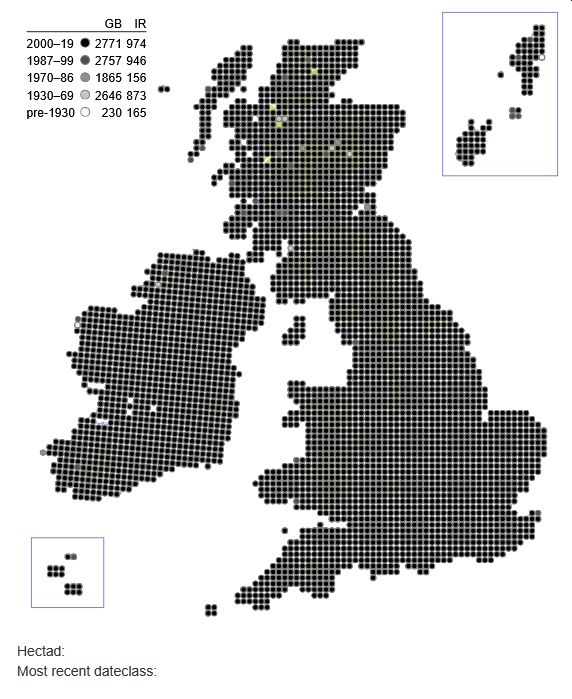
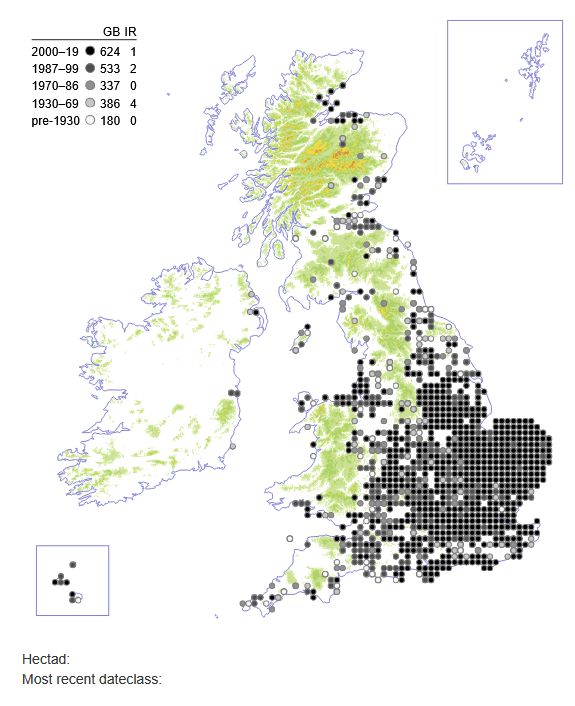
Distribution of Cirsium vulgare (Savi) Ten. and Onopordum acanthium L. in the United Kingdom and Ireland (BSBI Plant Atlas 2020).
For Global distributions of these species:
For maps of the worldwide distribution of these species:
Cirsium vulgare (Savi) Ten. Plants of the World Online.https://powo.science.kew.org/taxon/urn:lsid:ipni.org:names:730297-1
Onopordum acanthium L. Plants of the World Online.https://powo.science.kew.org/taxon/urn:lsid:ipni.org:names:730297-1
Scottish Identity & The Use of Thistle Iconography
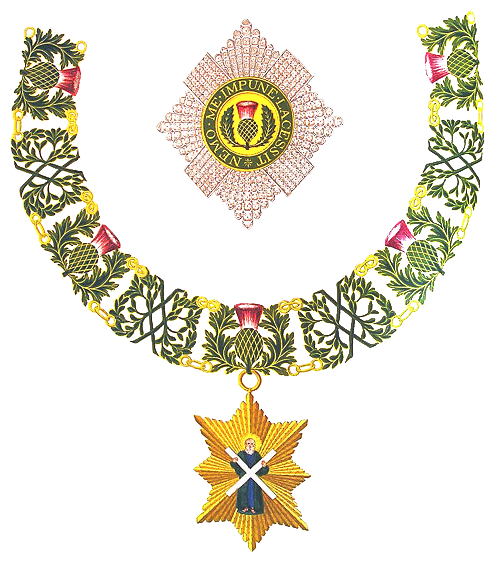
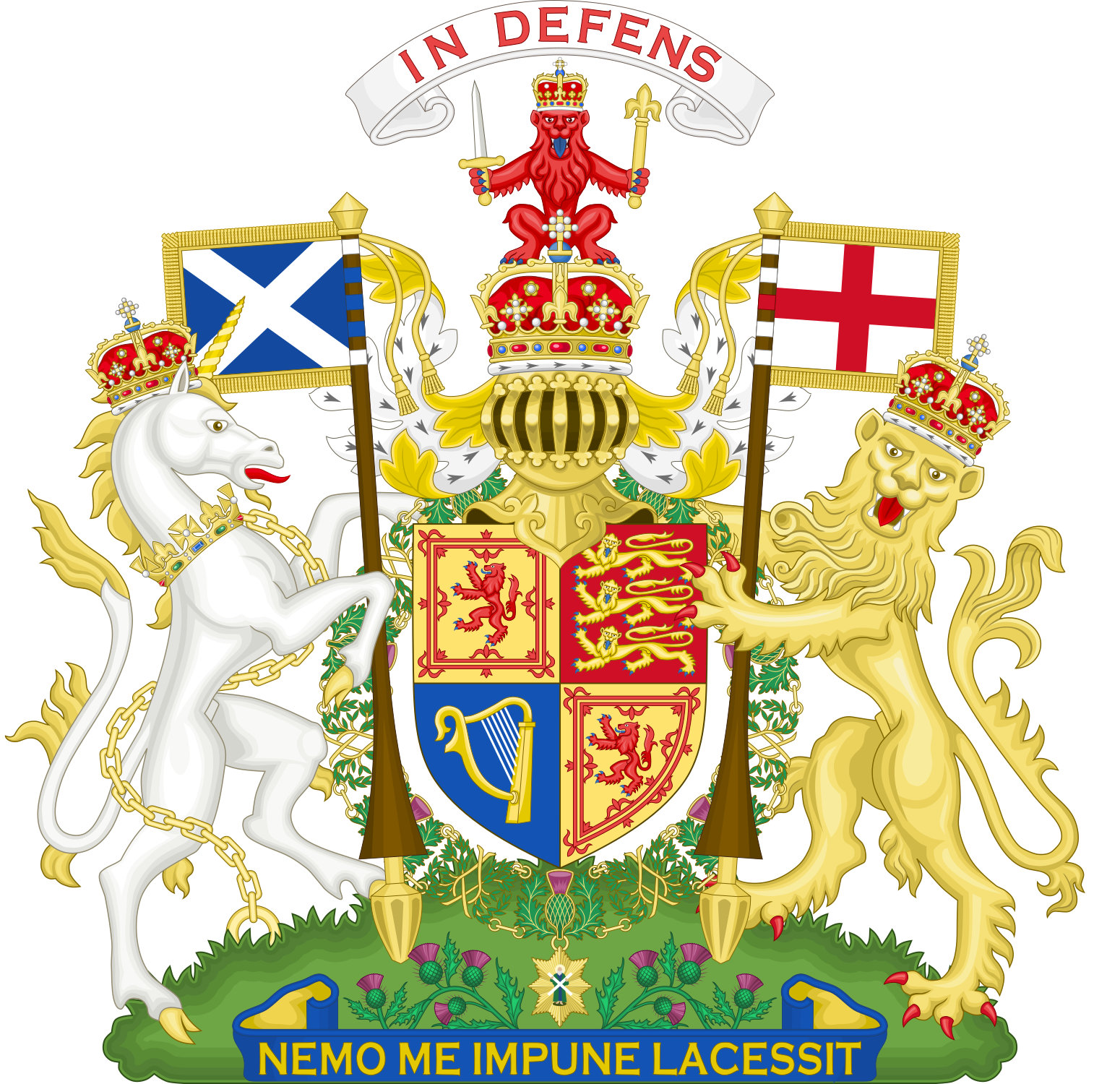
The thistle, a prominent symbol of Scotland, has been widely adopted by organizations seeking to connect with Scotland’s culture and heritage. Its distinctive shape makes the thistle not only visually striking, but instantly recognizable. From royals to currency to corporate logos to public buildings, the thistle’s distinctive image is used to evoke a sense of “Scottishness”.
Examples of the incorporation of the thistle in various their emblems and logos in Scotland

© Crown copyright






The use of the thistle is a reference to where it was originally published, which was in Edinburgh.
© Encyclopædia Britannica




Examples of the thistle used as a decorative motif in art and architecture
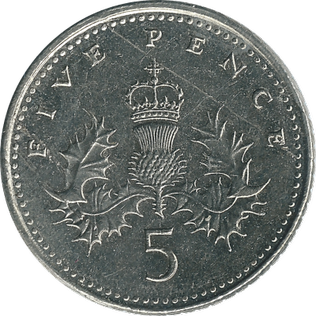
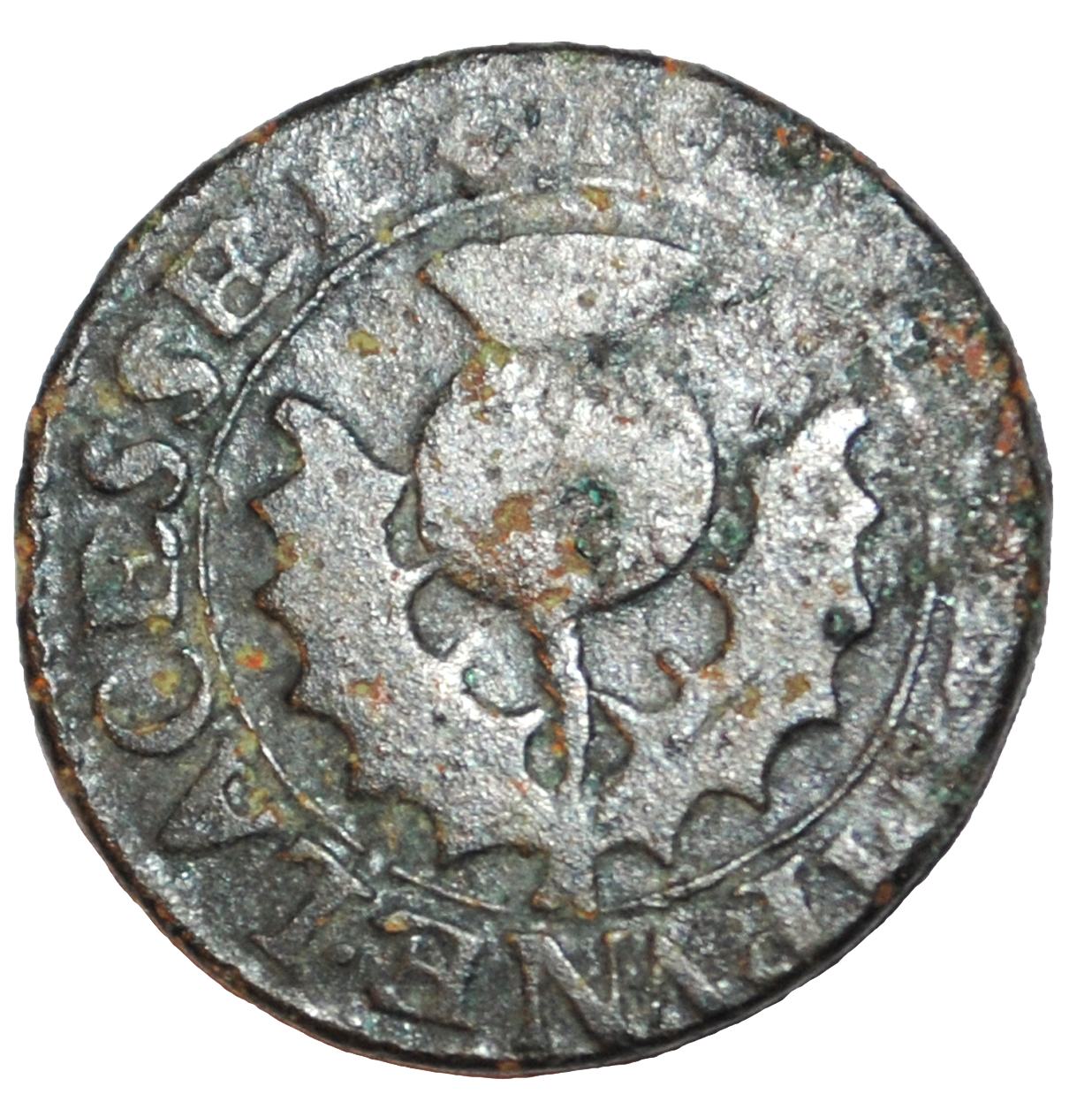
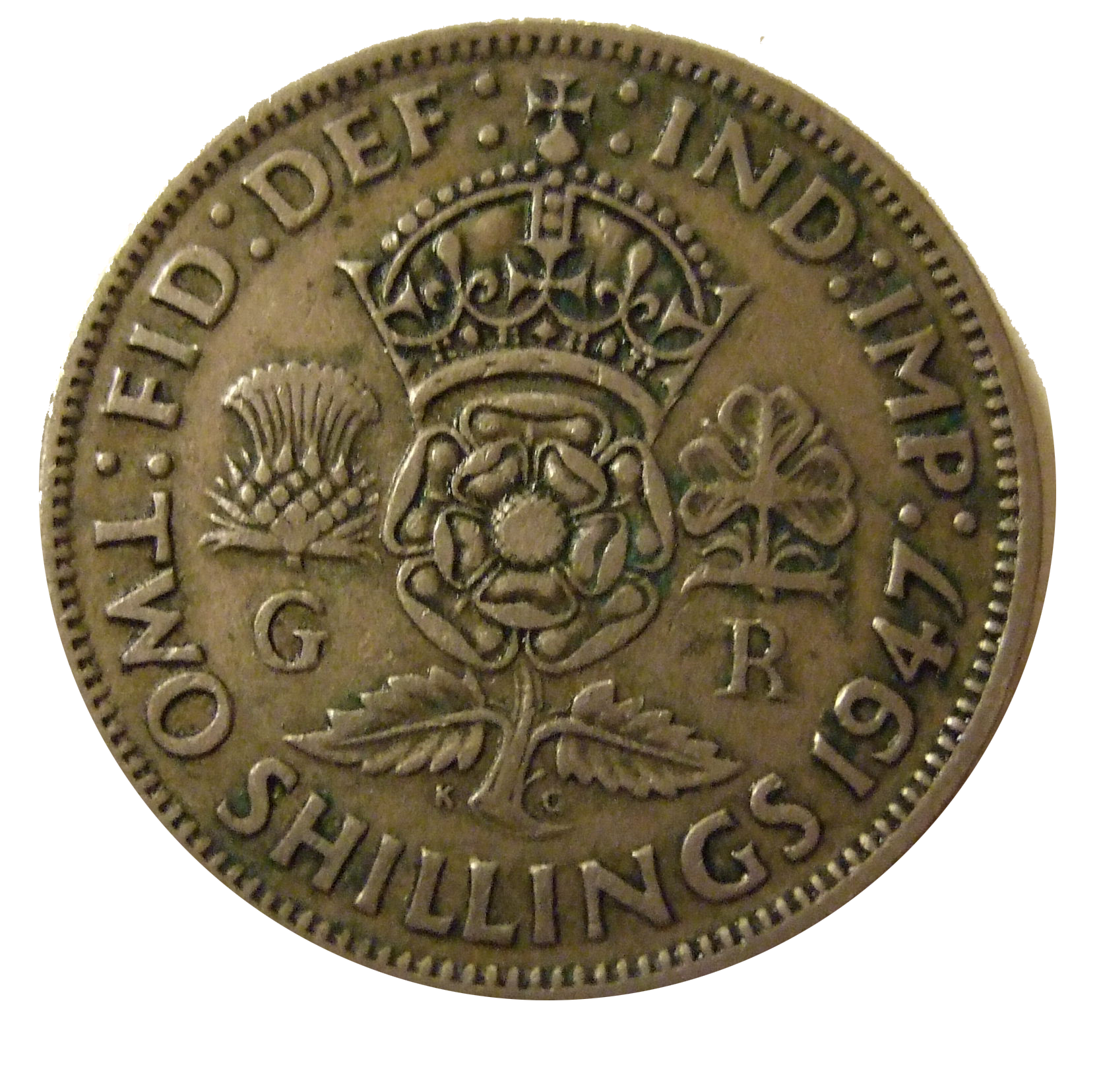
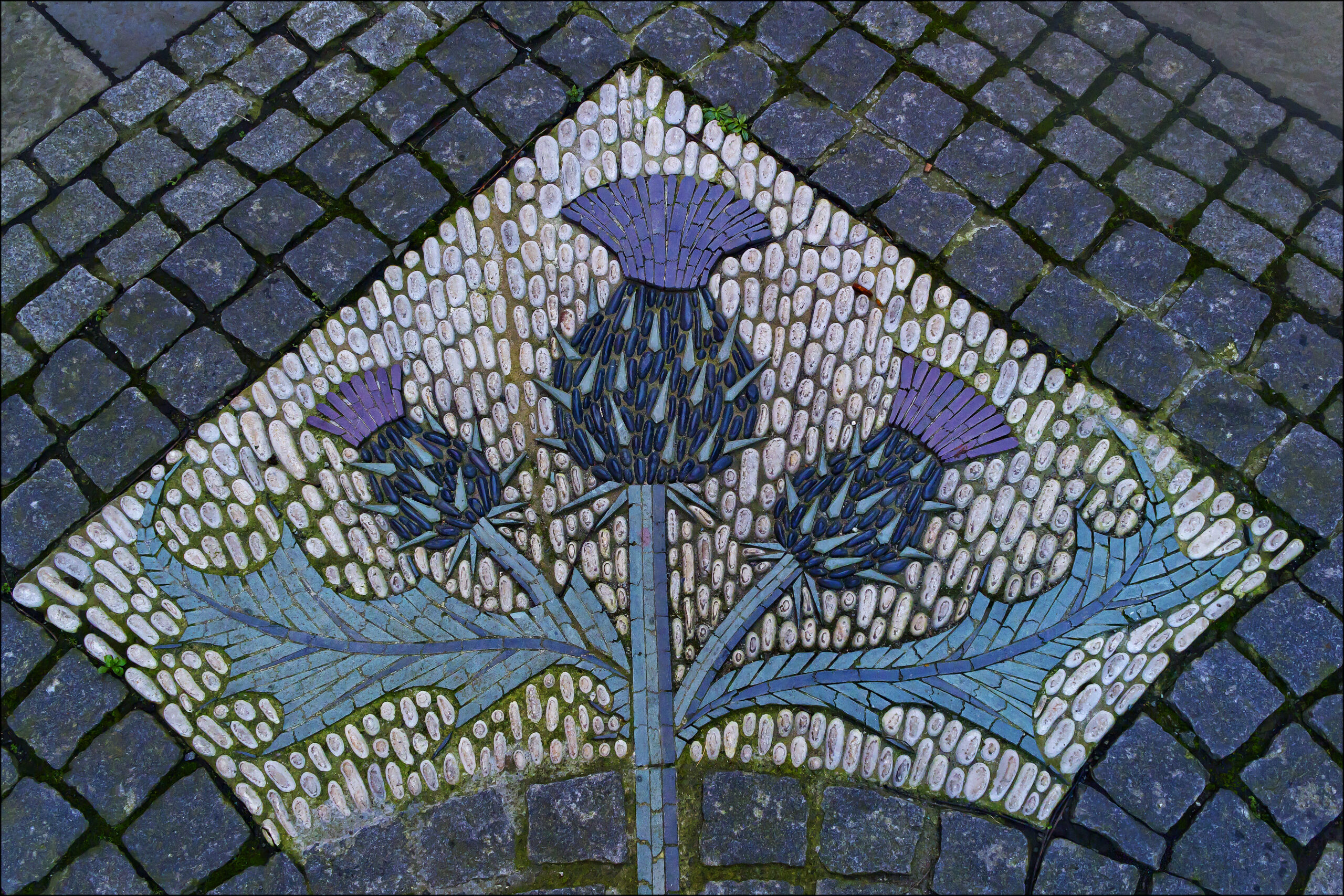
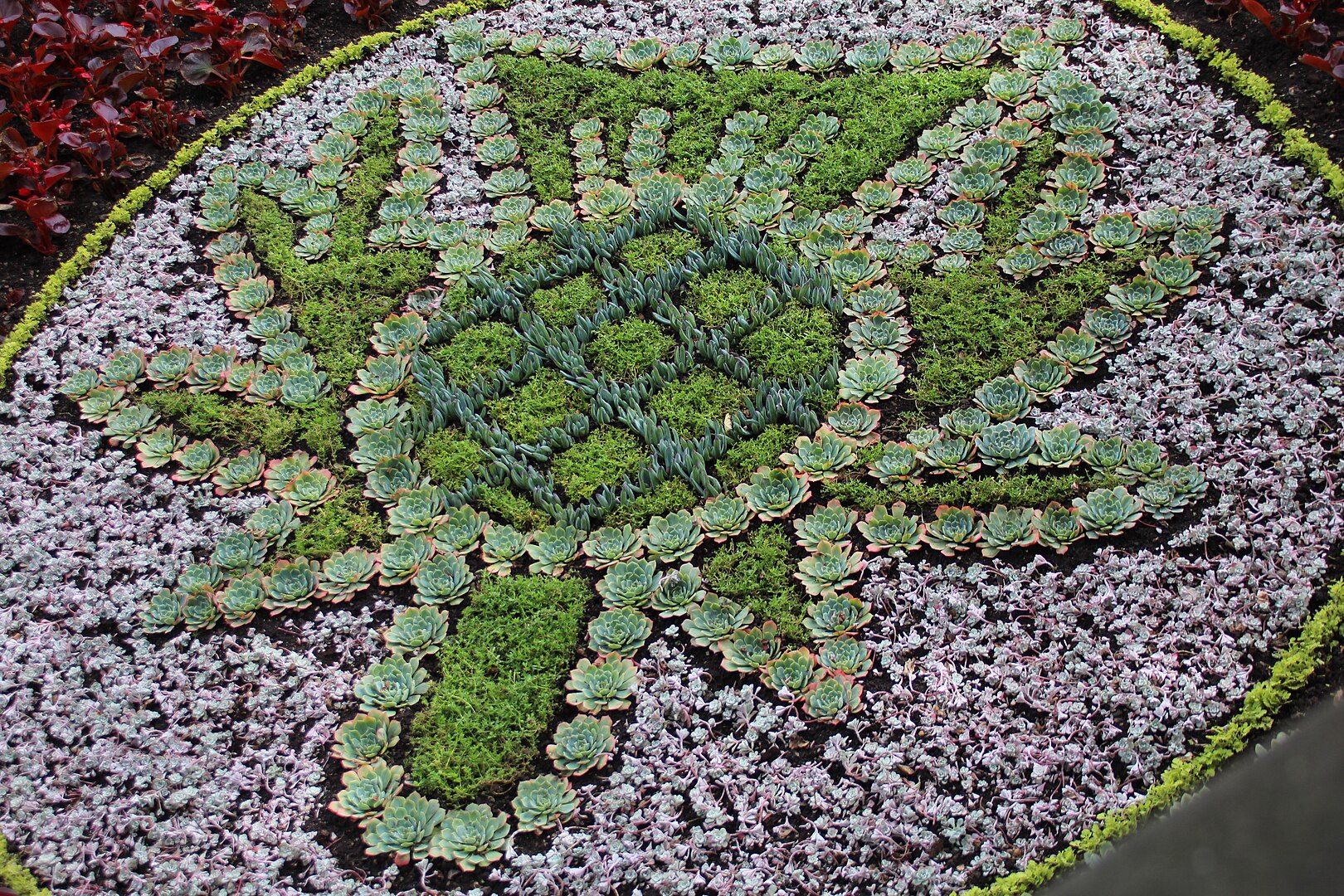
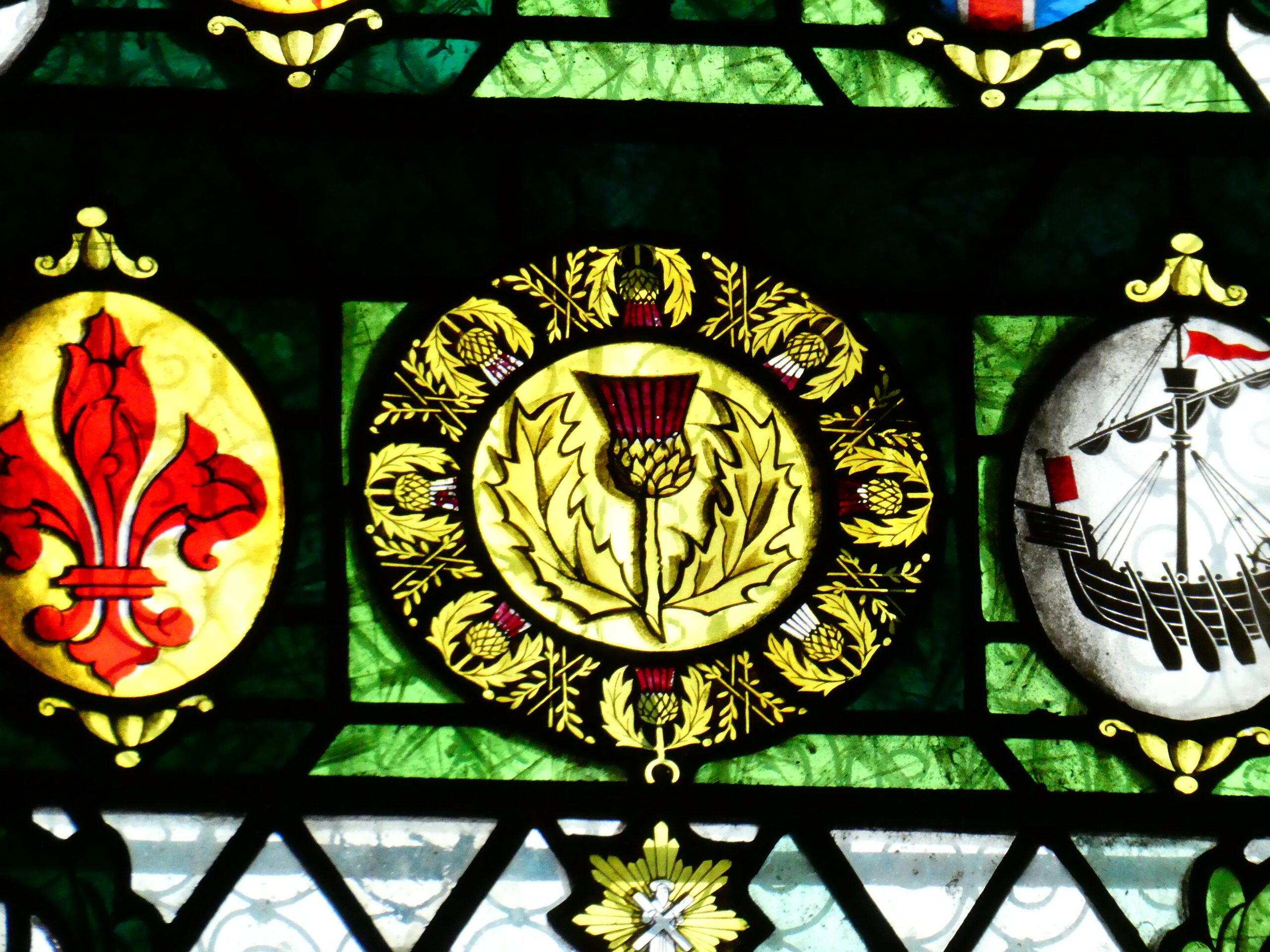
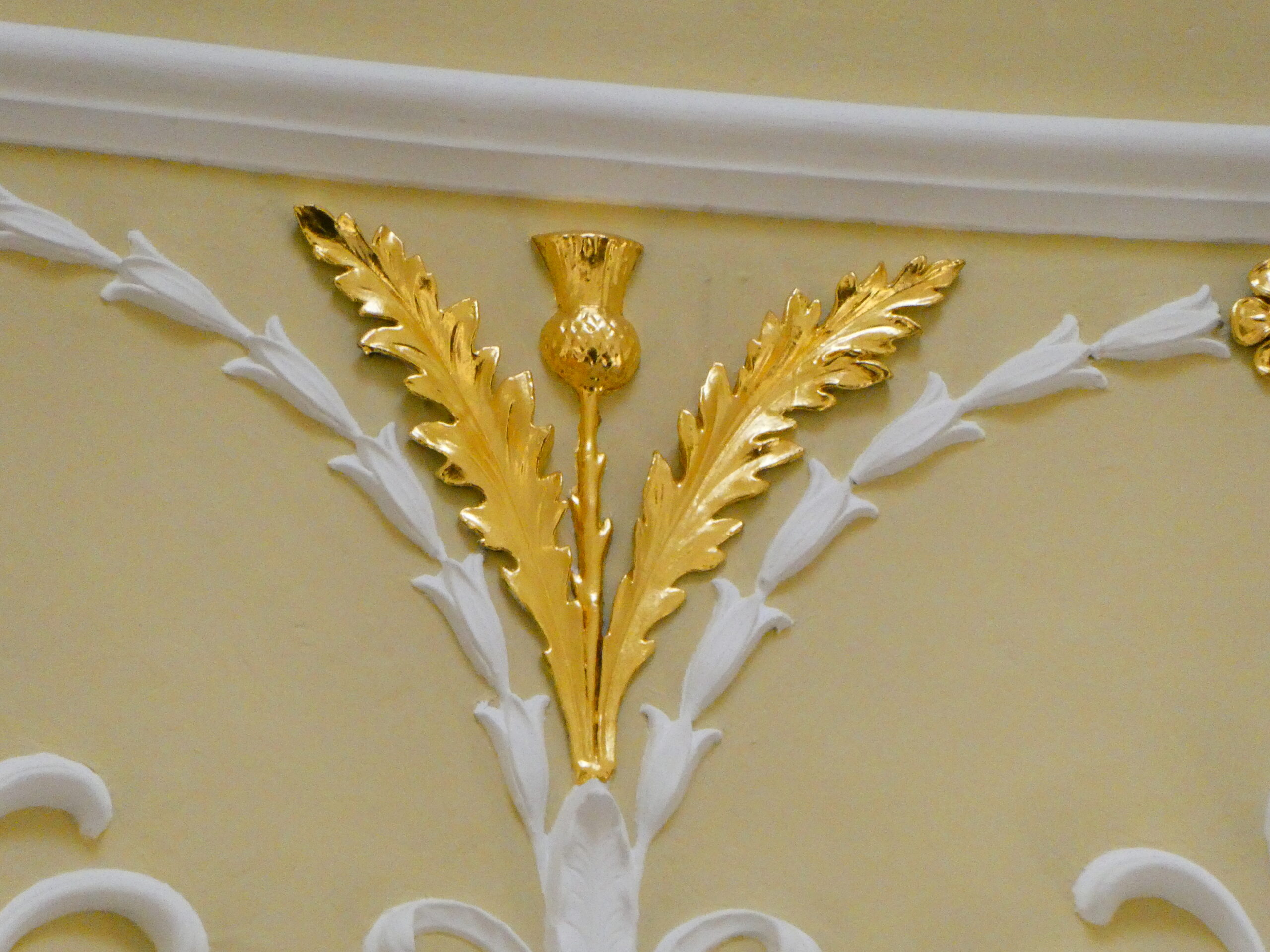
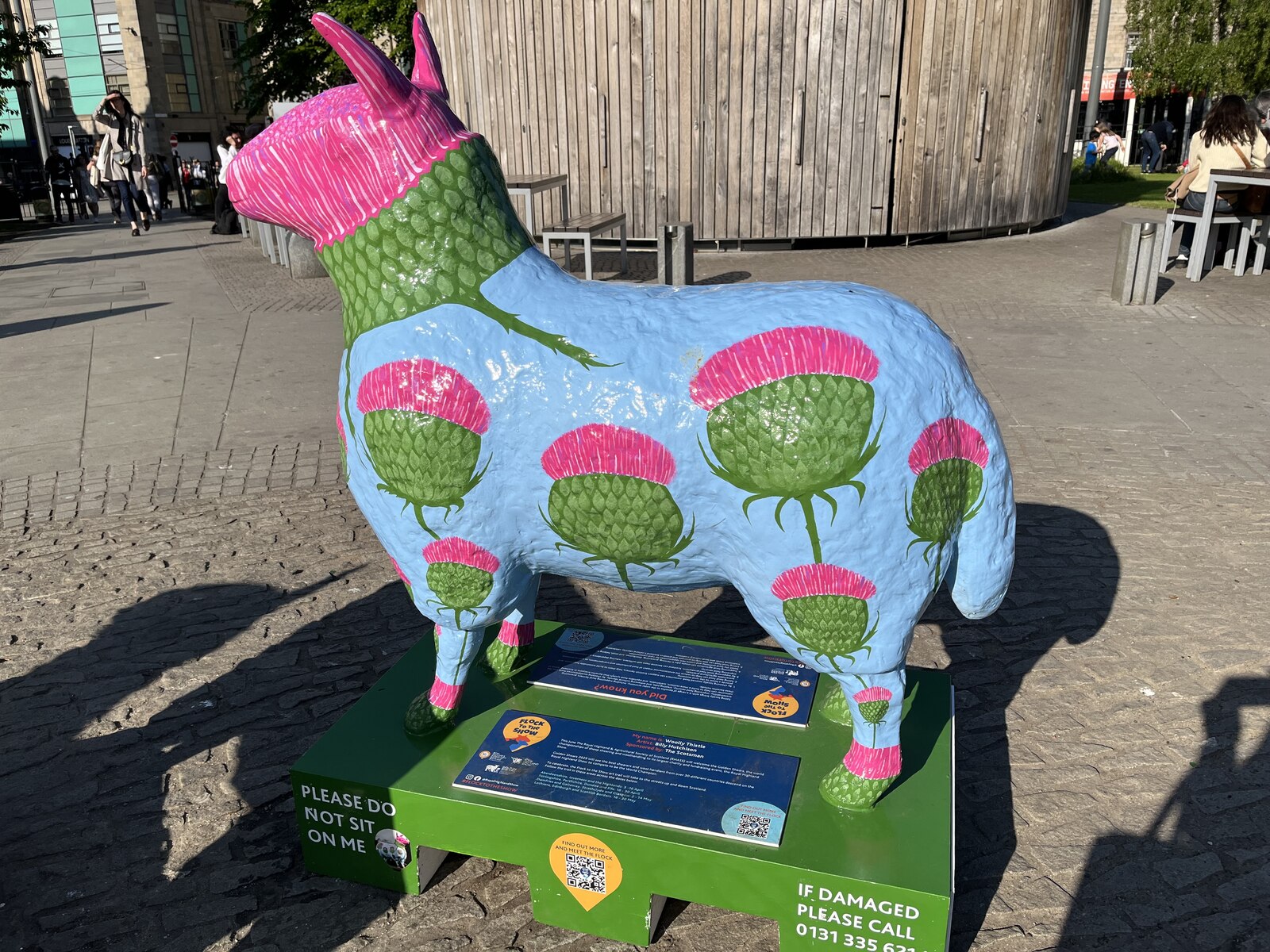
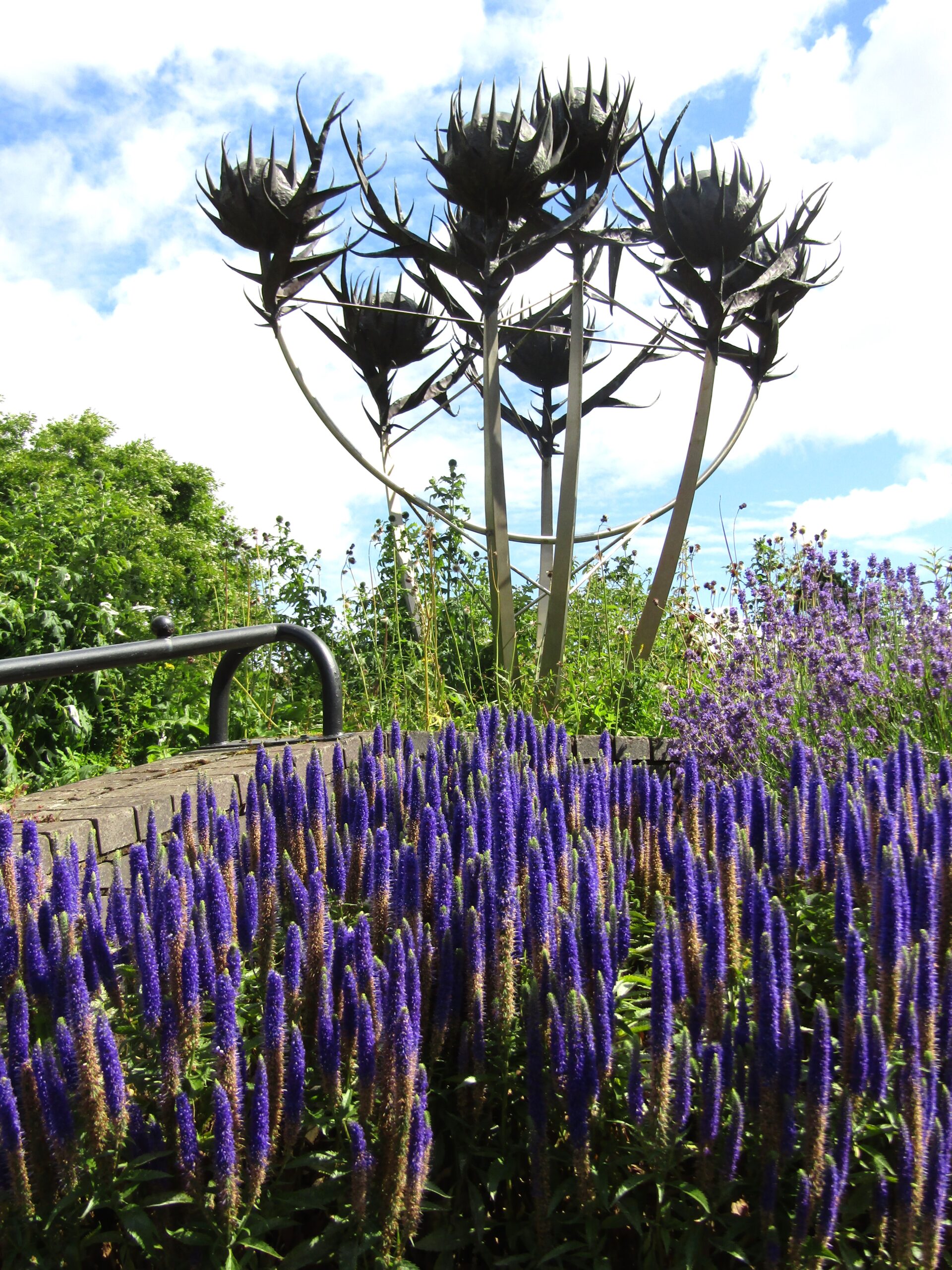
From Top left: 1) Five Pence coin (reverse), 1990. Thistle design, minted from 1982-2008 ) Royal Mint. 2) Scottish two pence (reverse), dated between 1642-1663 the Portable Antiquities Scheme (PAS) CC BY 2.0. 3) Two Shilling, a florin (reverse), 1947, minted during reign of George VI (1936-1952) By Jerry “Woody”, CC BY 2.0. 4) Stone/tile, Thistle mosaic, near the Scottish National Portrait Gallery, Queen Street, Edinburgh, By dun_deagh, CC BY-SA 2.0. 5) Floral motif depicting a thistle on floral clock, Princes Street Gardens (2016), By GerritR, CC BY-SA 4.0. 6) Stained glass, Glasgow Cathedral, (image taken by author). 7) Gilded plasterwork, ‘Adam Dome,’ National Records of Scotland (General Register House), Princes Street, Edinburgh, (image taken by author). 8) ‘Woolly Thistle’ by Billy Hutchison. From ‘Flock to the Show’, a public art trail (2023) in St. Andrews Square, Edinburgh, by Jennifer Petrie, CC BY-SA 2.0. 9) Thistle sculpture by David F. Wilson, North Inch Park, Perth – part of ‘Thistle Galore’ project, By Colin Smith, CC BY-SA 2.0.

_of_Charles_I_or_Charles_II_(FindID_994977).jpg)

.jpg)


The Thistle in Scottish Literature
The thistle has made many appearances in Scottish literature, capturing the imagination of many writers and poets. It is commonly used as a symbol of resilience, independence and national pride.
Than callit scho all flouris that grew on feild,
Discirnyng all thair fassionis and effeiris;
Upone the awfull Thrissill scho beheld
And saw him kepit with a busche of speiris.
Concedring him so able for the weiris,
A radius croun of rubeis scho him aif.
And said, ‘In field go furth, and fend the laif;…
Transation from the Original Middle Scots:
“Then called she all flowers grew in the field,
Describing all their fashions and effeirs,
Upon the awful Thistle she beheld,
And saw him keeped* [guarded] by a bush of spears;
Considering him so able for the wars,
A radiant crown of rubies she him gave,
And said, ‘In field go forth, and fend the lave [others]… “
Part XIX in “The Thrissil and the Rois” (aka The Thistle and the Rose) by William Dunbar (1503) composed in honour of the marriage of King James IV (the thistle) to Margaret Tudor (the rose), daughter of England’s Henry VII.
’S e Fòghnan na h-Alba lus ainmeil nam buadh;
Lus grinn nan dos calgach thug dearbh air bhi cruaidh;
Sean-suaicheantas mòrail tir bhòidhich mo luaidh:
’S tric dh’fhadaich a dheagh-chliù tein’-éibhinn’nam ghruaidh.
Transation from the Scottish Gaelic:
“O, the Thistle o’ Scotland was famous of auld,
Wi’ its toorie[3] sae snod[4] and its bristles sae bauld;[5]
’Tis the badge o’ my country – it’s aye dear to me;
And the thocht o’ them baith brings the licht to my e’e.”
Beginning of the Chorus, The Thistle o’Scotland (Suaicheantas na h-Alba) written by Malcolm MacFarlane & Evan MacColl, composed by Frederick Wilson Whitehead (1902), a patriotic song
A Scottish poet maun assume
The burden o’ his people’s doom,
And dee to brak’ their livin’ tomb.
Mony ha’e tried, but a’ ha’e failed.
Their sacrifice has nocht availed.
Upon the thistle they’re impaled.
You maun choose but gin ye’d see
Anither category ye
Maun tine your nationality.
“A Drunk Man Looks at the Thistle” by Hugh MacDiarmid (1926), a poem written in both English and Scots
Regardless of which thistle is the ‘true’ Scotch Thistle, it has become an enduring symbol of Scotland, representing her resilience and beauty.
1Dickson, J & Walker, A. (1981). What is the Scottish thistle? Glasgow Naturalist (20)2): 1-21.