The following blog was written by Rose Kent a digitiser in the Herbarium.
Since 2021 we have increased our digitisation capacity reaching 1 million specimens imaged in August 2024. Each digitiser is assigned a family of plants to work through. This series of blogs will spotlight the families that have been completed by a member of the team.
Rubiaceae is one of the largest families of flowering plants.
Digitising the collection has been a slightly dizzying experience – it has involved working through the many many herbarium specimens that together have helped form our understanding of the diversity and difference that makes up “Rubiaceae.” From large tropical trees with hefty fruits and robust leaves, to tiny creeping herbs, no bigger than your thumb, each herbarium specimen holds testament to the family’s variety.
There are more than 600 genera and over 14,000 species within the family, with plants distributed worldwide. Despite this, all plants in the Rubiaceae (“Rubies”) are identifiable by their simple, opposite leaves and interpetiolar stipules. This character is one that is present throughout all our specimens in the collection.
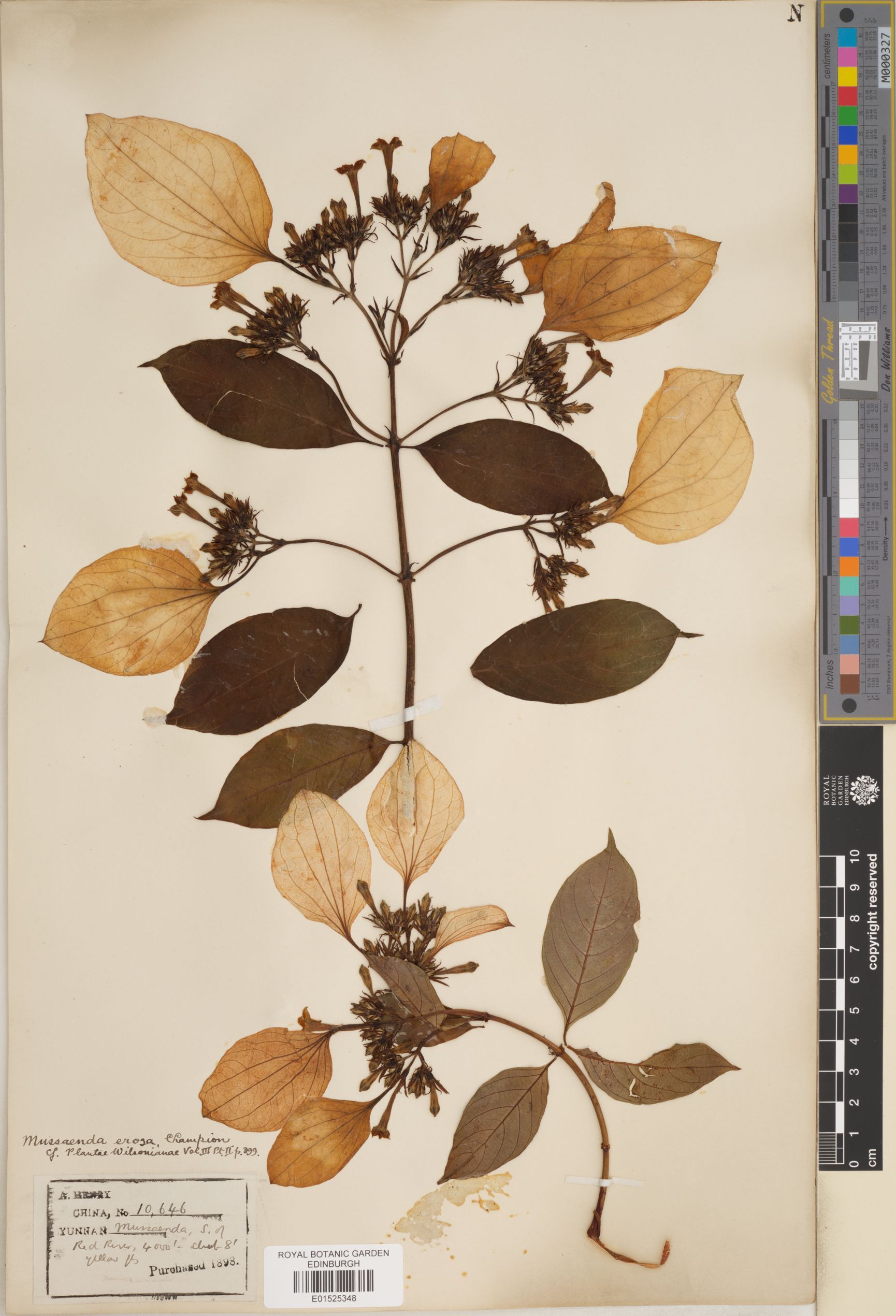
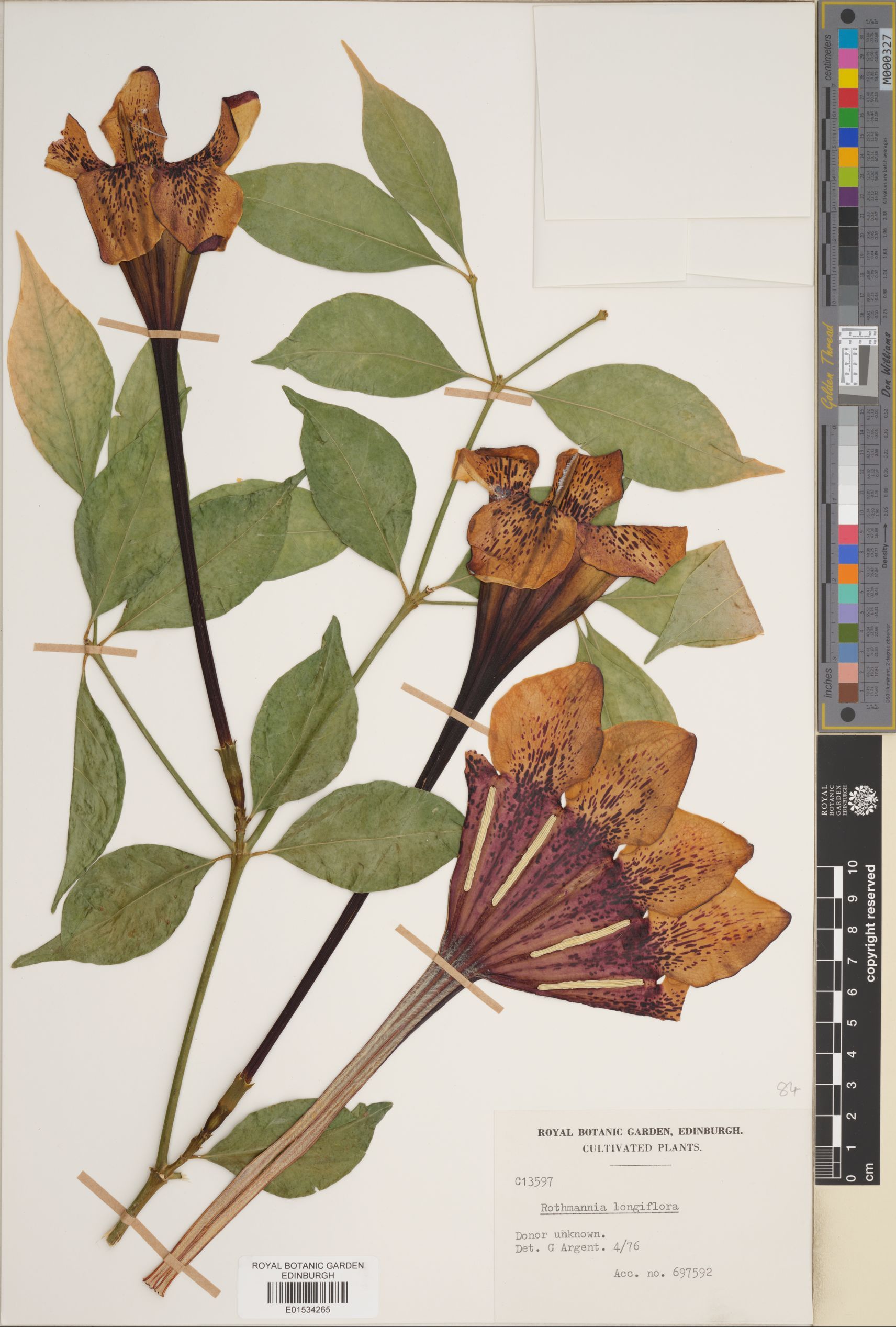
The Madder/Coffee/Bedstraw Family
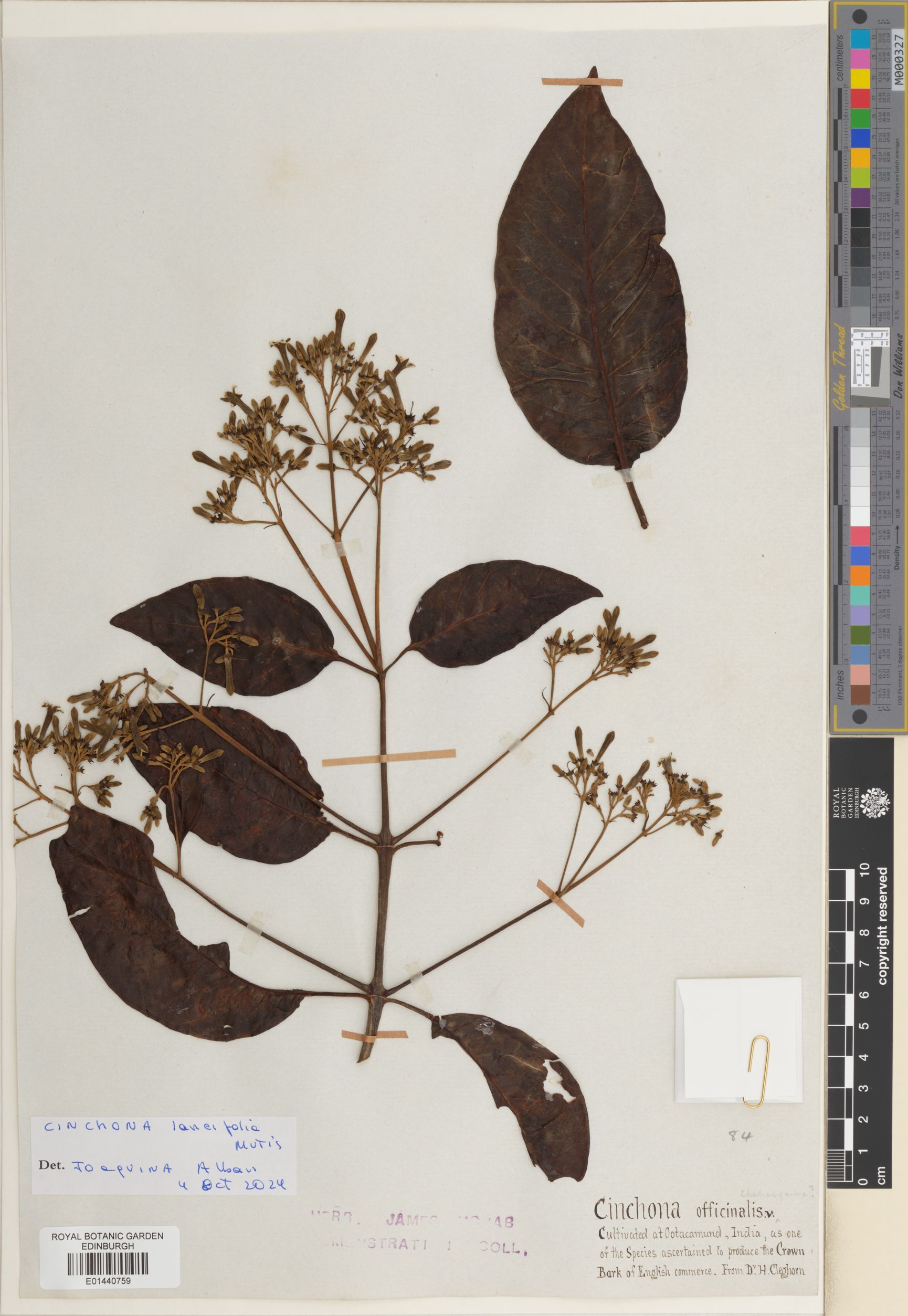
Rubiaceae contains many plants that are economically and medicinally important. These include Rubia (a dye-plant known as “madder”), Coffea (the source of coffee) and Cinchona (whose bark is the source of the anti-malarial drug quinine).
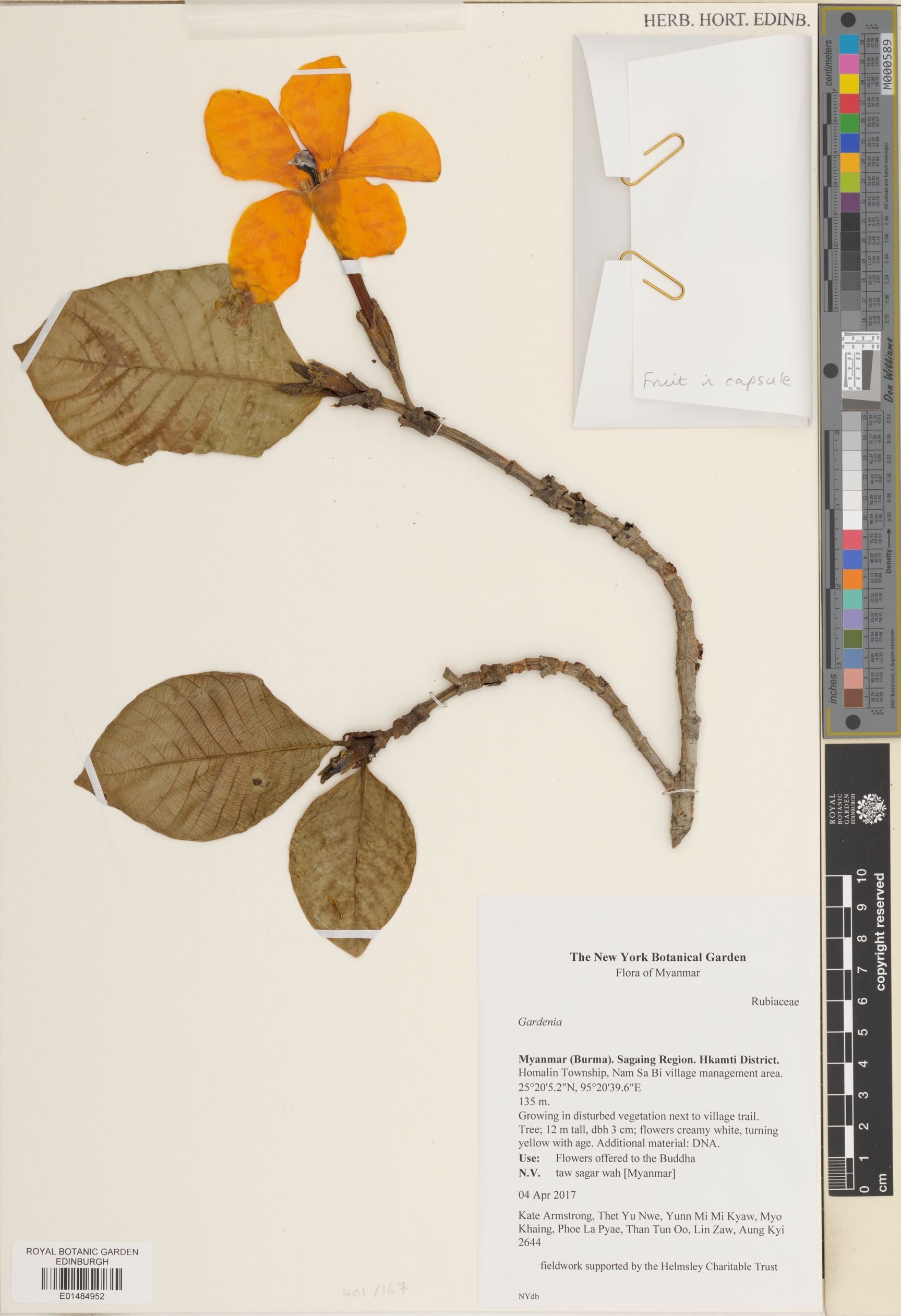
The family also contains many popular ornamental plants such as Gardenia and Ixora, and UK wildflowers such as Galium verum (lady’s bedstraw) or Galium aparine (cleavers/sticky willy).
Rubia, meaning Red
It is impossible to grasp such a huge family of plants in just one short blog post, so I will just briefly focus on the plant that is the family’s namesake: Rubia tinctorum (or madder).
The name rubia is derived from the Latin word ruber, meaning red, and theepithet tinctorum means “used for dying.” The name Rubia tinctorum thereforetells us quite neatly that this is a plant that is used for dying, and specifically for dying red. Other plants with the same epithetinclude Isatis tinctoria (the woad plant which produces a distinct blue pigment) and Roccella tinctoria (a lichen that produces a purple dye).
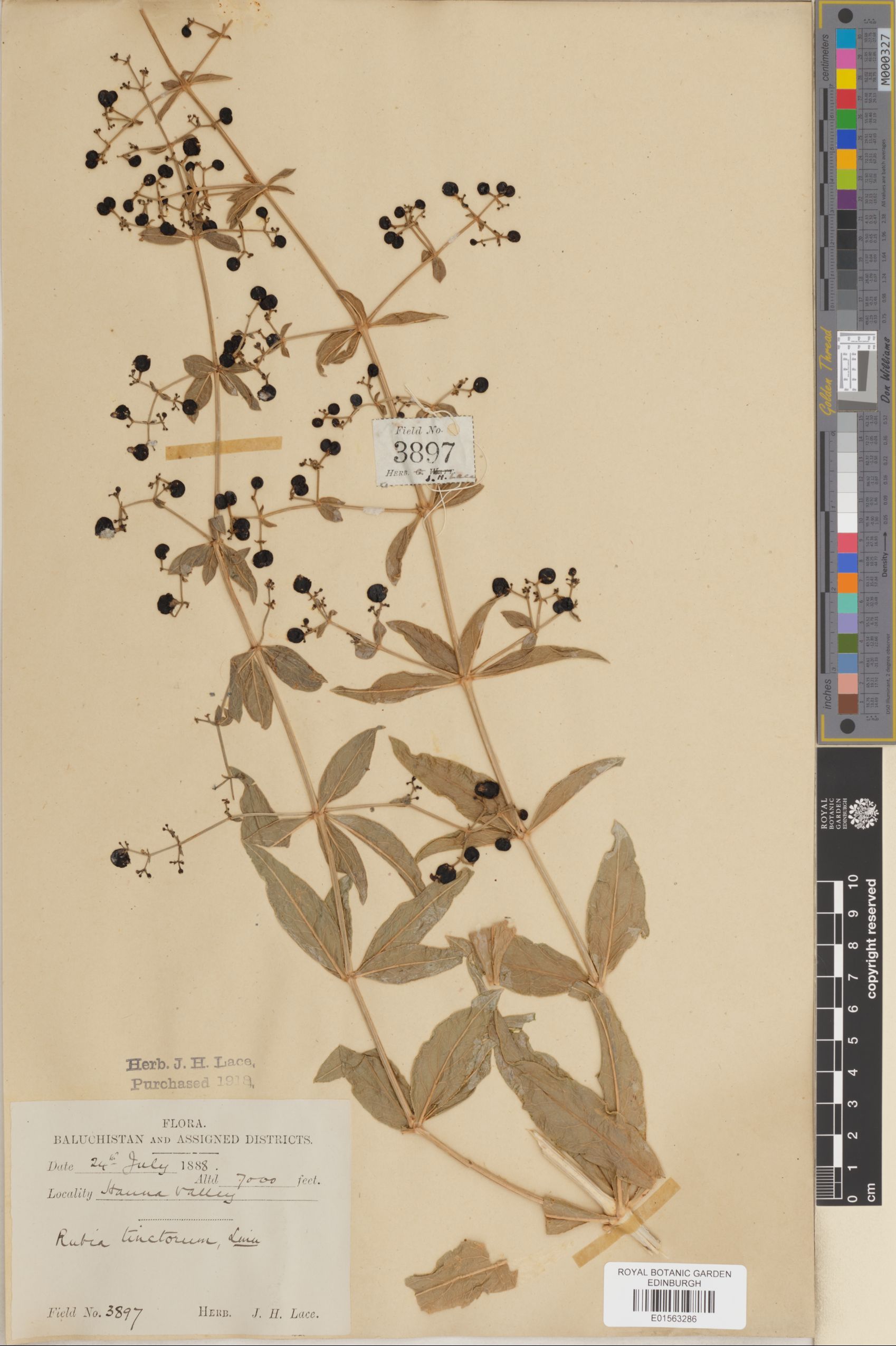
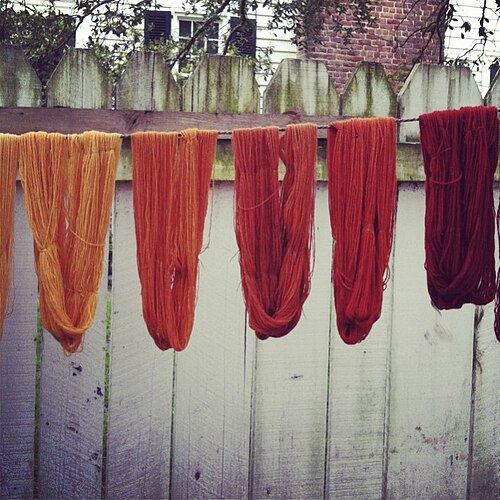
Herbarium specimen of Rubia tinctorum (E01563286) [left]; Skeins dyed naturally with madder root [right] (Source: Madison60 CC BY-SA)

Linnaeus took the name for the Rubiaceae family from Pliny the Elder, who listed the madder plant in his encyclopaedia Naturalis Historia. Indeed, the history of madder (also known as the rose madder or dyer’s madder) can be traced back to antiquity, with madder-dyed cloth having been found on mummified bodies in Ancient Egyptian tombs.
The red dye which is produced from Rubia tinctorum comes from processing its roots. For a long time, madder was one of the most reliable and readily available sources of red dye. It was used globally to produce pigments for paint and to colour textiles until the introduction of synthetic dyes in the latter half of the 20th century. Interestingly, mauveine, the first synthetic dye, was produced accidentally by William Henry Perkin in 1956 while he was attempting to synthesize quinine, the chemical found in Cinchona (another member of the Rubiaceae).
Our collections
We have 37,586 specimens available through our catalogue. Our Rubiaceae collections can be viewed here.
Top 5 regions
| No. of Specimens | Herbarium Filing Region |
| 3,744 | Europe (excl. Britain & Ireland) |
| 3,215 | India, Bangladesh & Pakistan |
| 3,140 | Inner China, Korea and Taiwan |
| 2,966 | West Asia |
| 2,558 | Indo-China |
Top 5 Genera
| No. of Specimens | Genus |
| 7,580 | Galium |
| 2,137 | Psychotria |
| 1,571 | Asperula |
| 1,314 | Rubia |
| 1,069 | Ixora |