The following blog was written by Rebecca Camfield a digitiser in the Herbarium.
Since 2021 we have increased our digitisation capacity reaching 1 million specimens imaged in August 2024. Each digitiser is assigned a family of plants to work through. This series of blogs will spotlight the families that have been completed by a member of the team.
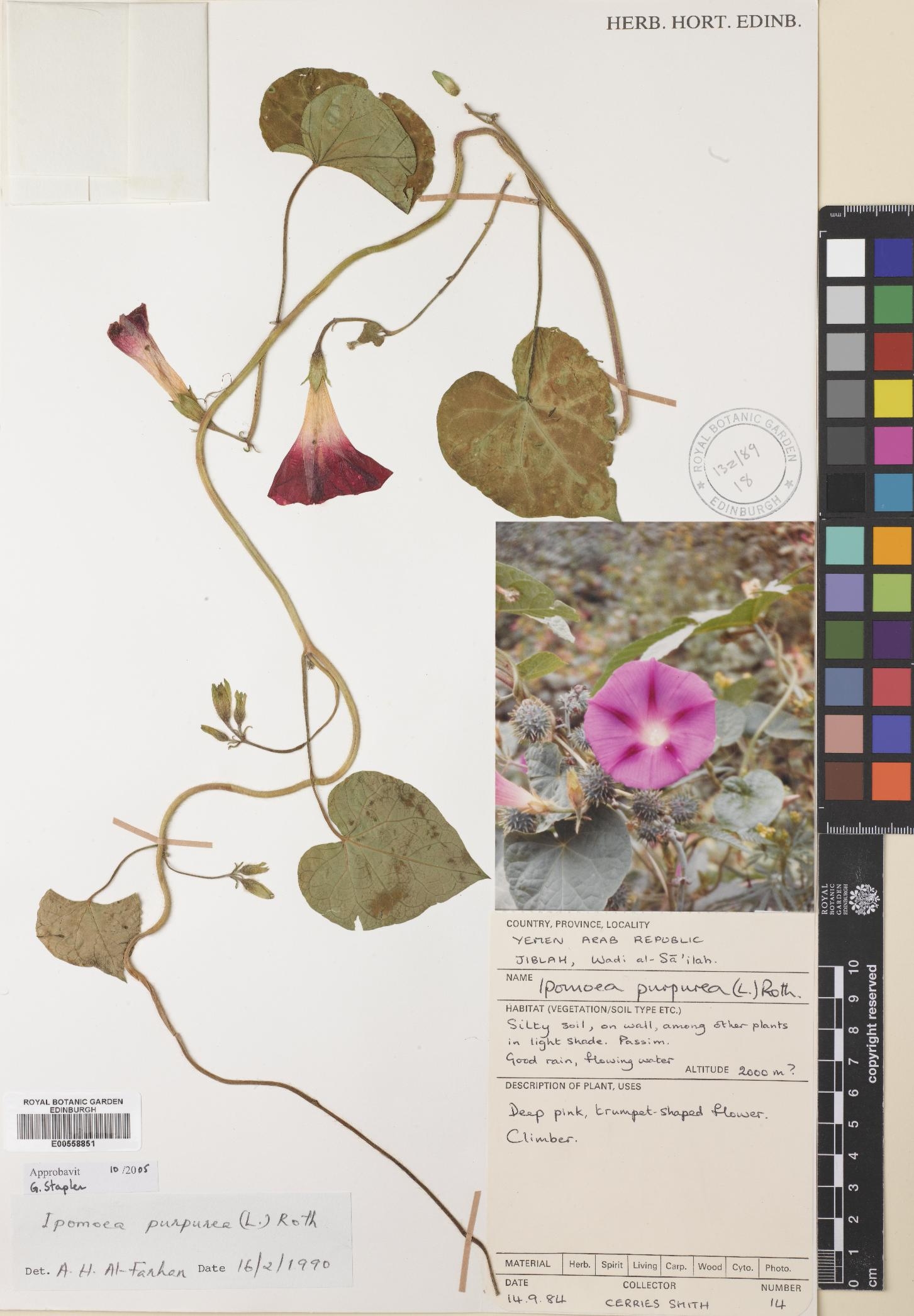
Convolvulaceae is a family of approx. 60 genera found globally in tropical and temperate zones but much more diverse in tropical regions. The family is also known as the morning glory or bindweed family. They are typically creeping herbs and flowering vines which usually have tendrils and 5 fused petals and sepals. The striking flowers of this family are quite recognisable, and some are used in cultivation whereas others are seen as garden pests, as they spread quickly and are difficult to remove. Due to the large flowers, they can have large pollinators, Calystegia silvatica with its 9cm wide flowers is visited by the Convolvulus hawk-moth, one of the larger moths in Europe with a 12 cm wingspan.
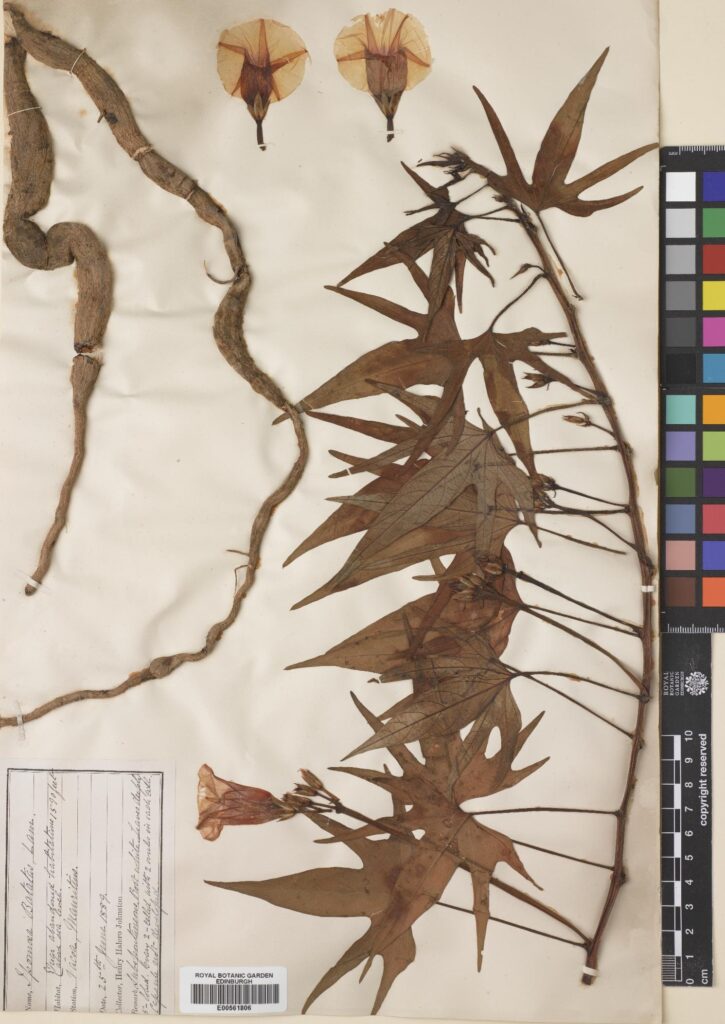
The leaves and tuberous roots of some are eaten, the most well-known would be Ipomea batatas, otherwise known as the sweet potato. The other is Ipomoea aquatica or water spinach. Other uses include the vulcanisation of rubber with Ipomoea alba or moon vine. It handily grows about the Panama rubber tree and was used in 1600BC to create rubber balls by the Olmecs. Others produce psychoactive chemicals that were used in rituals or for torture.
It also contains the parasitic genus Cuscuta with approx. 200 species. It is commonly known as dodder but has many other names including witch’s hair, wizard’s net, devil’s guts, angel hair and strangle weed. Due to its wide range of habits and hosts which include agricultural and horticultural plants it is of economic concern as its presence weakens its host making them susceptible to disease. There is thus a lot of research into this genus and many countries have a ban on importing the seed.
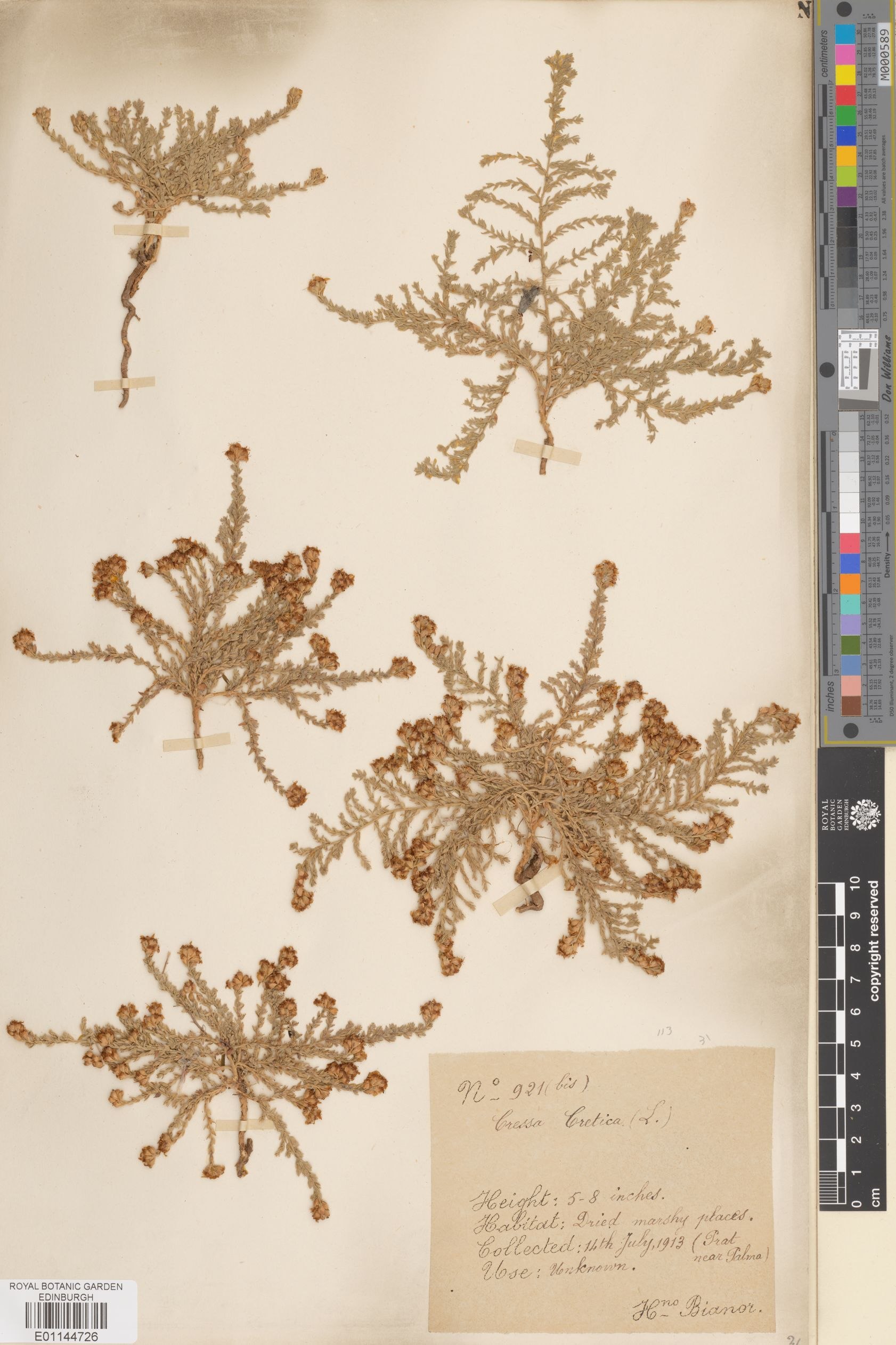
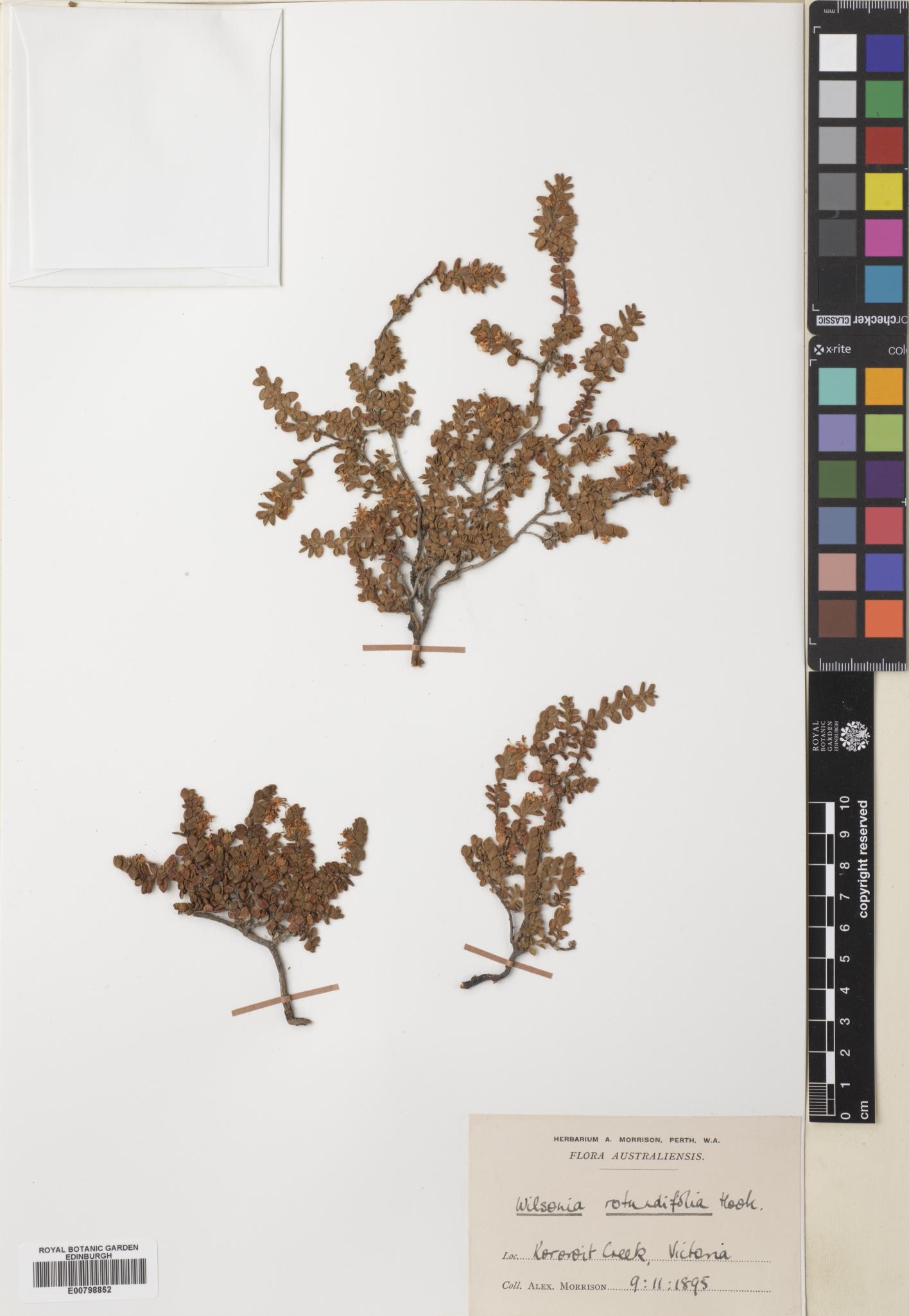
Whilst the majority are climbers and twining vines but there are also many small shrubs and creeping herbs in the family. Falkia is a tiny member forming dense ground cover up to 6 inches high with little white start flowers. Cressa is a small herb with erect stems found in alkaline soils, and Wilsonia, native to Australia forms small mats only 10cm high in salt marshes.
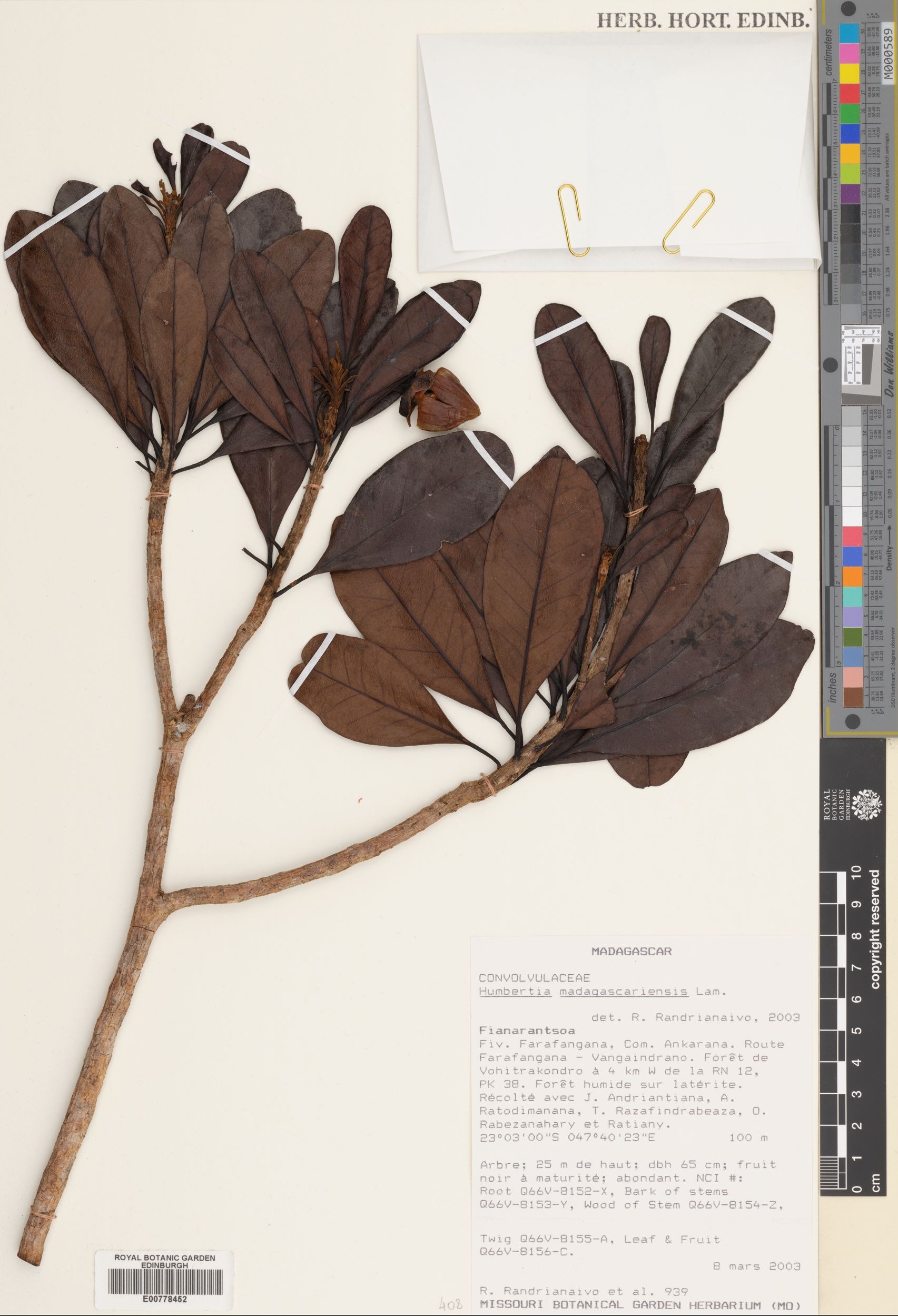
Humbertia is a monotypic genus found only in Madagascar and is unusual for the family as it has a tree habit. They grow to 30m and were used for lumber but have become rare. There are a few other trees in the family, Ipomoea arborescens from Mexico with a height of up to 15m and Ericybe stenophylla is a small tree native to Borneo.
Our Collections
Before mass digitisation there was already 7,670 specimens databased and afterwards there was 10,423, of which 291 are type specimens. The specimens can be viewed here.
Top 5 regions
| No. of Specimens | Herbarium Filing Region |
| 1,478 | India,Pakistan & Bangladesh |
| 1,462 | Western Asia |
| 1,000 | Europe (excluding Britain and Ireland) |
| 708 | Inner China, Korea & Taiwan |
| 557 | Arabian Peninsula |
Given how diverse the family is in tropical regions I’d have expected some higher numbers for South America and SE Asia. Our links with the Centre for Middle Eastern Plants (CMEP) is why the Western Asia collection is quite so high and our historical ties to India.
Top 5 Genera
| No. of Specimens | Genus |
| 2,943 | Convolvulus |
| 2,236 | Ipomoea |
| 1,582 | Cuscuta |
| 596 | Calystegia |
| 536 | Merremia |
Ipomoea is the larger genus with around 600 species, but Convolulus has the wider distribution that covers Europe and Northern Asia. This with our historical collections of those regions beats Ipomoea to the top spot. The global distribution of Cuscuta is why it so well represented for a parasitic genus.