
Edinburgh is a city where geology, history, ecology, and planning interlace to form an urban landscape unlike any other.
For participants of the British Ecological Society’s conference tour “Edinburgh’s Living Landscape: People and nature at the heart of the city” (15th Dec 2025), these layers were more than a backdrop – they offered a lens for understanding how past decisions, natural processes, and contemporary challenges converge.
This article brings together the key themes of the walking workshop and the visit to the Royal Botanic Garden Edinburgh, highlighting how cities can draw on their history and ecology to shape a resilient future.
A Landscape Written in Deep Time
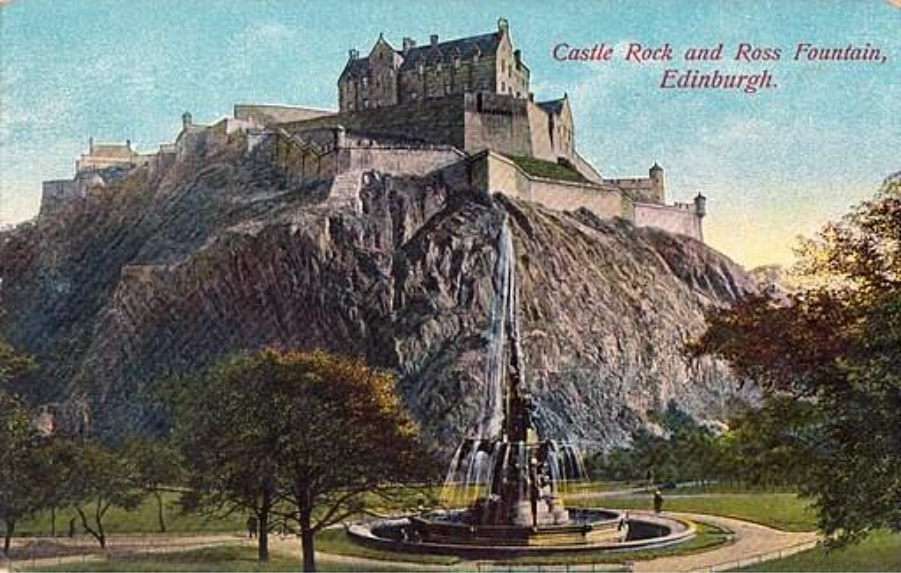
Much of Edinburgh’s character is rooted in geological events hundreds of millions of years old. Castle Rock – formed during ancient volcanic activity – created the crag-and-tail structure that defines the Old Town. Its resistant dolerite not only shaped early defensive strategies but also influenced James Hutton, whose observations around Edinburgh supported his ground breaking concept of “deep time”.
This expanded temporal perspective is increasingly relevant today. Climate change forces cities to think beyond electoral cycles or short-term planning horizons. Deep time reminds us that landscapes evolve, adapt, and respond to pressures – offering a powerful analogy for how modern cities might do the same.
Urban Inequality and the Human Environment
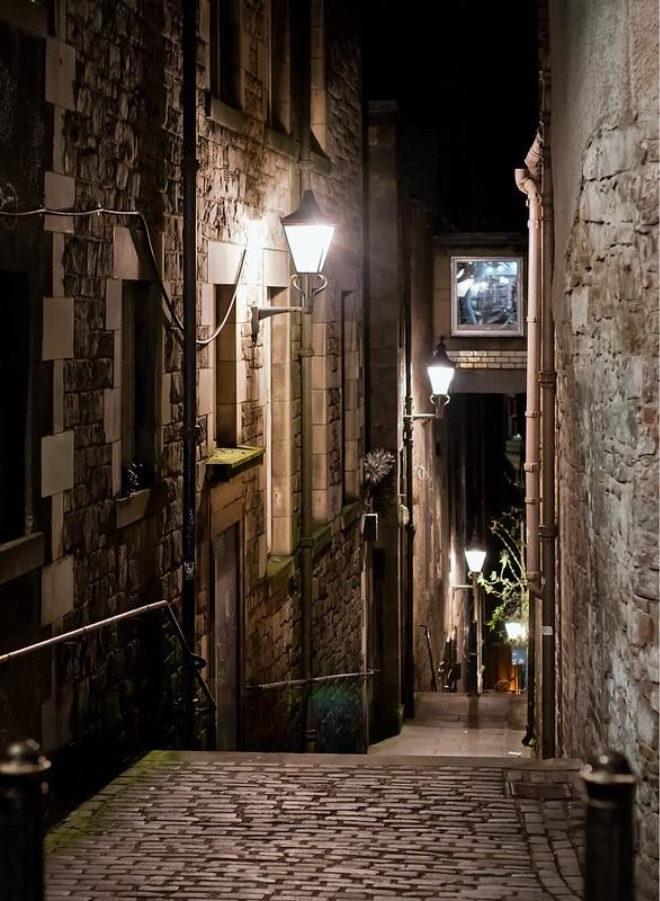
Edinburgh’s historic development illustrates how social and political pressures shape access to healthy environments. Confined by defensive walls and limited building space, the Old Town grew vertically, with wealthier residents living on lower floors and poorer households in overcrowded upper levels. Smoke, sanitation challenges, and poor air quality earned the city the nickname “Auld Reekie.”
These conditions echo a truth that persists in many global cities: environmental quality is not evenly distributed. Access to clean air, green space, and safe housing remains uneven, and climate change threatens to amplify these disparities. Understanding how inequality was built into historic urban form helps us recognise and address its contemporary equivalents.
Patrick Geddes and Early Ecological Urbanism
Few thinkers embody the integration of ecology and urban planning as clearly as Patrick Geddes. Working within the Old Town’s dense courtyards, Geddes introduced the principles of “Place, Work, Folk,” urging planners to consider geography, livelihoods, and communities as interconnected. His “conservative surgery” approach aimed to improve neighbourhoods rather than demolish them, introducing gardens and green courtyards to bring light and air into confined spaces.
These ideas anticipate today’s nature-based solutions: interventions that work with natural processes to address social and environmental challenges. Geddes’ work reminds us that sustainability is not purely a modern invention but part of a long dialogue between people and place.
“By leaves we live. Some people have strange ideas that they live by money. They think energy is generated by the circulation of coins. But the world is mainly a vast leaf-colony, growing on and forming a leafy soil, not a mere mineral mass: and we live not by the jingling of our coins, but by the fullness of our harvests.”
Patrick Geddes (1919)
Greenspaces, Access, and Climate Vulnerability
Princes Street Gardens and the area around Waverley Station illustrate how historic landscapes change and their history leaves vulnerability to modern conditions. Once a marshy hollow, and then the basin of the man-made Nor’ Loch, the area remains prone to flooding – a challenge intensified by changing rainfall patterns and outdated drainage systems.
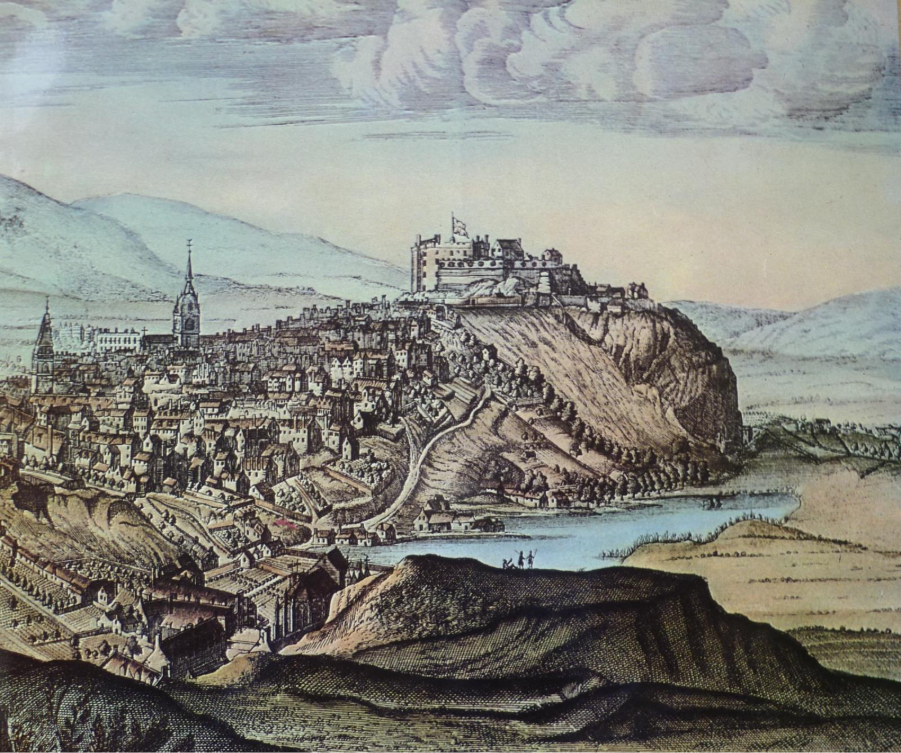
While the gardens remain a cherished landmark for visitors, our research (The Good City) revealed that younger residents see them as inaccessible or unappealing—an issue given the scarcity of greenspace in this part of town.
At the same time, many of the New Town’s private gardens highlight a different issue: greenspace can exist in abundance yet remain inaccessible. Meaningful contact with nature is shaped not only by supply but by equity – who can enter, who feels welcome, and who is excluded.
When asked about natural places in the city that ‘bother them’, one of the young people we spoke with said:
“It’s a private garden. I can’t access it because I don’t live on a specific street.”
Edinburgh Young PERSON 2023
High-quality greenspace must serve multiple purposes: it should be inclusive and accessible to diverse communities, resilient to climate pressures, and supportive of biodiversity. Achieving this balance is at the heart of successful nature-based planning and participatory placemaking.
Heritage and Innovation in the New Town
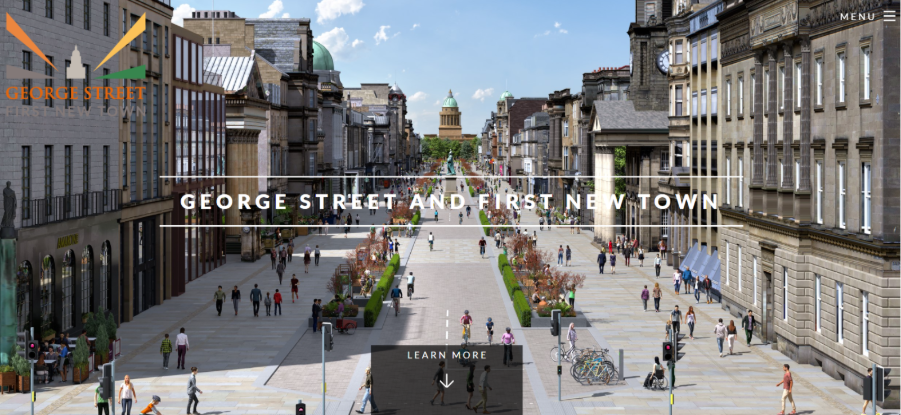
Edinburgh’s Georgian New Town offers a contrasting vision of urban form: planned, spacious, and aligned with the Enlightenment ideals of order and beauty. Today, these historic streets are becoming testbeds for climate adaptation. The redevelopment of George Street includes rain gardens designed to manage surface water while preserving the area’s architectural character. We are partnering in this work to ensure plant selection and design draw from both ecological function and Georgian garden aesthetics.
This model demonstrates that climate solutions don’t have to clash with heritage. Instead, they can enhance and reinterpret it, creating landscapes that honour the past while preparing for the future.
The Water of Leith: A Corridor of Change
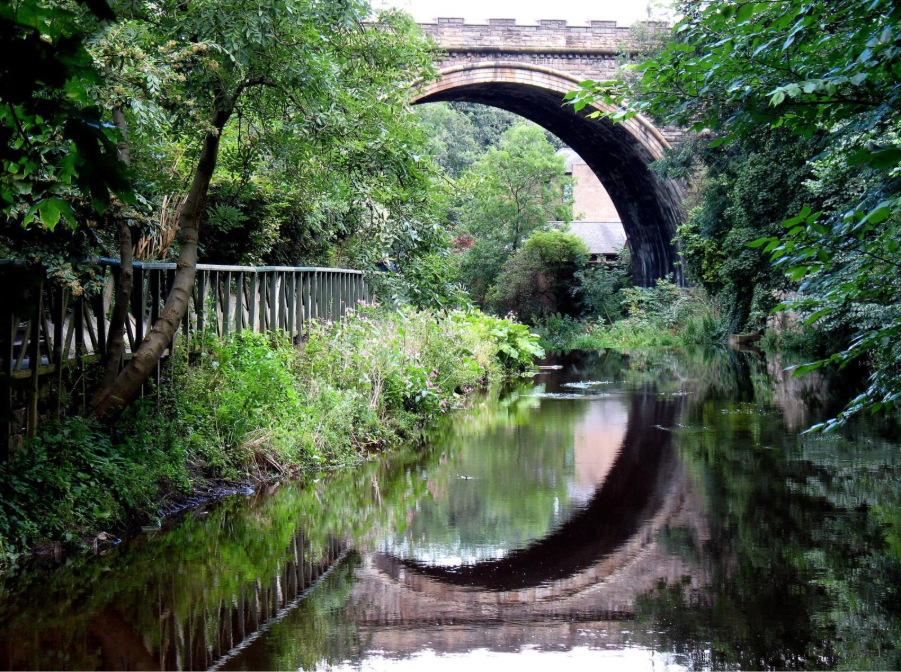
Once an industrial artery powering more than 70 mills, the Water of Leith now supports wildlife, recreation, and ecological connectivity across the city. Its transformation mirrors a broader shift in how cities view waterways – from industrial infrastructure to living systems that provide flood control, carbon sequestration, and habitat.
Today, the Water of Leith is a key component of the Edinburgh Nature Network, which aims to strengthen biodiversity corridors and support nature’s ability to move, adapt, and recover across urban environments.
RBGE as a Living Laboratory
The Royal Botanic Garden Edinburgh shows how nature-based solutions operate in practice, turning the garden into a living demonstration site.
Built in 2019 on a frequently flooded site, RBGE’s rain garden now captures and filters stormwater naturally, the site no longer floods, requires no irrigation, and supports thriving plant communities. RBGE’s living lawn systems feature improved biodiversity, deeper roots, improved infiltration, and better drought resilience compared with traditional turf. The crescent pond collects runoff from surrounding paths, while a new historically inspired Georgian rain garden – developed with Edinburgh World Heritage and the City of Edinburgh Council – will pilot heritage-informed adaptation. Trees and flower beds provide habitat for other plants and wildlife. Stormwater planters are pocket-sized rain gardens filter runoff at the building scale. Sensors within the planters help researchers better understand water movement and plant responses in urban settings. And we are working with Scottish Water to pilot these retrofit interventions in flood-prone neighbourhoods.
Together, these interventions show that nature-based solutions can operate at every scale – from courtyards to catchments, from domestic downpipes to citywide corridors. Helping us to ‘weather the weather’ and improve our towns and cities for everybody. You can tour these features for yourself using the ‘Features’ section of our Garden Explorer tool.