The following blog was written by Becky Camfield a digitiser in the Herbarium.
Since 2021 we have increased our digitisation capacity reaching 1 million specimens imaged in August 2024. Each digitiser is assigned a family of plants to work through. This series of blogs will spotlight the families that have been completed by a member of the team.
The Giant rhubarb family with its single genus of Gunnera which contains approx. 65 species.
It is an ancient family with a rich fossil history. Arising in Gondwanaland in the late Cretaceous, it was at one point found globally. Its pollen has been found in fossils from Australia, North America and even Antarctica, whereas today it is native to Central & South America, Eastern Africa, Madagascar, Indonesian Islands, Philippines, Hawaii, New Zealand and Papua New Guinea. It is considered introduced to Western North America, Sweden, France, Ireland and the U.K.
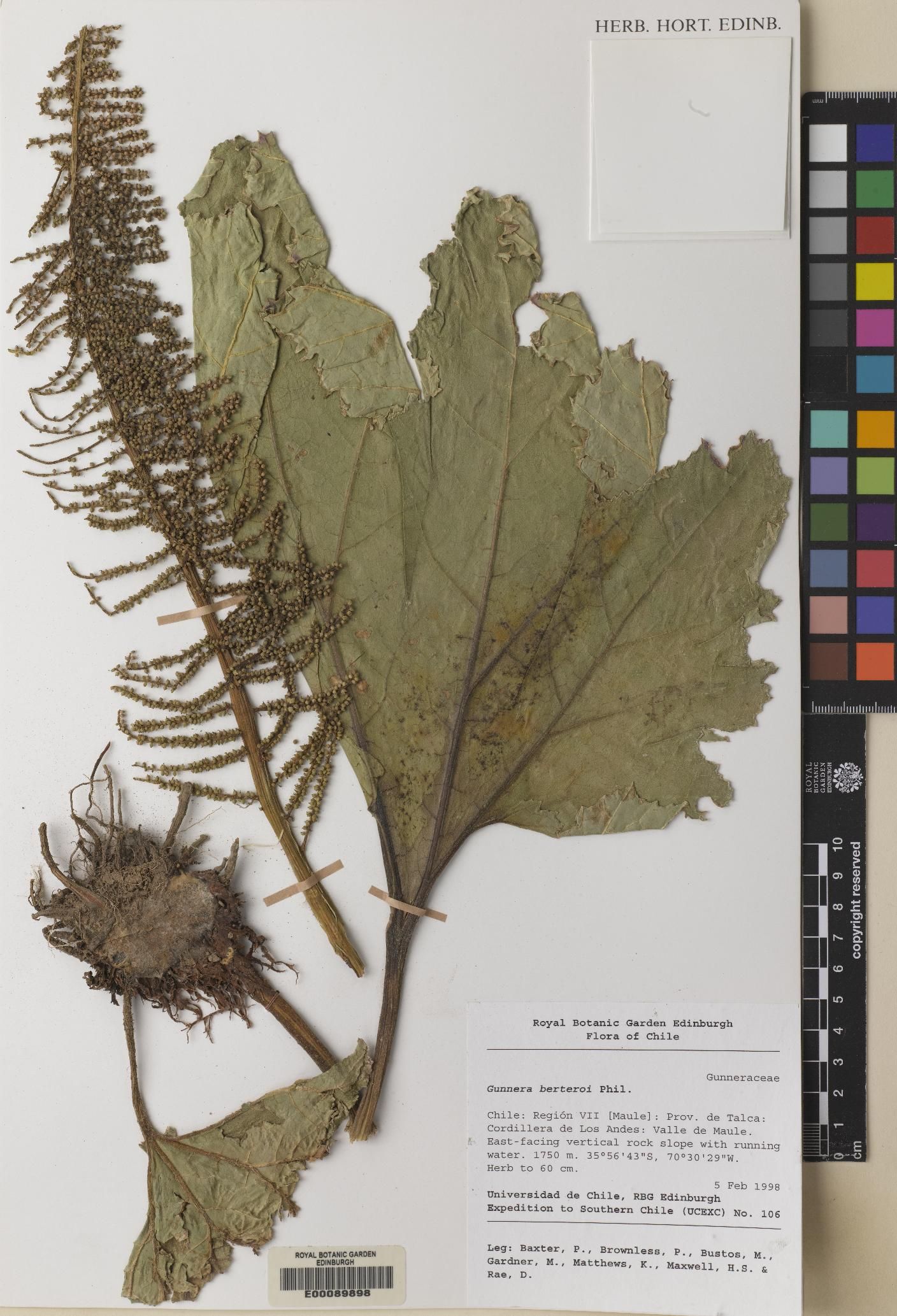
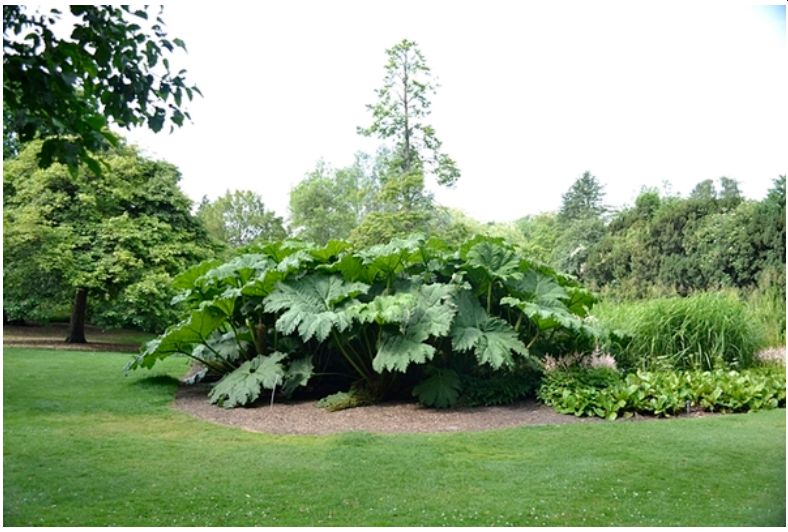
The main subfamily Panke is known for its large leaves. The largest belong to Gunnera manicata Linden ex André from Brazil which in the wild can get to 2m x 2.5m (not including the petiole that can also get to 2m in length). They have been known in cultivation to reach 3m in width. G. magnifica H.St.John has the largest leaf buds that are 60 cm x 40cm. The leaves have been seen in use as umbrellas.
Outside of the subgenus Panke the leaves are medium to small, and the plants are low lying, forming mats in the basal species. In fact, G. albocarpa (Kirk) Cockayne from New Zealand has leaves only 1-2 cm long!
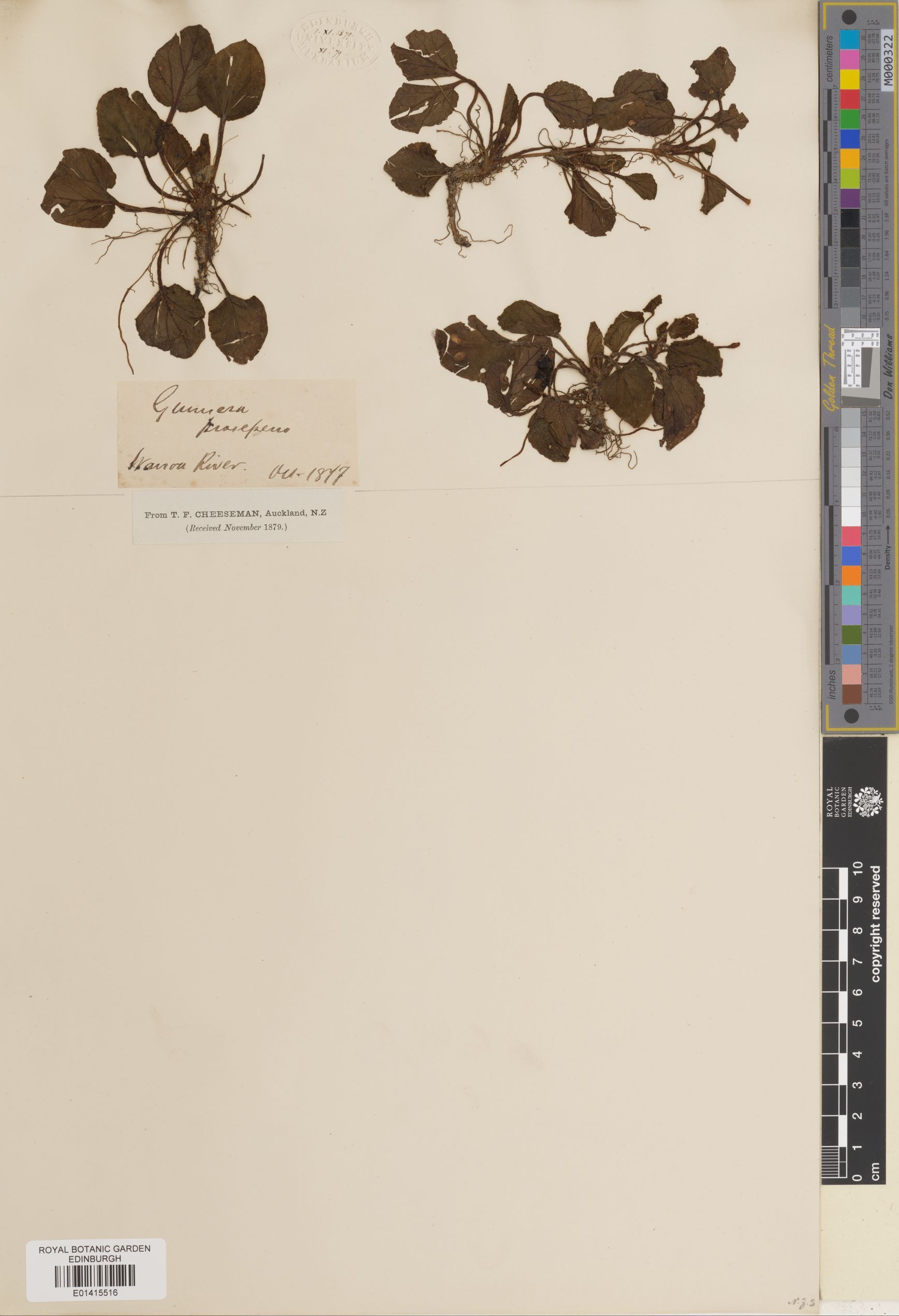
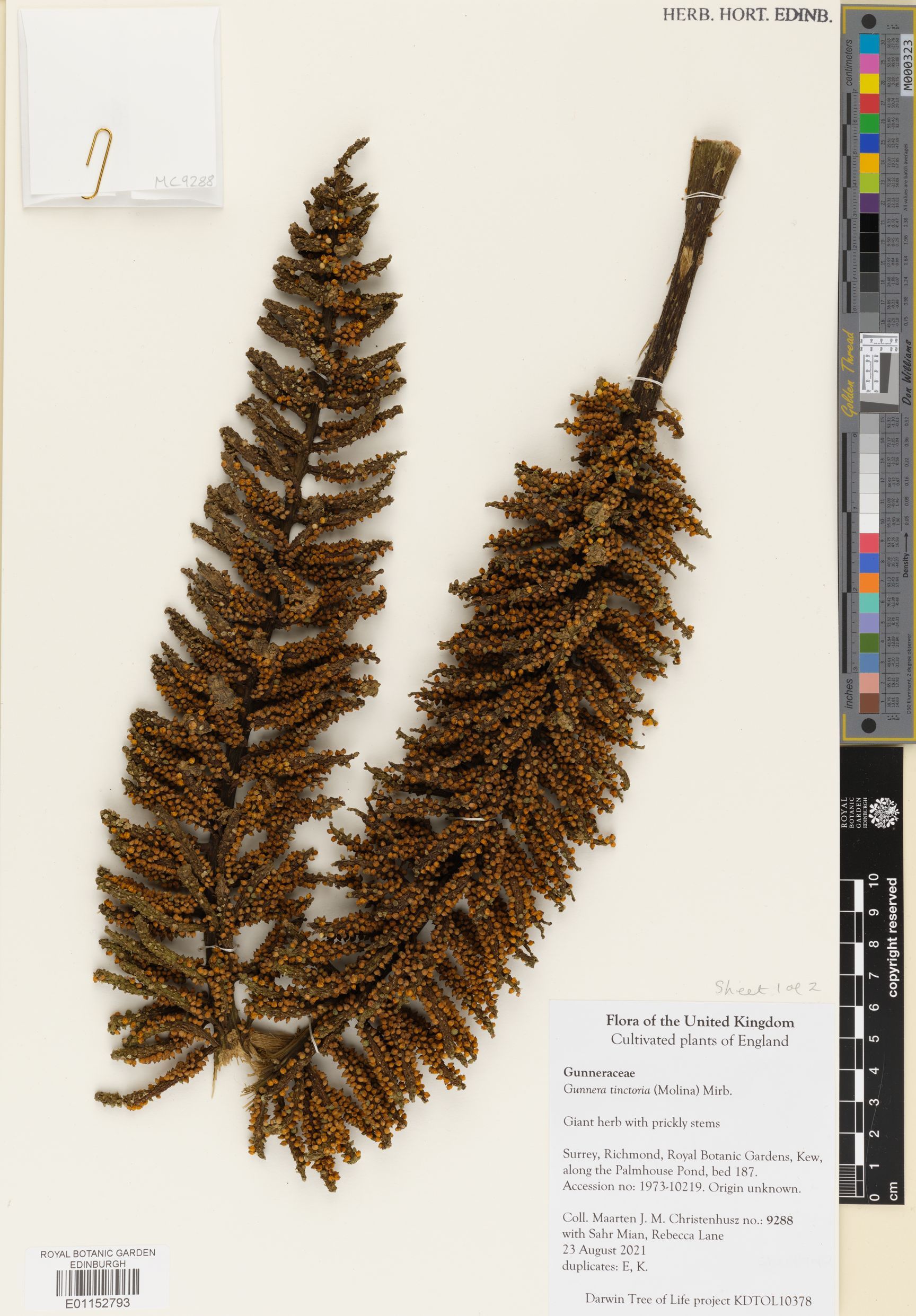
They are mostly used in cultivation. However G.tinctoria (Molina) Mirb. from Chile and Argentina has edible stalks, which are peeled and eaten fresh or added to salads, liquor or marmalade. The stalks, leaves and petioles of G. perpensa L. from Southern Africa is also eaten, they are usually fresh but can also cooked. It is also used as a traditional medicine for digestive complaints.
Our Collections
Propr to the digitisation of the collection we had 56 specimens available through our online catalogue. Following the digitisation of the family we have 117 specimens. Our collections can be viewed here.
Top 5 regions
| No. of Specimens | Herbarium Filing Region |
| 45 | Temperate South America |
| 18 | South Africa |
| 13 | Papua New Guinea |
| 12 | New Zealand |
| 11 | Cultivated |
We could have better representation of the genus from Indonesia, Central America, Central Africa and even Brazil. Previous research focus on Argentina and Chile have resulted in the top spot.
This is also shown in the species our collection covers. We only have specimens for just 17 species out of the 65. G. magellanica Lam. being the most collected with 34 specimens.