
The Wardian case is credited as the invention of the surgeon and naturalist Nathanial Bagshaw Ward who lived in London and was an avid plant collector. His glazed, closed cases revolutionised the transport of live plants, particularly those from the tropics that don’t have a dormant period and those that are prone to desiccation, such as ferns.
From about the middle of the nineteenth century, these cases became such standard kit for transporting plants that few people thought to record their use and tracking down how the Botanics was using Wardian cases has proven to be surprisingly difficult. What has emerged from my research is a connection to three economically important plants that are all members of the Rubiaceae plant family – coffee (Coffea sp.), cinchona (Cinchona sp.), the source of the malaria treatment (quinine), and the ipecacuan plant (Carapichea ipecacuanha) that was used to induce vomiting and is now forgotten as a medicine.
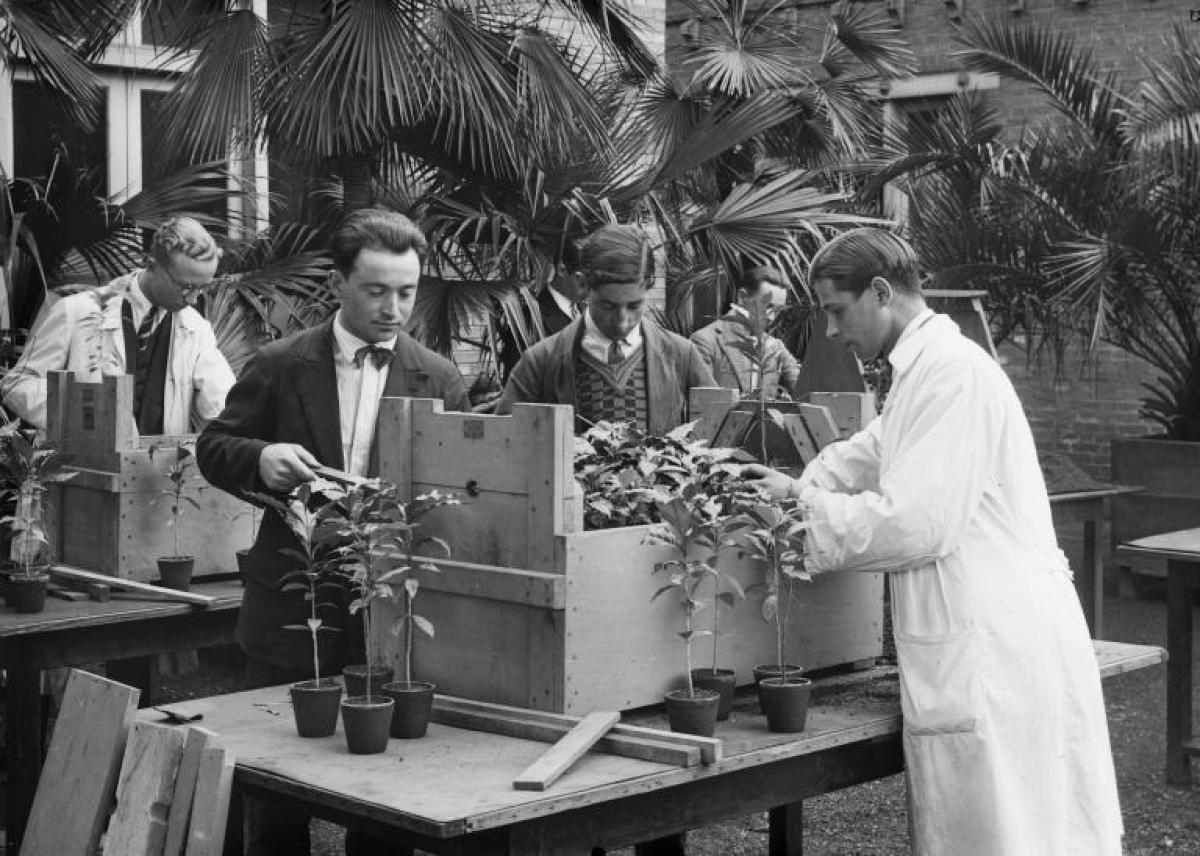
By moving these incredibly valuable plants to their colonies the European colonial powers made fortunes, destroyed natural habitats and uprooted and exploited people. Ward’s case can truly be described as a box that changed the world.
The problem
From the late eighteenth century onwards, European empires expanded rapidly and the reliable movement of economically important plants was a problem that needed an urgent solution. This was essential for success in the power struggle between empires.
Tropical plants exist in a perpetual state of growth. There is no dormant period when they can be safely transported. Conditions on board ships were simply too hostile, and plants rarely survived the long journeys involved. More than two-thirds of the breadfruit plants transported by Captain Bligh in 1791, on his second attempt at moving plants from Tahiti to Jamaica, were dead on arrival. The British Government ploughed a considerable amount of money into refitting two ships to move the breadfruit, the Bounty (a failure due to mutiny in 1789) and two years later the Providence. The breadfruit was needed to feed enslaved people working on the Jamaican plantations with the aim of producing a higher grade of cotton. The enterprise was masterminded by the botanist Sir Joseph Banks (Royal Botanic Gardens, Kew) and supported by William Pitt (British prime minister), Henry Dundas (head of the India Board), and Lord Sydney (Secretary of State).
The solution
Nathanial Ward demonstrated the use of glazed, closed wooden cases as a solution by sending plants from London to Sydney. This was the longest journey available at that time and the harshest test of Ward’s cases. On 23 November 1833 captain Charles Mallard wrote to Ward to inform him that the experiment had ‘fully succeeded’ and that a return shipment of plants was being prepared. The return leg was just as successful, and Ward’s name went down in history as a result. The cases became known as Wardian cases or Ward’s cases in his honour. Glazing allowed in vital light and sealing reduced water loss to a minimum, meaning the cases needed little or no maintenance during the journey. The cases were typically placed on the ship’s deck to provide the necessary light.
James McNab’s Wardian case
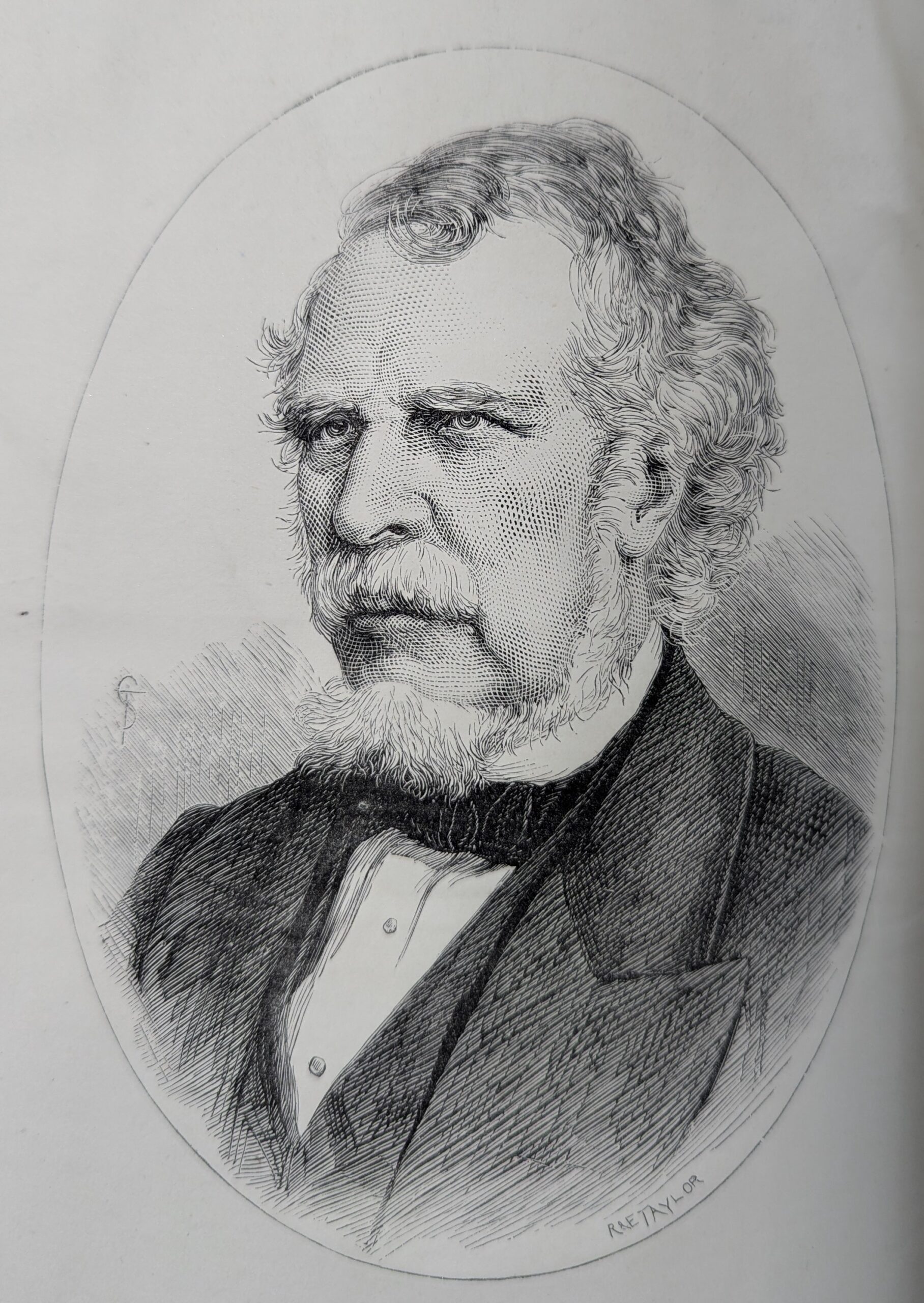
James McNab of the Royal Caledonian Horticultural Society, and later the curator of the Royal Botanic Garden Edinburgh, visited Ward in London several times to learn about the construction of his cases. On 13 June 1839 Daniel Ellis exhibited a Wardian case, built by McNab, to the Edinburgh Botanical Society. It was received with much acclaim. However, Ward’s invention was not entirely new, and others had been experimenting along similar lines. At the same meeting of the Botanical Society McNab read a letter from advocate and amateur botanist Allan Alexander Maconochie about his own experiments with ‘glass cases for growing plants similar to those recommended by Mr N B Ward’. When the claim was later published, Ward took great offence and described the claim as a ‘one of the most barefaced falsehoods ever uttered’. Ward chose not to patent his invention as he wanted it to benefit humanity, although he may also have worried that others could have contested such a move. Despite the controversy, such cases have become associated with Ward and Maconochie’s work is a footnote.
Interestingly, McNab made his own experiments to reduce the weight of a large earth-filled, glazed box. Instead, he packed pots with moss and replaced the glass with a canvas cover. The obvious disadvantage is that this blocked out the light.
The Darjeeling cinchona plantations
Malaria still threatens half the world’s population, and the disease is thought to have killed more people than all the world’s wars and plagues put together. It was a major problem for the colonial powers and without a cure it has been suggested that the rise of the European empires would not have happened. The enslavement of as many as 20 million people may not have occurred if a cure for malaria had not been found.
The only known cure was an extract of the bark of a South American plant called cinchona. The active substance in the bark is an alkaloid called quinine after the indigenous name of the plant – quina – meaning bark. Understandably, the European empires wanted their own reliable supply of cinchona bark. In the mid-nineteenth century cinchona was probably the most sought-after economic plant on the planet.
The South American Quechua Indians were first to understand the medicinal qualities of cinchona bark as a treatment of fevers and the Spanish Jesuit missionaries were the first Europeans to hold a monopoly on ‘Peruvian bark’ or ‘Jesuit powder’ from the 1650s.
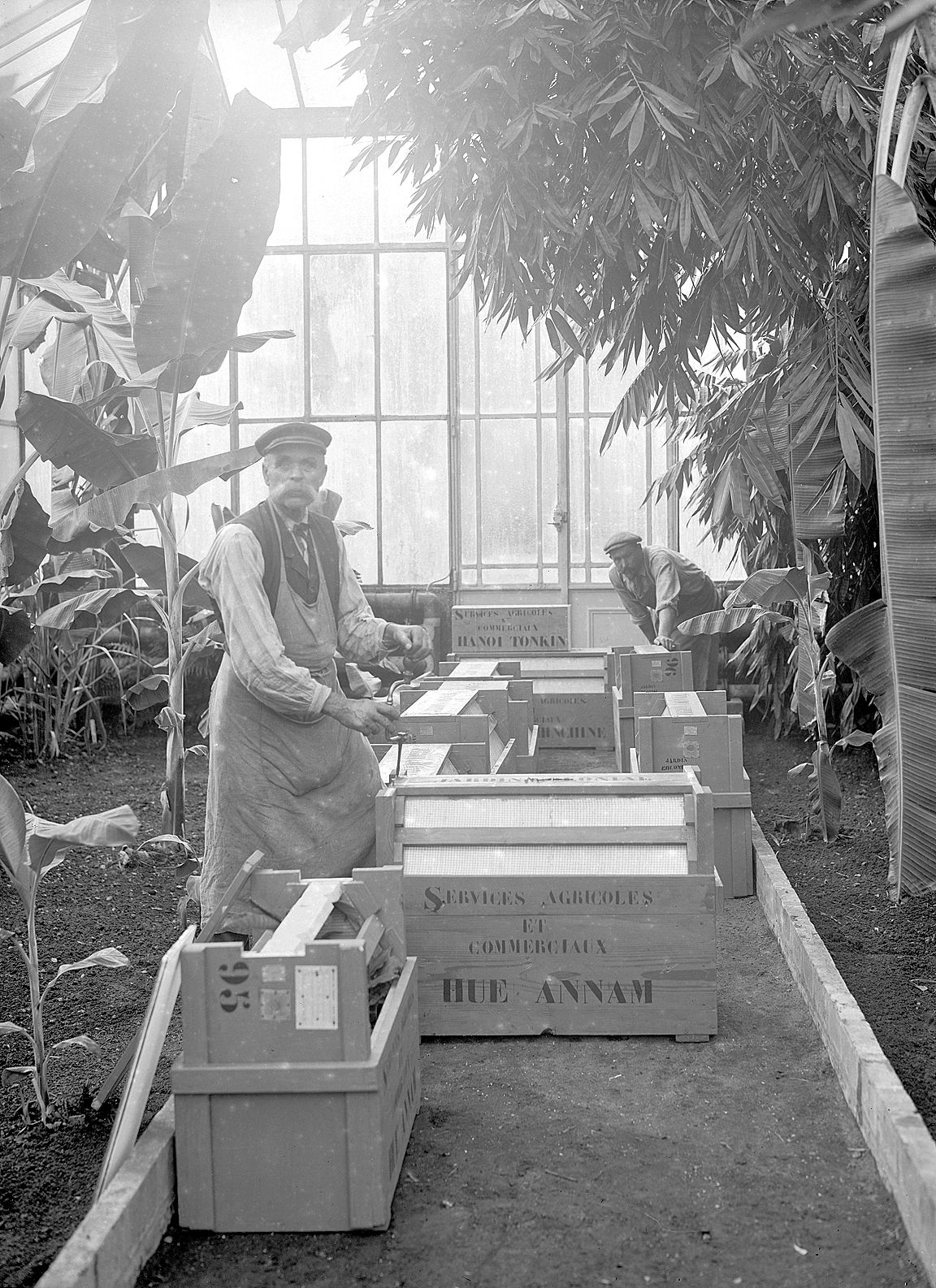
Britain’s first opportunity to create cinchona plantations within its empire came when the explorer Clements Markham was sent to hunt for cinchona plants in Peru and Bolivia in 1860 with the help of botanist Richard Spruce and others. Markham’s cinchona plants were sent to the Nilgiris (Blue Mountains) in south India as well as to Burma and Ceylon.
Shortly after Britain’s first foray into cinchona production, a second wave of plantations were established in Darjeeling, West Bengal, in northern India. This involved the Royal Botanic Garden Edinburgh (RBGE) and the use of Ward’s cases to move plants from Edinburgh to Calcutta and then onwards to Darjeeling.
In 1872 Mr Lister of RBGE was sent to Calcutta with two Wardian cases containing plants, including cinchona. Only two plants died during the journey. Lister arrived in Calcutta on December 9 and by January 3 had rooted a further 15 cuttings taken during the voyage. The shipment included a second economically important plant called the ipecacuan plant and the cuttings were probably of this species. This plant was a medically important emetic (vomit inducing) drug that the British also wanted a reliable supply of. Darjeeling provided the first trial plantations alongside the plantings of cinchona. In a letter to Richard Lindsay, foreman in the propagating department at RBGE, Lister says:
‘They had neither cinchona nor ipecacuan plants in the Botanic Garden here [Calcutta] till I brought them.’
During the 1870s plantations containing hundreds of thousands of cinchona plants were established in Darjeeling, at great cost to natural forest cover. Despite all this effort, the British ultimately lost control of the cinchona trade to the Dutch. The British businessman Charles Ledger was supplied with seeds of what would become a new species of cinchona named in his honour. The seeds, sent to his brother in England in 1865, were of value as they came from plants that had a particularly high quinine content. The British Government turned down the opportunity to purchase the seeds, a decision that ultimately led to the seeds being acquired by the Dutch. With these highly productive plants growing in their Javanese plantations the Dutch went on to monopolise the quinine trade.
Introduction of coffee to Malawi
Shortly after RBGE was involved in sending cinchona and ipecacuan plants to Darjeeling, coffee seedlings were sent to what is now Malawi. These were not sent in a Wardian case and the near failure of this first introduction illustrates the difficulty of transporting live plants. A letter dated 1877 from John Buchanan at the Blantyre Mission to Professor Balfour, Regius Keeper at RBGE, says:
‘From Mr M’Gibbon we got tea, coffee and cotton (Sea Island) seeds. I have made several trials of the tea, but without any result. The seeds swelled as if to vegetate, but they rotted. I think the coffee seed must have been too old. The cotton grew pretty well.’
This suggests no coffee was established at Blantyre at the time. Buchanan, a Scottish missionary, horticulturist and planter, subsequently received three coffee plants from Professor Balfour in 1879 while working as a gardener for the Blantyre Mission. Buchanan is credited with setting up the first coffee plantations in what is now Malawi sometime after his dismissal from the Mission for brutality. In a paper by Buchanan, published in 1893, he says:
‘It is now fourteen years since, through the kindness of the late Professor Balfour, three coffee plants were presented to the Blantyre Mission. These plants were packed in moss in a flat box, under the care of Mr Duncan, who occasionally opened the box and dampened the moss, they reached Blantyre after three months’ journey. Two of the three subsequently died, one each of Coffea arabica and Coffea liberica; the other C. arabica survived, at first grew slowly, but ultimately blossomed forth into flower and fruit.’
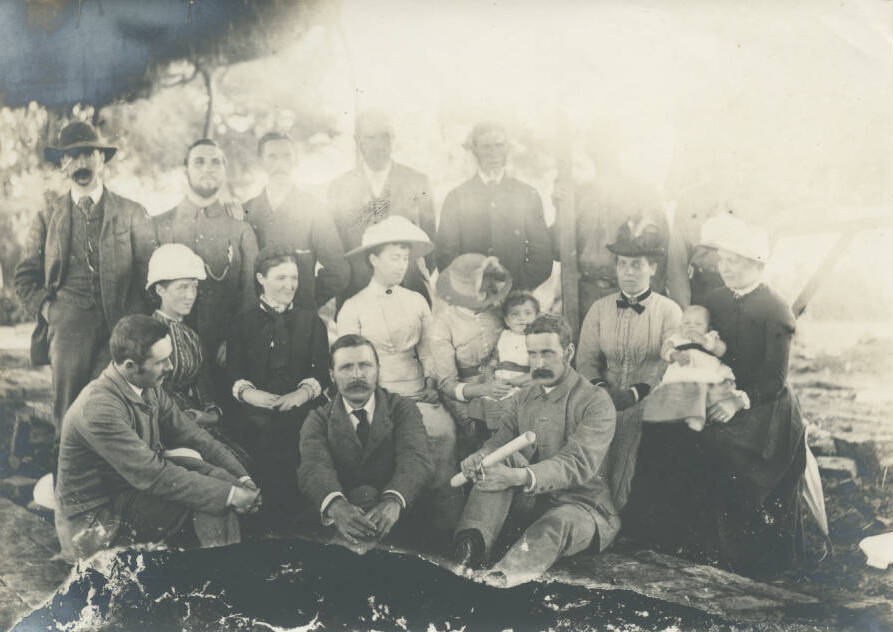
This first introduction of coffee had not used a Wardian case but further introductions, that led to a short-lived coffee boom, took advantage of the reliability of Ward’s invention. In 1878 the London-based nurseryman William Bull was advertising 1,000 coffee plants at four shillings each to be sent to the colonial planters. Bull was using his own improved and patented version of Ward’s case to transport coffee plants. Over several years Bull established a system that involved importing plants from Liberia that were grown on at his London nursery for a year before being exported to coffee growing regions around the world. The arrival and dispatch of plants relied on his Wardian cases. The species of coffee that Bull favoured was Coffea liberica as it was resistant to a devastating disease called coffee leaf rust. This coffee species was among the plants originally sent by Professor Balfour from Edinburgh and was part of the planting in colonial British Central Africa (now Malawi) during the coffee boom years. Malawi’s coffee industry survives to this day.
Postscript
As awareness of plant health issues developed, it was realised that by moving live plants, rooted in soil, unintended pests and pathogens would also be transported. This was presenting a serious biosecurity risk and the last Wardian cases were sent out during the 1960s. The Wardian case had had its day. But over the 100 year period in which the cases were in use the course of history had been altered. We are living with the extraordinary legacy of this simple wooden and glass box.
Acknowledgement
Luke Keogh’s excellent history book ‘The Wardian Case: How a Simple Box Moved Plants and Changed the World’ provided me with an opening and set up several lines of further enquiry about the role of Wardian cases at RBGE.
I would also like to thank Graham Hardy in the RBGE Library for help with research. The depth and richness of the story was greatly helped by his incredible knowledge of RBGE history.