The following blog was written by Linde Hess a digitiser in the Herbarium.
Since 2021 we have increased our digitisation capacity reaching 1 million specimens imaged in August 2024. Each digitiser is assigned a family of plants to work through. This series of blogs will spotlight the families that have been completed by a member of the team.
Many moons ago, I landed in Australia, was picked up from the airport by a wise friend and ferried to her house. Passing under a bright blue Adelaide winter sky, she told me to pause and soak up all my fresh first impressions of a new corner of the world. The air was crisp, the roads wide and the sky fiercely blue. But the deepest impression was left by the omnipresent scent of eucalyptus.
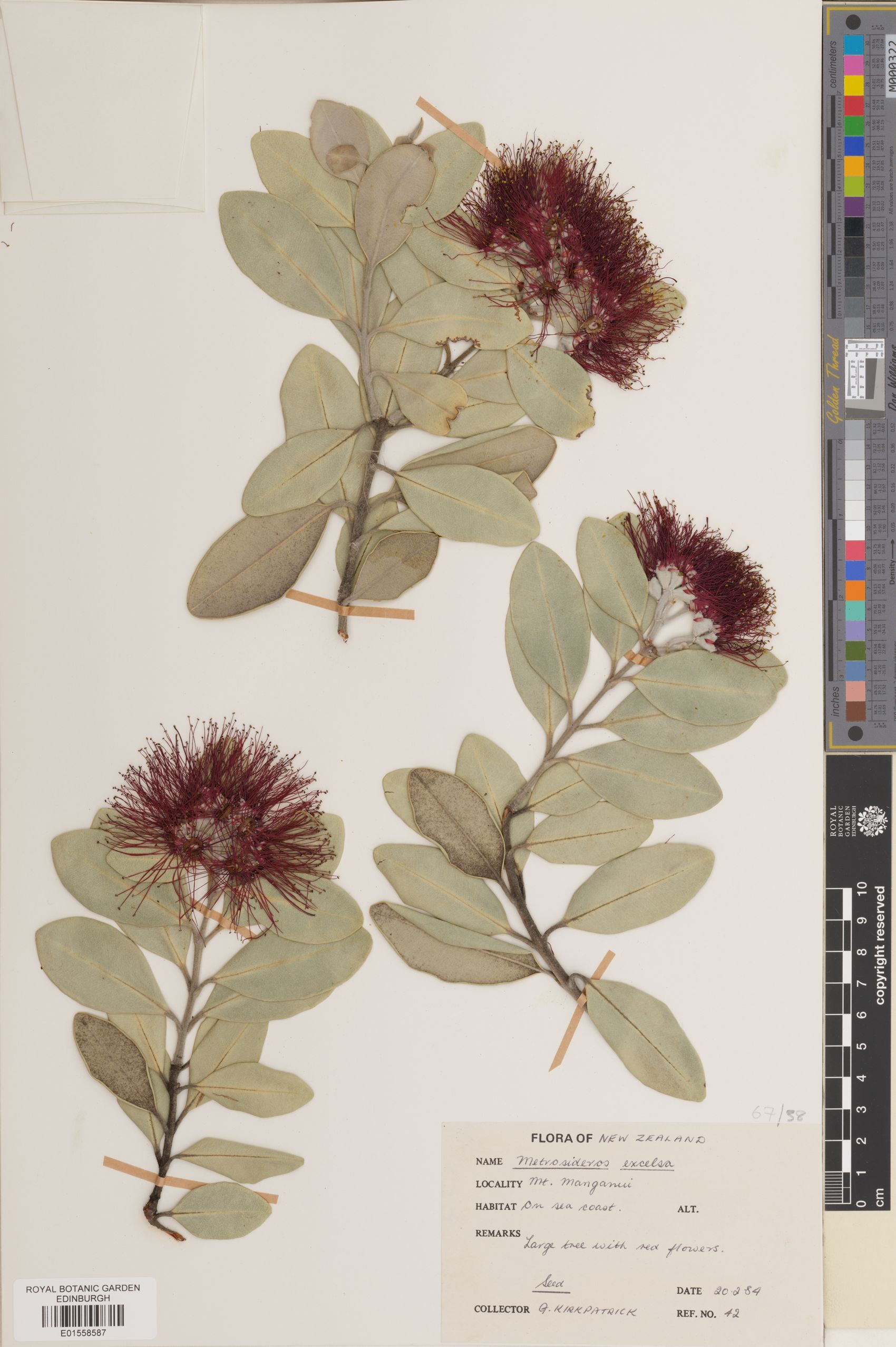
Years later, in another country -New Zealand- I found myself working with another member of the Myrtaceae; I used seeds of the Pōhutukawa tree for my MSc research project as they were tiny and fast-germinating. The Pōhutukawa is also known as the New Zealand Christmas tree, as its flowers in December with big puffs of bright red clustered flowers. Pōhutukawa and the related rātā hold a prominent place in Māori mythology.
Fast forward to the present: whenever I open a Myrtaceae cabinet at the Edinburgh herbarium, the eucalyptus scent of specimens, some collected over two hundred years ago, transports me back to that crisp first day in Adelaide.
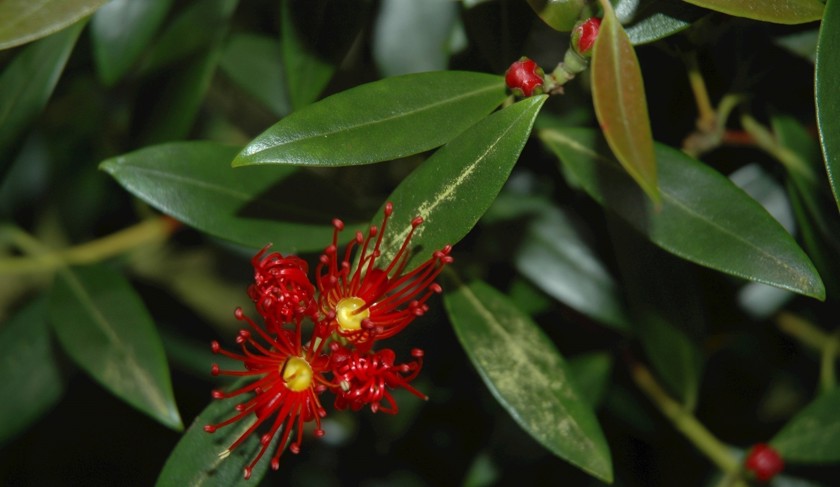
Sadly, in New Zealand the conservation status of all native Myrtaceae was raised to ‘Threatened’ in 2018 after the arrival of myrtle rust. Myrtle rust (Austropuccinia psidii) is also known as guava rust and eucalyptus rust. Myrtle rust can cause deformation and dieback of new leaves and shoots and prevent flowers and fruit developing, preventing regeneration. In Australia there are at least 15 rainforest tree species at risk of extinction in the wild due to myrtle rust infection. Currently, only one strain of myrtle rust exists within Australia. However, other strains are present overseas. These close relatives of myrtle rust could have devastating impacts on Australian plants if they were to enter Australia.
Thankfully, Scotland is free of myrtle rust and if you want to see and smell Myrtaceae closer to home, you can at Logan Botanic Garden. There you can find the beautiful Southern Rata (Metrosideros umbellata), which has bright red flowers in July and August. At Logan there is also a eucalyptus grove.
Distribution
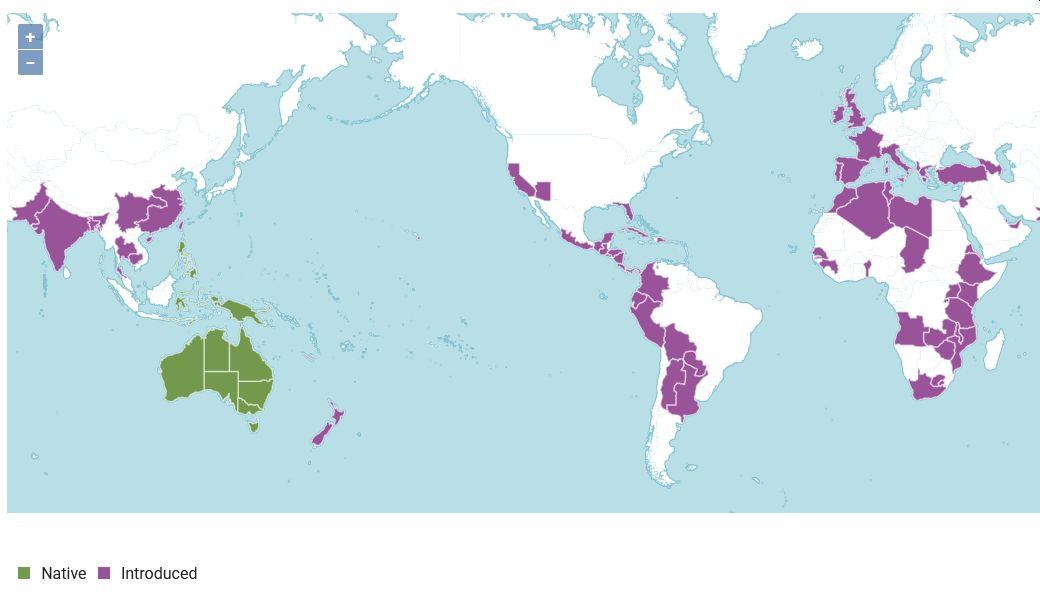
This family is ubiquitous in the Southern hemisphere, tropical Asia and the Mediterranean. Members of the Myrtaceae family have been introduced in areas to the north of its native range.
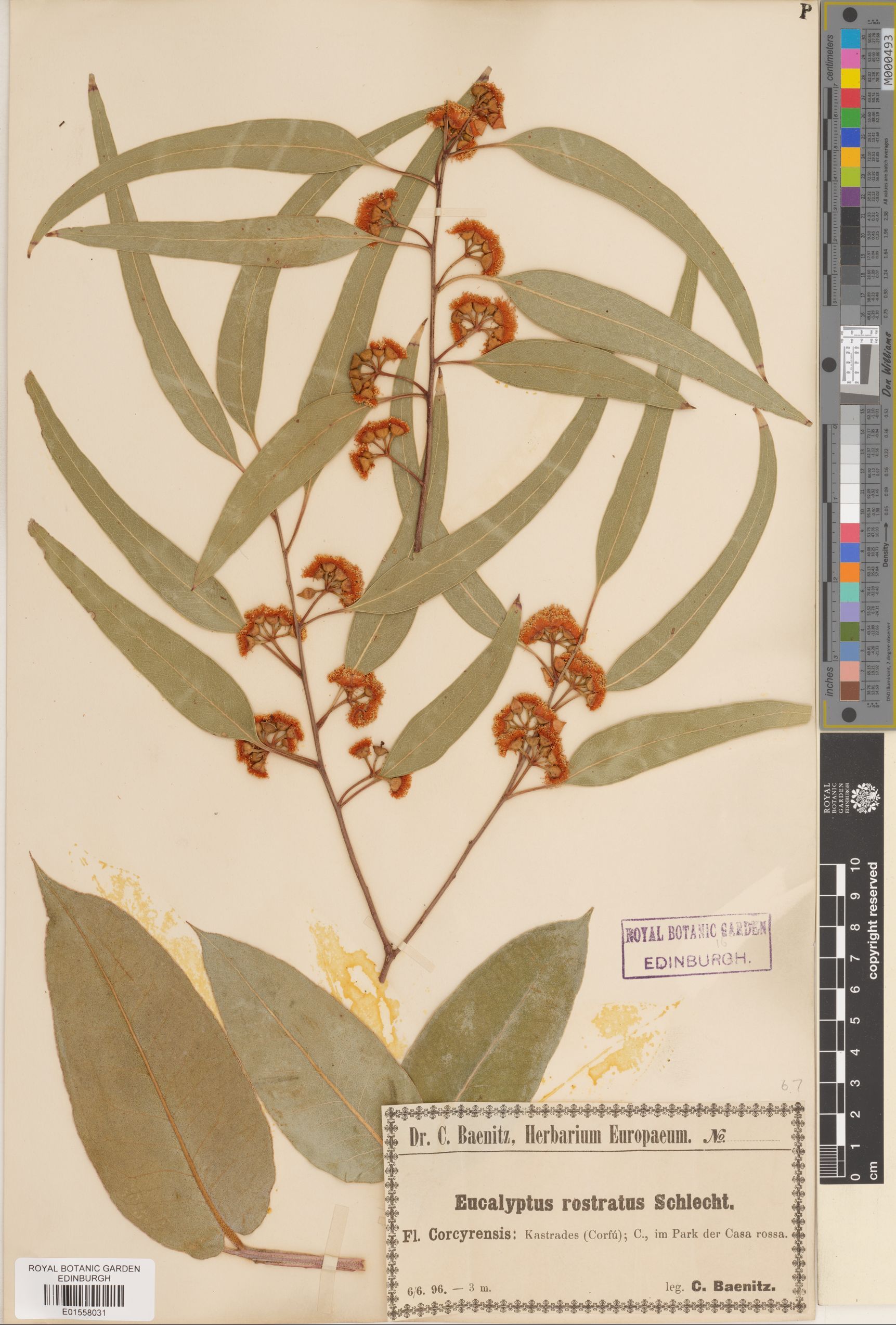
One of the largest genera in this family is Eucalyptus; this genus is native to Australasia and introduced to a great number of countries throughout the world – see image from Plants of the World Online (POWO) below.
The first eucalypt in Europe (Eucalyptus obliqua) was planted in the greenhouses of the Royal Botanic Gardens, Kew (Kew Gardens) in 1774 from seed donated by Captain Tobias Furneaux, whereas the first eucalypt (Eucalyptus robusta) to be planted outdoors was in the English Garden of the Royal Palace of Caserta (Italy) in 1792 by Johann Andreas Graefer, probably with seeds donated by Sir Joseph Banks. The Galician Benedictine monk lived Salvado mentions eucalypts of good size growing in Cape Town in 1867. Silva-Pando & R. Pino-Pérez (2026) establish a chronology of the introduction of different species of Eucalyptus into Europe and in other parts of the world in the paper: Introduction of Eucalyptus into Europe. Australian Forestry Volume 79, 2016 – Issue 4
Our Collections
Mass digitisation added 3,009 records to the 8,300 already in our online database. The total number of Myrtaceae specimens after mass digitisation is 11,309. 400 of these are Type specimens. Our Myrtaceae collections can be viewed here.
Top 5 regions
| No. of Specimens | Herbarium Filing Region |
| 3,477 | Australia |
| 1,086 | East Tropicl South America |
| 755 | Malay Islands |
| 636 | New Guinea |
| 568 | Indo-China |
Top 5 Genera
| No. of Specimens | Genus |
| 2,727 | Syzygium |
| 1,109 | Eucalyptus |
| 947 | Eugenia |
| 853 | Melaleuca |
| 567 | Leptospermum |
This family includes 130 genera. An underrepresented genus is Archirhodomyrtus. We only have one specimen of Archirhodomyrtus, namely Archirhodomyrtus beckleri, collected in Coff’s harbour Australia in 1903, while there are five known species in this genus. This genus is endemic to Northeastern Australia, which is not a focus area of our collection, so it is not surprising our collection underrepresents Australia endemic species.
We don’t have any specimens of the genus Legrandia, which is unsurprising as it is endemic to Chile and consist of only one species.
Non-cultivated representatives of the genus Feijoa are also absent from our collection. Its only species is Feijoa sellowiana (O.Berg) O.Berg. The native range of this species is Brazil (S. Minas Gerais) to Argentina (Misiones). It is a shrub or tree and grows primarily in the subtropical biome. It has uses as a medicine and for food. We only have cultivated specimens of Feijoa in our collection and none from its original South American region.
Interesting Specimens
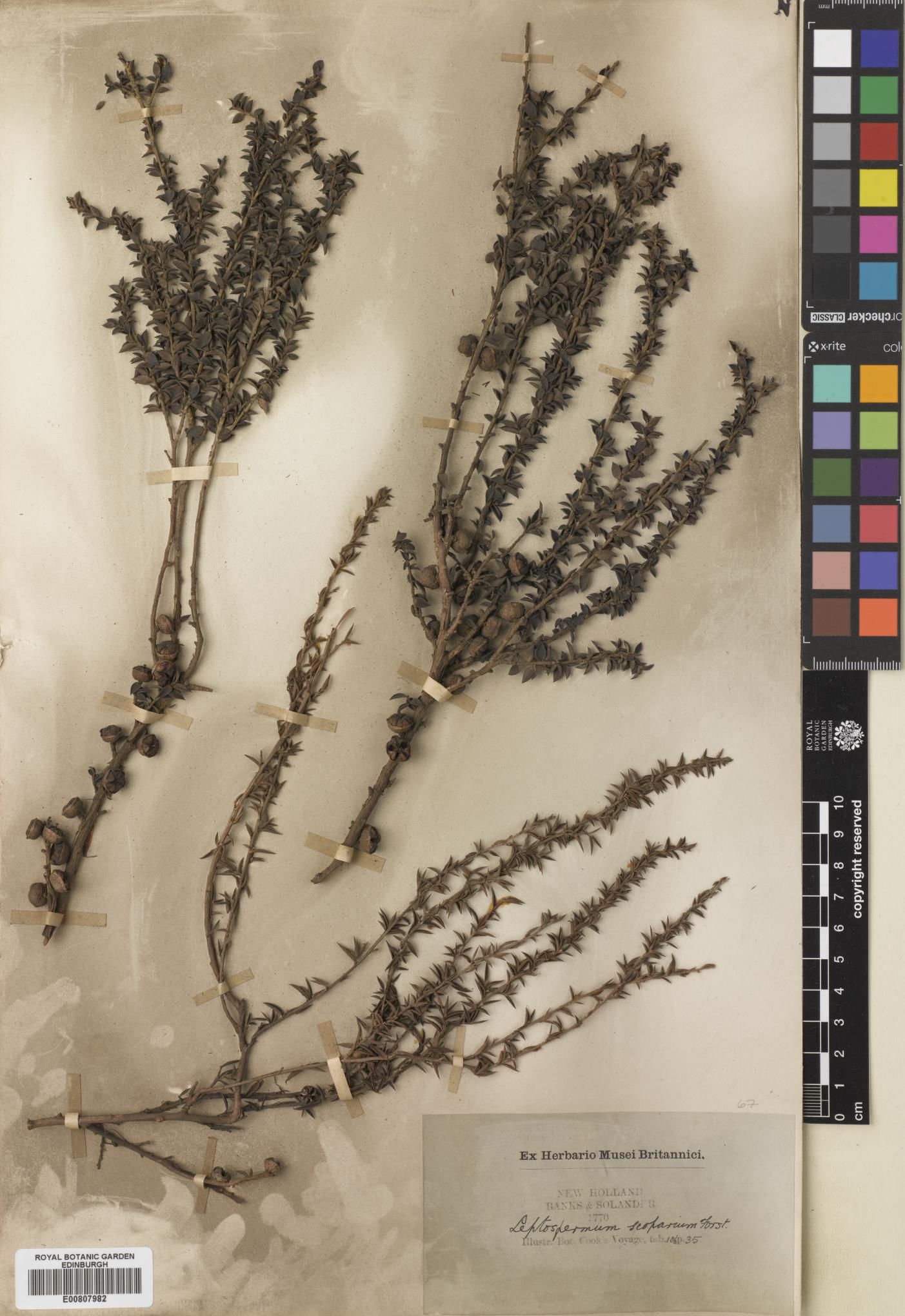
A noteworthy member of the Myrtle family is Leptospermum scoparium J.R.Forst. & G.Forst., better known under its Māori name: mānuka. Manuka honey originated in New Zealand, and it is made from nectar collected by bees that forage on the wild mānuka a tree, which give it a distinctive flavour. Below is an example of a mānuka plant from Australia from our collection. This specimen was collected by Banks and Solander in 1770 while travelling on the Endeavour with Captain Cook.
journal
It’s so cool that the speakers are alumni who are now CEOs. It makes me even more excited to participate, especially since the topics are so relevant to today’s media developments!