The following blog was written by Linde Hess a digitiser in the Herbarium.
Since 2021 we have increased our digitisation capacity reaching 1 million specimens imaged in August 2024. Each digitiser is assigned a family of plants to work through. This series of blogs will spotlight the families that have been completed by a member of the team.
Some families take up several aisles in our collection, but the following ones do not; they only take up a few shelves or cabinets. Here, I will address this stretch of relatively small families in the order they occur in our collection, which reflects the APG-IV system.
About the families
Balanopaceae
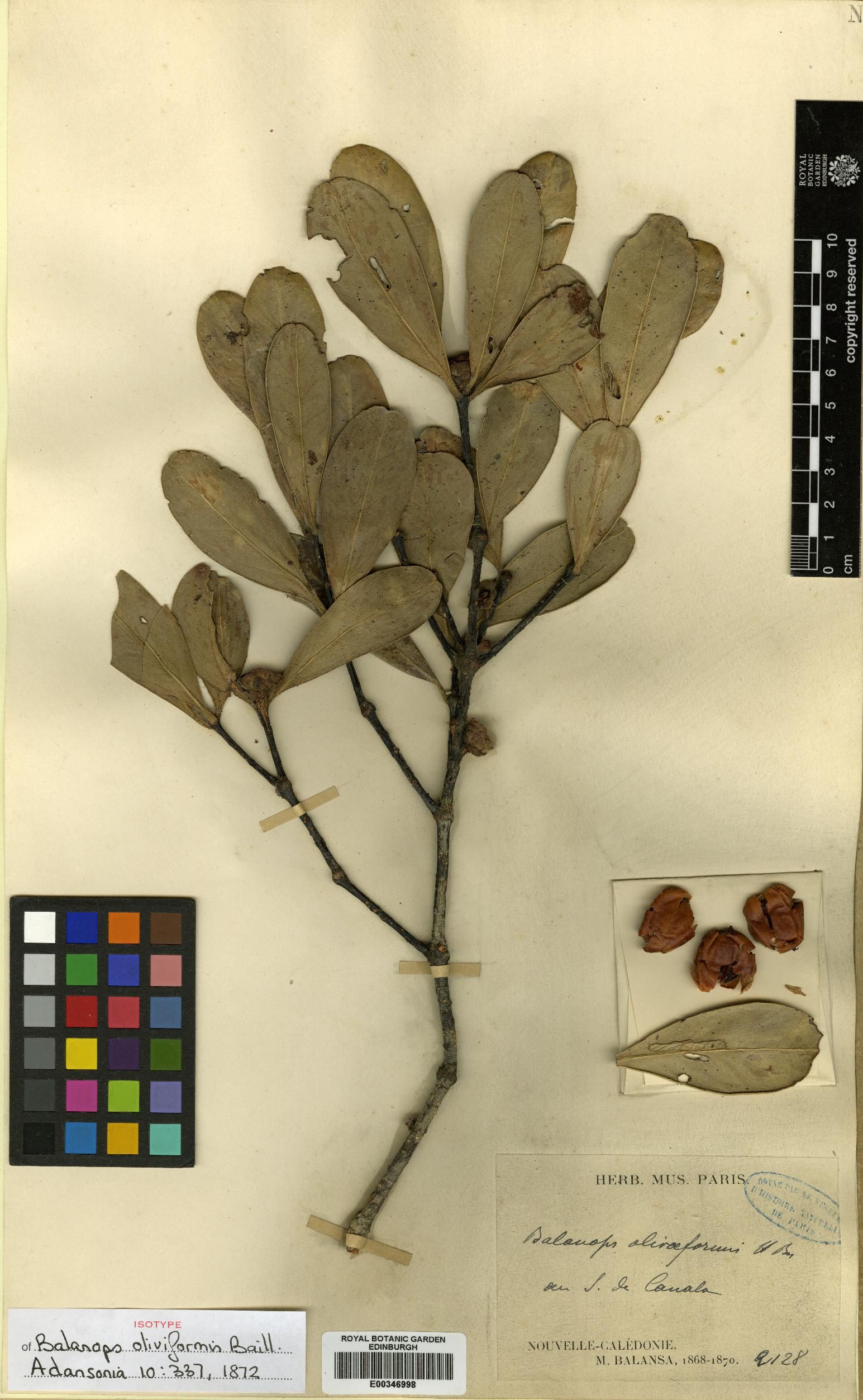
The family Balanopaceae consists of only one accepted genus: Balanops, which is native to Fiji, New Caledonia, Queensland, Vanuatu. Its members are trees and shrubs.
Our collections
Balanops is the only genus within this family. Before mass digitisation we had seven specimens in our database, now we have 23. We have four type specimens of this family in our collection. Specimens can be viewed here.
Most of our Balanaceae specimes were collected on the Pacific Islands, see table below.
Top Count by region
| No. of Specimens | Herbarium Filing Region |
| 20 | Pacific Islands |
| 3 | Australia |
Trigoniaceae
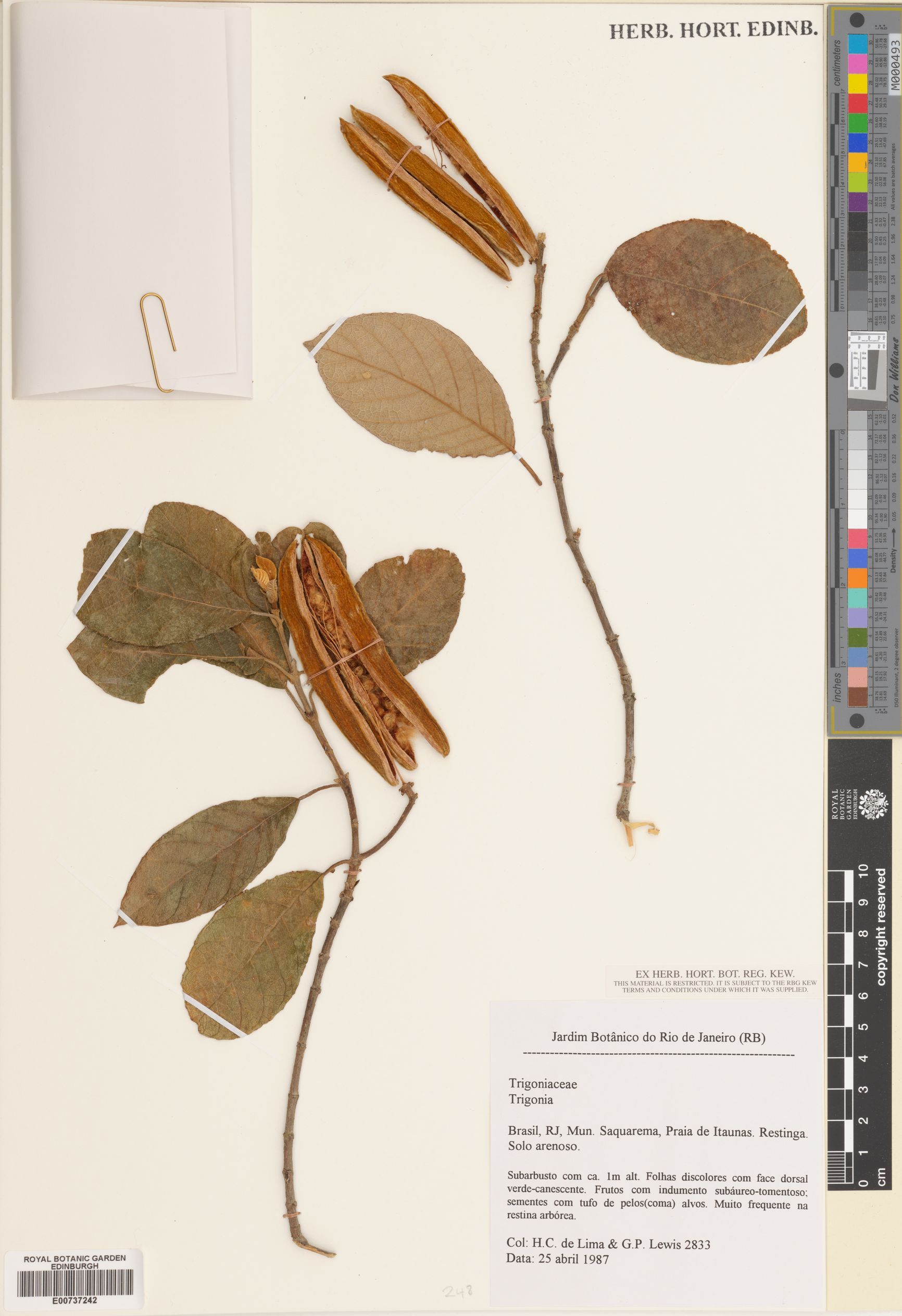
The Trigoniaceae family contains five genera and about 30 species; members of this family are mostly trees and mainly occur in the neotropics and Malaysia. The total number of types in our collection is eight. Specimens can be viewed here.
Our collections
Currently we have 71 specimens in our database, before mass digitisation the number of specimens was 27.
Top 5 Count by region
Most of the specimens in our collection were collected in Tropical South America and Malaysia, see table below.
| No. of Specimens | Herbarium Filing Region |
| 31 | East Tropical South America |
| 16 | Malay Islands |
| 12 | Malay Peninsula |
| 11 | West Tropical South America |
| 1 | Central America |
Top Genera
| No. of Specimens | Genus |
| 44 | Trigonia |
| 27 | Trigoniastrum |
Representatives of the genera Humbertiodendron Leandri, Isidodendron Fern.Alonso, Pérez-Zab. & Idarraga and Trigoniodendron E.F.Guim. & Miguel are lacking from our collection. The genus Humbertiodendron is endemic to Madagascar; this is an area we have historically focussed our collection on.
Dichapetalaceae
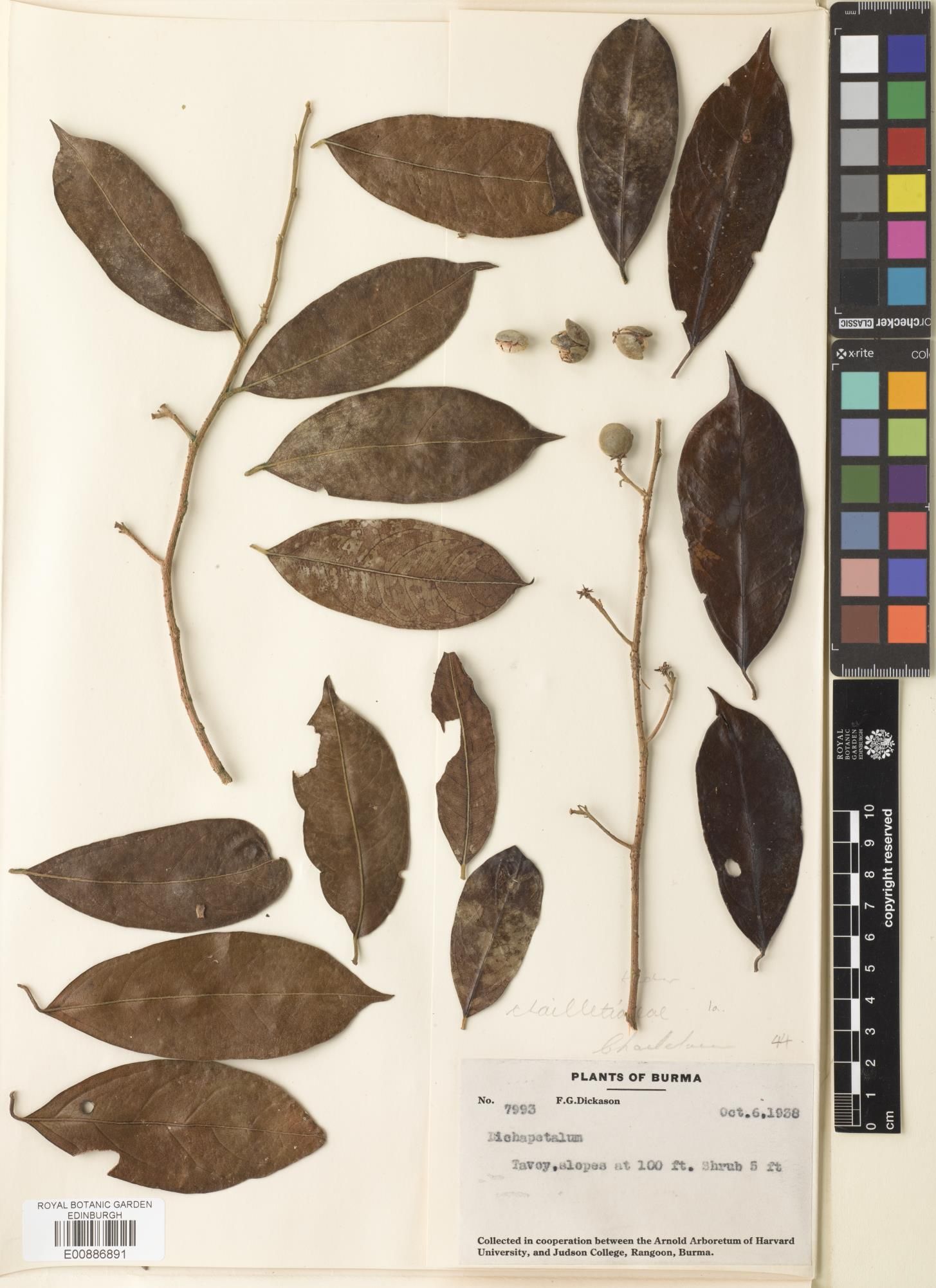
The family Dichapetalaceae consists mainly of trees and shrubs, and its members occur in the tropics and neotropics.
Our collections
The number of specimens in our database before mass digitisation for this family was 240, mass digitisation brought the total to 253. We have 28 Dichapetalaceae Type specimens in our collection. Specimens can be viewed here.
Top 5 Count by region
Most of the Dichapetalaceae specimens in our collection were collected in Tropical Africa.
| No. of Specimens | Herbarium Filing Region |
| 104 | Tropical Africa |
| 22 | East Tropical South America |
| 19 | Malay Islands |
| 18 | Indo-China |
| 17 | India, Bangladesh & Pakistan |
Top Genera
| No. of Specimens | Genus |
| 226 | Dichapetalum |
| 27 | Tapura |
| 3 | Chailletia (=synonym Dichapetalum) |
Most of our specimens are in the genus Dicapetalum. We do not have any representatives of the genus Stephanopodium in our collection, this genus consists of 14 species. It is native to tropical South and Central America. A few Stephanopodium specimens could be ‘hiding’ in our collection under their Tapura synonym.
Euphroniaceae
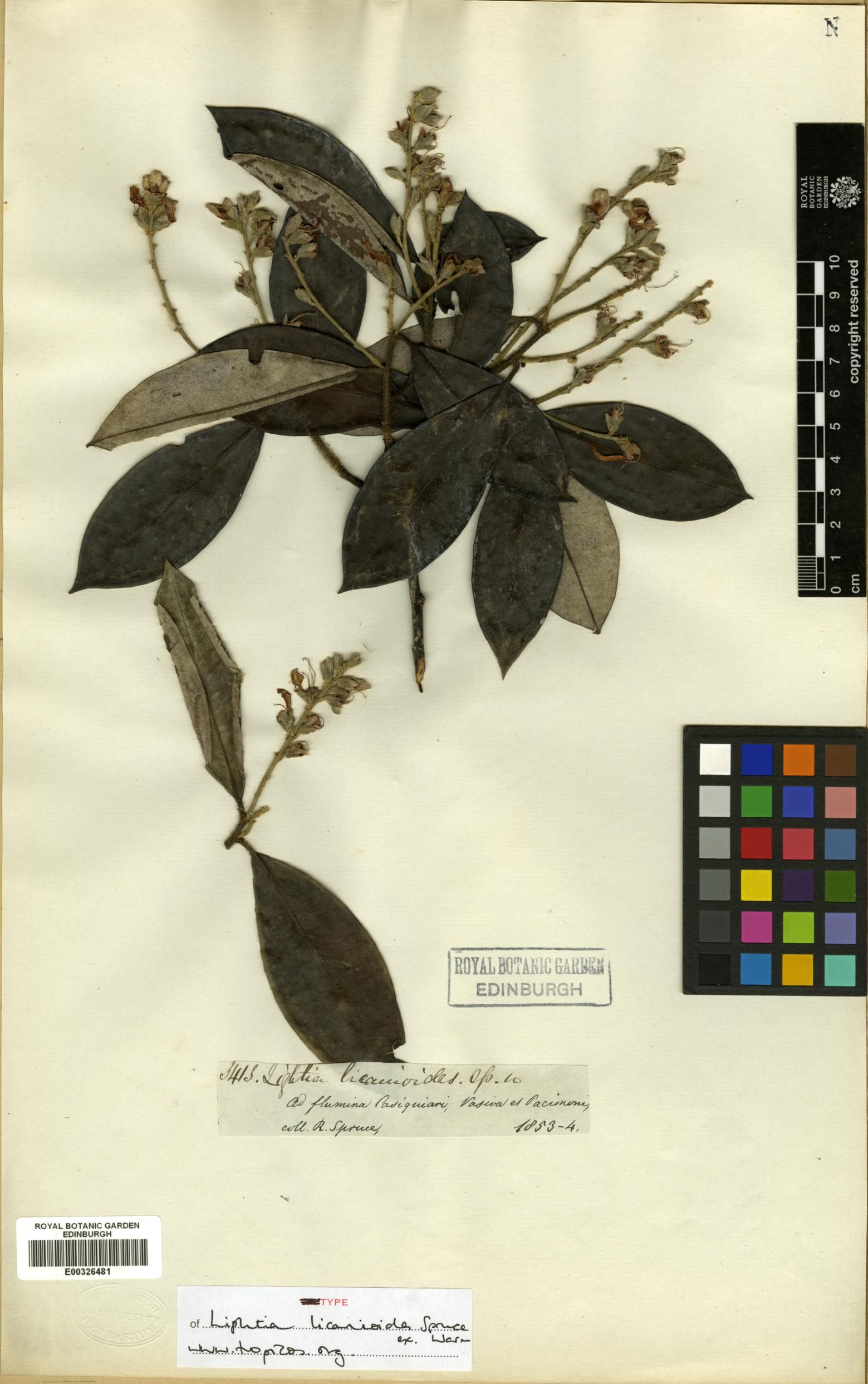
We only have one specimen that belongs in the Euphroniaceae family, it was collected in 1853-54, and it was already databased prior to mass digitisation. This specimen is Lightia licanoides Spruce Ex War., this name is a synonym of Euphronia hirtelloides Mart. & Zucc.
Euphronia is the only accepted genus within Euphroniaceae. Currently the three accepted species within this genus are: E. acuminatissima Steyerm., E. guianensis (R.H.Schomb.) Hallier f. and E. hirtelloides Mart. & Zucc.
Our collections
Our only Euphroniaceae specimen is a Type specimen. The specimen can be viewed here.
Top 5 Count by region
| No. of Specimens | Herbarium Filing Region |
| 1 | East Tropical South America |
Top Genera
| No. of Specimens | Genus |
| 1 | Lightia |
Chrysobalanaceae
Trees or shrubs with alternate, simple, entire leaves. A widespread tropical and subtropical family of 10 genera and about 400 species, the majority in tropical America. This family is sometimes included with the Rosaceae.
Our collections
The number of specimens in our database before amass digitation was 697 and after 1075. We have 60 Chrysobalanaceae Type specimens in our herbarium collection. Specimens can be viewed here.
Top 5 Count by region
| No. of Specimens | Herbarium Filing Region |
| 565 | East Tropical South America |
| 126 | Tropical Africa |
| 94 | West Tropical South America |
| 56 | Malay Islands |
| 43 | Central America |
Top 5 Genera
| No. of Specimens | Genus |
| 377 | Licania |
| 233 | Hirtella |
| 133 | Parinari |
| 83 | Couepia |
| 61 | Chrysobalanus |
Interesting specimens
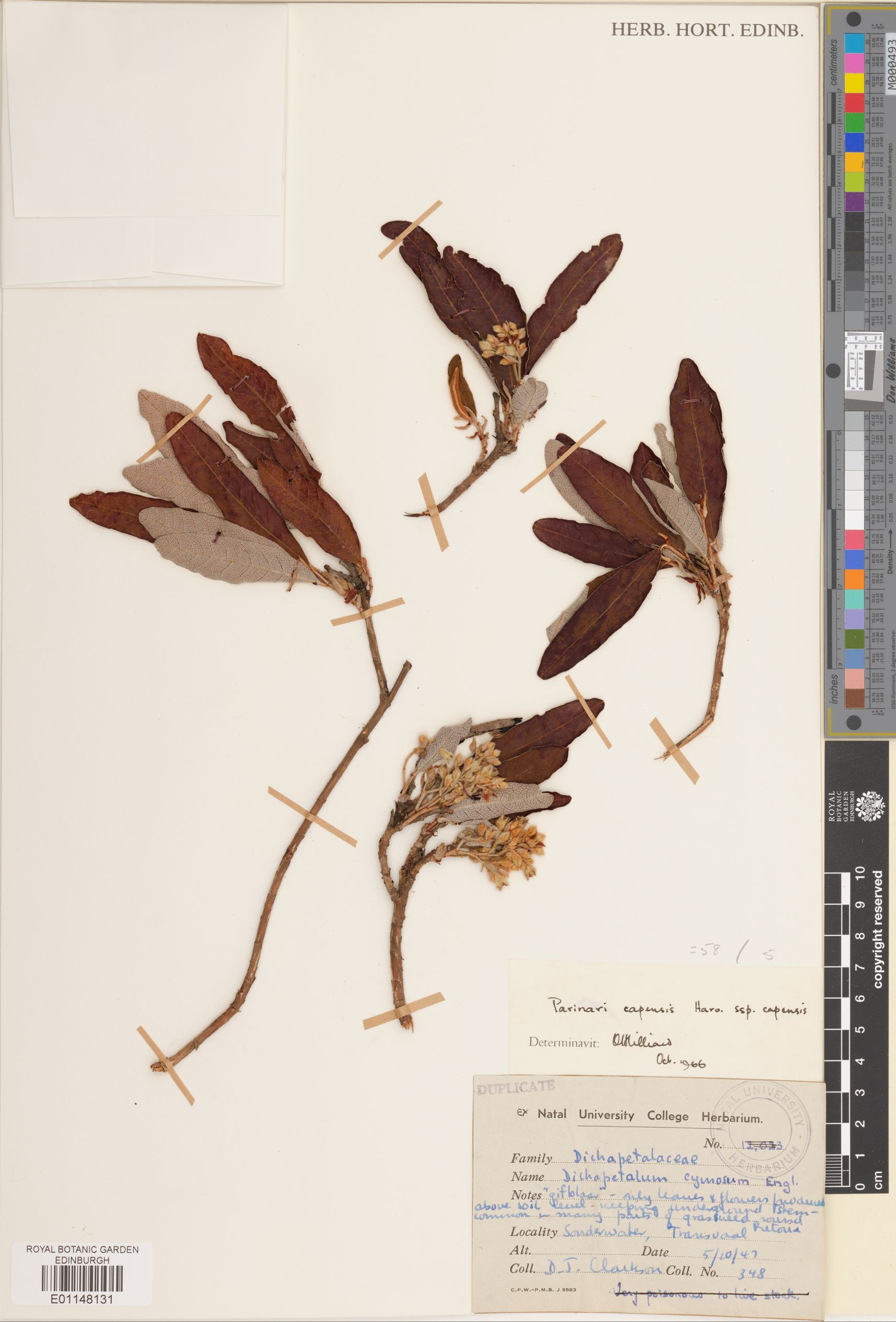
The shrub-like Parinari capensis lives nearly entirely underground, possibly to escape wildfires. You can read more about the possible mechanisms of evolution of geoxyle (underground) trees here: Tree or not a tree: Differences in plant functional traits among geoxyles and closely related tree species, Gomes, et al. 2019. African Journal of Botany, 127, P176-184.
“Geoxyles, a distinctive feature of Afrotropical savannas and grasslands, survive recurrent disturbances by resprouting subshrub branches from large below-ground woody structures. Underground trees are a type of geoxyle that independently evolved within woody genera of at least 40 plant families in Africa. The environmental limits and determinants of underground tree biogeography are poorly understood, with the relative influence of frost and fire debated in particular.” From: Underground trees inhabit varied environmental extremes across the Afrotropics, Courtenay et al. 2023 doi: 10.1093/aob/mcad124