Stories from the Biomes: Replanting the Palm Houses, Part 1
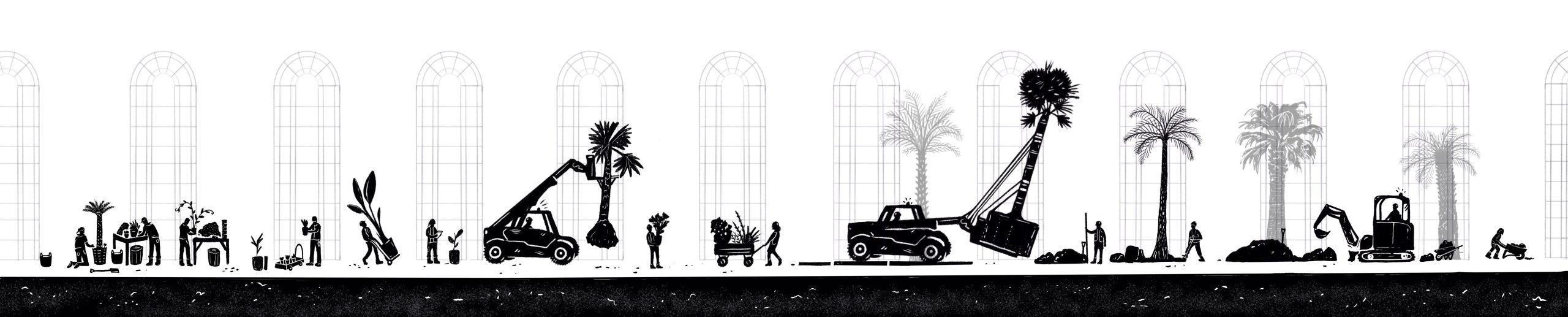
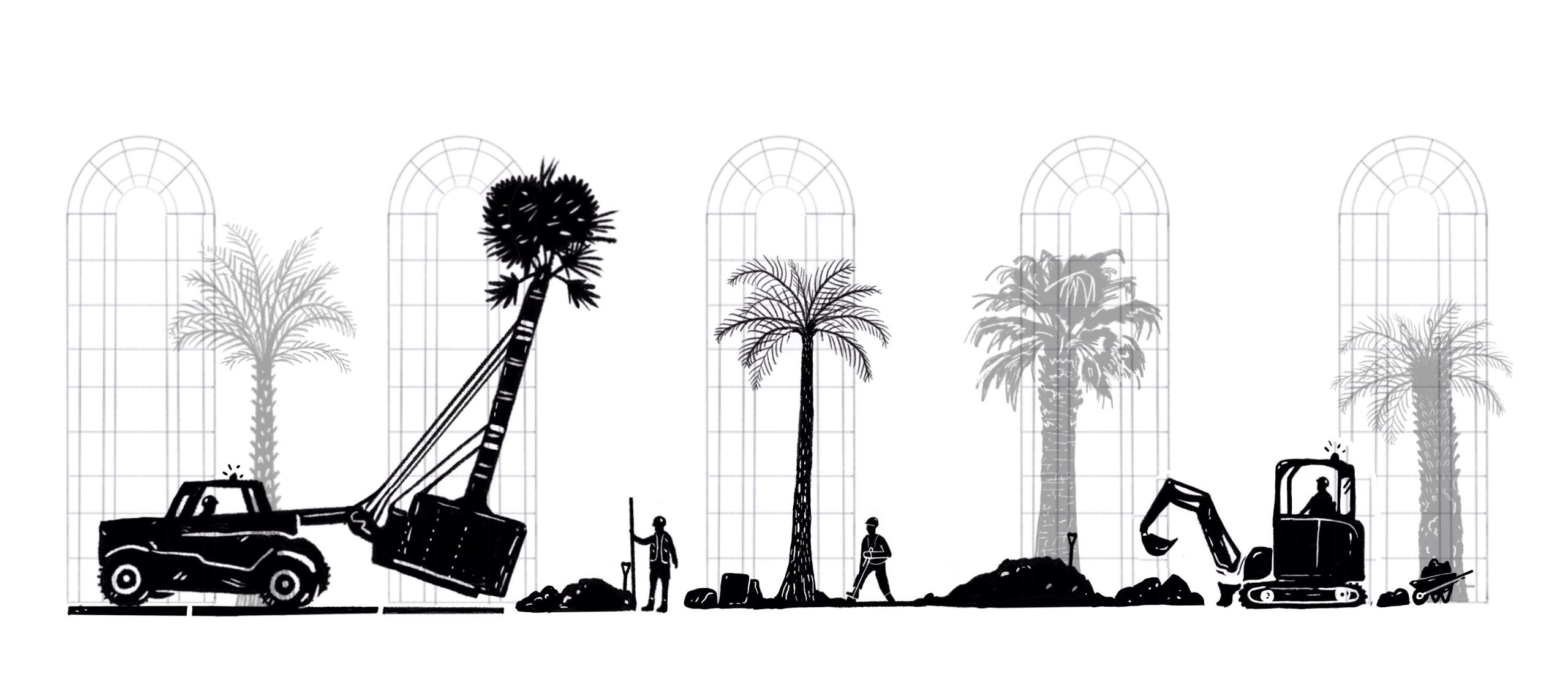
Replanting the Palm Houses. Illustration: Kevin Bannon
After five years of structural restoration and months of horticultural preparation, the first and largest group of plants has returned to the Palm Houses. This first stage focused on planting 71 of the largest palms and tree ferns, making their final move into the historic glasshouse, beginning in December 2025.
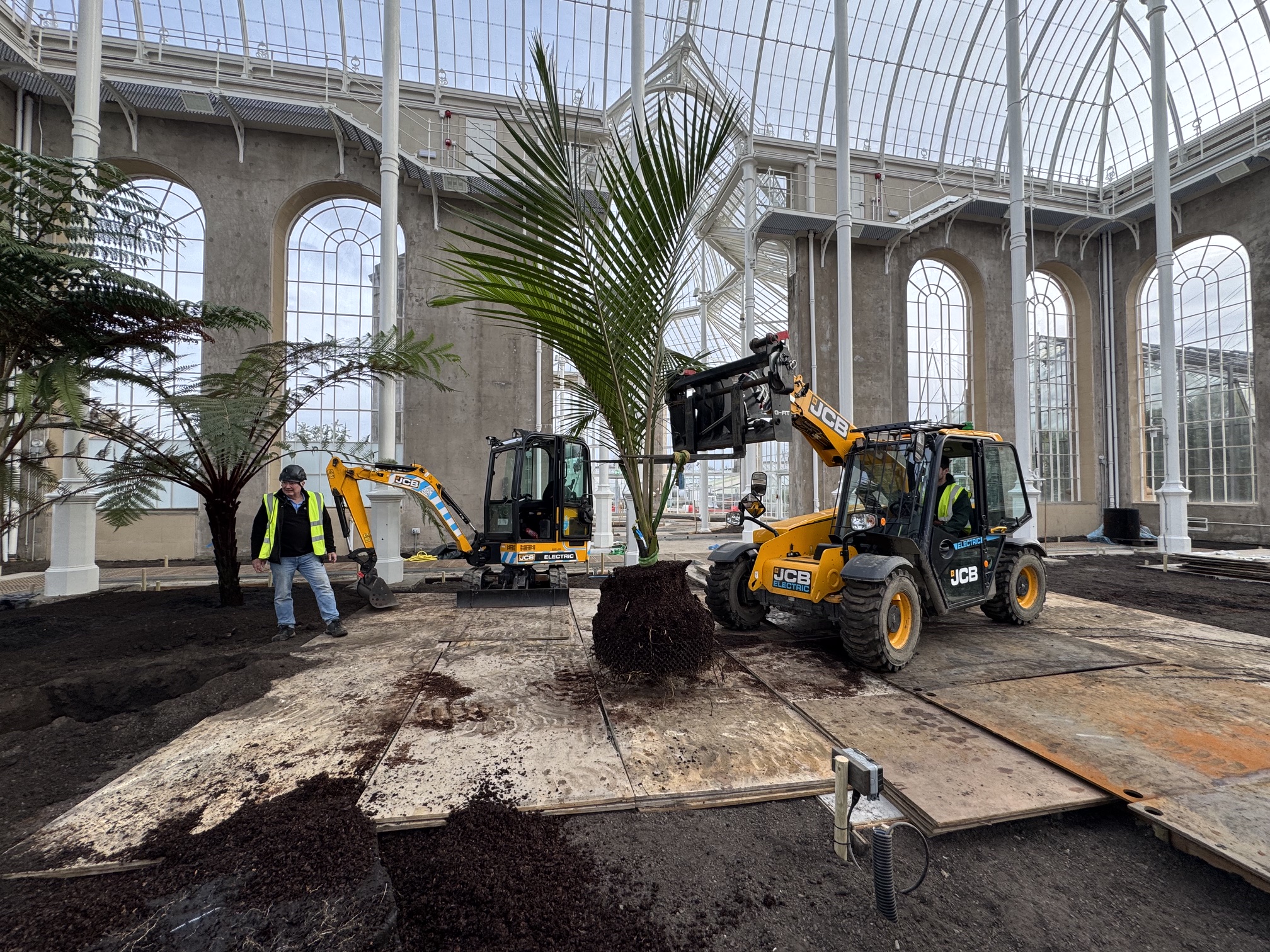
Rhopalostylis sapida, commonly known as the Nikau Palm, became the first palm planted in the Palm House on December 17th, 2025. Pictured: Neil Watherston and Marc Gilbert. Photo: Kevin Bannon.
Plant Preparation
The Palm Houses were officially returned to the Royal Botanic Garden Edinburgh in September 2025, as final electrical work and finishing details continued in the background. Behind the scenes, a major reorganisation of plants across each relevant collection marked the first steps for the Glasshouse team before replanting could begin, a project covered in Stories from the Biomes: House 3 to House 5.
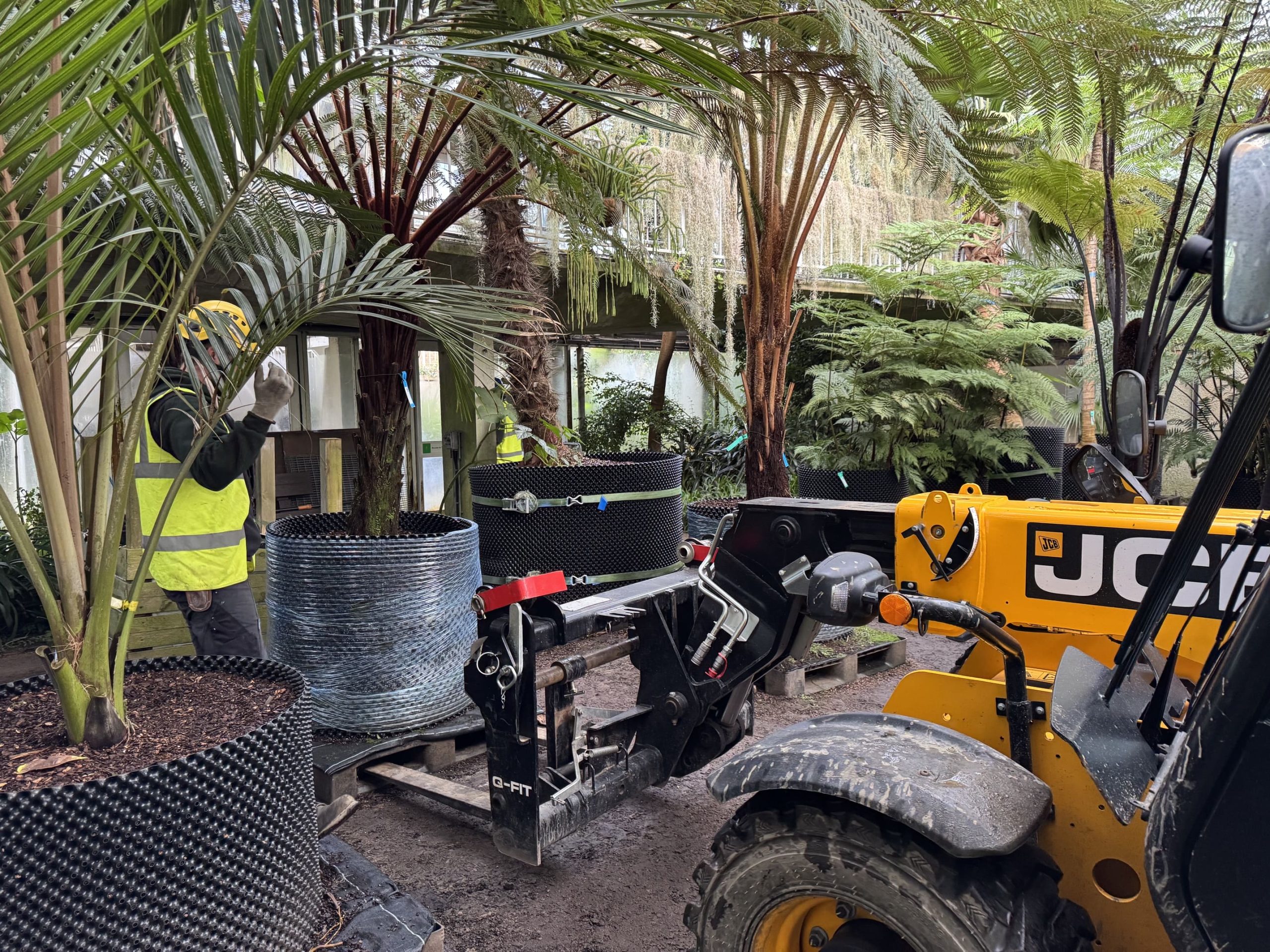
The movement of heavy machinery over newly installed infrastructure demanded careful planning, technical skill and patient coordination, requiring a deep understanding of both the space and the plant collection it would ultimately support. What might appear as a steady, routine process was a complex and finely managed operation reliant on creativity, adaptability, and precision.
The First Plant
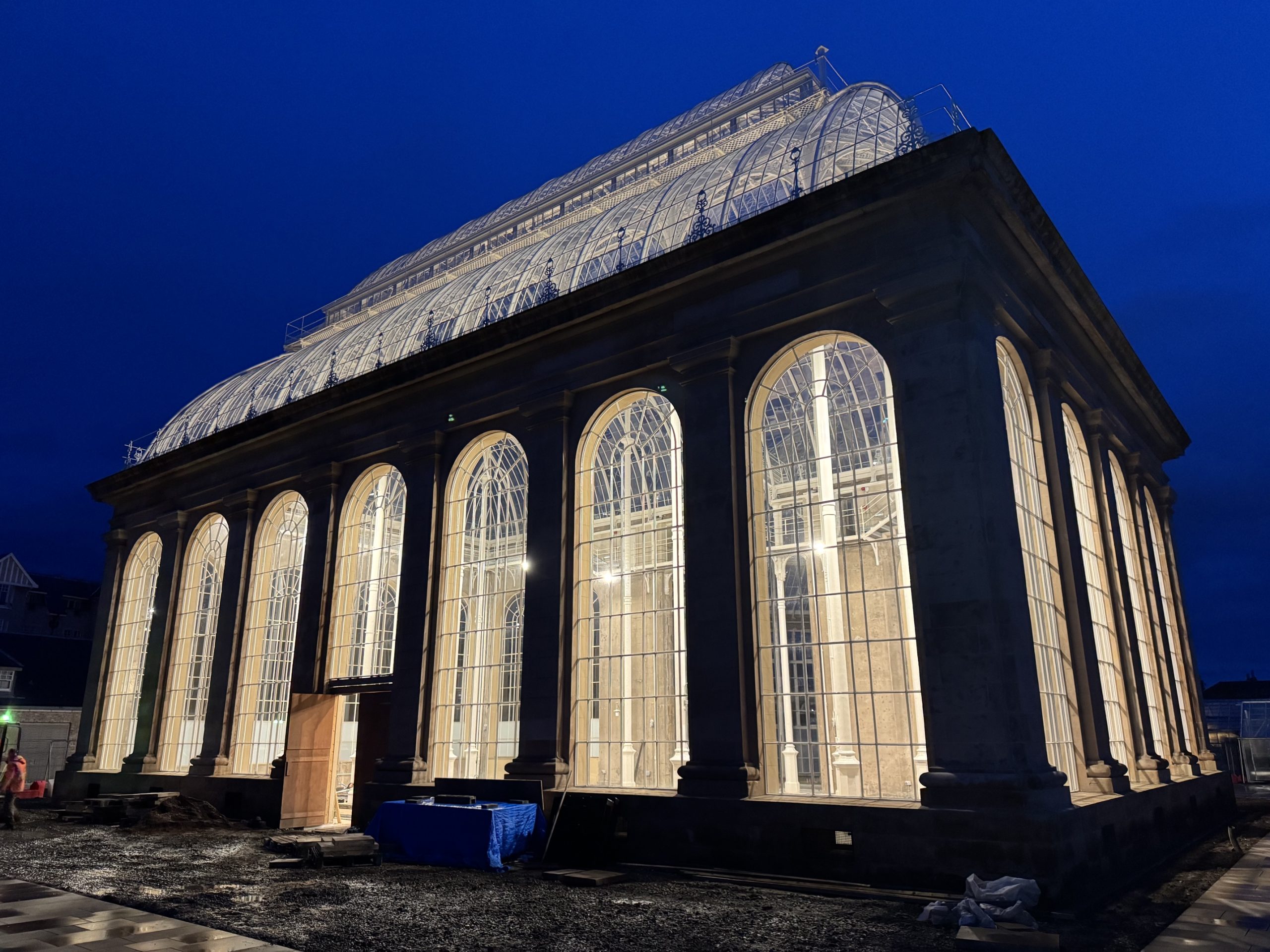
Just before sunrise, an illuminated Palm House. December 17th, 2025. Photo: Kevin Bannon.
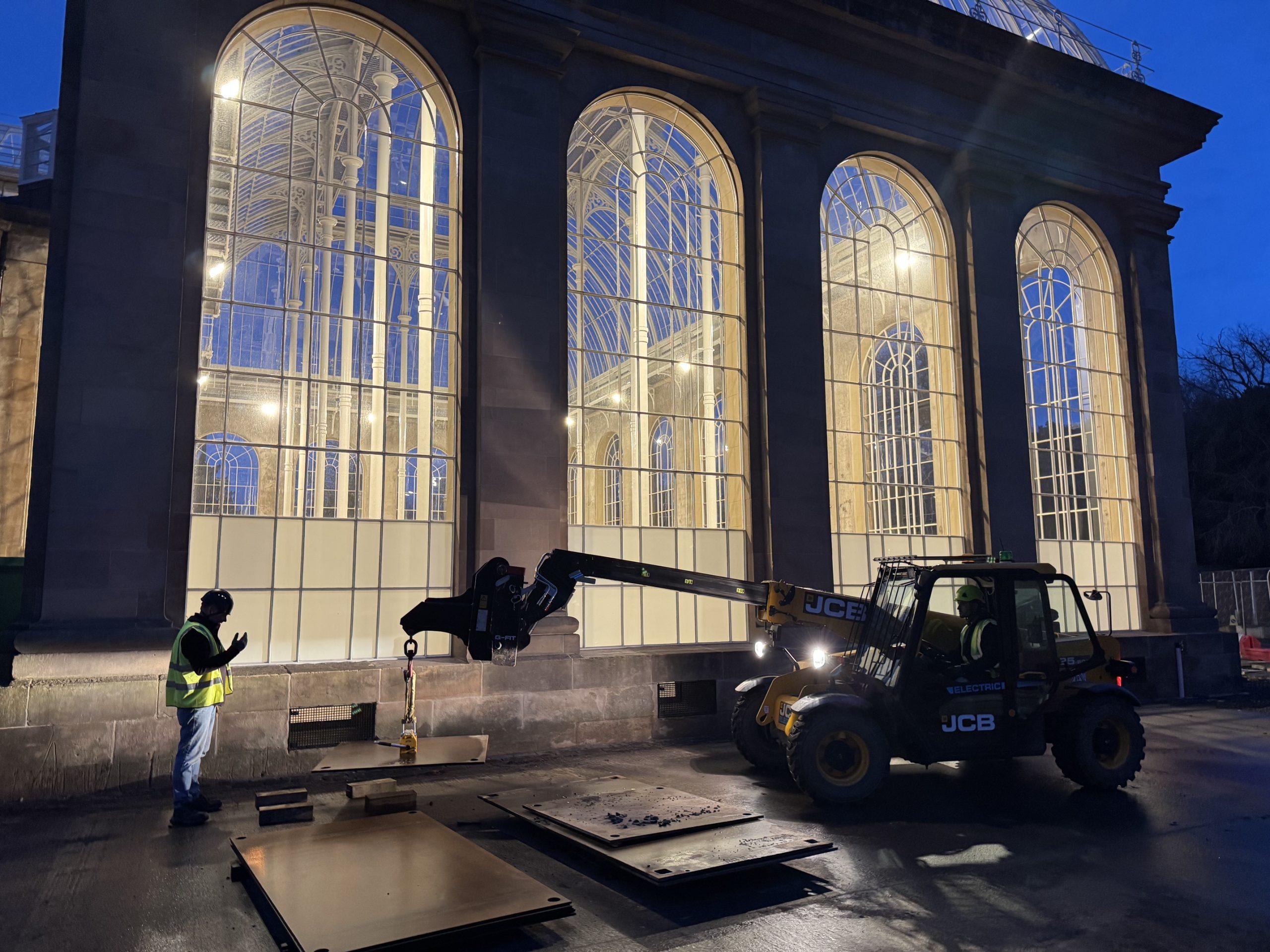
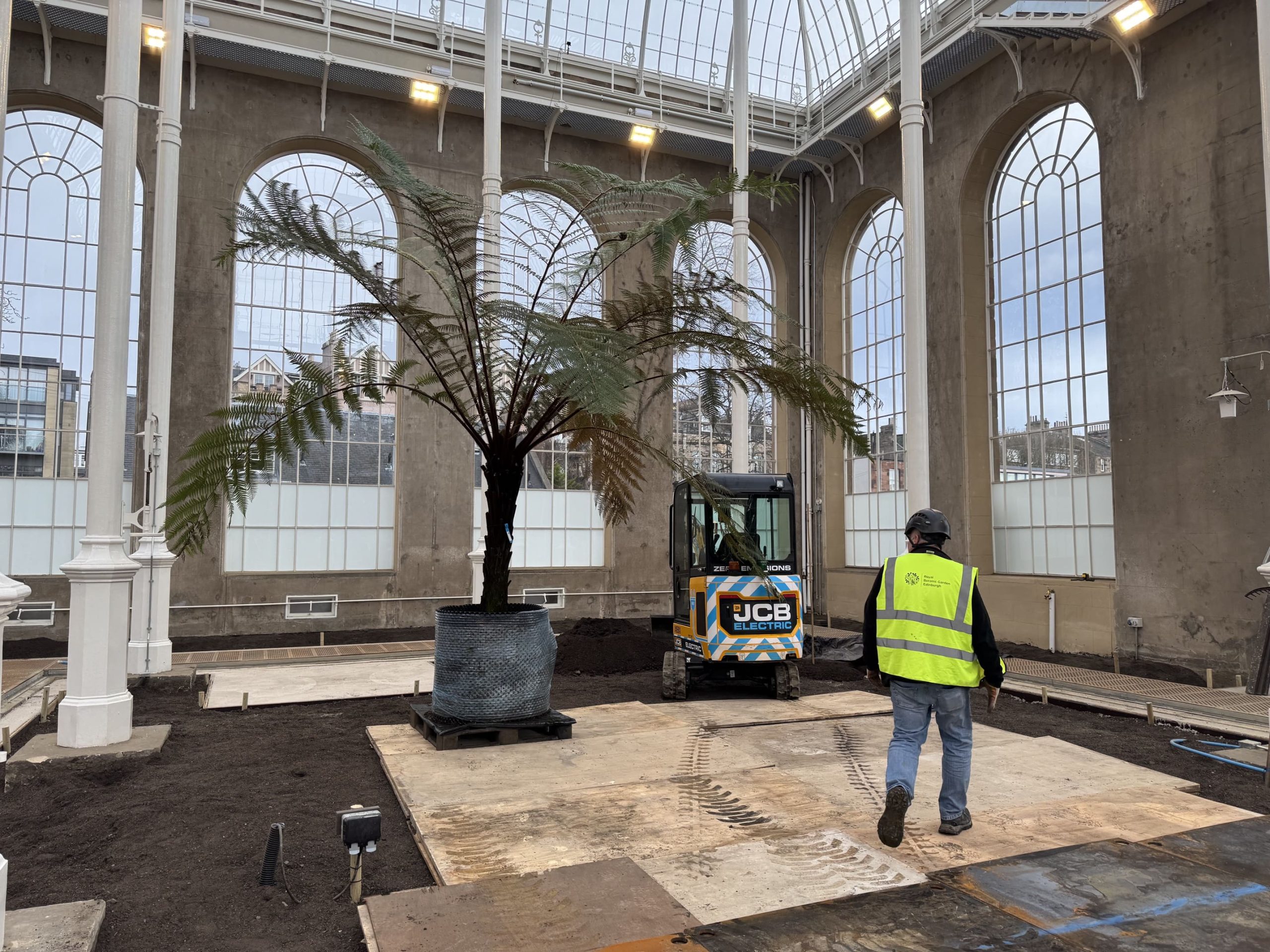
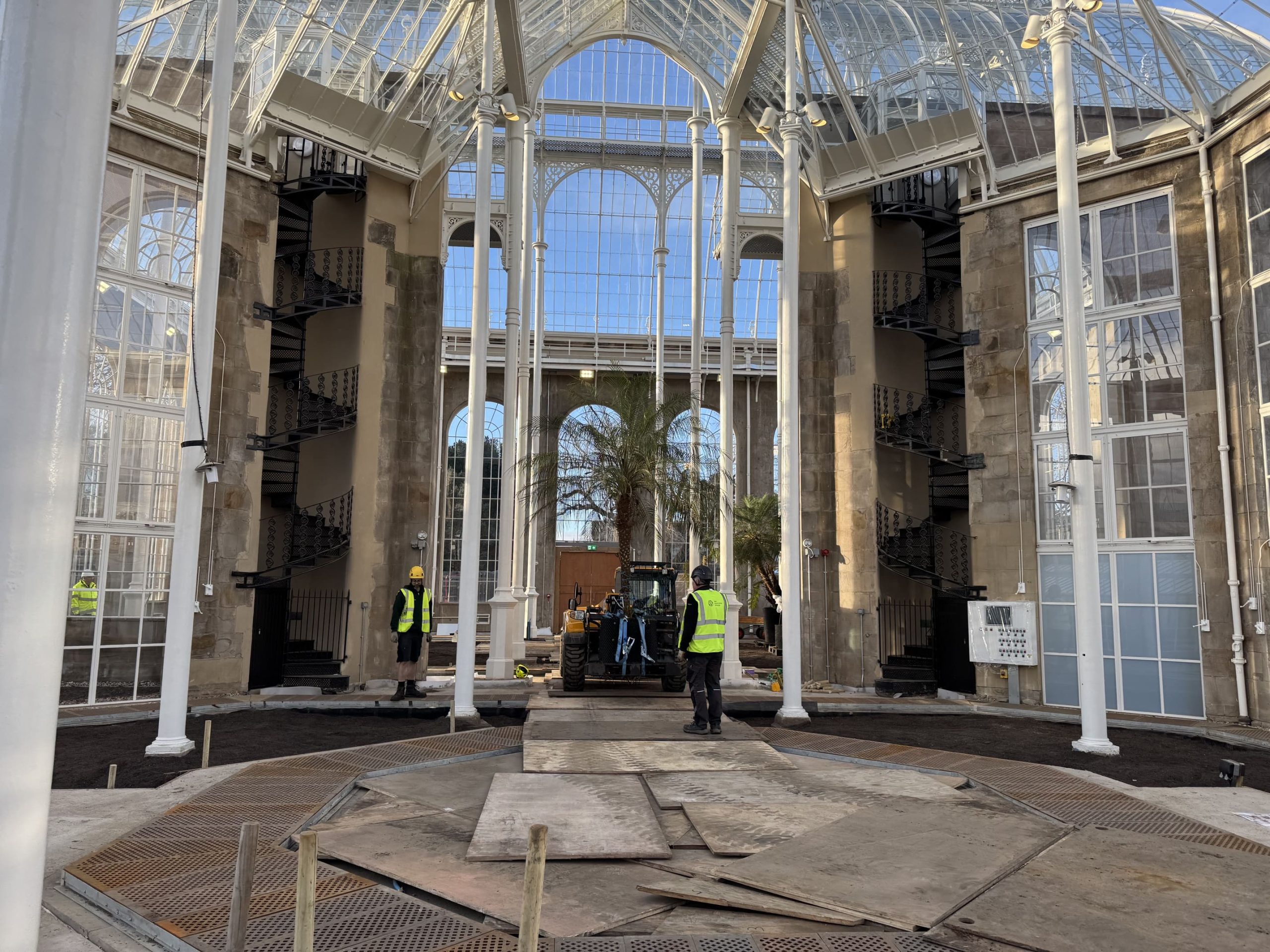
With the final sandstone paths yet to be installed, a temporary surface of fifteen steel plates and a layered arrangement of more than sixty thick wooden boards were laid across the primary pathway. This important set-up protected the new cast-iron grates covering a new heating duct system while creating a stable route for machinery. This arrangement raised ground levels within the already confined space, allowing for the re-landscaping to begin.
It was essential to plant the largest palms and tree ferns before finishing works began, reducing the risk of damage to the new surfaces and making full use of the available space.
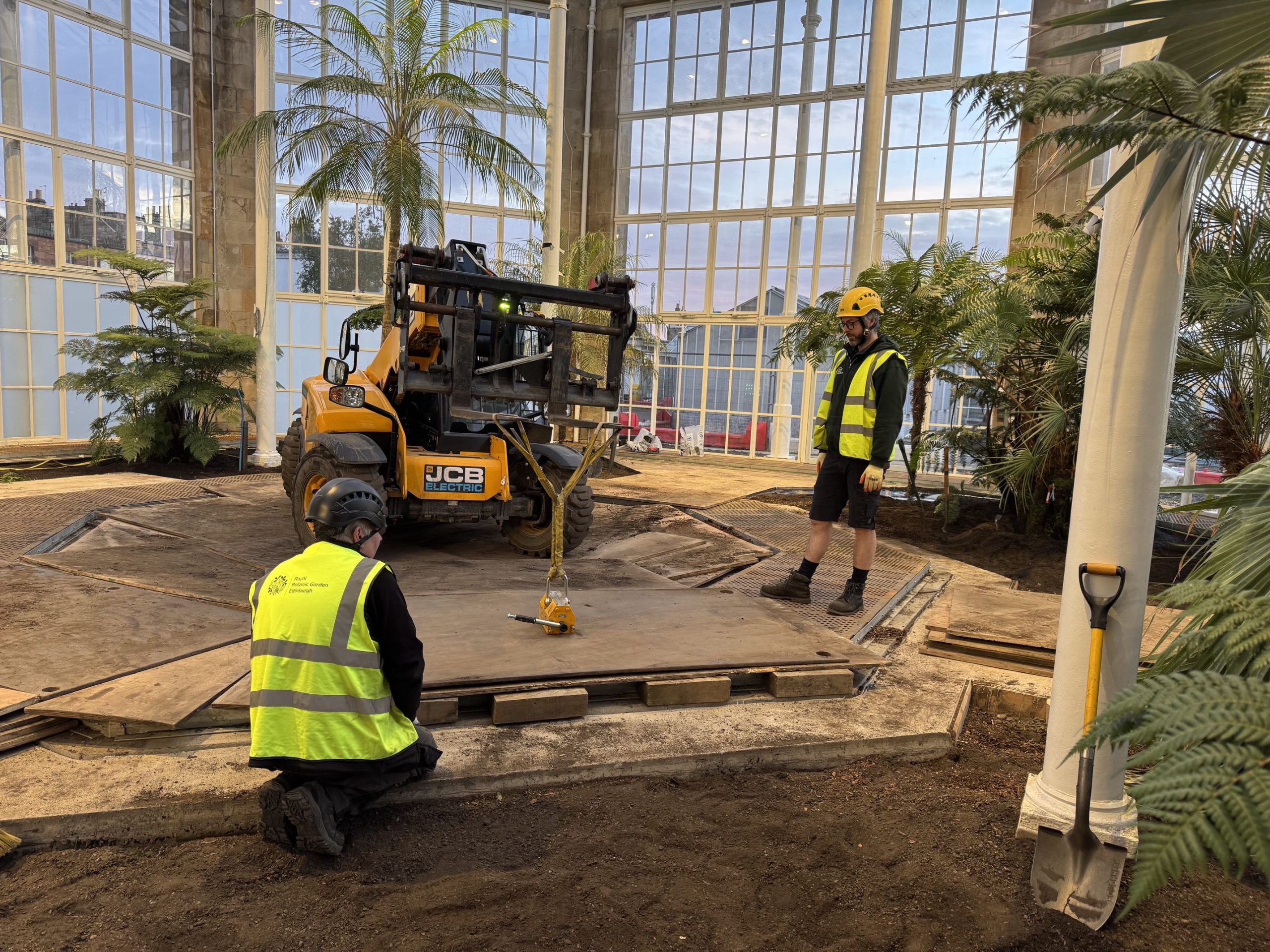
Using an industrial magnet attachment, the electric telehandler positioned each steel plate along the primary route through the Palm Houses. Pictured: Neil Watherston and Marc Gilbert. Photo: Kevin Bannon.
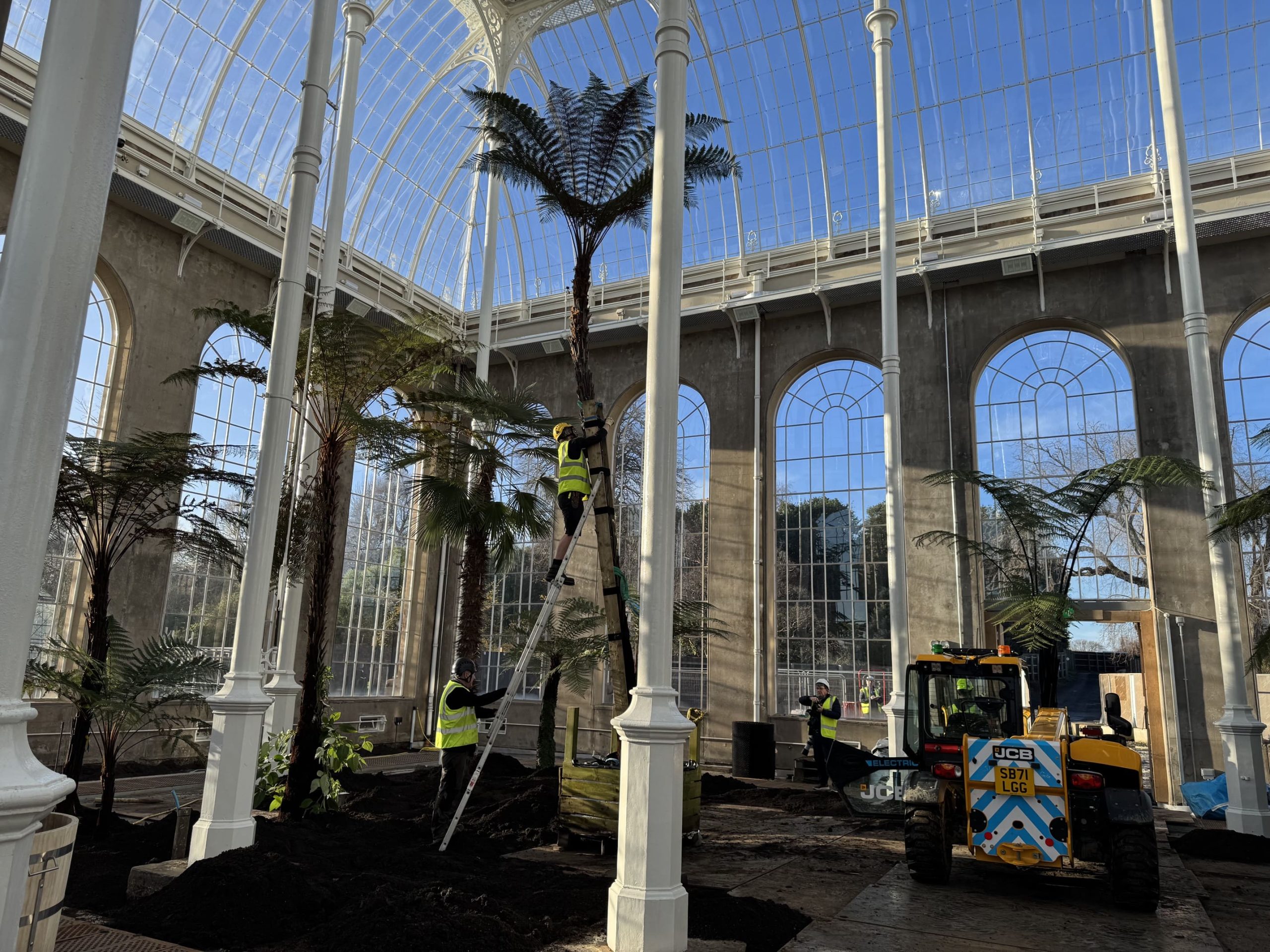
Beginning in House 3 with the last tree fern to leave the Ferns and Fossils Glasshouse in 2023. Dicksonia blumei would become the first large specimen planted in the Palm Houses. Pictured: David Tricker. Photo: Kevin Bannon.
Team Leader Neil Watherston with Dicksonia blumei. Photo: Kevin Bannon.
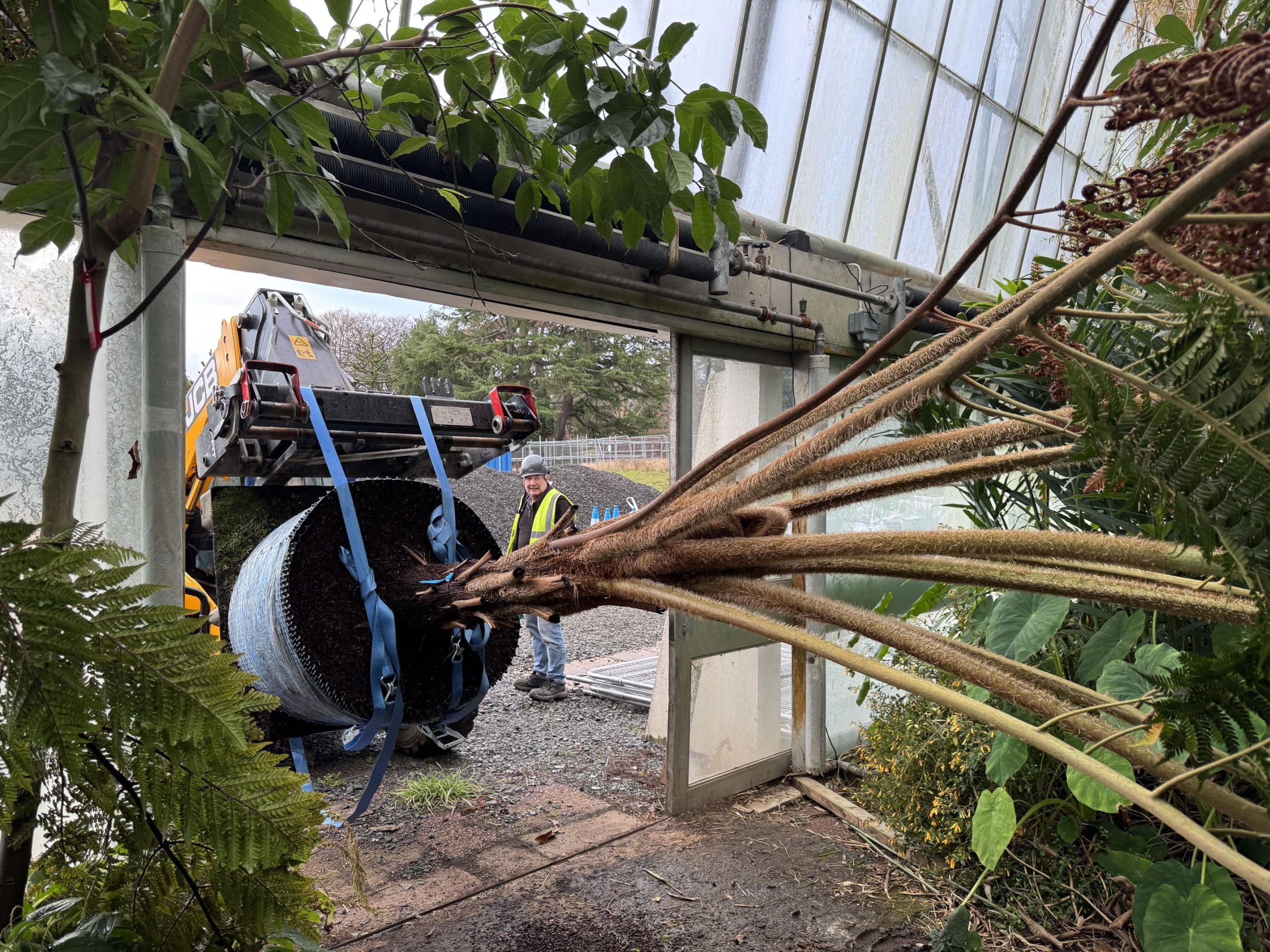
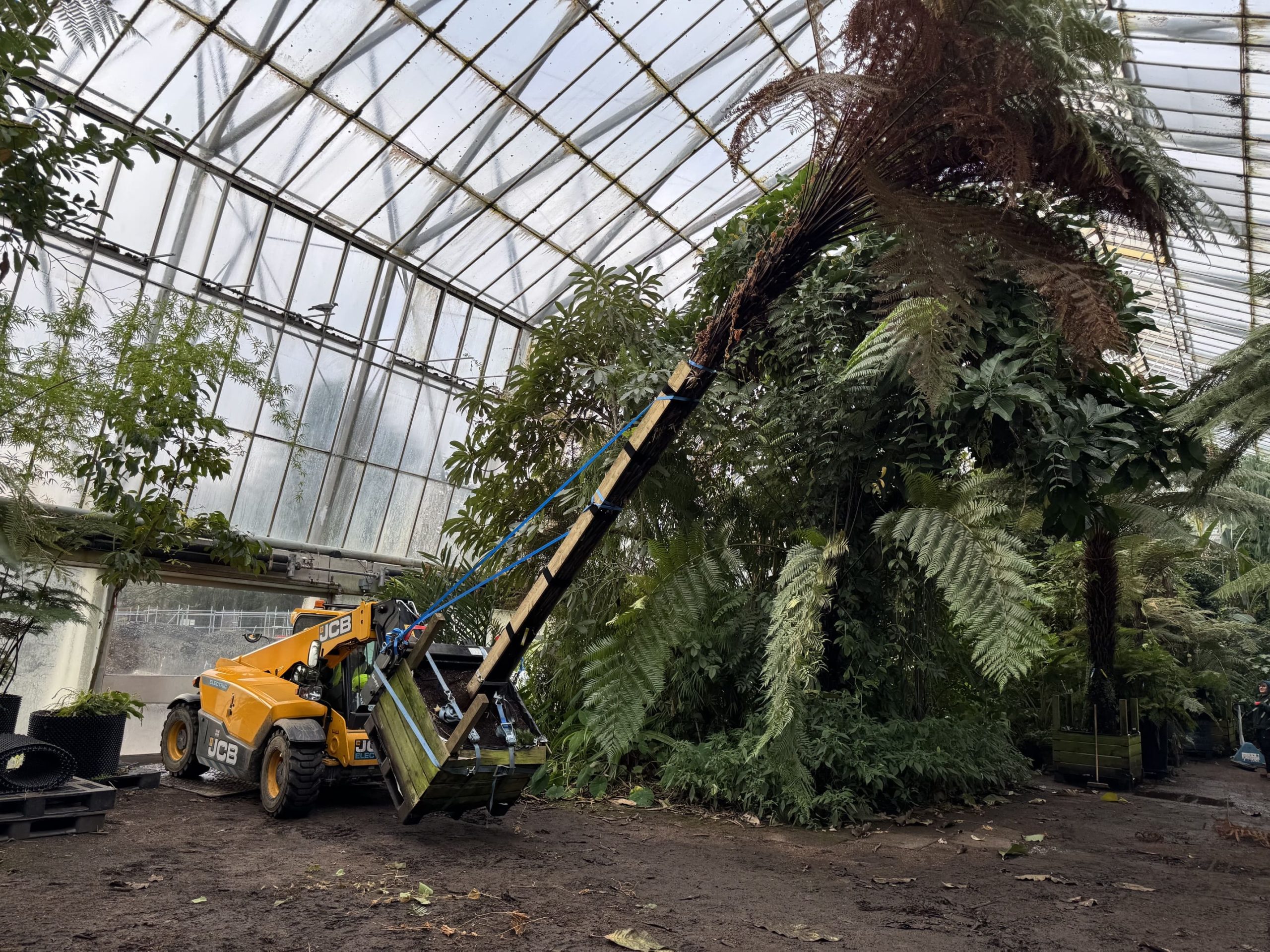
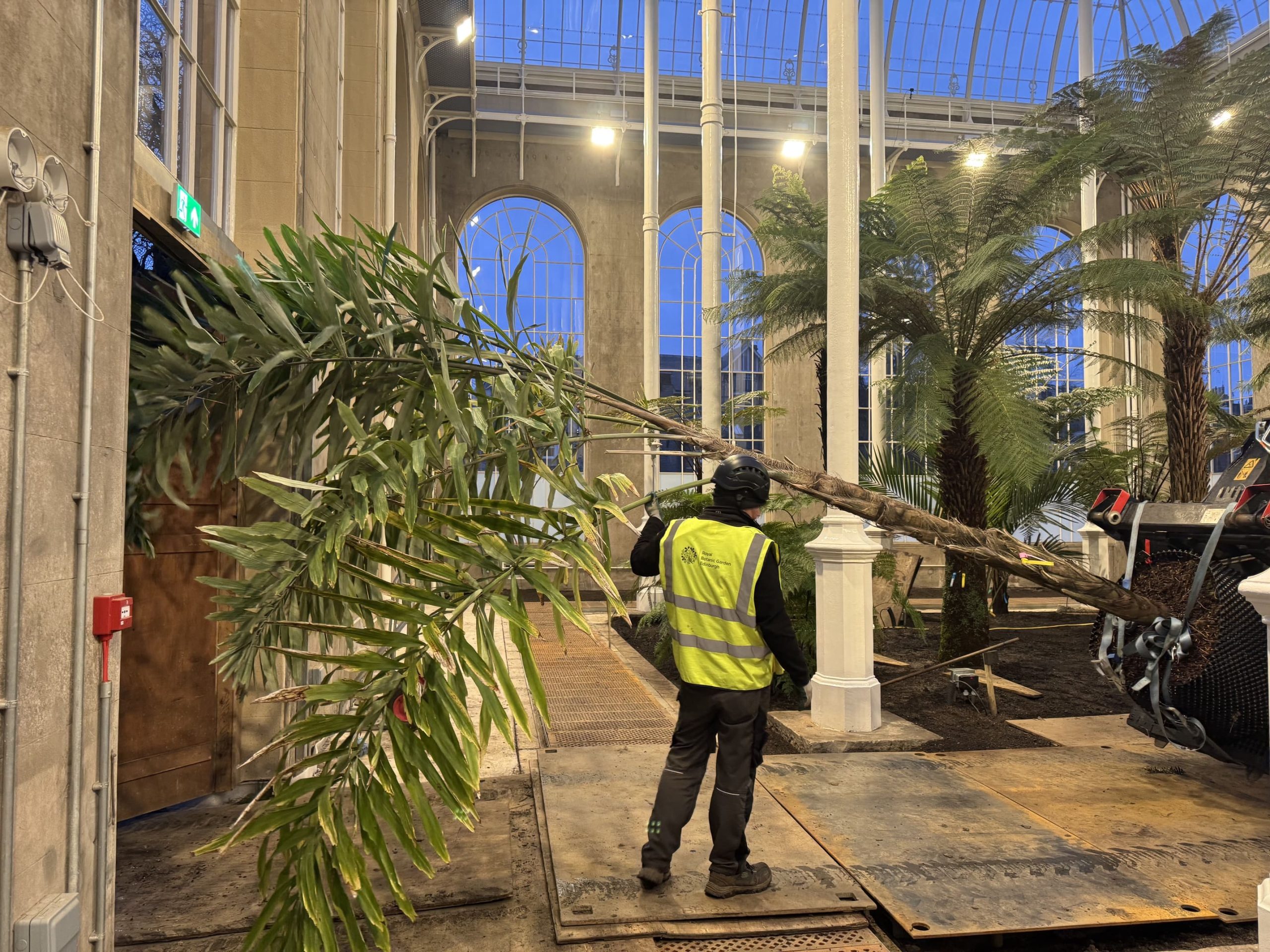
Both the Palm Houses and Front Range Glasshouses are designated as Grade A listed buildings, meaning any modifications to main entrances for access are restricted. As a result, the horizontal removal technique, as seen with the Sphaeropteris excelsa in the image above was applied to all the large plants removed from House 3. Pictured: Neil Watherston. Photo: Kevin Bannon.
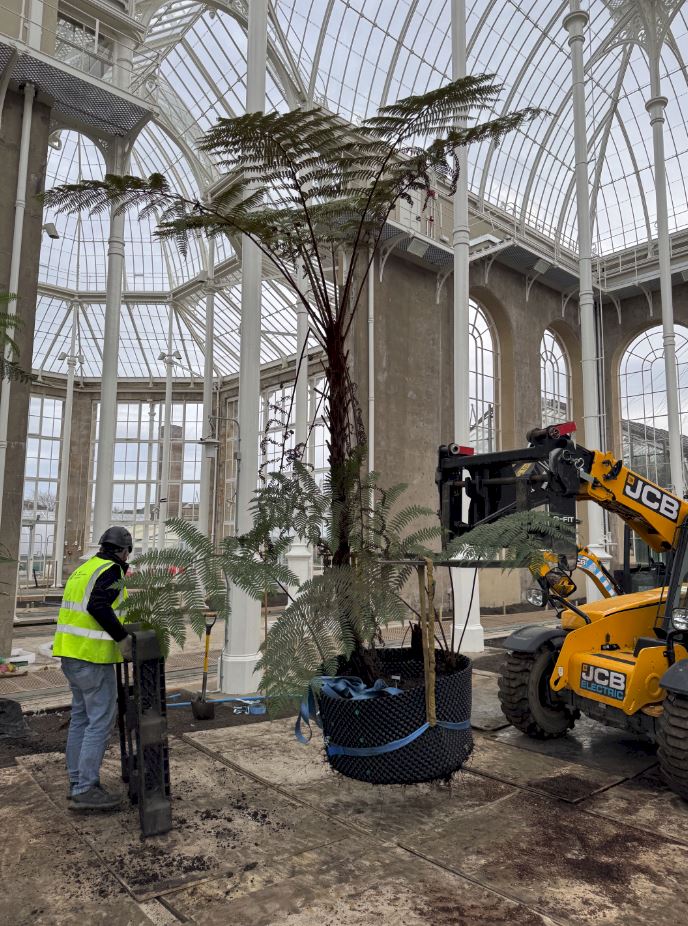
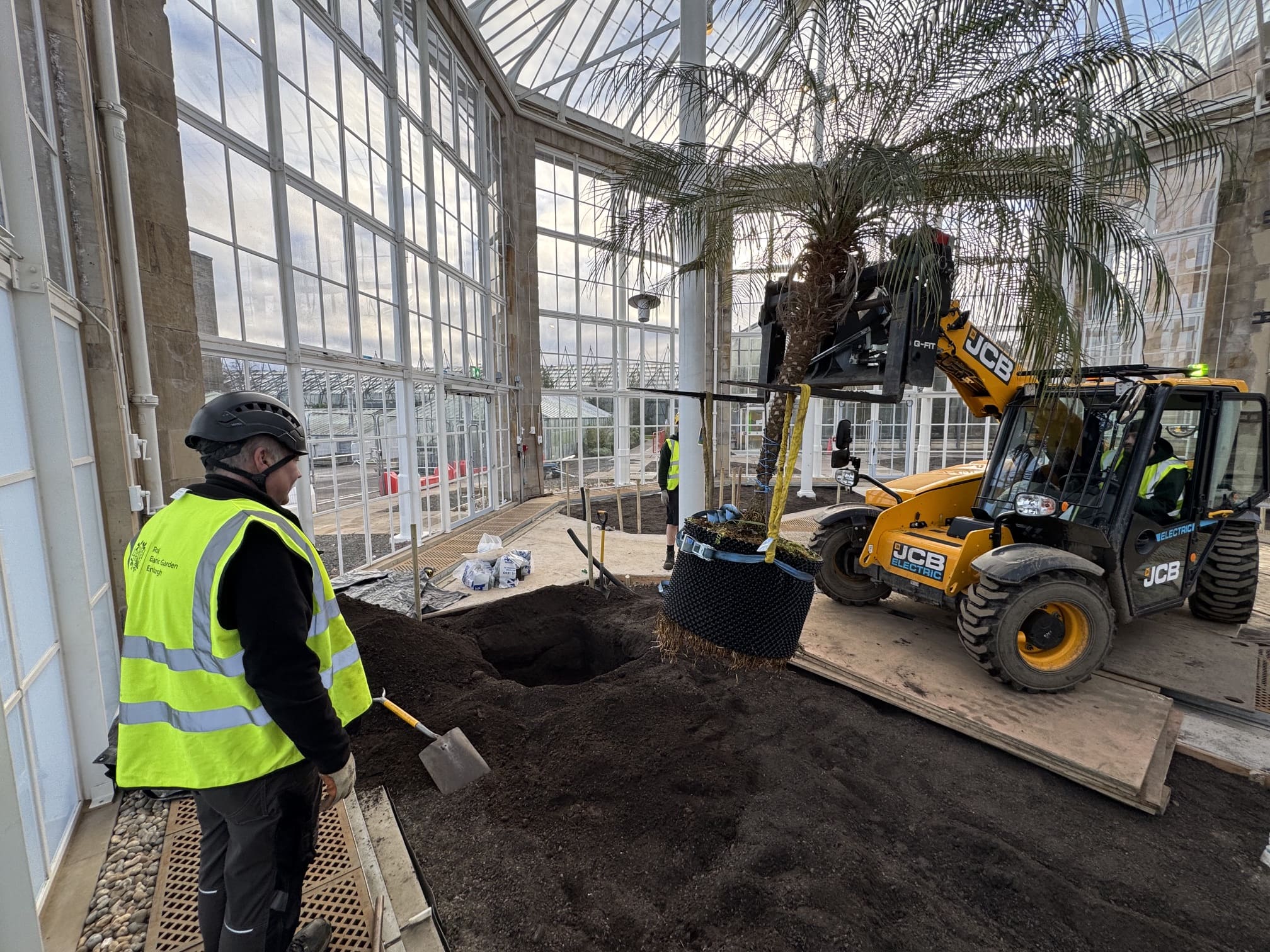
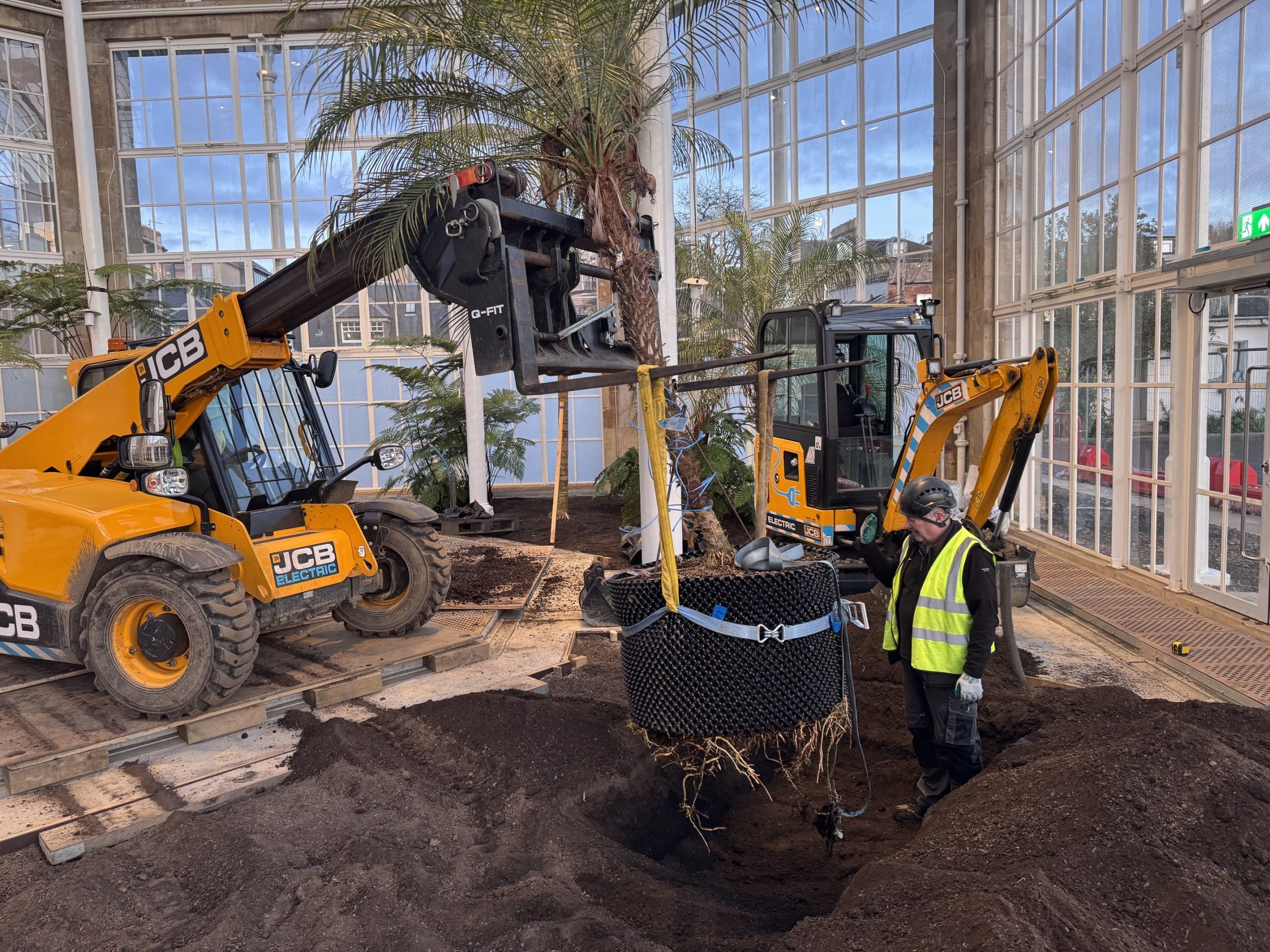
Alsophila manniana lifted into position while still in its Air-Pot®. Once positioned and soil levels confirmed, the Air-Pot® is undone and soil gently packed around the root ball. Alsophila manniana was the final planting before the 2025 Christmas and New Year break. Pictured: Neil Watherston. Photo: Kevin Bannon.
A New Year
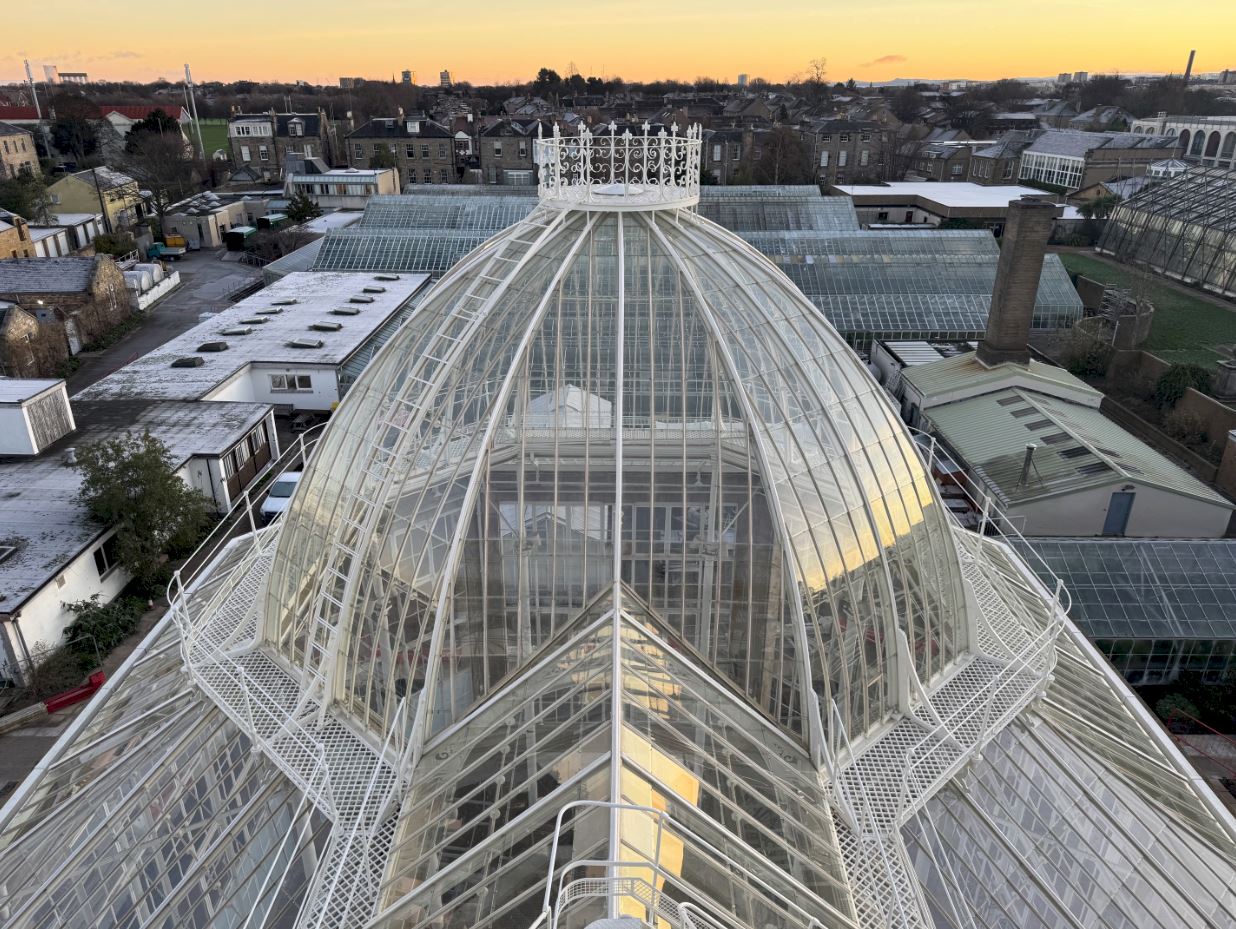
Overlooking the Horticulture Department and Glasshouse Collections from atop the Palm House. January 2026. Photo: Kevin Bannon.
The new year began with the immediate continuation of the replanting in the smaller octagonal Palm Houses. Each day work began at 7:30am, with plants moving continuously throughout. The smaller, domed glasshouse came with the challenge of a confined turning circle and multiple support pillars limiting access and visibility.
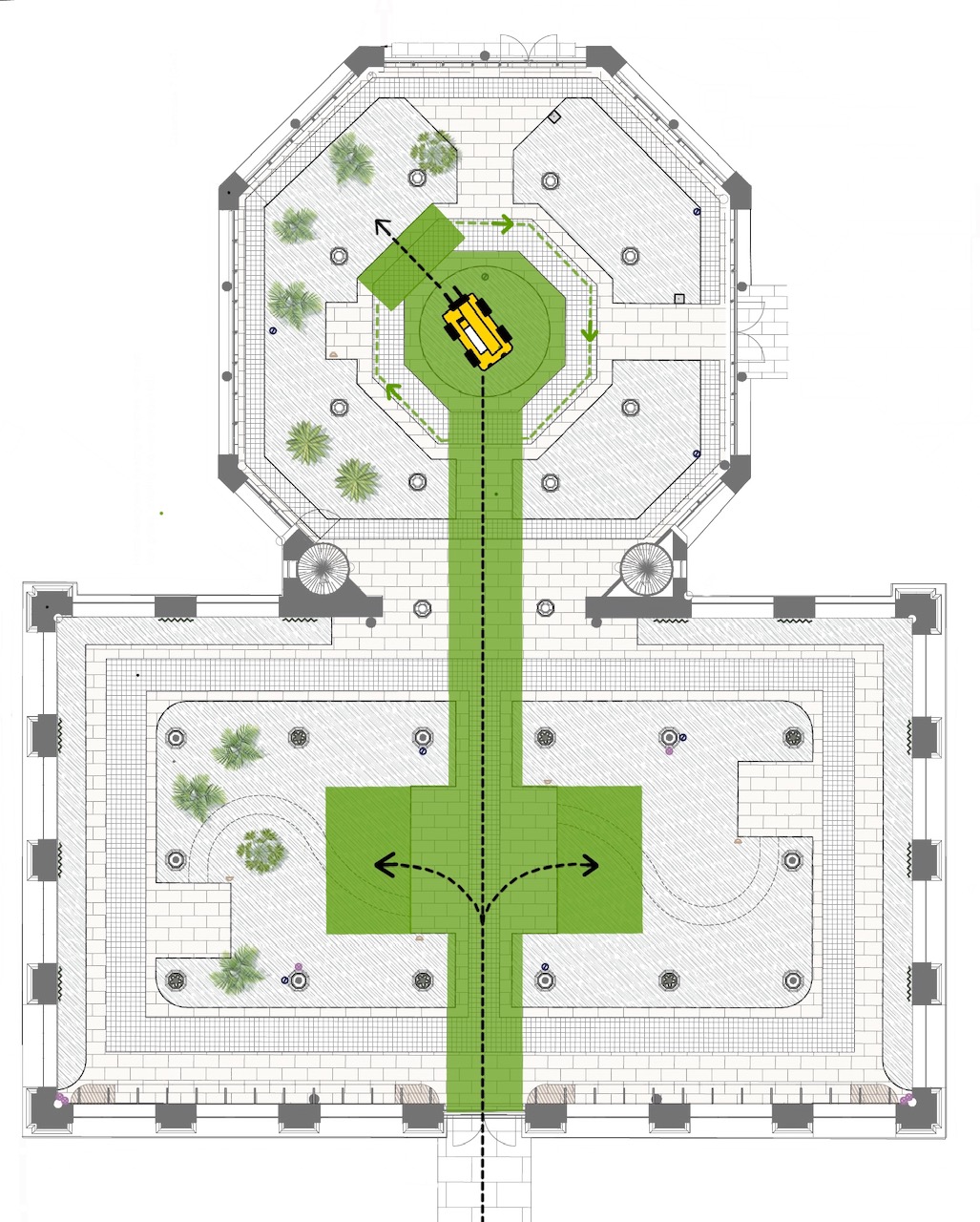
The area highlighted in green was the only designated driving spaces for both the digger and telehandler to coordinate lifting and digging. The planting progressed in a clockwise sequence, with minor adjustments to the planned positions of plants, and considerations given to minimise soil compaction as well as machine stability on uneven ground. Illustration: Kevin Bannon.
Phoenix roebelenii moves through the space where a dividing wall once separated the two Palm Houses. Pictured: David Tricker, Neil Watherston and Marc Gilbert. Photo: Kevin Bannon.
With only inches to spare, Phoenix roebelenii is gently manoeuvred around structural pillars into the prepared planting position. Though heavy machinery is a key component, the final adjustments and level checks relied on manual adjustments by the team. Pictured: David Tricker, Neil Watherston and Marc Gilbert. Photo: Kevin Bannon.
The next Phoenix roebelenii, neighbouring the first, required the same process as before but in reverse. Pictured: Marc Gilbert and Neil Watherston. Photo: Kevin Bannon.
The steel plates were repositioned incrementally across each segment of the cast iron grates, allowing the telehandler to stabilise its wheels then extend it’s arm to place each plant into position. Pictured: Neil Watherston, David Tricker and Marc Gilbert. Photo: Kevin Bannon.
Before lifting into position, root balls were measured and soil levels adjusted to ensure correct height and position, countering any existing lean in the trunks. A laser level was used to establish final heights in relation to the central heating ducts, resulting in each planting being temporarily mounded until final soil levels were in place.
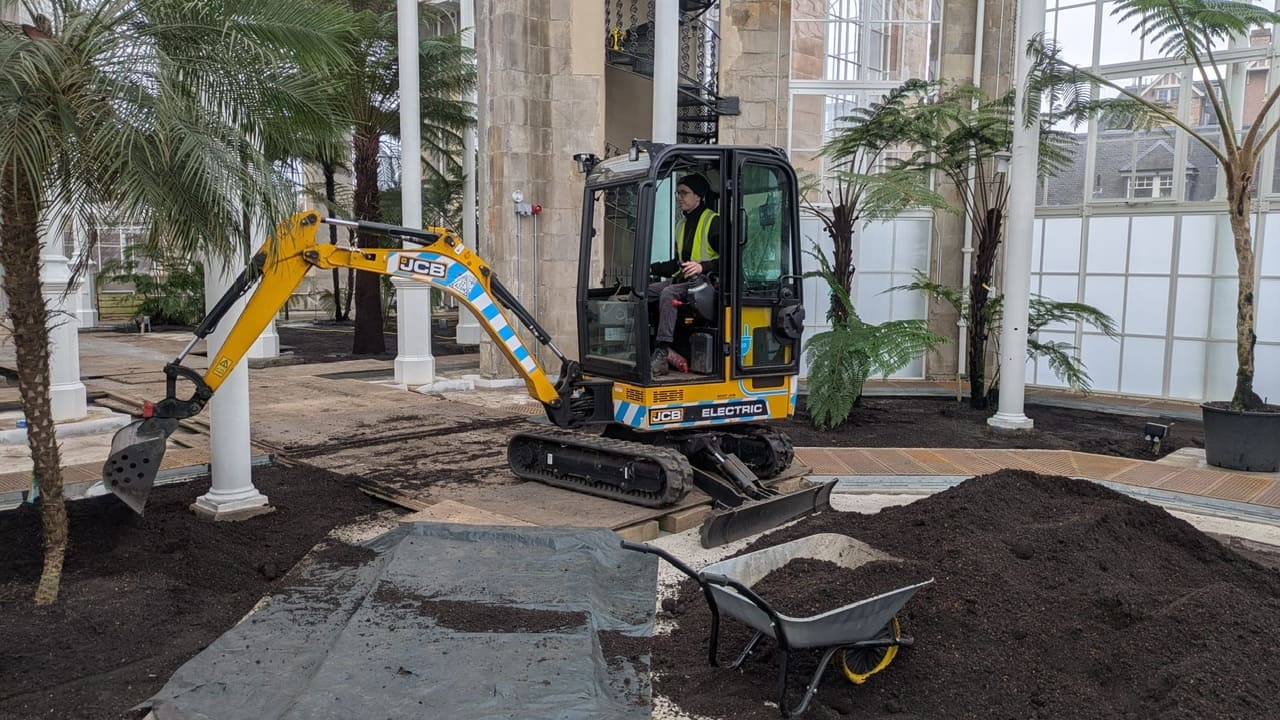
Following the completion of plantings around the sides of the glasshouse, ground boards were removed and the soil levels raised in both the central and surrounding beds. Pictured: Kevin Bannon. Photo: David Tricker.
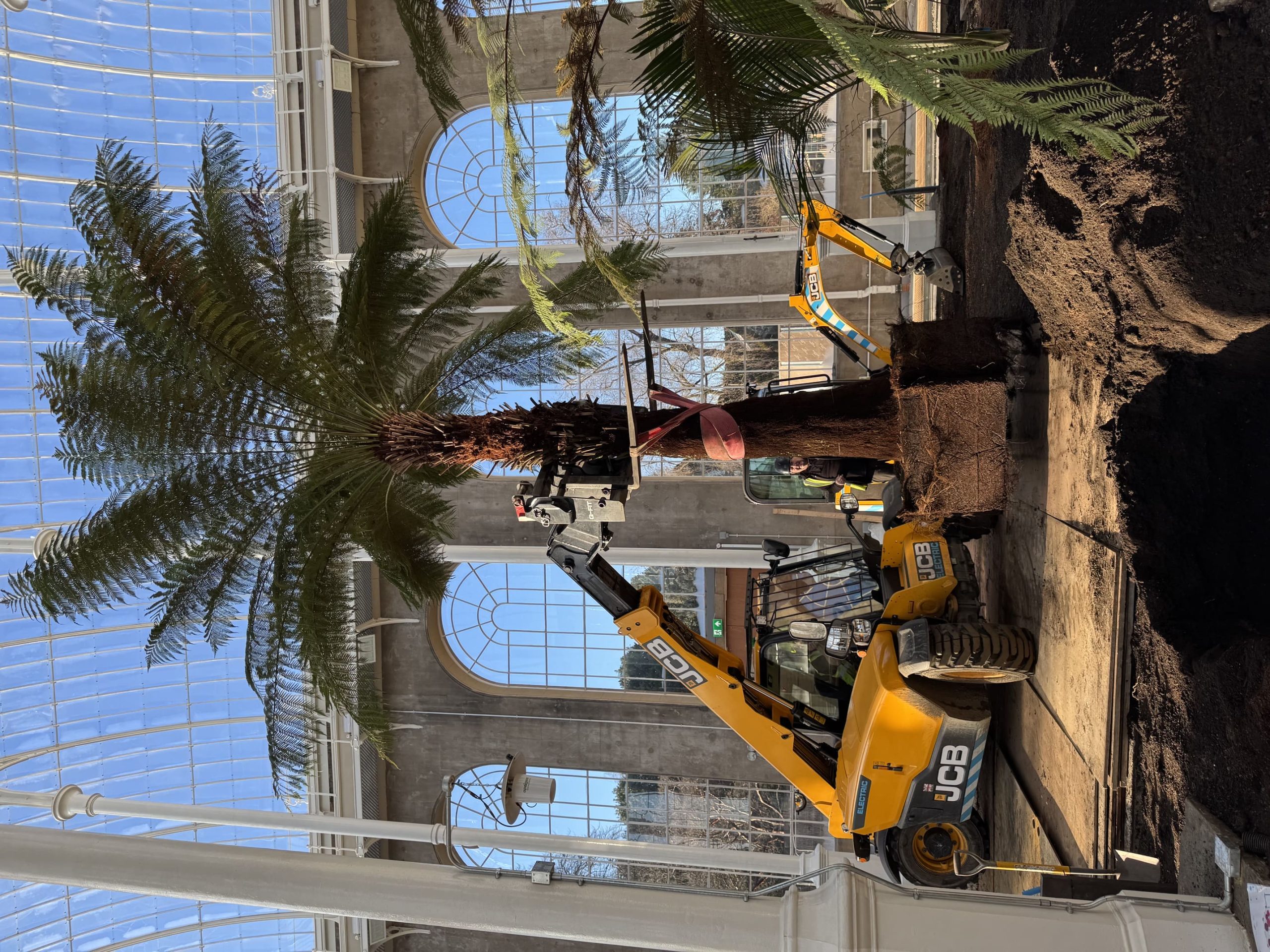
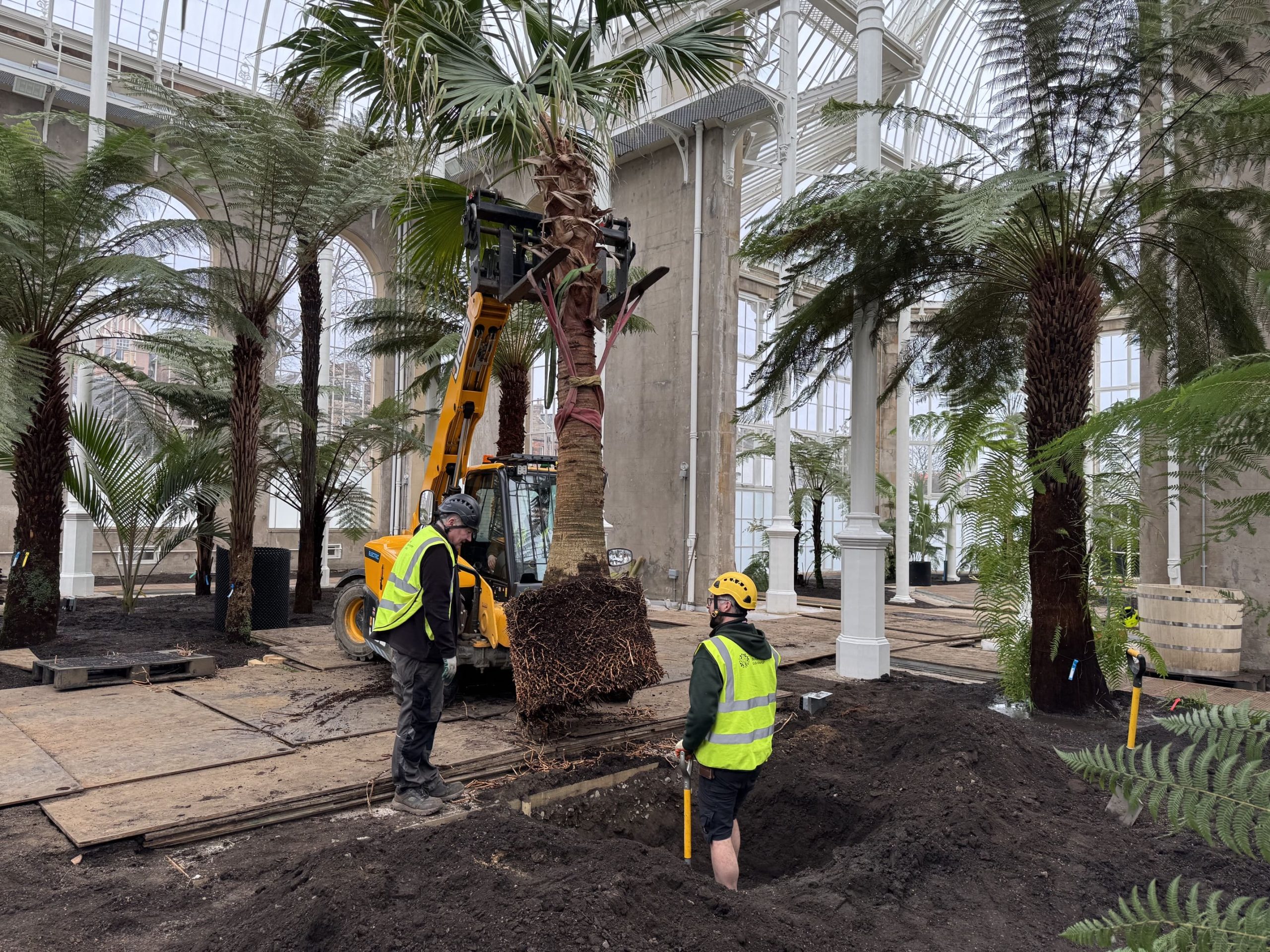
The dense root ball of Dicksonia antarctica is revealed after almost 3 years since its removal from the Ferns and Fossils Glasshouse. Weighing an estimated 300-400kg, this was the first of three Dicksonia antarctica planted as part of the new collection. Pictured: Marc Gilbert. Photo: Kevin Bannon.
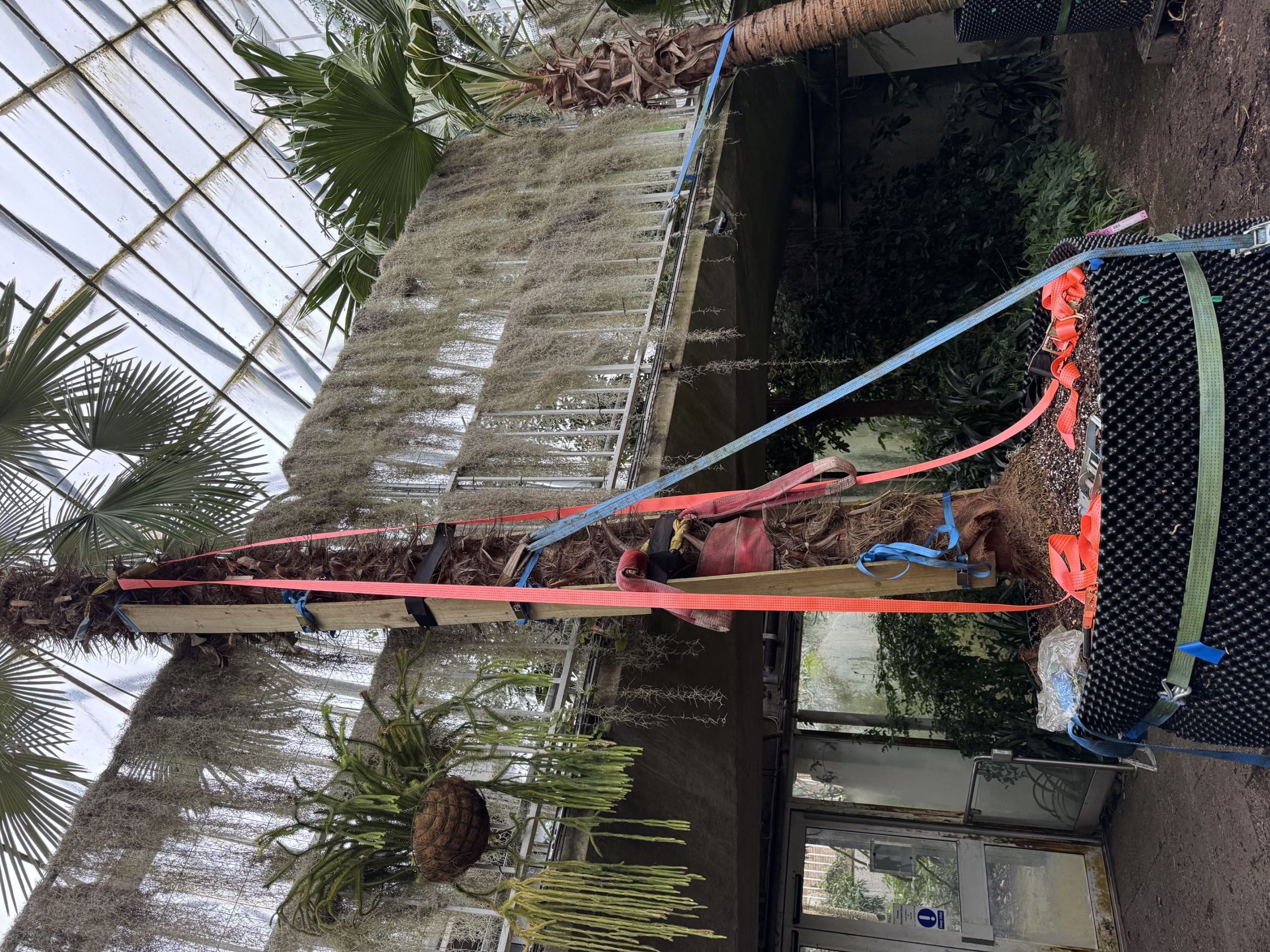
One of the tallest and most fragile, aDicksonia squarrosa is lowered until fully horizontal. Additional supports were added to mitigate any risks of possible trunk snapping. This was also a good opportunity to inspect crowns for pests and remove older fronds. Pictured: Marc Gilbert. Photo: Kevin Bannon.
Trachycarpus princeps, brought into the garden as a seedling in 1991. The move of this palm was specifically scheduled for relocation on January 21st, which triggered wide media coverage of the process. This was the largest specimen moved by the team in terms of overall combined height and weight. Photo: Kevin Bannon.
Vimeo @thebotanics
Once inside the Palm Houses, the support straps along the trunk of Dicksonia squarrosa were removed before planting in the central bed. Pictured: Neil Watherston, David Tricker and Marc Gilbert. Photo: Kevin Bannon.
Livistona chinensis just opposite its original pre-2021 location. Finding the vital balance point between each large specimen varied depending on root ball, trunk weight and fragility. In many cases, adjusting support straps to find a safe equilibrium took longer than the planting itself, and tested the electric telehandler’s limits in handling the plant itself. Pictured: Neil Watherston and David Tricker. Photo: Kevin Bannon.
Another early morning move, Wallichia disticha slowly making its way inside. Native to the eastern Himalayas, this palm is a monocarpic species meaning it will only flower once before dying. Pictured: Neil Watherston. Photo: Kevin Bannon.
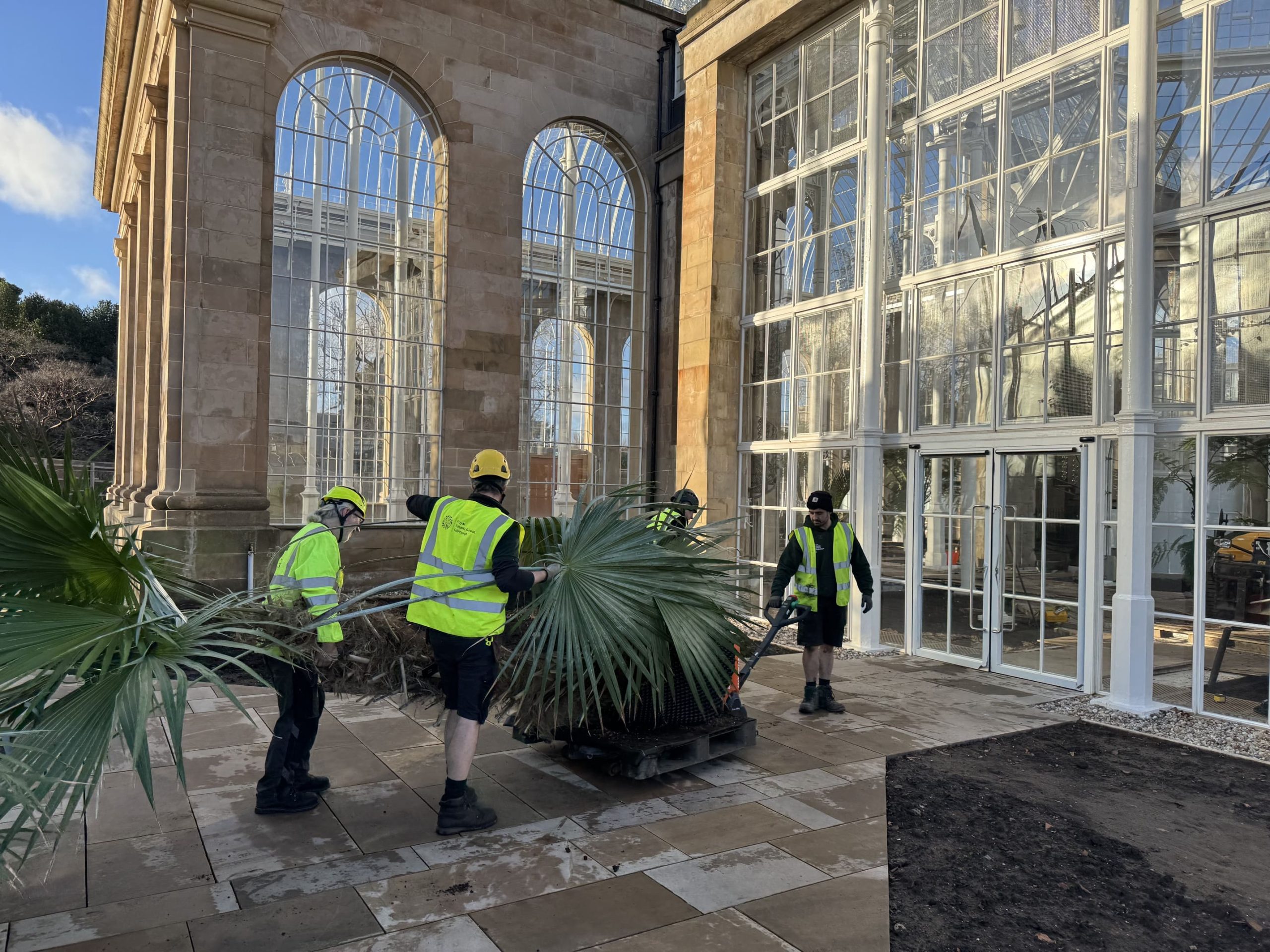
Thrinax radiata, a slow growing palm native to many Caribbean islands, Mexico and Central America, was manually brought through smaller doors in the octagonal glasshouse for planting by the entrance. Pictured: Bruce Robertson, David Tricker, Neil Watherston and Marc Gilbert. Photo: Kevin Bannon.
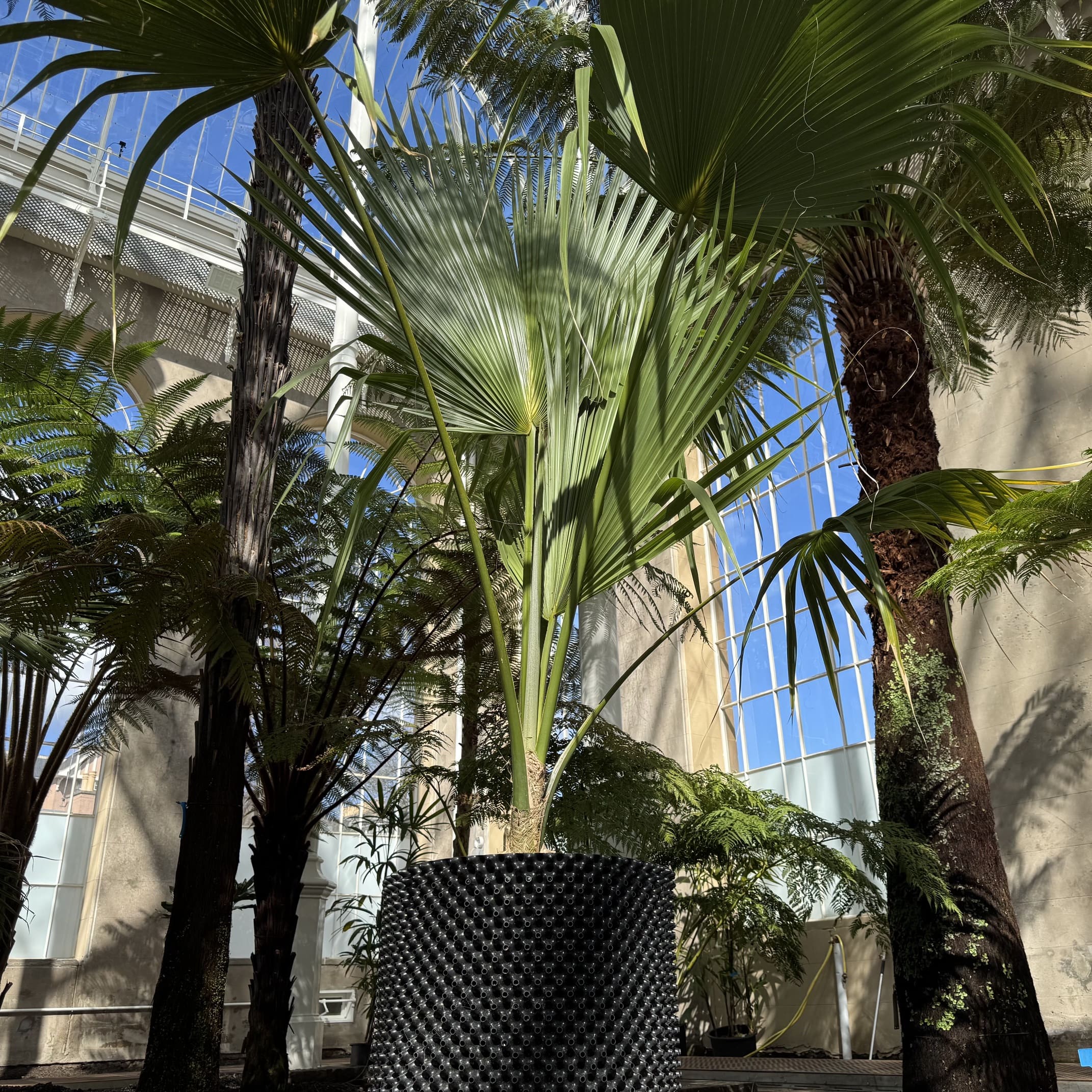
Sabal mexicana, a 2016 seedling of the famous specimen removed as part of the decant in 2021. As of June 2026, a small-time capsule was buried nearby for the next generation to open. (Photo: Kevin Bannon)
Instagram @rbgedinburgh Youtube @TheBotanics
Instagram @rbgedinburgh Youtube @TheBotanics
The work continues…
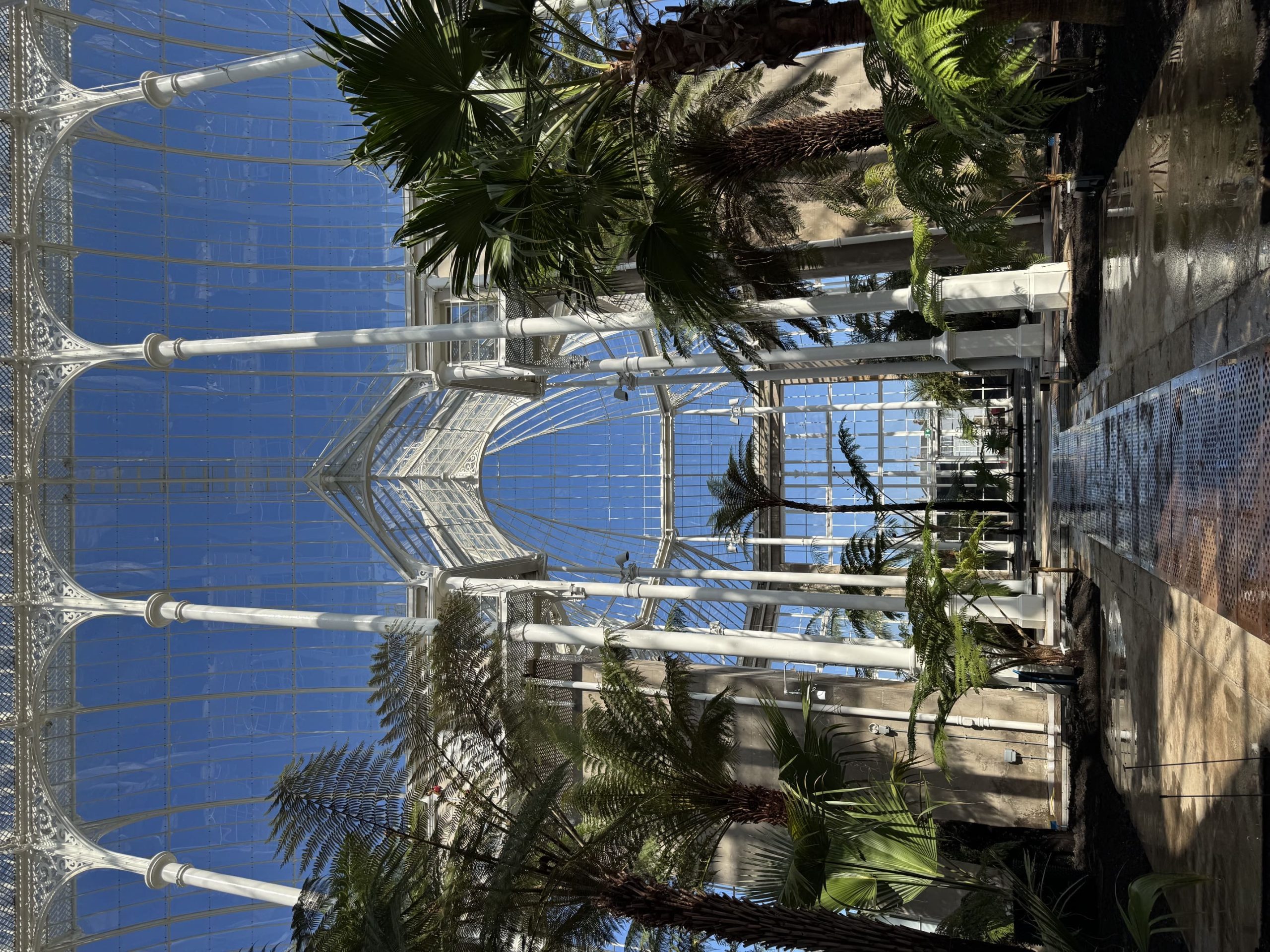
The central view inside the Palm Houses, June 2026. Photo: Kevin Bannon.
This monumental stage of replanting was completed in just 27 days; the next stages focused on finalising soil levels following the installation of steel edging and the sandstone flooring. There is only one chance with moving plants of this scale; their safe arrival into the Palm Houses relied on steady decisions made over the years as well as during this historic move to prevent their irreplaceable loss in the wider collections at RBGE. The replanting gives back to the Palm Houses the very reason they exist; a purpose understood in the mid-1800s and through the almost 200 years since, with evolving horticultural practices laying the foundations for the success of today.
Stories from the Biomes: Replanting the Palm Houses, Part 2 will cover the final replanting that continued over the summer months, involving understory plants and climbers as well the outdoor planting surrounding the Palm Houses before reopening to the publicon 2 October 2026.
The First Plants. Illustration: Kevin Bannon
Previous Stories from the Biomes covering the glasshouse decants and other projects can be found here.

Leave a Reply