
Page 87 of 127
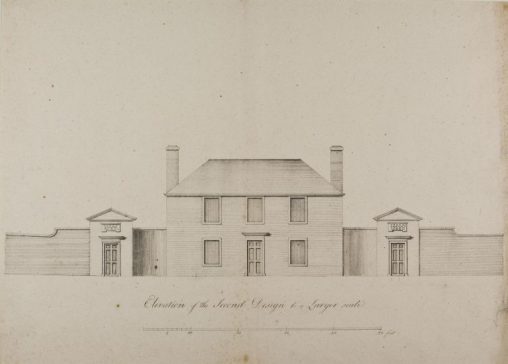
‘Edin. 29th March 1765. Received from Dr John Hope Professor of Botany in the College of Edinburgh, the sum of fifteen pounds ster for making Plans and Estimates…
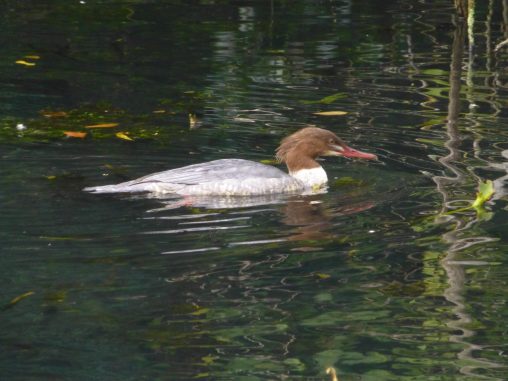
The figures are at last all in and 62 bird species were recorded in the Botanics in Edinburgh during 2013. This is one fewer than 2012 when 63…
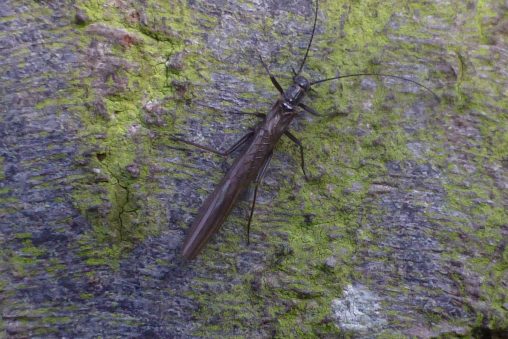
Today I saw my first insect of 2014 in the Botanics. No ordinary fly or early bee; it was a STONEFLY of the genus Leuctra (needle flies), almost…
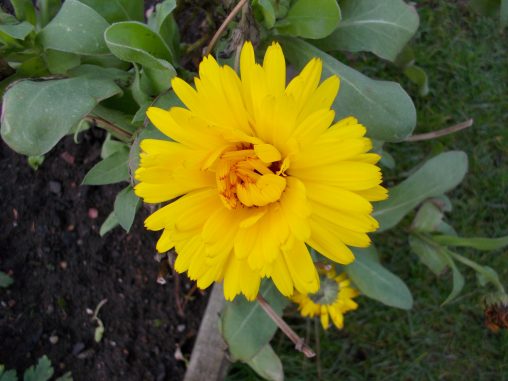
Backed by a west facing wall, Tomato plants set in grow bags in the lean to glasshouse of the Fletcher Building are continuing to yield edible fruit. For…
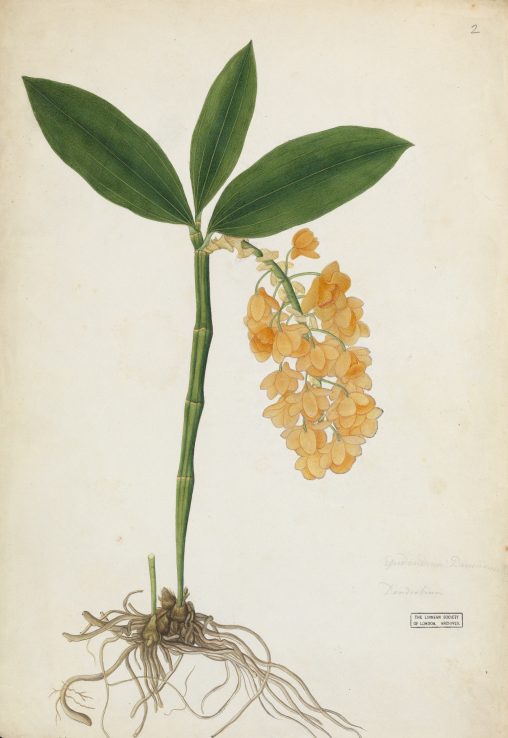
The celebration of 200 years of Nepal-UK relations was launched on 6th January 2014 with an exhibition of natural history drawings made by Dr Francis Buchanan-Hamilton in 1802-3….
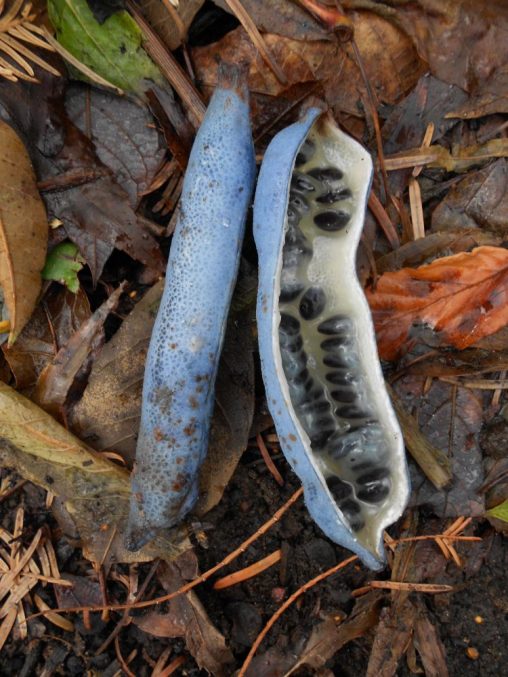
Hanging by a fragile stalk from the terminal bud, the colourful bean pod like fruits of Decaisnea fargesii are an exotic shade of blue. The upright growth of…
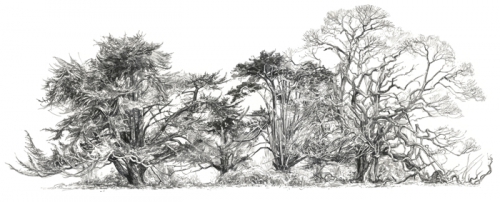
2014 marks the 350th anniversary of the publication in 1664 of John Evelyn’s classic book Sylva: a discourse of forest trees and the propagation of timber in…
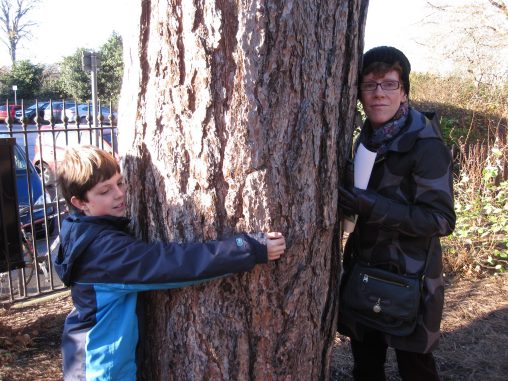
A Record Attempt to stage the world’s largest tree hug, held on Sunday 1st December, has stormed past Forestry Commission England’s 702 tree huggers which is the official…
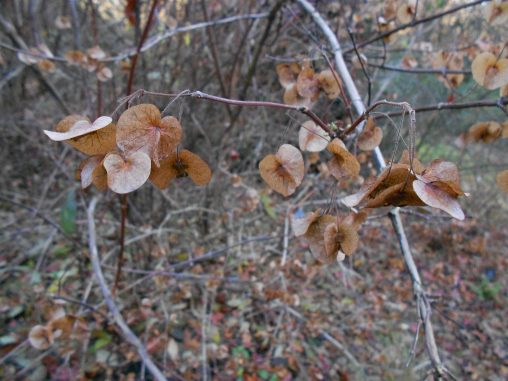
A touch of breeze and the brown wafer thin seed pods of this Dipelta yunnanensis are set quivering on the leafless shoots. The twin wing like bracts give…
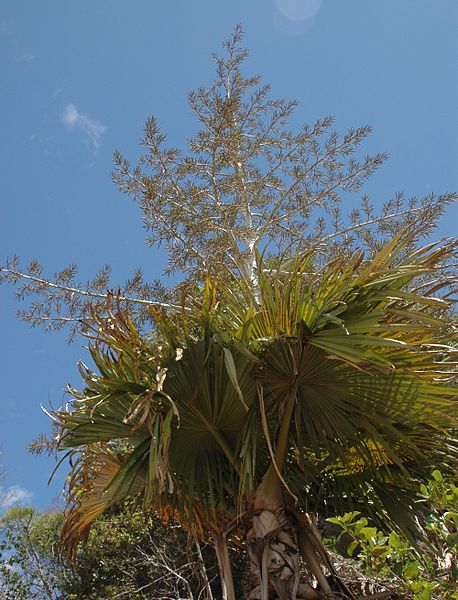
Description: This rare palm can reach a height of over 18m in its natural habitat, and has large fan-shaped leaves. It has an unusual lifecycle, flowering only once…

An alien force, the Shapers, is trying to manipulate our minds by filling the world with Exotic Matter (XM) via portals associated with works of art and other…
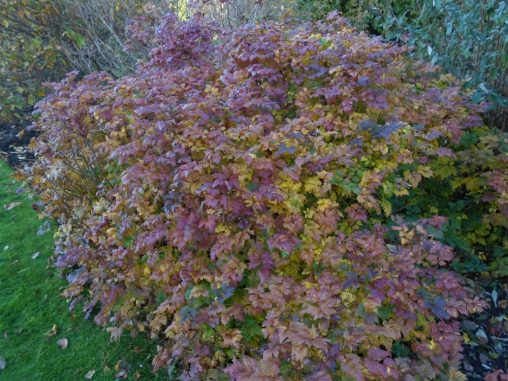
Xanthorhiza simplicissima; a deciduous shrub with pinnate foliage that slowly colours into early winter. Surprisingly, a member of the Buttercup family, Ranunculaceae. Native to Eastern North America where…
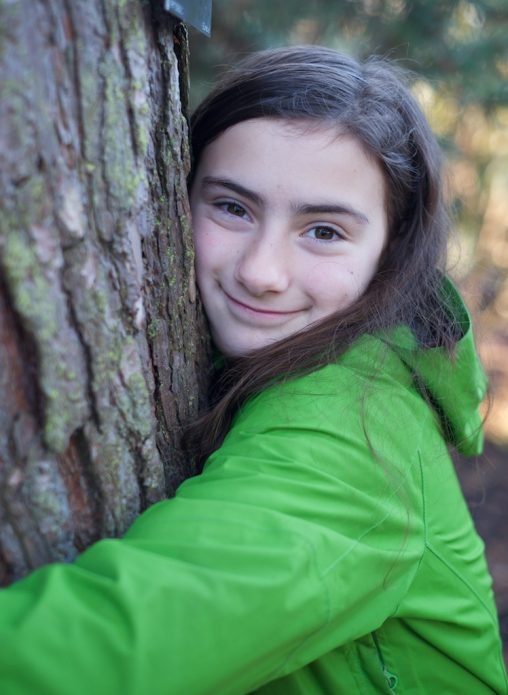
Tree huggers converged on 11 sites around Scotland on the 1st of December to mark the end of National Tree Week and to try to break a world…
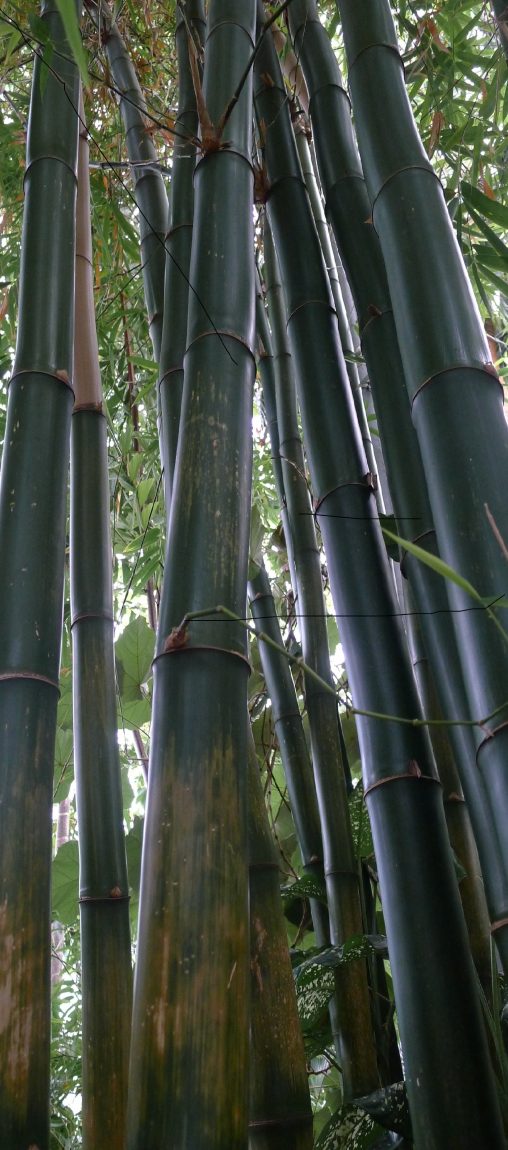
Bamboos are essentially a group of toughened grasses. This particular giant bamboo is known as Bambusa vulgaris. It is an open clump-forming species with striped stems and dark…
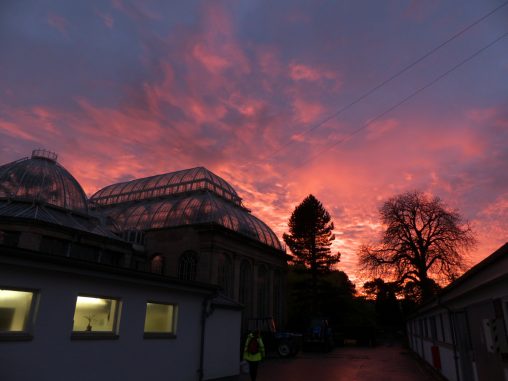
On Thursday we were treated to a fantastic sunset as we left work. Luckily I had my camera with me. November 2013 has given us many fine days…
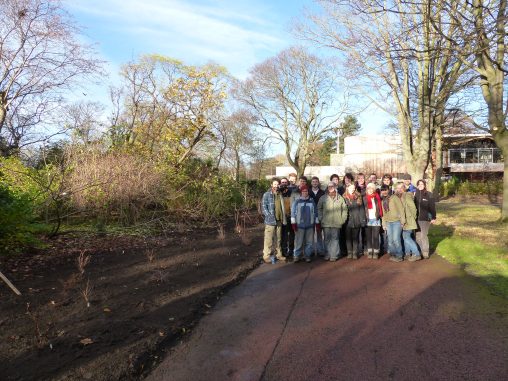
National Tree Week, 23 November – 1 December is the UK’s largest tree celebration and launches the start of the winter tree planting season. Today we have been taking…
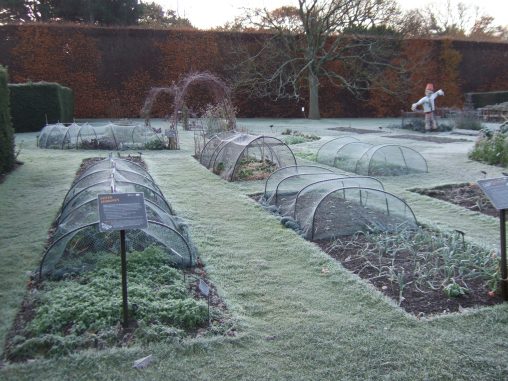
A heavy frost brings out the beauty of the edible garden in winter. It also demonstrates the hardiness of some of the crops. Enjoy these photos as they…
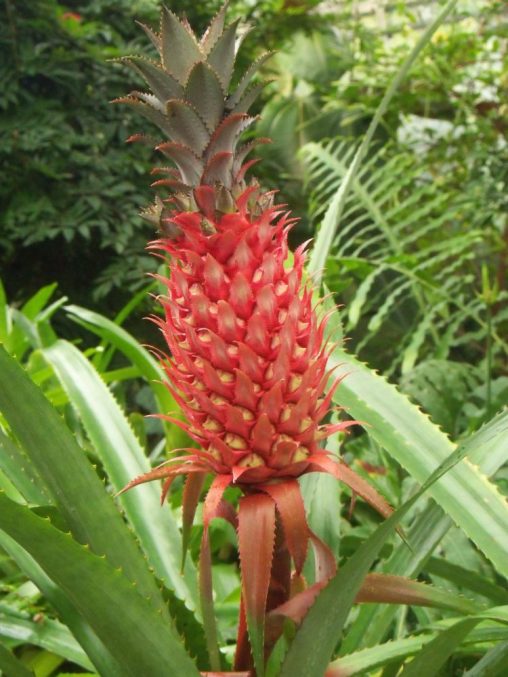
Takeover Day Scotland is a celebration of children and young people’s contribution to museums, galleries and historic homes. It is a day on which they are given meaningful…
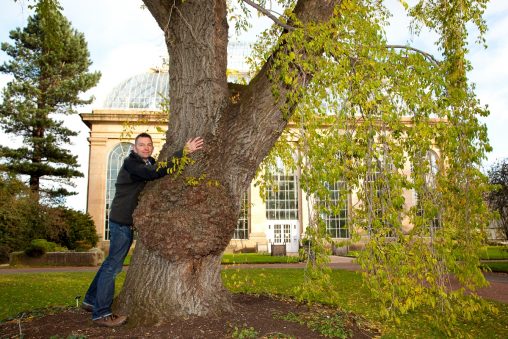
The Royal Botanic Garden Edinburgh is putting out the call for people to help break the world record for tree hugging. The Garden is joining forces with ten…