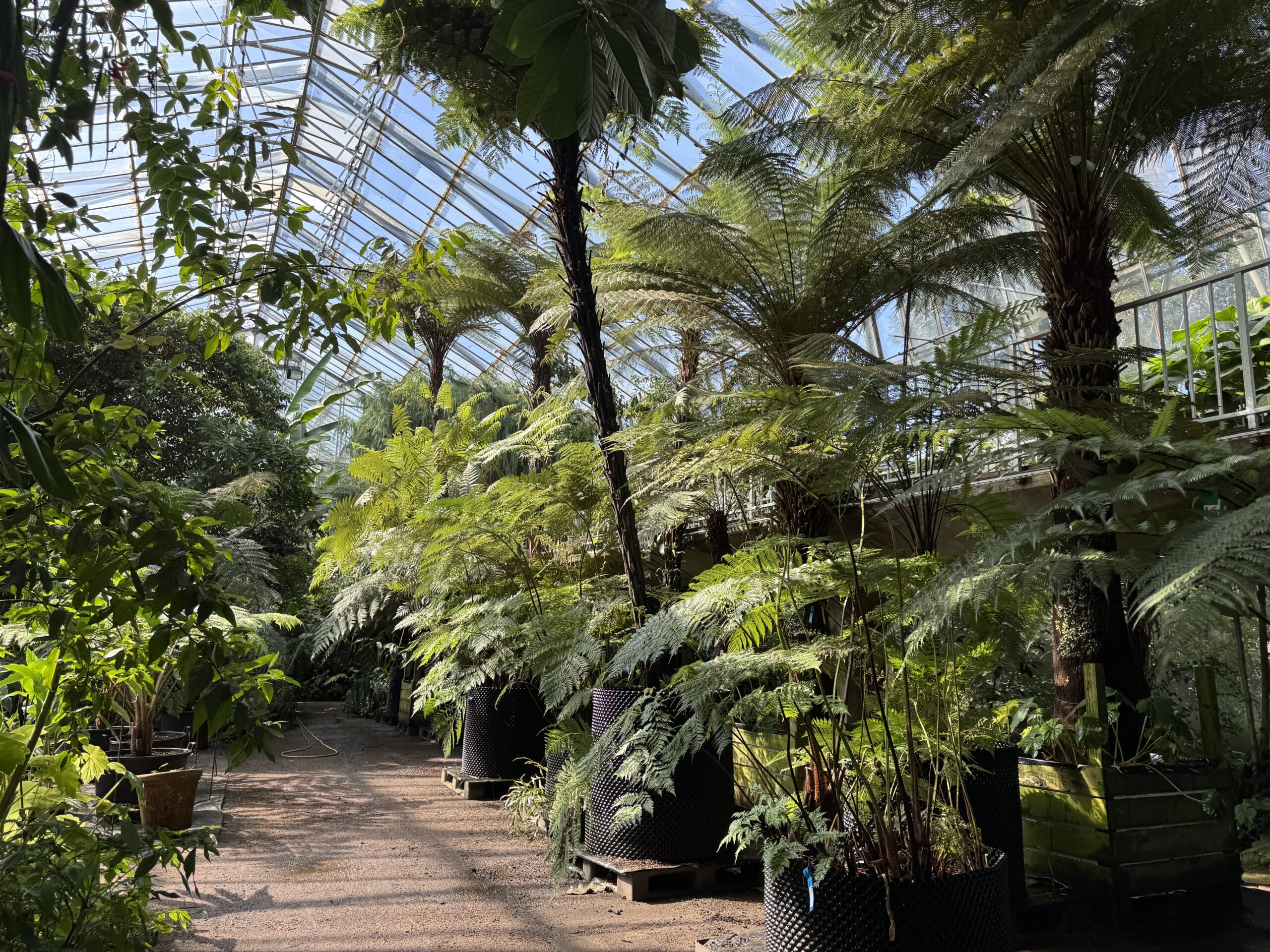
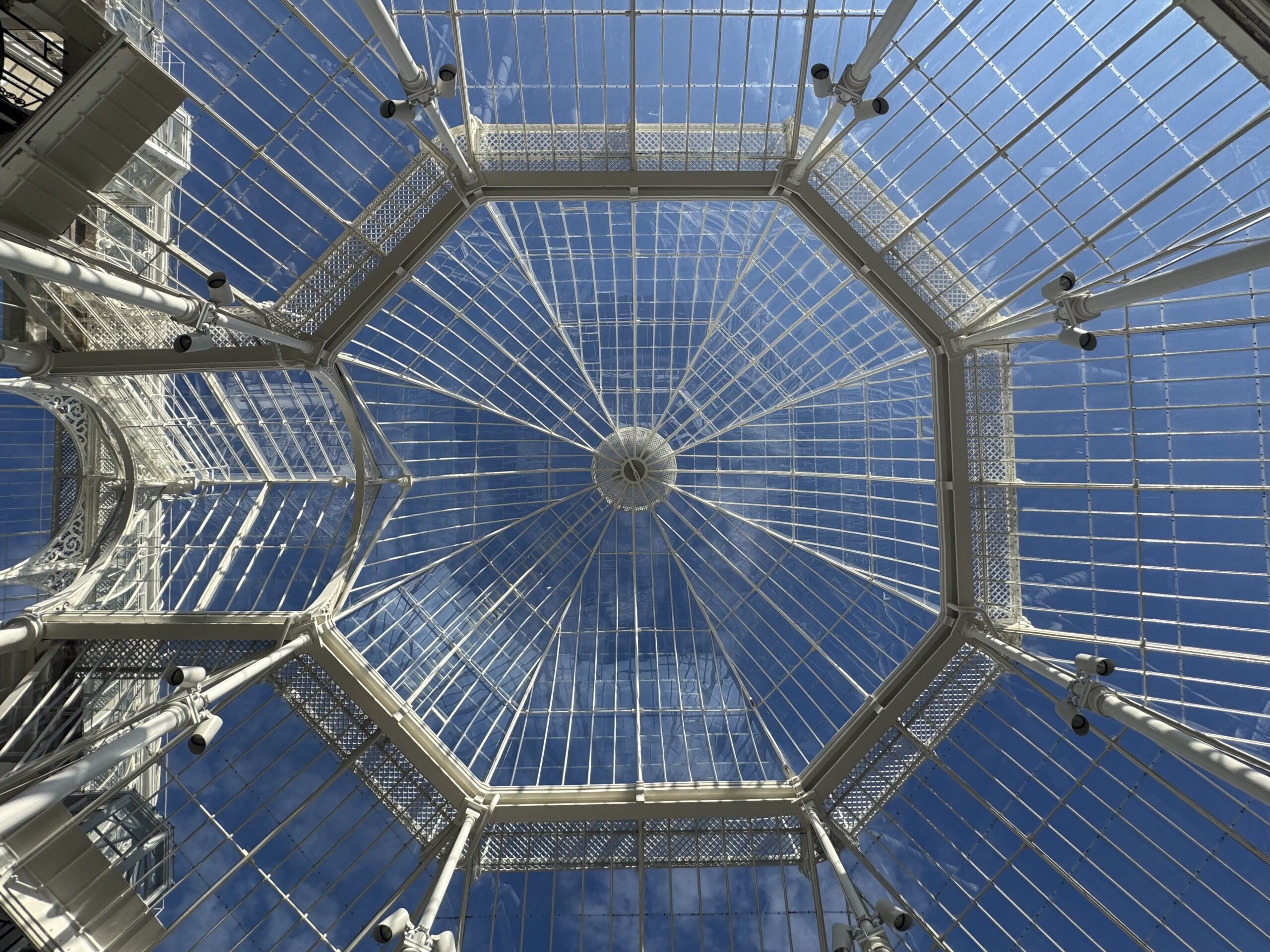
The view through the canopy in House 3, with Trachycarpus princeps towering over the rest of the potted collection. Photo: Kevin Bannon
Since 2021, House 3 (Temperate Lands Glasshouse) has been the gravitational centre of the changes to the RBGE Glasshouses as part of the Edinburgh Biomes Project. It has been housing the largest plants of the living collection decanted from both the Palm Houses and House 5 (former Ferns & Fossils Glasshouse). Now, with the restorations complete on the Palm Houses, preparations are in motion for the replanting to begin.
Changes to House 3 (Temperate Lands)
Throughout the Summer of 2025 preparations have taken place across the relevant Glasshouses for the manoeuvre and removal of the large plants destined for the Palm Houses with hard relandscaping, design planning and large-scale repotting to name a few.
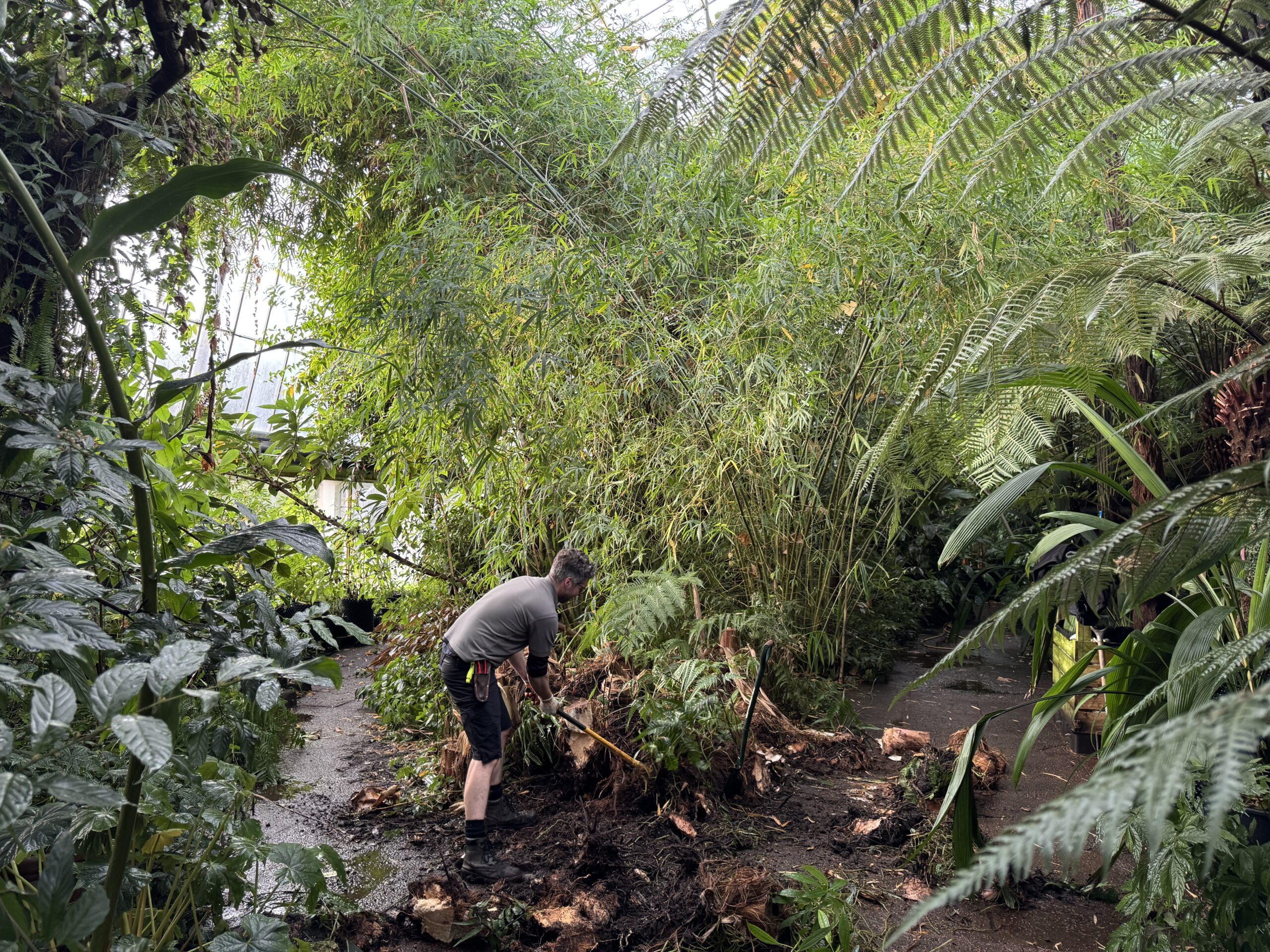
Senior Horticulturist David Tricker, who has cared for the collection, removes Musa sikkimensis (also known as the Darljeeling banana or Sikkim banana after its native region in India) from the display beds in House 3 to create additional space for manoeuvring machinery into the Glasshouse. Propagated beforehand, the plant still exists in the collection. Photo: Kevin Bannon
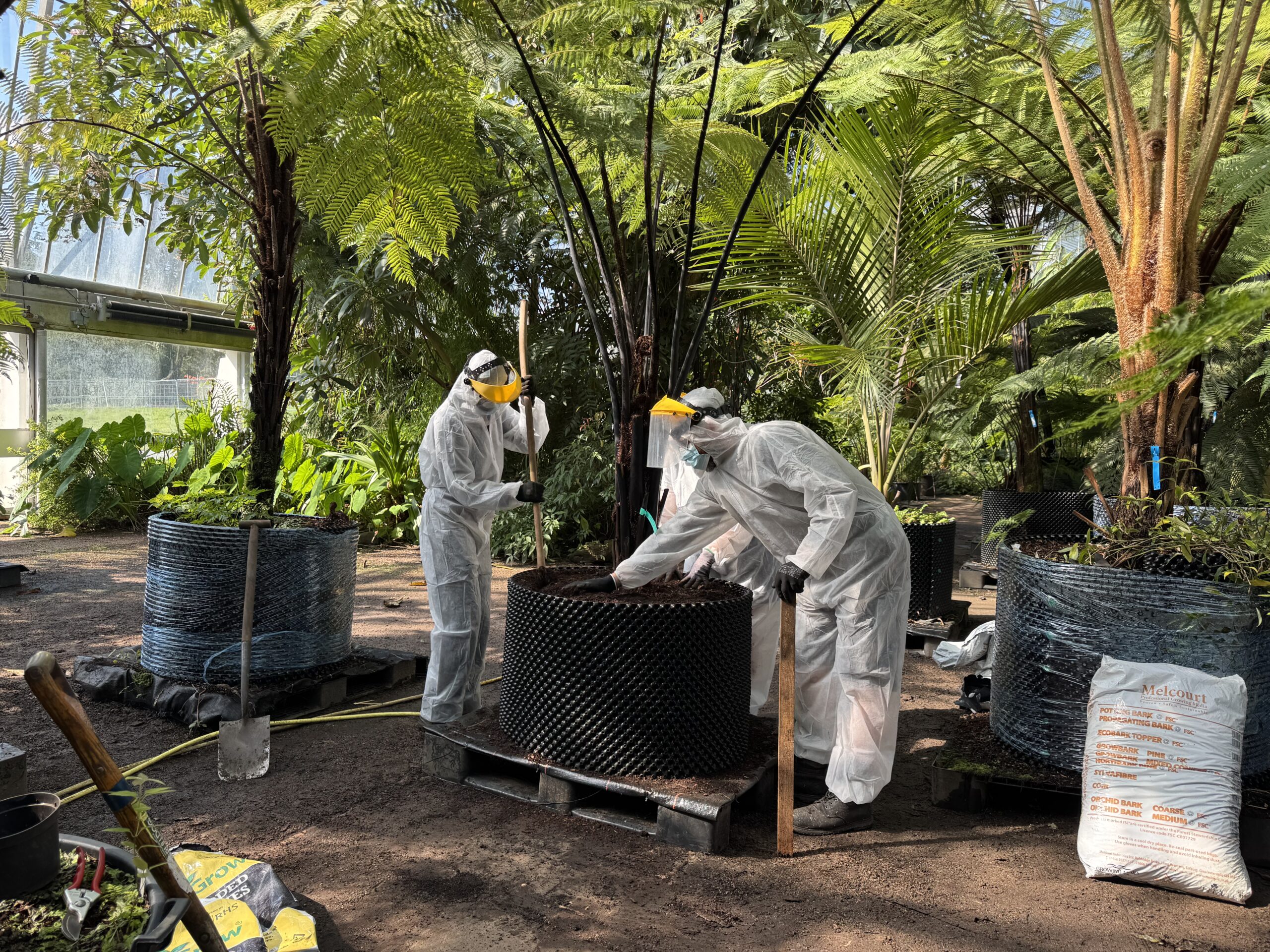
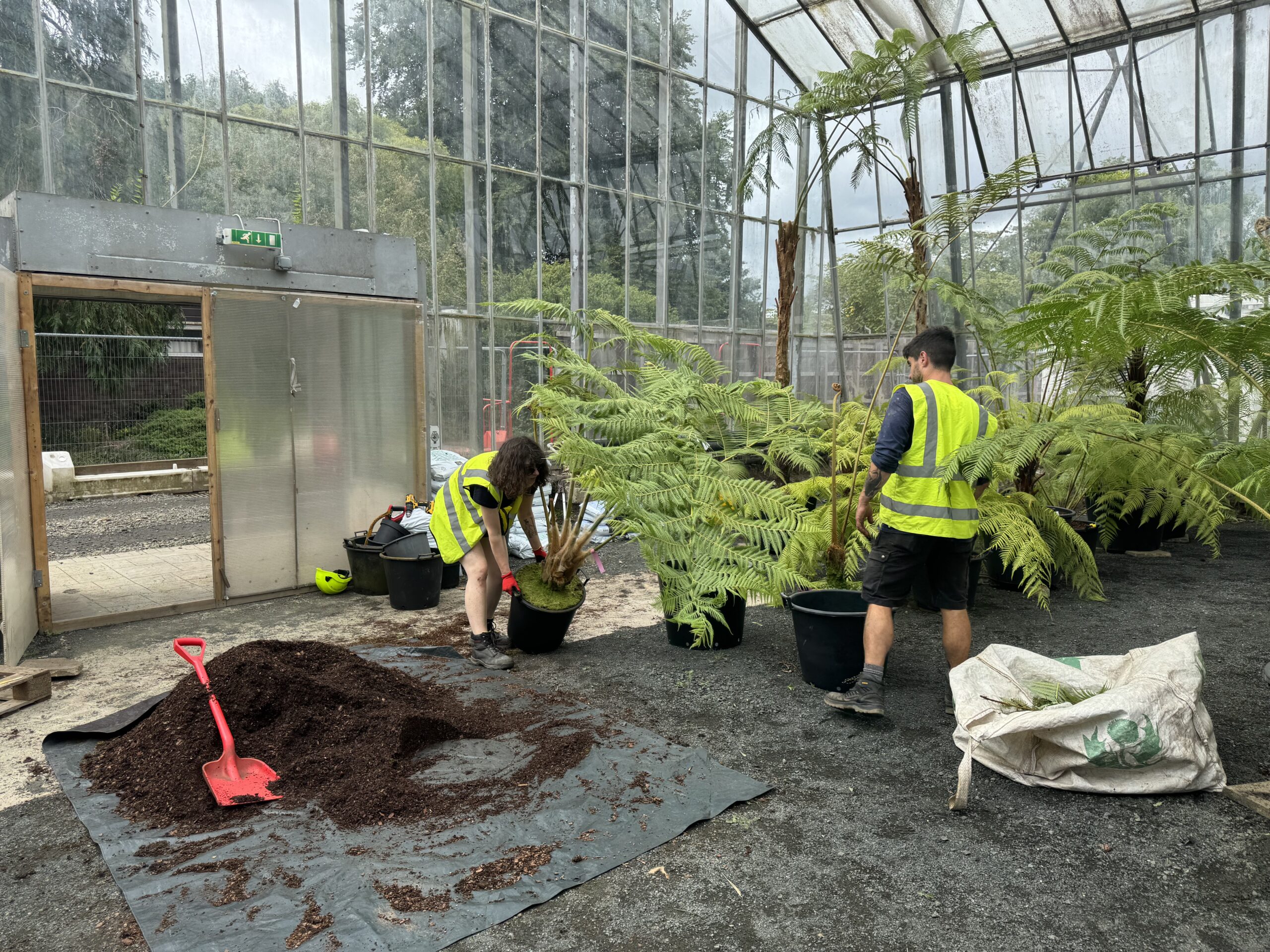
Sphaeropteris medullaris, synonym Cyathea medullaris. Commonly known as the black tree fern or mamaku across its wide distribution of the south-west Pacific, and is a common plant found in forests of New Zealand. Whether it’s the large spikes on their trunks and fronds, spores shedding, or the release of scales into the air, PPE is important in the process of repotting tree ferns. This Sphaeropteris medullaris will be a centrepiece in the future display. Pictured L-R: Audrey Tam, Lili Barras-Hargan and David Tricker. Photo: Kevin Bannon
House 3’s potted collection is reorganised to create space for the largest of the palms and tree ferns to exit the Glasshouse. The remaining plants are categorized into three groups representing the three phases of replanting, layering from the largest to smallest plants. Photo: Kevin Bannon
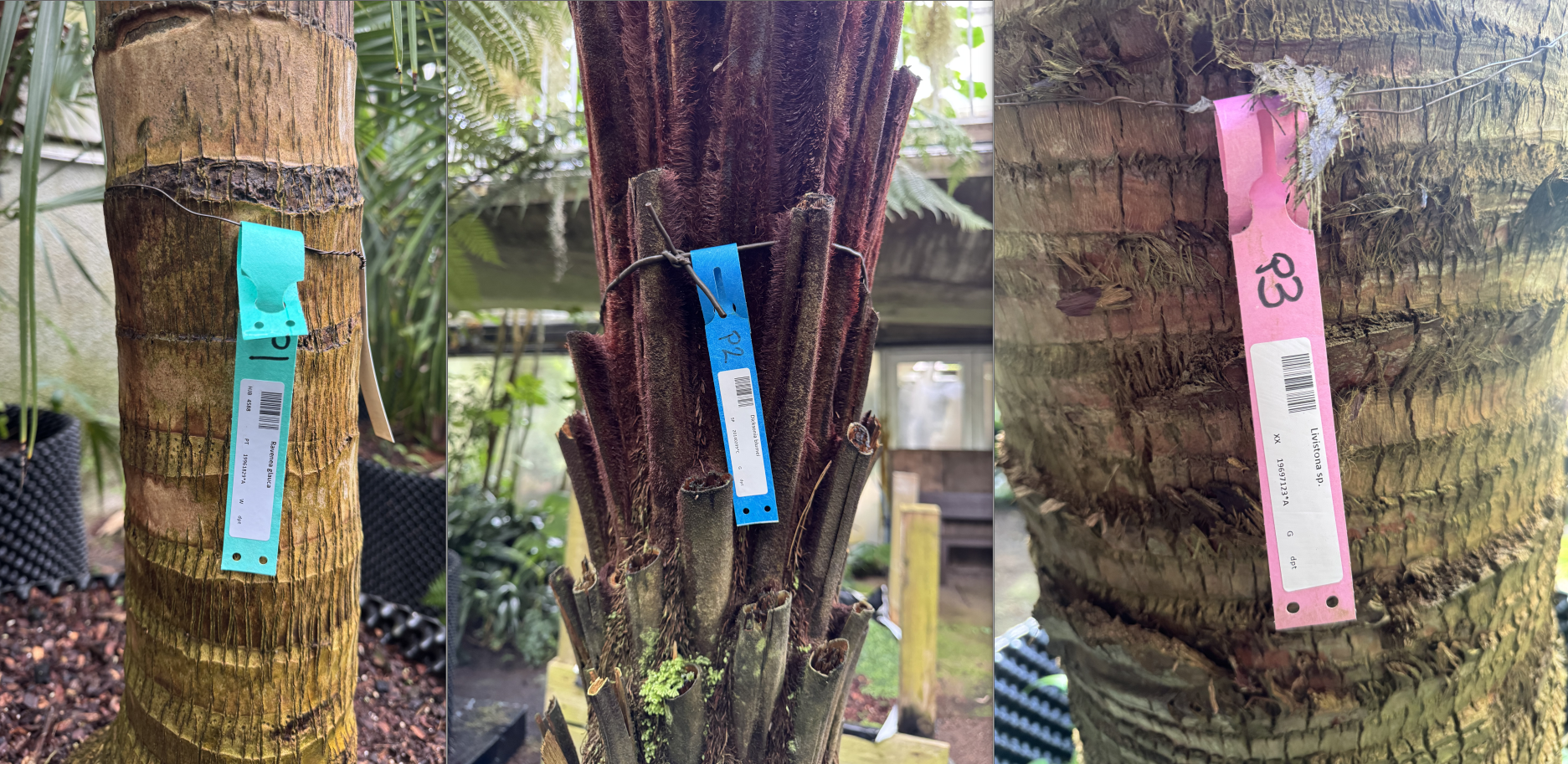
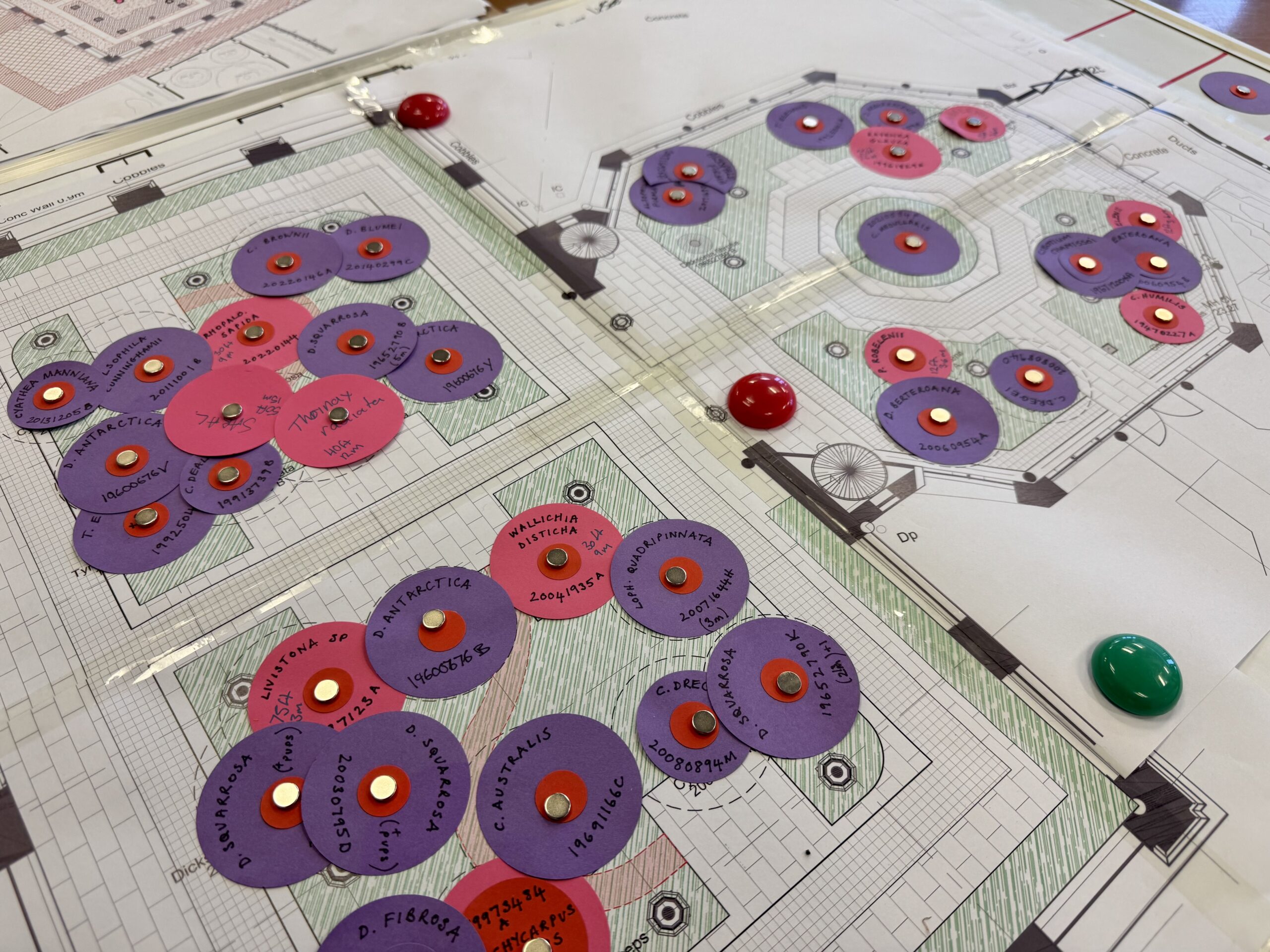
Corresponding to their location in the design plan for the Palm Houses, the colour-coded tags highlight which phase each plant will exit House 3 for replanting into the display beds. This preparation ensures a quicker and safer transfer of such heavy – yet delicate – plants. Pictured L-R: Ravenea glauca, Dicksonia blumei, Livistona sp. Photo: Kevin Bannon
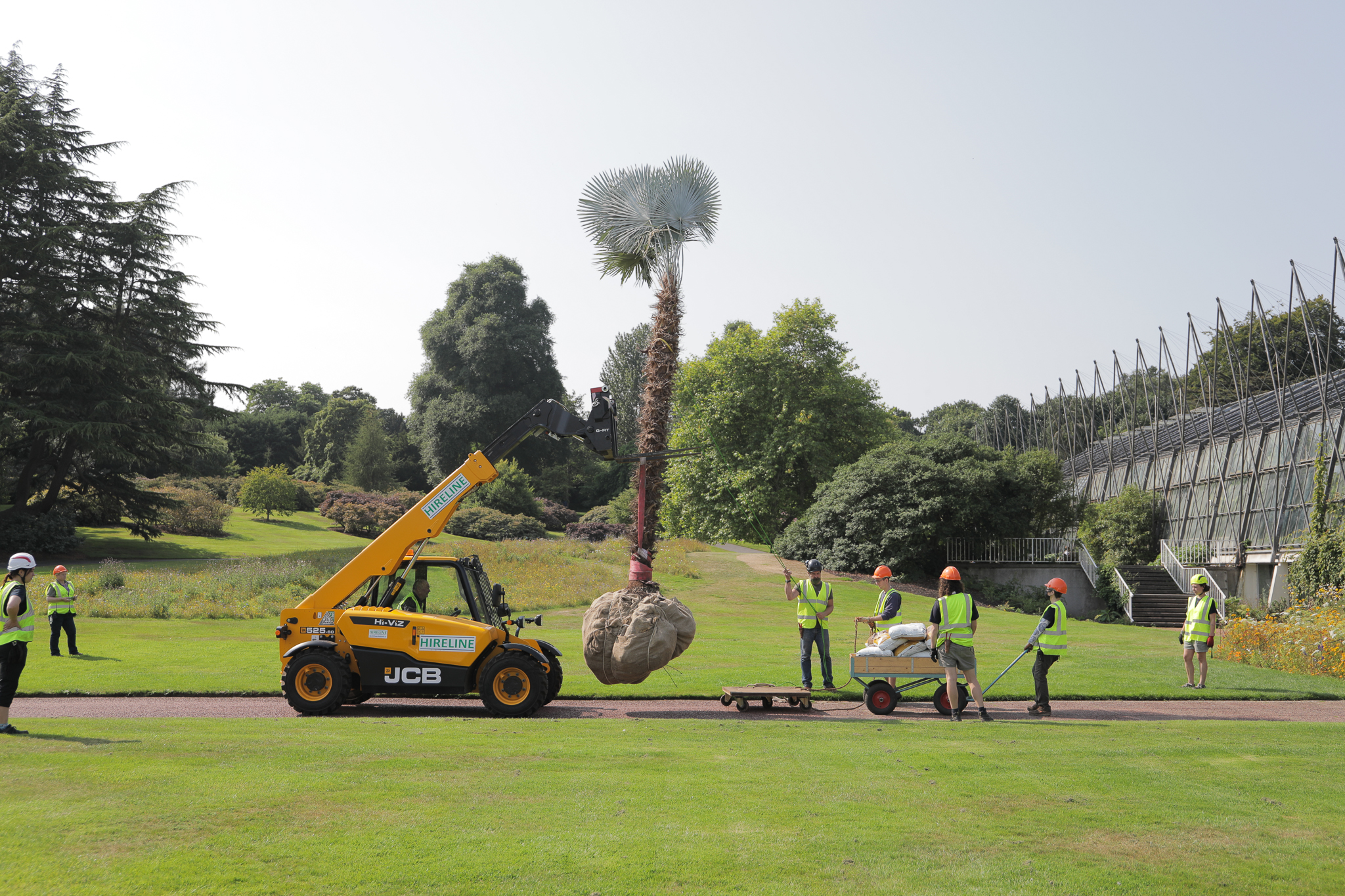
Due to the restricted access into the Glasshouses themselves, the tallest of the palms and tree ferns will need to be laid down horizontally to move from one location to another. This method of decanting collections involves extreme caution, with some of the plants, such as Trachycarpus princeps, commonly known as the Stone Gate Palm, weighing over a tonne.
A look back at the first movement of Trachycarpus princeps to House 3 during the decant of the Palm Houses in 2021. Pictured L-R: Neil Waterston, Si Allan, Kevin Bannon, Lucie Odale, Sadie Barber and Kate Miller. Photo: RBGE
Short Drive to House 5
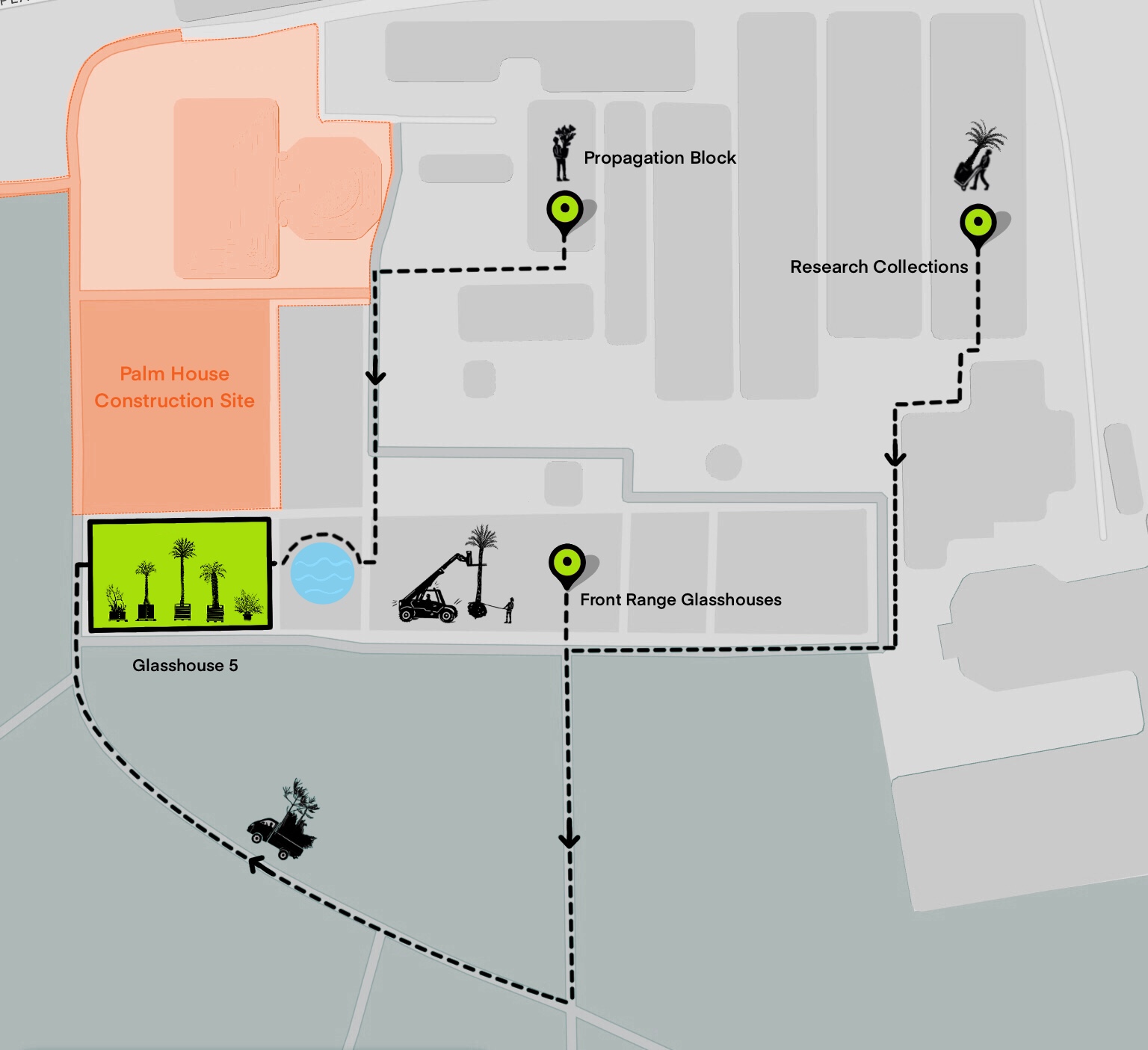
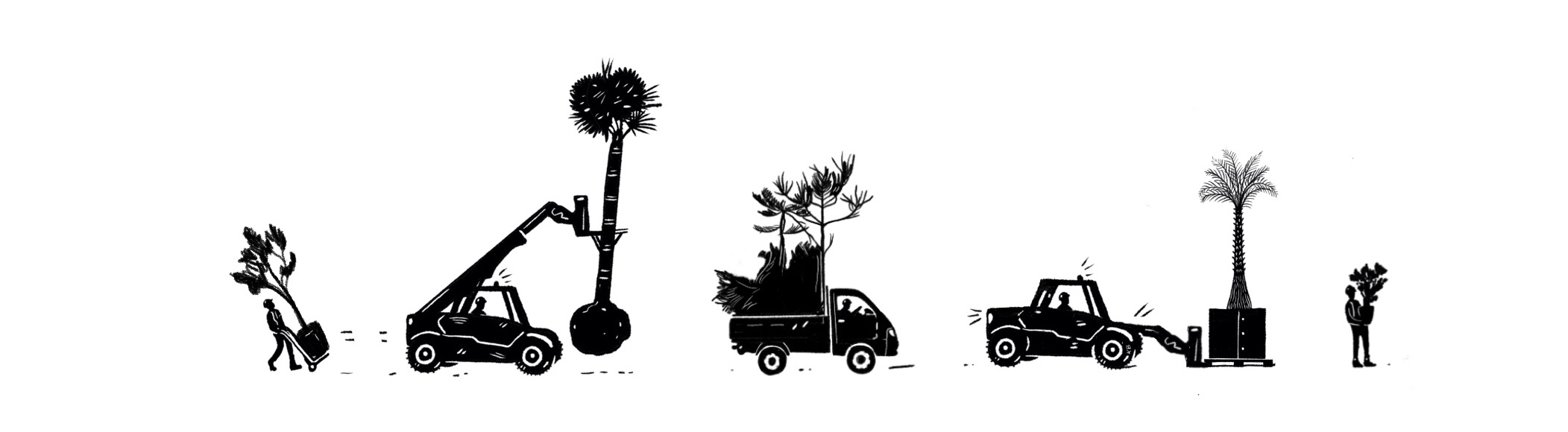
The above illustration outlines the three main routes taken to bring plants of all sizes to House 5. The majority coming from House 3, with some younger plants from the Propagation Glasshouses and Research Collections, temporarily housed and grown on in House 5 over the summer following the creation of hardstanding area in the Glasshouse. Illustration: Kevin Bannon
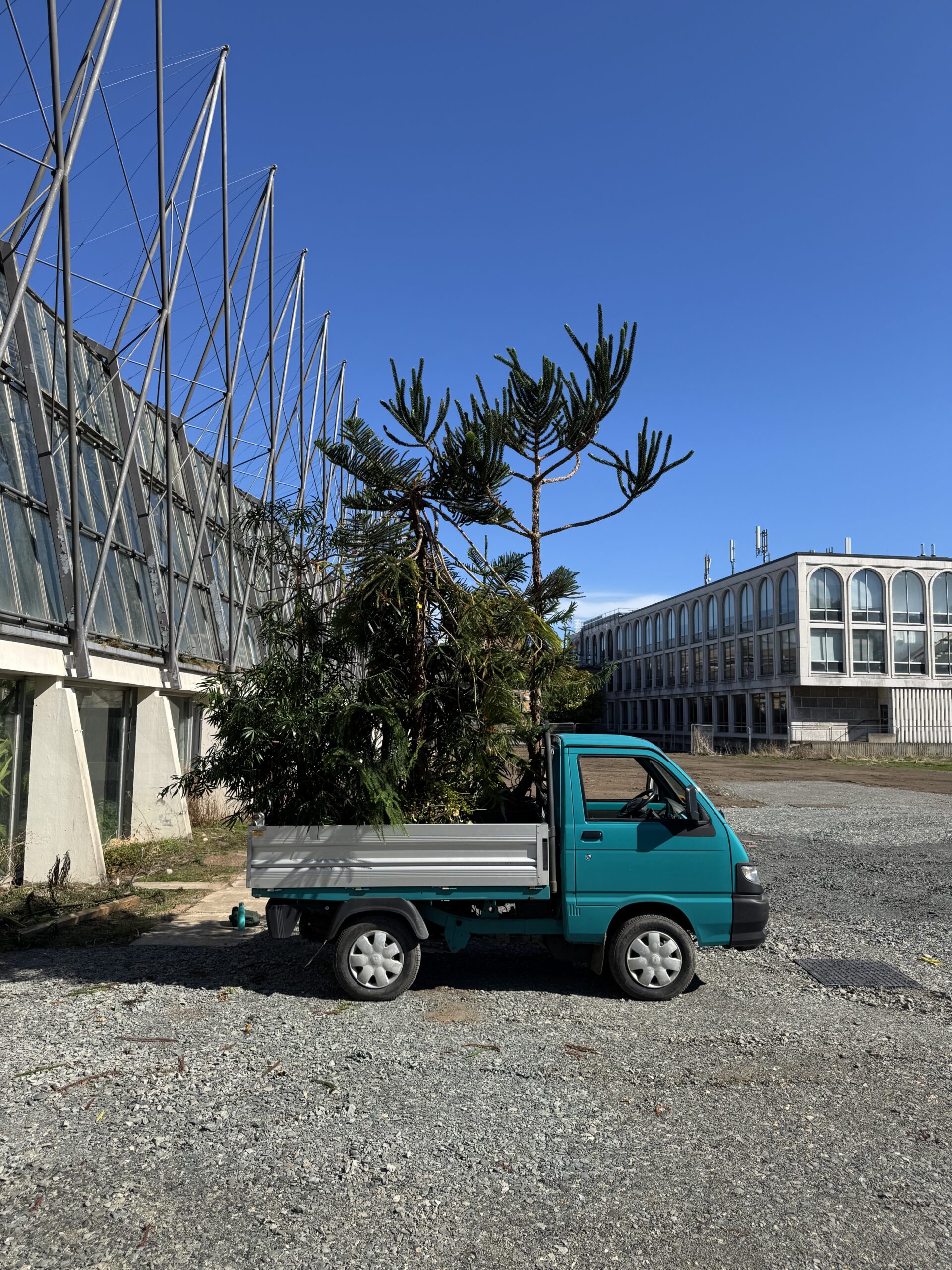
Waiting outside House 3, the Horticulture department’s diminutive Piaggio van is ready to take a selection of rare conifers such as Araucaria luxurians, A. rulei and A. montana to House 5. Photo: Kevin Bannon
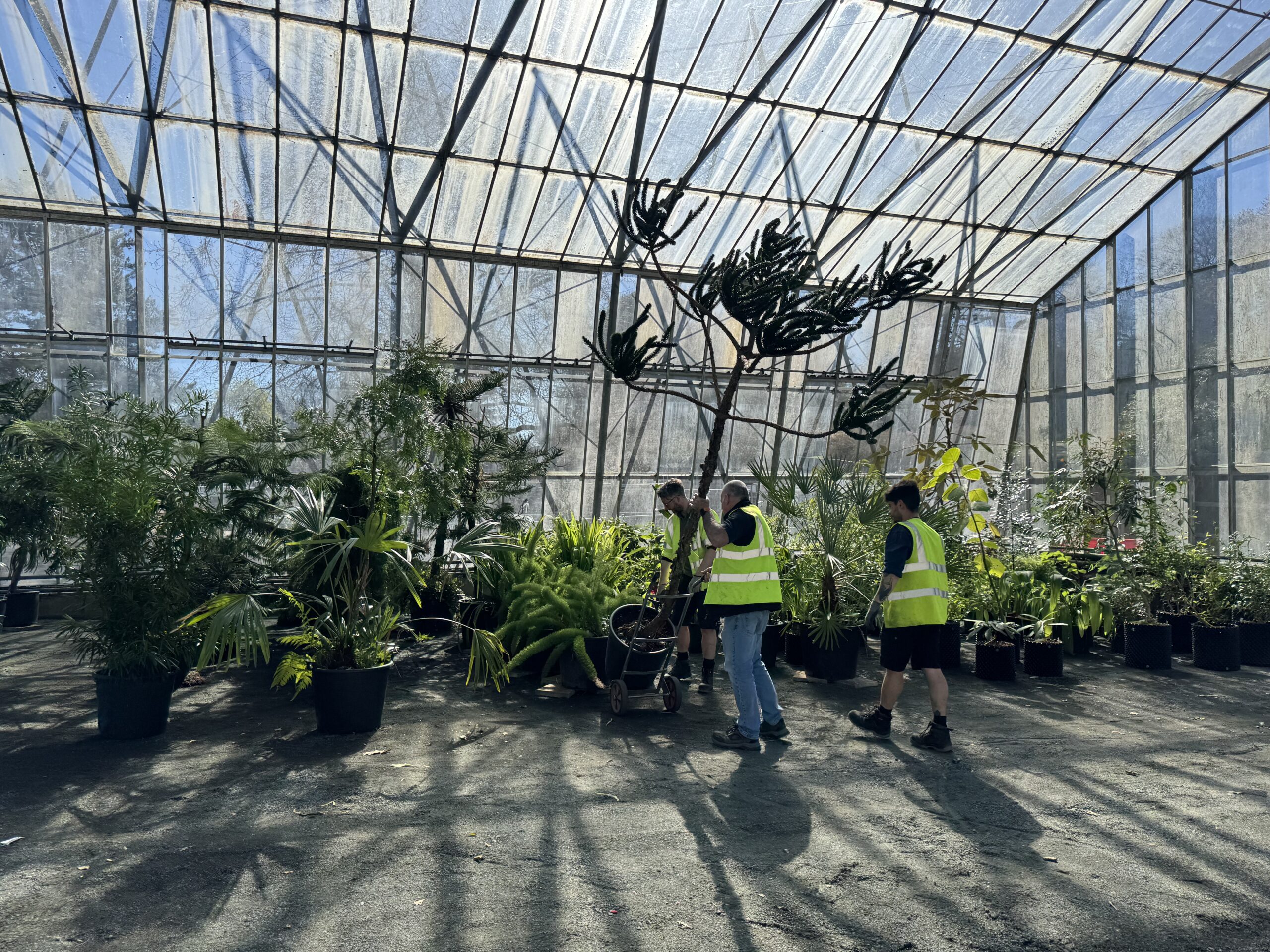
Moving Araucaria rulei into place on the south-facing side of House 5 in a wide area of sun exposure. Depending on how each plant reacts to their new but temporary environment, the collection will be adjusted over time. Pictured L-R: David Tricker, Neil Watherston and Marc Gilbert. Photo: Kevin Bannon
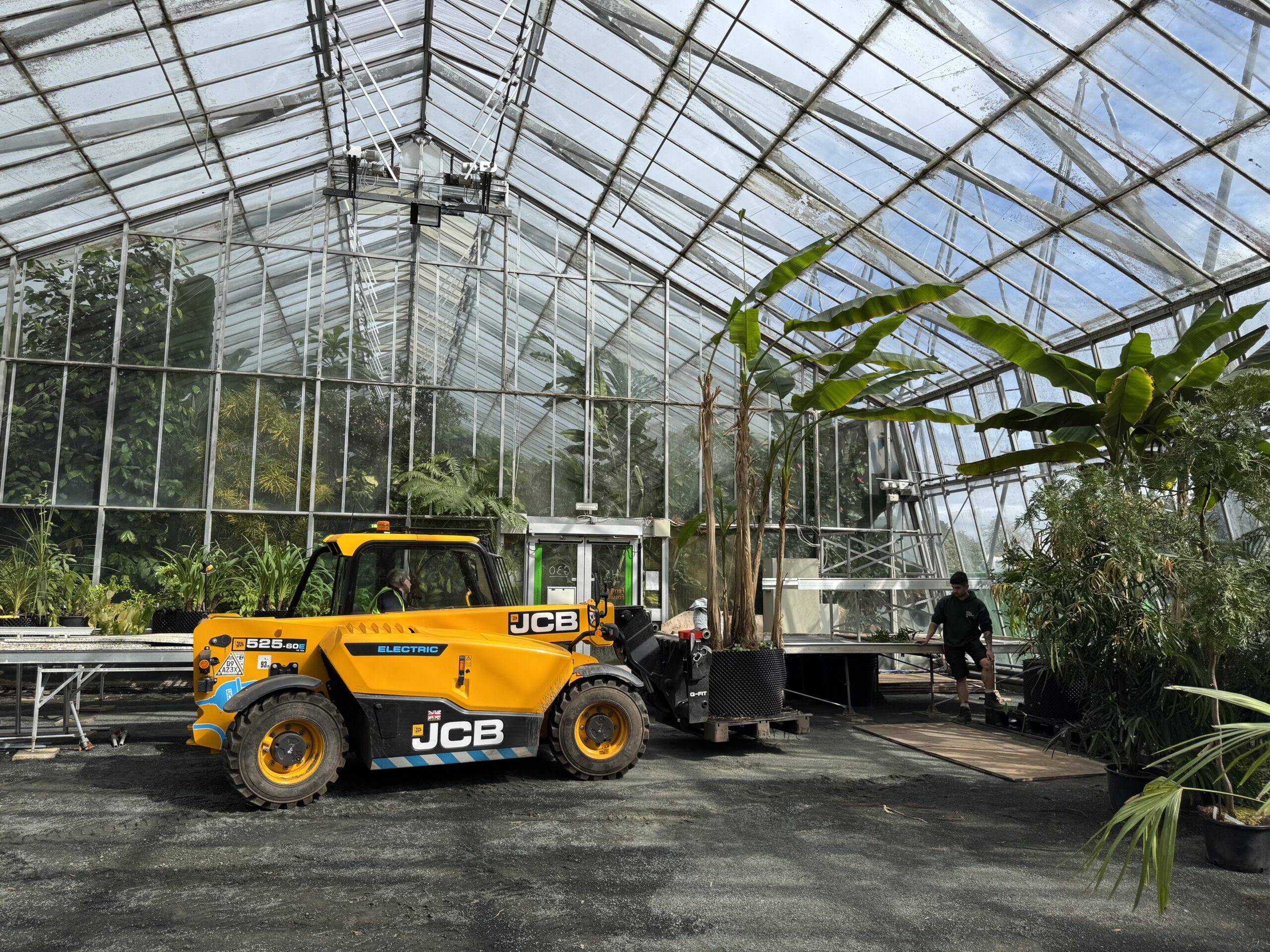
The electric telehandler moves the pallet-based plants, such as Musa itinerans seen above. While this plant is not part of the new display in the Palm Houses, it will help form areas shade in House 5 and open space in House 3 when the final decant begins. Pictured L-R: Neil Watherston and Marc Gilbert. Photo: Kevin Bannon
Care and Selection
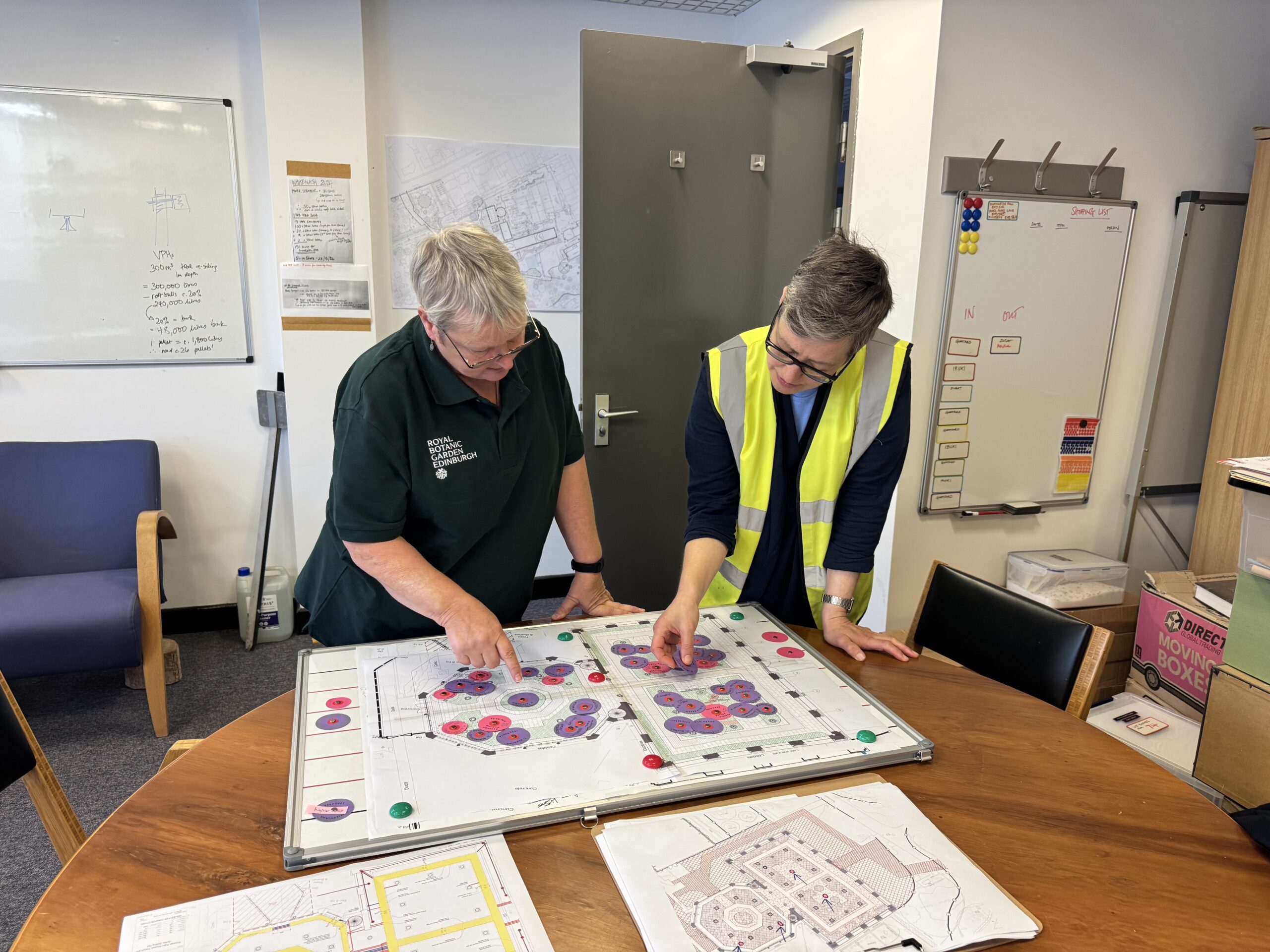
Glasshouse Managers Fiona Inches and Sadie Barber review the planting plan for the Palm Houses. Although still subject to change as work continues into next year, most of the largest plants now have their places set within the new planting beds. Photo: Kevin Bannon
A physical planting board makes it easier to visualise plant arrangements and choose the best position for each specimen. Each marker provides a rough estimate of canopy spread, with the two-tone pieces representing the larger palms and tree ferns in the Palm Houses. After this, the smaller plants will fill the space underneath. Photo: Kevin Bannon
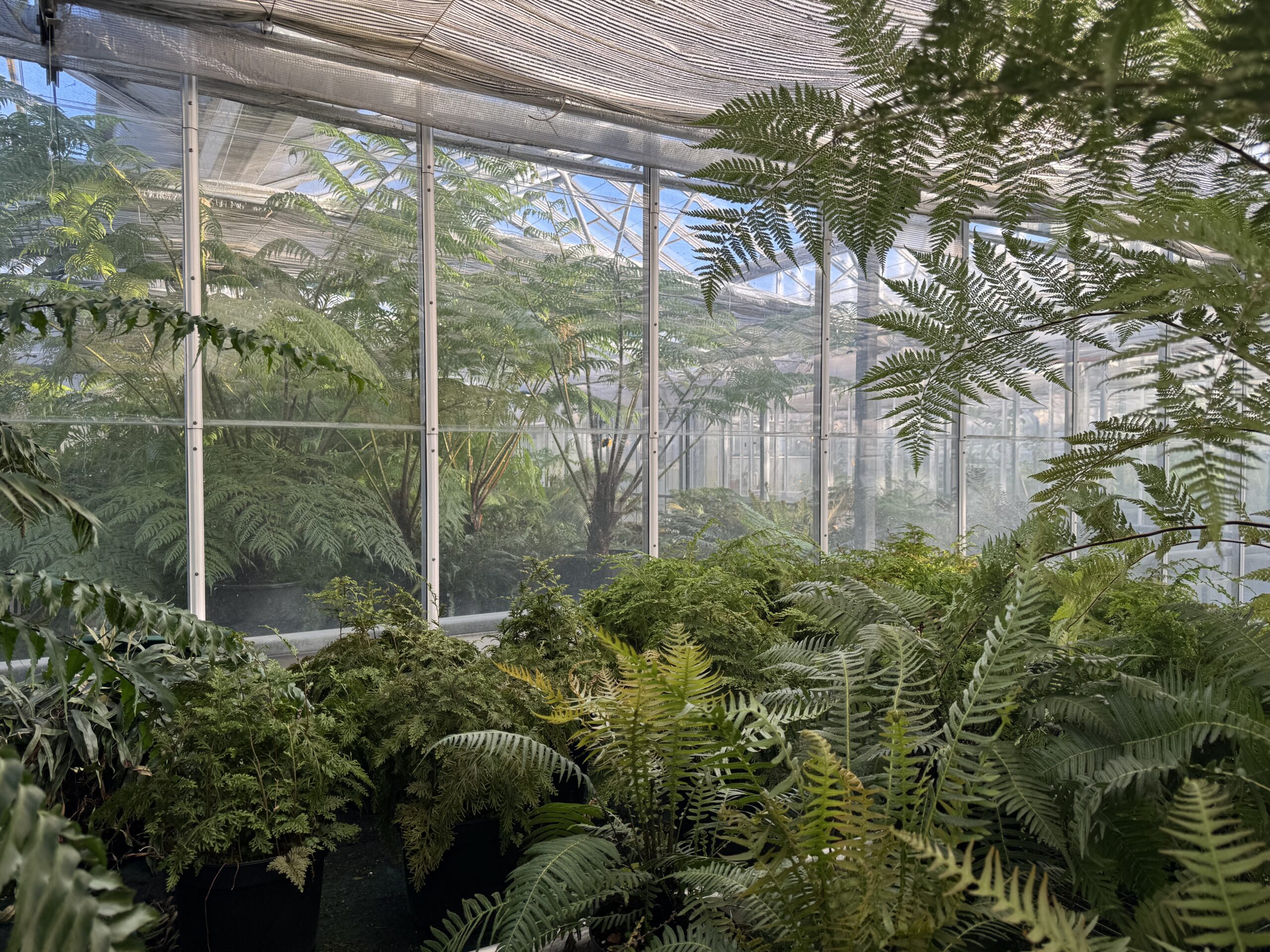
A view through one of the backup Glasshouses. Here is a collection of young tree ferns and small bryophytes sourced from diverse regions including New Zealand and Hawaii. These small Glasshouses hold most of the smaller, more manageable plants decanted from House 5 (previously the Ferns and Fossils Glasshouse). Photo: Kevin Bannon
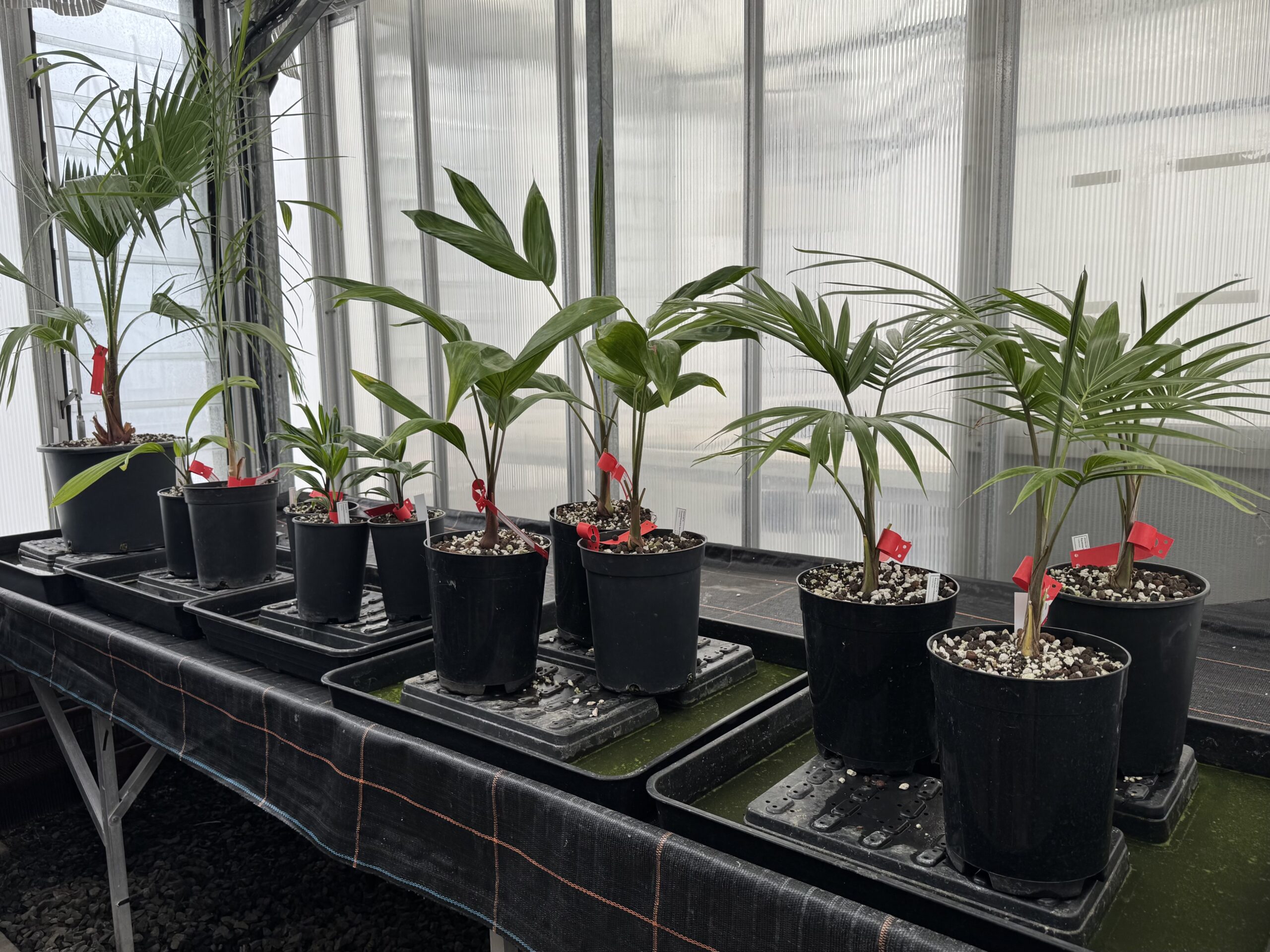
The establishment of a fresh generation of display collections is the start of a new era. Once replanted, the young palm trees within the collection will find no restriction in reaching astonishing heights. Transferred from RBG Kew, the above photo is a selection of young palms including Ravenea hildbrandtii, Chrysalidocarpus cabadae and Sabal mauritiiformis. Photo: Kevin Bannon
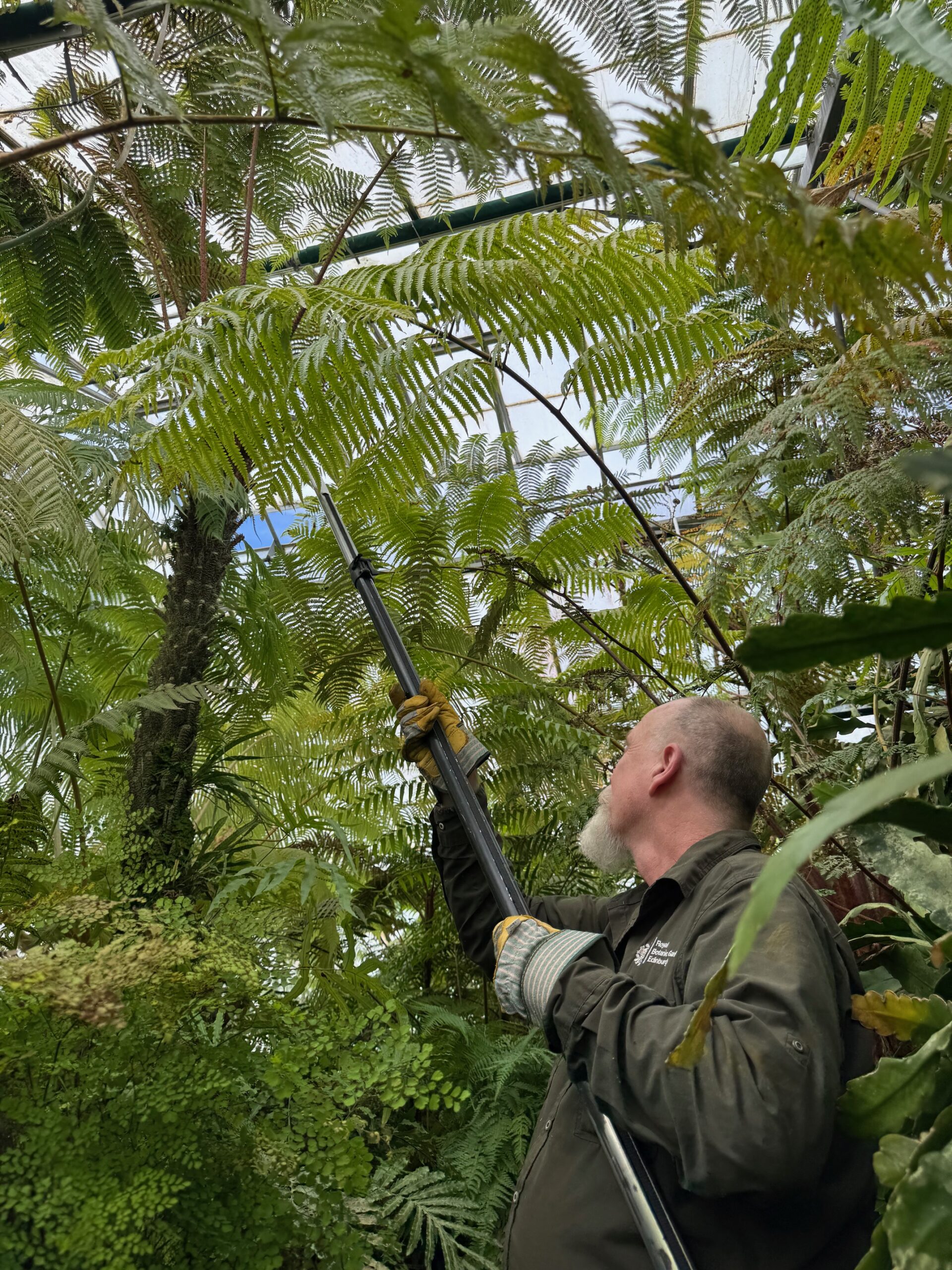
Senior Horticulturist Andy Ensoll reduces the fronds of Cyathea spinulosa in preparation for repotting in House 5. Here in the smaller glasshouses, the ferns are almost at the limits of the vertical space available. Photo: Kevin Bannon
Cibotium regale is next for repotting. A final repotting will give each plant a head start to produce new roots in larger pots. Pictured L-R: Horticulturist Mia Storrier and Senior Horticulturist Marc Gilbert. Photo: Kevin Bannon
The planting design is tuned to offer spaces of shade, dappled light and full sun. Staff are excited to replant, but mindful not to over-plant — preserving both plant health and views of the Palm Houses’ architecture. Beneath the canopies of the tallest plants, colourful flowers, mosses, epiphytes, and climbers from a wide range of different plant families will thrive in the new soil specially chosen for the planting beds.
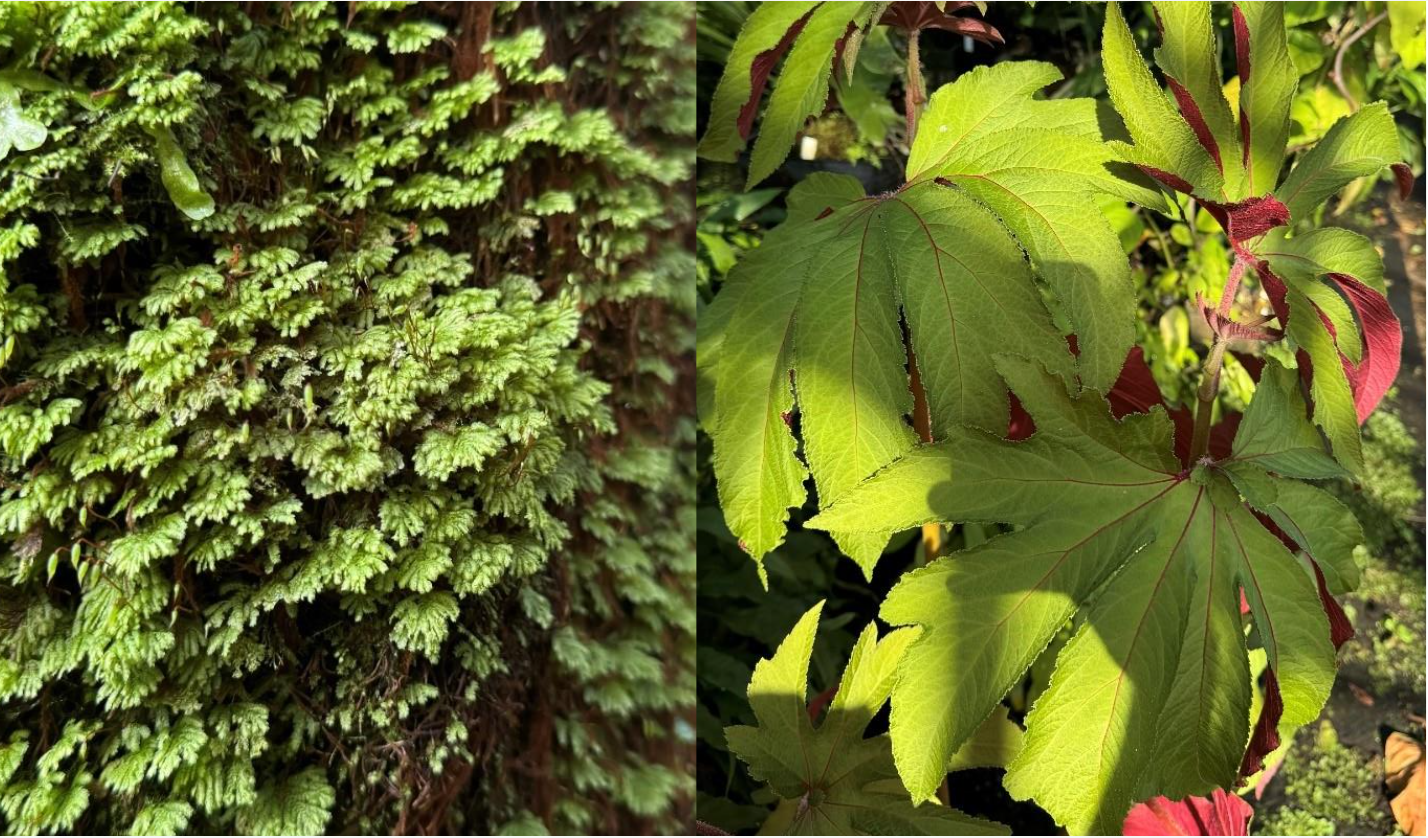
Left: The moss Hypopterygium tamarisci has made its home on the trunks of many of the tree ferns over time. Right: Begonia luxurians x paviflora growing in the temperate backup Glasshouse. Photo: Kevin Bannon
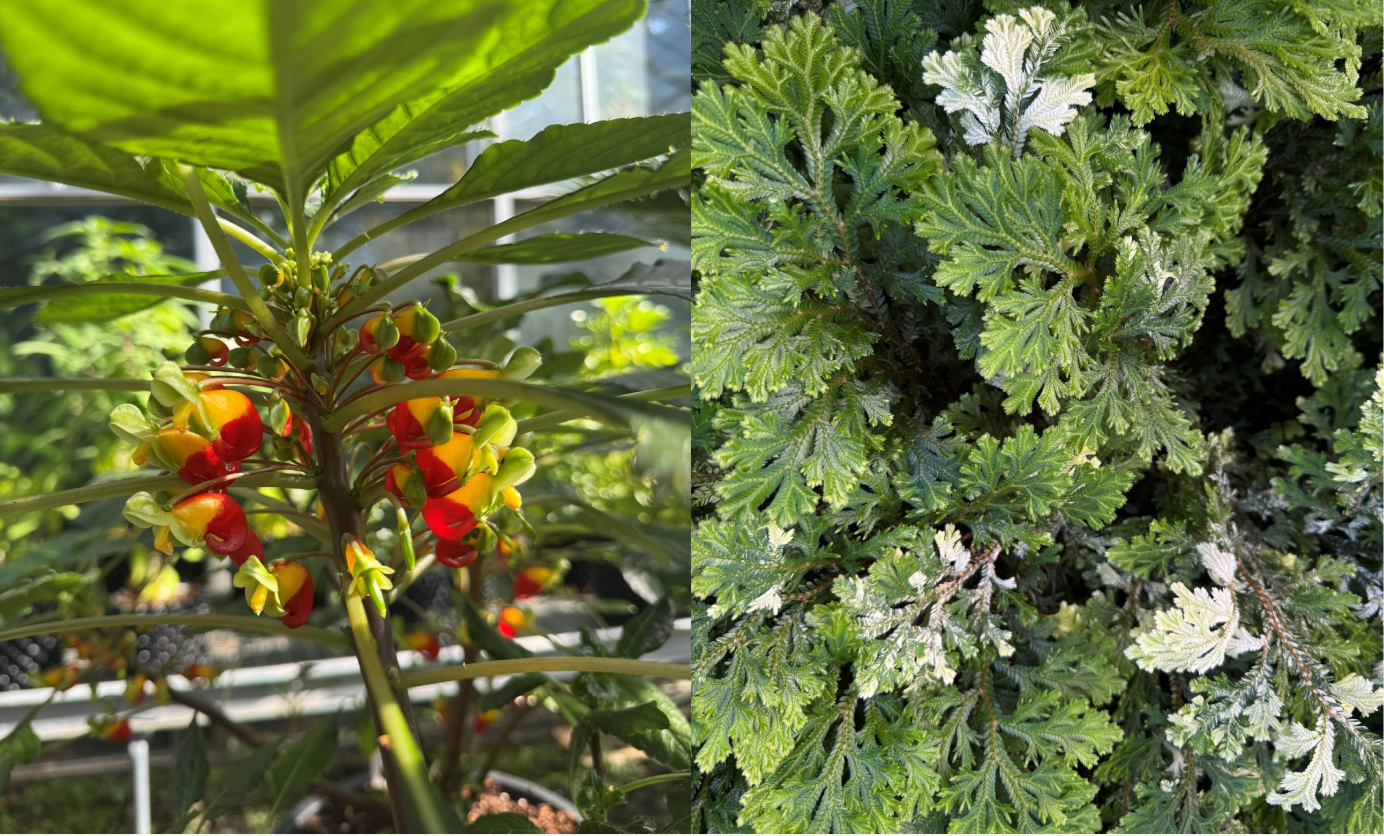
Left: Impatiens niamniamensis flowering in House 5 Right: Selaginella martensii ‘Variegata’ in the propagation glasshouse among other species of Selaginella. Photo: Kevin Bannon
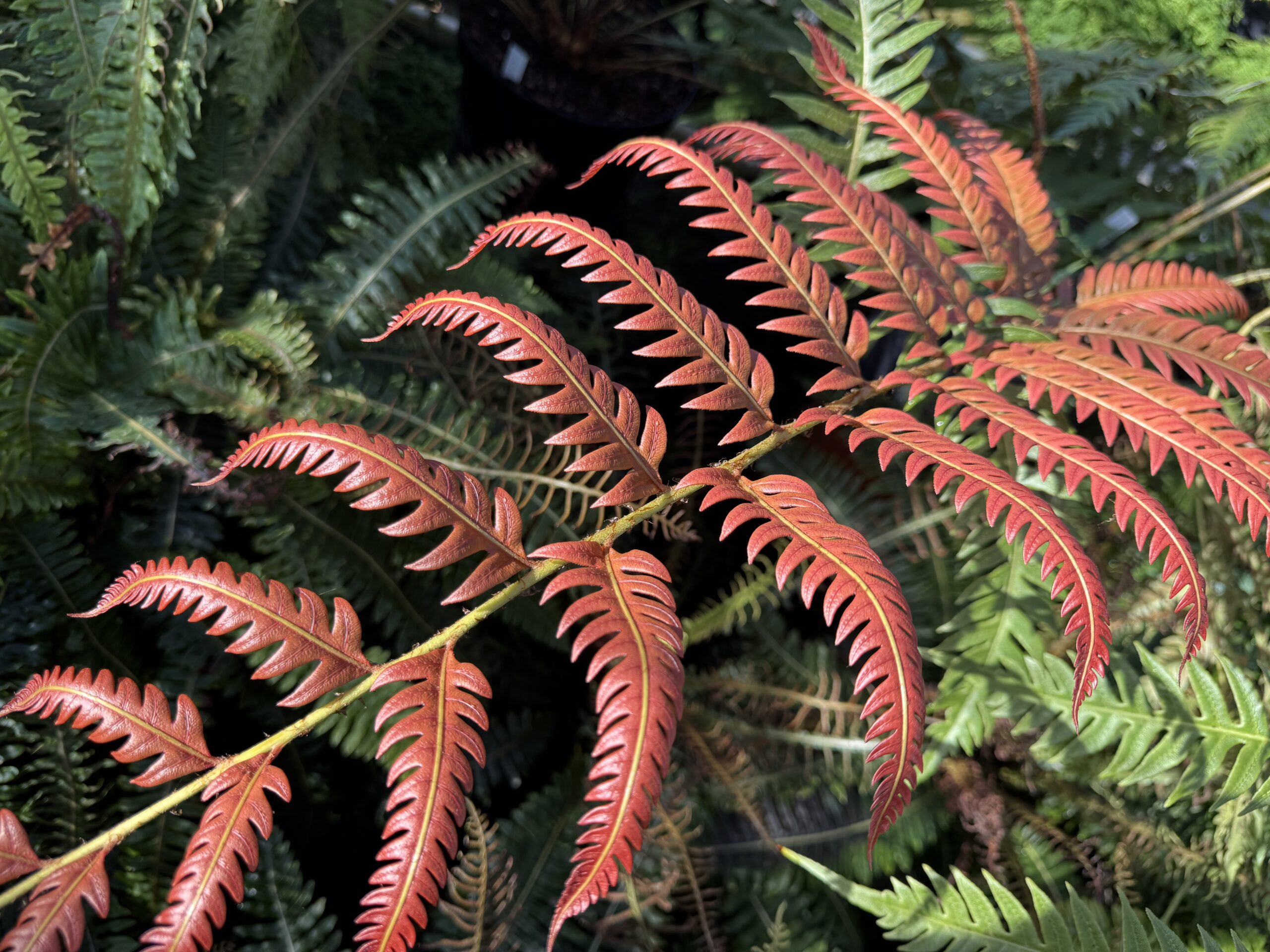
The deep red of a new Woodwardia unigemmata frond unfurling over the green of Blechnum discolor. Photo: Kevin Bannon
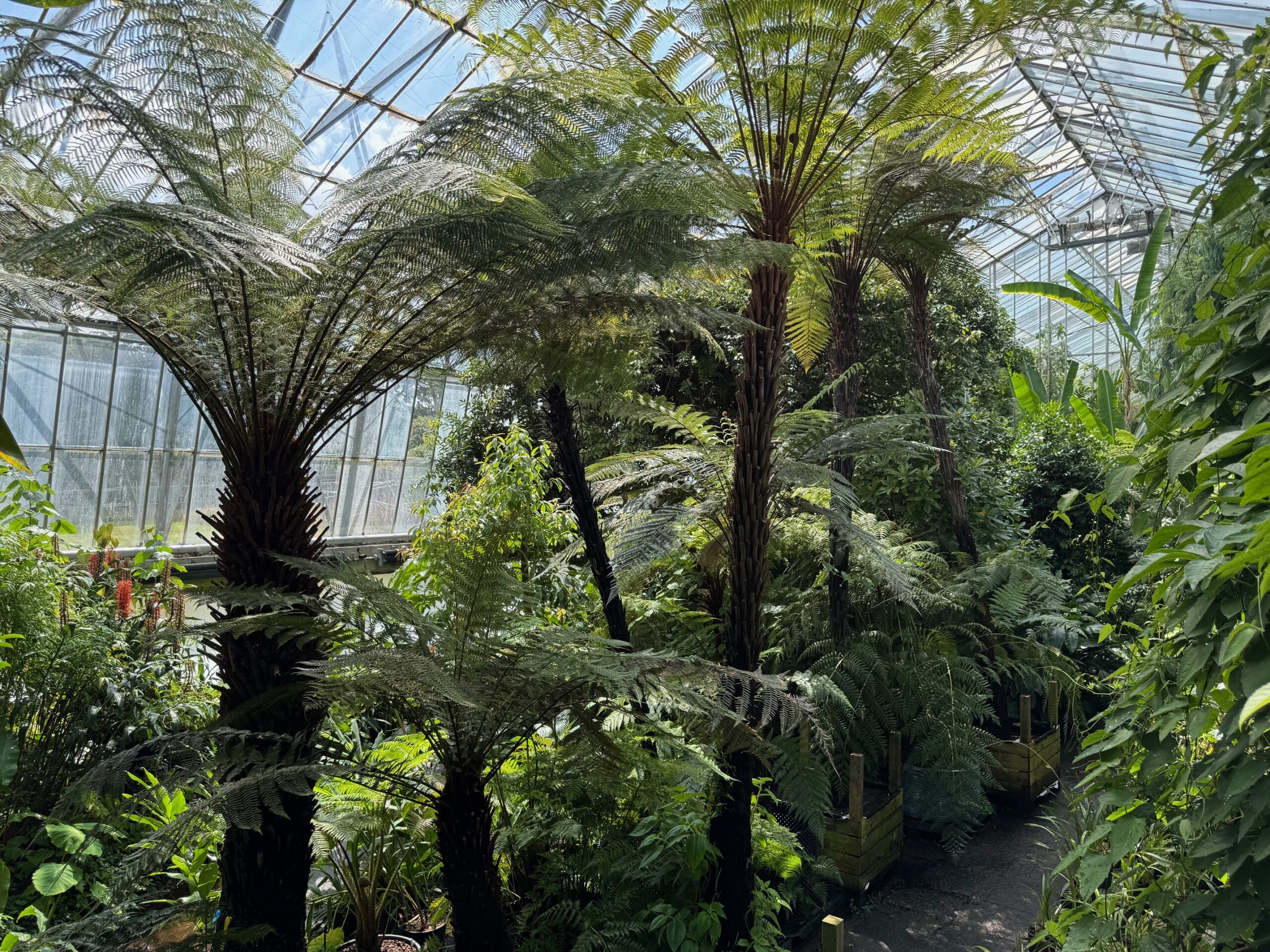
Looking from the bridge in House 3, it’s clear how palms and tree ferns grow at very different rates, creating a shifting canopy. Once plants are fixed in the planting beds of the Palm Houses, pest control and pruning access become ongoing challenges in a space shaped not only by plant growth but by the dynamics of caring for a living collection in a public space. Photo: Kevin Bannon
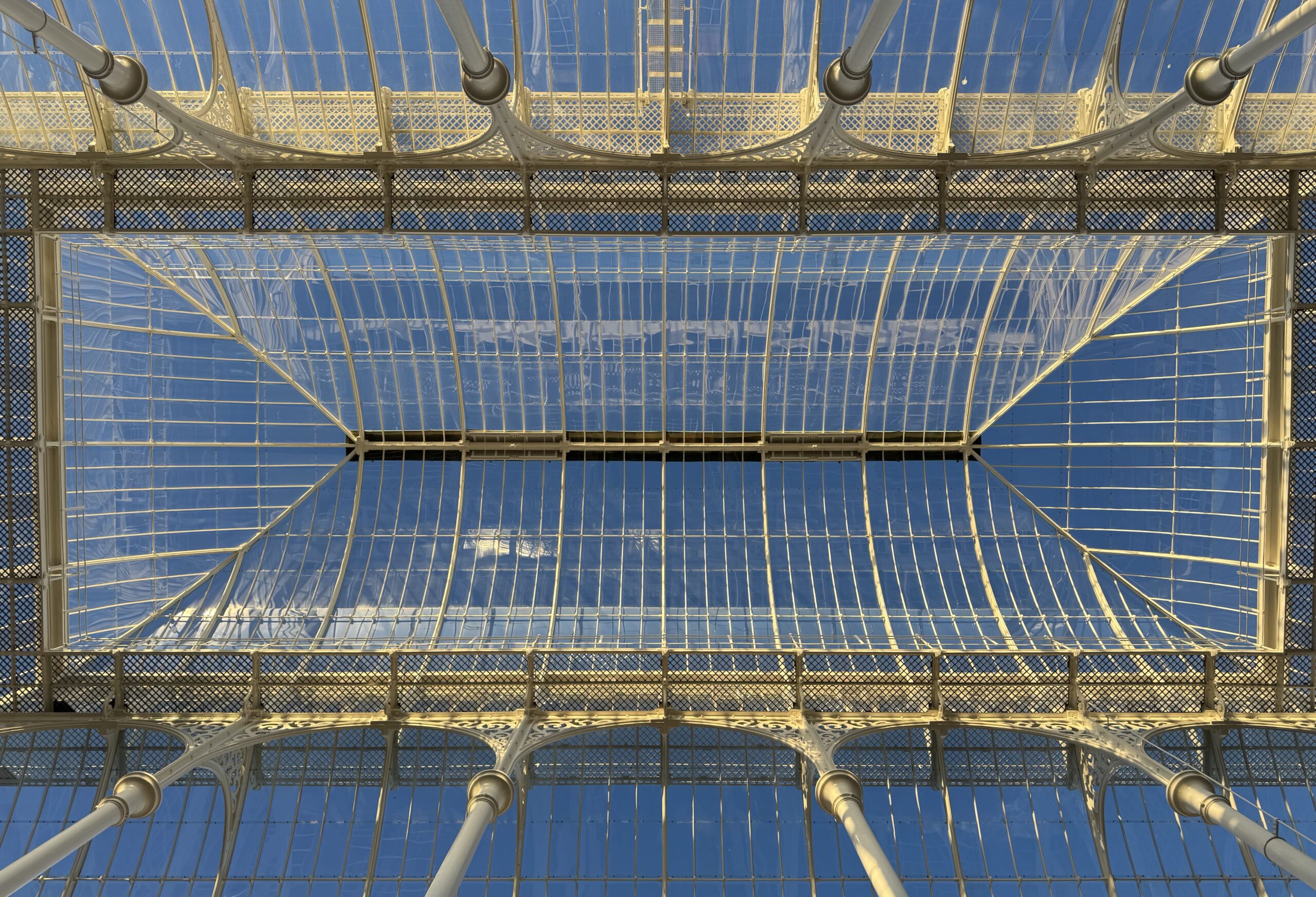
Each in a different light, looking up through the immaculately refurbished Victorian framework and new glass of the Palm Houses. (Photo: Kevin Bannon) House 7 (Photo: Kevin Bannon)
Replanting will fulfil the purpose of the Palm Houses as a space for plant display. The completion of replanting the Palm Houses is the end of a years-long horticultural project for Glasshouse Team and so many others who have worked from the original decant in 2021 to the final stages yet to come. The new and returning plants will breathe life into the historic space once again for the public to enjoy.
Below are two short films covering the movement of plants between the Glasshouses.